
 Worksheets
jana
Total questions: 110
Worksheet time: 3hrs 43mins
Ionic bonds form between ---
nonmetals.
metals and nonmetals.
Covalent bonds form between ---
nonmetals.
metals and metals
metals and nonmetals
What are valence electrons?
sum of the protons and neutrons
protons minus electrons
electrons in the inner shells
electrons in the outer shell
Atoms that gain an electron have an electric charge of ---
-1.
-2.
+1.
+2.
If an atom has 7 protons and 7 electrons, its electric charge is ---
-7
-14
0
+7
Atoms form compounds to become more ---
reactive
stable
explosive
toxic

A _______ is the force that holds atoms together in a compound.
Chemical Formula
Chemical Reaction
Chemical Bond
Synthesis Reaction
Why do chemical bonds form?
so the number of protons equals the number of electrons
to fill the outermost electron level
so an atom can become unstable
An electron has a ___ charge.
no charge
positive
negative
it depends
A proton has a ___ charge.
positive
negative
no charge
it depends
According to the Octet Rule, atoms of elements react with each other in order to attain ____ electrons in their outermost energy level or shell.
2
4
8
10
It is a chemical bond arises between the atoms of non-metals by sharing of each atom with electrons
ionic bond
Covalent bond
Electric bond
Magnetic bond
Why do elements bond?
To be friends
To create a new element
To become stable
To get bigger
Which of these is not a real bond in chemistry?
James
Ionic
Covalent
Metallic
Which of the following describes covalent bonds?
Bonds form because of opposite charges
electrons are shared to fill outer electron shells
Electrons are transferred between atoms
Covalent bonds are magical
The octet rules states that most elements want to have _____ valence electrons.
2
4
6
8
Chemical bond is ...
the physical mixing of two different atoms.
the force that holds two atoms together
the energy used up when two atoms combined.
the temperature that changes the phase of matter.
Which of the following atoms is most likely to bond with another atom?


How many valence electrons does Oxygen (O) have?
6
8
15
16
Which statement best describes the relationship between atoms & molecules.
molecules are made of atoms that are chemically bonded together.
atoms are made of molecules that are chemically bonded together.
molecules are made of a mixture of atoms and compounds.
atoms are made of protons, neutrons & electrons.
symbol of sodium
k
Fe
Na
Ag


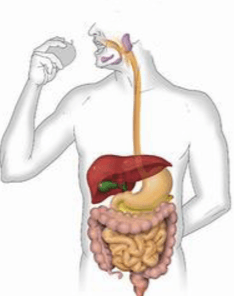
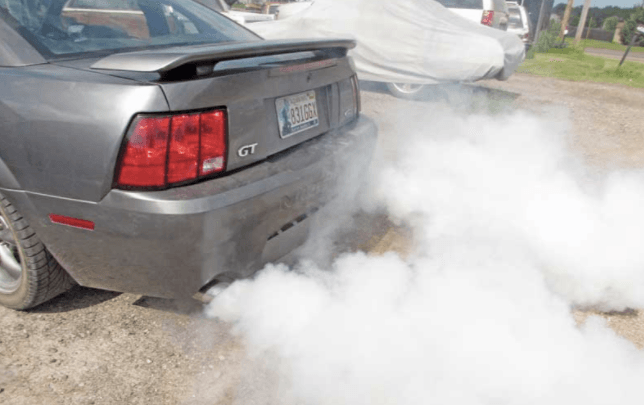

What changes did the water undergo?

Identify what type of change happening in the picture below...
Chemical Reaction
Physical Change
Change in State
Change in appearance only
Which of the following is a molecule?
copper
ferrum
oxygen we inhale
none of these
The atomicity of water is
(a)
Which of the following is correct representation of carbon monoxide?
Co
cO
none of these
CO

Which element has a higher electronegativity value?
Niobium
Tin
Cadmium
Iodine

Which element has a lower electronegativity value?
Calcium
Barium
Electronegativity (a) as you go down a group.
Electronegativity trends are the same as:
Atomic radius trends
Ionization energy trends
Both of these
None of these
What does electronegativity do as you go across a period?
decrease
no pattern
stay the same
increase
As you move across a period, the outer electrons are ________ to the nucleus, so the nucleus of the atom is ________ to attract electrons in a bond.
closer, more able
closer, less able
further, less able
further, more able
Do noble gases have electronegativity values?
yes
no
Why does electronegativity decrease as you go down a group?
As you go down a group, the outer electrons are further away from the nucleus
As you go down a group, the nucleus is less able to attract electrons in a bond
Both of these
None of these

Which is the correct order of electronegativity from lowest to highest?
Zinc, Nickel, Iron, Scandium
Iron, Nickel, Zinc, Scandium
Scandium, Iron, Nickel, Zinc
Scandium, Iron, Zinc, Nickel
Electronegativity is the ability of an atom to attract electrons in a physical bond.
false
true

Sodium and Bromine will make a _____ bond
Ionic
Hydrogen
Covalent
Exploding
The mutual sharing of one or more pairs of electrons between two atoms.
Covalent
Ionic

This type of bonding can be described as "I give, I get"
Covalent
my mom
Ionic
Friendship
Why do all bonds form?
filling the outermost energy level
to win
to make other atoms unstable
to be famous
What two types of atoms make a covalent bond?
2 Metal
2 Ionic
1 nonmetal 1 metal
2 Nonmetal

NaCl
metallic
covalent
Ionic

Hydrogen and Chlorine will from a ____ bond
Unique
bestie
Covalent
Ionic

Beryllium and sulfur will form a ____ bond
Covalent
Metallic
Ionic
Unique
In ionic bonds, metals tend to?
Keep their electrons
Gain valence electrons
Lose valence electrons
None of these answers are correct

MgO for a _____ Bond.
Ionic
Metallic
Covalent
What type of bond involves the sharing of electrons between atoms?
Covalent
Ionic
Best friend bonds
Why don't noble gases form bonds?
They all have a full octet
Noble gases do form bonds
They only bond when with eachother
none of these answers are correct
This type of bonding can be described as a "cooperation"
Diverse
Ionic
Covalent

Water, H2O
Ionic
Covalent
Water
When metals bond with non-metals they form what type of bonds
Ionic
Covalent
An ionic compound forms between a ______
2 nonmetals
metal and nonmetal
2 metals
noble gasses
Type of linkage formed from the electrostatic attraction between oppositely charged ions in a chemical compound.
Ionic
Covalent

CH4 (Methane) is an example of a(n) ______ bond.
metallic
covalent
Ionic
Which subatomic particles are much smaller than the others and have a negative charge?
protons
neutrons
electrons


H₂O is a compound molecule.
TRUE
FALSE

O2 is a compound molecule.
TRUE
FALSE
Group of atoms bonded together
Mixture
Compouns
Atom
Molecules
What is Covalent Bonding?
Bonding that is the result of two nonmetals sharing electrons
Bonding between two metals
Bonding that is the result of a nonmetal and a metal exchanging electrons
Bonding between more than two elements
Which particle is responsible for bonding?
Protons
Electrons
Neutrons
Nucleus
Which of the following is true about Ionic Bonds? (select ALL TRUE options)
High melting point
Low melting point
Can dissolve in water
Cannot dissolve in water
Can conduct electricity
Potassium Chloride is...
Ionic
Covalent
Water (H2O) is...
Ionic
Covalent
Ammonium (NH4) is...
Ionic
Covalent



Na2S
Name this compound: KF
Potassium fluoride
Potassium fluorite
Fluorine potasside
Potassium fluorate
Write the formula for barium + nitrogen
Ba2N3
Ba3N2
BaN
BaN3
Which of the following is an ionic compound:
CH4
I2
LiBr2
CO
calcium arsenide

