
 Worksheets
Science Annual Revision
Total questions: 70
Worksheet time: 50mins
Which planet is closest to the Sun?
Mercury
Saturn
Earth
Mars
Which planet is known as the Red Planet?
Venus
Mars
Jupiter
Neptune
What is the largest planet in our solar system?
Mercury
Saturn
Jupiter
Uranus
Which planet is known for its beautiful rings?
Earth
Saturn
Mars
Pluto
What is the fifth closest planet to the Sun?
Saturn
Jupiter
Uranus
Neptune
How long does the Earth take to rotate on its own axis?
1 year
Earth takes ____________ to orbit around the Sun.
365 days
350 days
24 hours

At position A, which hemisphere would have summer?
Northern hemisphere
Southern hemisphere

What happens when the area in which you live tilts away from the sun?
It is winter.
It is summer.
What causes seasons?
Earth's tilted axis
The position of the planets
Energy is measured in (a) .
Our food contains ___________ energy.
kinetic
chemical
thermal
light
When we move, chemical energy is changed into (a) energy.
Energy cannot be (a) or destroyed.
Thermal energy comes from ___________.
electricity
heat
food
Energy is measured in (a) .
What is the name of the force that slows parachutes down as they fall?
Friction
Sky resistance
Gravity
Air resistance
Name the force that makes the car travel different distances on different surfaces.
Magnetism
Rough surfaces create _________ friction than smooth surfaces.
more
less
A change that makes new
substances is ___________.
irreversible
reversible
Indicate which changes are reversible.
boiling water
baking a cake
melting candle wax
rusty metal
Tick the solvent.
water
coffee
flour
sand
Tick the solutes.
flour
sugar
salt
sand
Which material is insoluble?
sugar
coffee
salt
sand
Which process would you use to separate sand and water?
evaporation
filtration
sieving
hand-picking
Which process would you use to separate sugar and water?
evaporation
filtration
sieving
hand-picking
Which process would you use to separate beads and marbles?
evaporation
filtration
sieving
hand-picking
Which process would you use to separate inks?
(a)

Identify the energy transfer
chemical to kinetic
solar to electrical
thermal to light
electrical to light

Identify the energy transfer
chemical to solar
electrical to thermal
chemical to light
thermal to kinetic

When you eat food, your body gains ___________ energy.
electrical
chemical
thermal
light

Which type of energy is NOT given off by a fire?
light
electrical
thermal
sound


If an object is not moving the forces acting upon it are (a) .
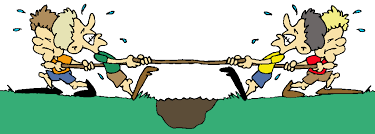


Balanced
Unbalanced
There is ______ friction on a smooth surface.
more
less
no
lots of
Friction moves in the ______ direction of the object moving.
same
different
opposite
What will happen to the friction when an item moves on a rough surface?
Nothing
It will decrease.
It will increase.
It will disappear.
When is having less friction useful?
walking
driving
ice skating
climbing
We use oil to _____ the friction between the moving parts inside a car engine.
wash
reduce
increase
What would happen if you polished a wooden floor?
Friction would be increased and the floor would be slippery.
Friction would be decreased and the floor would be slippery.
Friction would remain the same and the floor would no longer be slippery.

Which two of these forces act on parachutes?
Air Resistance
Gravity
Thrust
Kinetic Energy
What causes an object to fall faster?
Smaller surface area
Larger surface area
If it has a parachute
If it is softer
Another name for air resistance is...
Buoyancy
Streamline
Gravity
Drag

The larger the surface area of the moving object, the ___________ air resistance there is.
Less
More
Longer
Quicker
Air resistance pushes against falling
objects and __________________.
Speeds them up
Keeps them afloat
Slows them down
Spins them
Which has more air resistance?


Air resistance is a force caused by...
Water pushing against moving objects
Air pushing against moving objects
Gravity pushing against moving objects
Normal force pushing against moving objects

The more streamlined an object is, the...
More air resistance
Less air resistance
Slower air resistance
Faster air resistance
When dropped from the same distance, which will fall to the floor faster?


Waterproof material
Plastic
Wood
Fabric
Paper
Shiny and conducts electricity
Glass
Plastic
Rubber
Metal
feels soft

Irreversible
Reversible
Burning

Irreversible
Reversible
Burning
It does NOT dissolve in water.
soluble
insoluble
A mixture that looks clear contains _________ substance.
soluble
insoluble

flour
soluble
insoluble

pepper
soluble
insoluble

rice grains
soluble
insoluble

baking powder
soluble
insoluble

Sofia separated a mixture (soil and water). At the end, she had clean water using a separation technique. What is the name of the separation technique she used?
Evaporation
Filtration
Separating funnel
Sieving

What is the name of the separation technique should a student use to separate the iron filings?
Magentism
Filtration
Sieving
Separating funnel
Melting, freezing and rusting are some examples of reversible changes.
True
False

