wayground logo

Free Printable Worksheets

Font size

S
M
L
XL
Worksheets

Quarter 4 Review

Total questions: 164

Worksheet time: 2hrs 1mins

Name
Class
Date
1.
What does the picture show?
a)
A Food Web
b)
An Ecosystem
c)
A Food Chain
d)
A nice scenery
2.

Where does the food chain START?

a)

with consumers that eat grass

b)

with the sun giving energy to producers

c)

with the sun giving energy to consumers

d)

with consumers eating other consumers

3.

Which of the following are factors that could cause extinction?

a)

Destruction of animals' habitat

b)

Climate change

c)

Pollution

d)

Increased human population (more people)

e)

ALL of the above could cause extinction

4.

Breaks down and feeds on the remains of other organisms

a)

decomposer

b)

consumer

c)

producer

5.

An oak tree is a/an...

a)

Producer

b)

Primary Consumer

c)

Secondary Consumer

d)

Decomposer

6.

Which symbiotic relationship is when one organism benefits and the other is not impacted (positively or negatively)?

a)

Predation

b)

Mutualism

c)

Commensalism

d)

Parasitism

7.
An individual living thing is a/an __________.
a)
habitat
b)
ecosystem
c)
organism
d)
population
8.
The place where an organism lives is its _________.
a)
habitat
b)
abiotic
c)
ecosystem
d)
community
9.
All of the nonliving parts of an ecosystem are _______.
a)
biography
b)
biotic
c)
abiotic
d)
biology
10.
All of the living and nonliving things in an area that interact with each other are called a/an ______.
a)
community
b)
habitat
c)
population
d)
ecosystem
11.
Temperature, light, air, water, and soil are all  _____  parts of the environment
a)
alive
b)
biotic 
c)
abiotic
d)
living
12.
A group of bunnies living in the forest is an example of a __________.
a)
Population
b)
Ecosystem
c)
Individual
d)
Community
13.
A bird hitches a free, safe ride on the back of a grey elephant. The elephant doesn't seem to mind and barely notices the bird. Which type of relationship is this?
a)
mutualism
b)
commensalism
c)
parasitism
14.
Carnivores, herbivores, omnivores, and scavengers are all examples of __________.
a)
producers
b)
consumers
c)
decomposers
d)
abiotic factors
15.
A bird in a tree watched as a lion stalked, attacked, and then ate a zebra. Which of these animals was the prey?
a)
bird
b)
lion
c)
zebra
d)
all of the above
16.
A relationship where one organism benefits and one organism is harmed is called __________.
a)
mutualism
b)
commensalism
c)
parasitism
17.
A relationship where both organisms benefit is called __________.
a)
mutualism
b)
commensalism
c)
parasitism
18.
all the populations living in an ecosystem.
a)
population
b)
community
c)
ecosystem
d)
species
19.
The role or job of a species in a community.
a)
habitat
b)
diet
c)
niche
d)
ecosystem
20.
What is the physical location where plants and animals live?
a)
population
b)
habitat
c)
species
d)
niche
21.
A(n) _________ consists of all the living and non-living things that interact in an area. 
a)
ecology
b)
ecosystem
c)
habitat
22.
__________ factors are the living parts of an ecosystem.
a)
Biotic
b)
Abiotic
c)
Limiting
23.
A _______ represents all the members of one species in a particular area. 
a)
community
b)
population
c)
carrying capacity
24.

The first organism in a food chain is always a__________.

a)

consumer

b)

producer

c)

carnivore

d)

herbivore

25.
Mutualism, commensalism, and parasitism are the three types of
a)
symbiotic relationships.
b)
predation.
c)
competition.
d)
prey adaptations.
26.
Which of the following animals is an INVERTEBRATE?
a)

Cat

b)

Dog

c)

Spider

d)

Fish

27.
Which are the 5 groups of vertebrate animals?
a)

Mammals, fish, amphibians and sharks

b)

Mammals, fish, birds, reptiles and amphibians

c)

Lions, tuna, eagle, crocodile and frog

d)

Humans, fish, birds and reptiles

28.
The spider is...
a)

Vertebrate

b)

Invertebrate

29.

they are covered in feathers

a)

mammals

b)

birds

c)

molluscs

d)

reptiles

30.
Octopus is...
a)

Vertebrate

b)

Invertebrate

31.

Which is NOT a function of the nervous system?

a)

gathering information

b)

responding to a stimulus

c)

maintaining homeostasis

d)

collecting waste

32.

Two neurons connect at a place called a _______.

a)

synapse

b)

stimulus

c)

cerebrum

d)

cell body

33.

Physical injuries, like a major car accident, can be very dangerous to nervous system health. How?

a)

the nerves will communicate slower

b)

pain receptors activate during physical injuries

c)

damaged nerves cannot send or receive signals

d)

the driver will be very upset about their destroyed car

34.

What is considered the command center of the nervous system?

a)

Neurons

b)

Heart

c)

Spinal Cord

d)

Brain

35.

How do your nerves work?

a)

They carry messages back and forth from the brain to the rest of the body

b)

The send messages only to the spinal cord

c)

They only receive messages from the spinal cord

d)

They really don't work. They are lazy and want everything done for them.

36.
Brain cells are called
a)
hemoglobin
b)
neurons
c)
brainpoppers
d)
alveoli
37.

Where would the nerve impulse start in this reflex arc?

a)

A

b)

C

c)

D

d)

E

38.

what might be a job of a motor neuron?

a)

connecting to a muscle and helping you move

b)

connecting within the brain to help you make a decision

c)

sending a message toward your brain from a pain receptor in your skin

d)

all of these

39.
After air moves through the pharynx it continues downward. The _____, or windpipe, directs the air into 2 separate branches or tubes.
a)
mucus
b)
trachea
c)
larynx
d)
epiglottis
40.
the ____ look like a wasp's nest and is where the exchange of oxygen and carbon dioxide takes places.
a)
alveoli
b)
bronchial tubes
c)
lung
d)
diaphragm
41.
the tubes that go from the trachea into the lungs
a)
alveoli
b)
diaphragm
c)
epiglottis
d)
bronchial tubes
42.
healthy _____ are usually pink in color. You have two of these.
a)
alveoli
b)
epiglottis
c)
lungs
d)
trachea
43.
a chamber behind the nose and mouth that leads to the trachea
a)
pharynx
b)
trachea
c)
epiglottis
d)
larynx
44.
cleans, moistens, and warms the air
a)
trachea
b)
larynx
c)
nasal passage
d)
windpipe
45.
a flap of tissue that closes when we eat so food doesn't not go down the trachea
a)
larynx
b)
pharynx
c)
trachea
d)
epiglottis
46.
known as the voice box
a)
windpipe
b)
larynx
c)
pharynx
d)
epiglottis
47.
What is breathed out from our mouth and nose?
a)
carbon dioxide
b)
oxygen
c)
nitrogen
d)
helium
48.
What is the main bone structure that protects the lungs
a)
Vertebrae
b)
Rib cage
c)
Skull
d)
Pelvis
49.

Where in the respiratory system does gaseous exchange take place?

a)

Alveoli

b)

Trachea

c)

Bronchioles

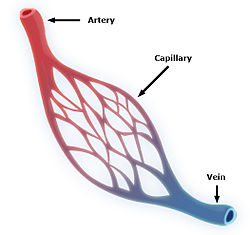
50.

Which microscopic blood vessels surrounds the alveoli?

a)

Veins

b)

Arteries

c)

Capillaries

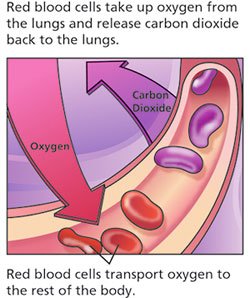
51.

Which of these gases can the protein haemoglobin carry?

a)

Ammonia and methane

b)

Nitrogen and hydrogen sulphide

c)

Oxygen and carbon dioxide

52.

Which term is used to describe the movement of gases from an area of high concentration to an area of low concentration?

a)

Contraction

b)

Diffusion

c)

Evaporation

53.

What is the role of the respiratory system?

a)

Add CO2

b)

Add CO2 and remove O2

c)

Remove O2

d)

Add O2 and remove CO2

54.

What is gaseous exchange?

a)

The movement of O2 and CO2 between the bronchi and bronchioles

b)

The movement of O2 and CO2 between the heart and lungs

c)

The movement of O2 and CO2 between the alveoli and bloodstream

d)

The movement of O2 and CO2 between the nasal cavity and trachea

55.

The pathway of air after inhalation through the nasal / oral cavity is...

a)

Trachea - Bronchus - Bronchioles - Capillaries

b)

Trachea - Alveoli - Bronchioles - Bronchus

c)

Bronchus - Trachea - Alveoli - Capillaries

d)

Trachea - Bronchus - Bronchioles - Alveoli

56.
Which is a function of the cardiovascular system?
a)
to move water throughout the body
b)
to transport gases throughout the body 
c)
to eliminate waste from the body
d)
to provide structural support for the body 
57.
Which of the following is a synonym for the circulatory system?
a)
respiratory system
b)
digestive system
c)
nervous system
d)
cardiovascular system
58.
In which system of the human body does the heart belong?
a)
Nervous
b)
Skeletal
c)
Cardiovascular
d)
Digestive
59.
Which system permits blood to circulate and transports nutrients around the body?
a)
Nervous
b)
Respiratory
c)
Circulatory
d)
Digestive
60.
These cells, in the blood, carry oxygen and give the blood its color.
a)
white blood cells
b)
plasma
c)
platelets
d)
red blood cells
61.
This type of vessel carries blood TO the heart:
a)
vein
b)
nerve
c)
muscle
d)
artery
62.
When oxygen-rich blood is carried AWAY from the heart, it travels through an...
a)
artery
b)
neuron
c)
vein
d)
straw
63.
The smallest type of blood vessel is the:
a)
nerve
b)
vein
c)
capillary
d)
artery
64.
How many chambers does the heart have ? 
a)
4
b)
6
c)
3
d)
1
65.

The bottom chambers of the heart are called

a)

ventricles

b)

atria

c)

vena cava

d)

valves

66.
What are tube-like structures that include the arteries, arterioles, capillaries, venules, and veins?
a)
Blood Vessels
b)
Lymph
c)
Glands
d)
Strep
67.

The top chambers of the heart are called

a)

ventricles

b)

atria

c)

vena cava

d)

valves

68.
What is the definition for ingestion?
a)
Breaking down food into smaller nutrients
b)
Getting rid of waste products
c)
Getting food into our bodies
d)
Getting nutrients into our bloodstream, so that our cells can use them
69.
What is the definition for digestion?
a)
Breaking down food into smaller nutrients
b)
Getting rid of waste products
c)
Getting food into our bodies
d)
Getting nutrients into our bloodstream, so that our cells can use them
70.
What is the definition for absorption?
a)
Breaking down food into smaller nutrients
b)
Getting rid of waste products
c)
Getting food into our bodies
d)
Getting nutrients into our bloodstream, so that our cells can use them
71.
What is the definition for elimination?
a)
Breaking down food into smaller nutrients
b)
Getting rid of waste products
c)
Getting food into our bodies
d)
Getting nutrients into our bloodstream, so that our cells can use them
72.
Where does the digestion of starch begin?
a)
esophagus
b)
small intestine
c)
stomach
d)
mouth
73.
The muscular tube that moves food from the mouth to the stomach?
a)
esophagus
b)
small intestine
c)
stomach
d)
mouth
74.
Where are nutrients absorbed into the blood?
a)
esophagus
b)
small intestine
c)
stomach
d)
mouth
75.
The organ where food is mashed and then broken down by acids?
a)
esophagus
b)
small intestine
c)
stomach
d)
mouth
76.
Where extra water and minerals are absorbed through the cells of this organ ...
a)
liver
b)
small intestine
c)
stomach
d)
large intestine
77.
Food broken down by physical processes is called
a)
mechanical digestion
b)
chemical digestion
78.
Food broken down by chemicals is called
a)
mechanical digestion
b)
chemical digestion
79.
Enzymes and acids are examples of 
a)
mechanical digestion
b)
chemical digestion
80.
What is the correct order in which food passes through the digestive system?
a)
mouth>stomach>large intestine>small intestine
b)
esophagus>sm intestine>stomach>lg intestine
c)
stomach>sm intestine>esophagus>mouth
d)
mouth>esophagus>stomach>sm intestine>lg intestine
81.

What type of digestion takes place in the stomach?

a)

mechanical

b)

chemical

c)

both mechanical and chemical

82.

What part of the digestive system mechanically and chemically breaks down food?

a)

mouth

b)

stomach

c)

both the mouth and stomach

83.

What chemically breaks down food into smaller molecules?

a)

teeth

b)

muscles of the stomach

c)

enzymes

84.

What are the rhythmic muscular contractions of your esophagus called to help food move along?

a)

swallowing

b)

peristalsis

c)

inertia contractions

d)

paralysis

85.

How many types of muscles are their?

a)

600

b)

3

c)

5

d)

206

86.

If you have the power to control the muscle it is called.

a)

Involuntary

b)

Voluntary

87.

An example of an involuntary muscle is?

a)

Leg

b)

Heart

c)

Arm

d)

Fingers

88.

These muscles are connected to the bone.

a)

Smooth

b)

Skeletal

c)

Cardiac

89.

These muscles are found in internal organs.

a)

Skeletal

b)

Muscular

c)

Smooth

d)

Cardiac

90.

Cardiac muscles are?

a)

Voluntary

b)

Involuntary

91.
What are the 3 types of muscle tissue?
a)
Thigh, Calf, & Shoulder
b)
Traps, Forearm, & Abs
c)
Hamstring, Biceps, & Triceps
d)
Smooth Muscle, Cardiac Muscle, & Skeletal Muscle
92.
Which muscles are involuntary?
a)
skeletal
b)
cardiac
c)
smooth
d)
smooth and cardiac
93.
When a muscle contracts, it _______
a)
gets longer
b)
gets shorter
c)
gets thinner
d)
grows hair
94.
Which types of muscle tissue are voluntary?
a)
Cardiac
b)
Skeletal
c)
Smooth
d)
Cardiac and Smooth
95.
Skeletal muscles are attached to the _________.
a)
Stomach
b)
Lungs
c)
Bones
d)
Involuntary Muscles
96.
Cardiac muscles are ONLY located in the heart
a)
TRUE
b)
FALSE
97.
Muscles always work in _____
a)
pairs
b)
groups of 3
c)
bones
d)
joints
98.
Voluntary muscle is
a)
muscle that has to be told when to move
b)
muscle that moves automatically
c)
muscle that needs to be stretched regularly
d)
muscle that makes up the heart and stomach
99.
What is an example of an involuntary muscle? 
a)
Heart
b)
Arms 
c)
Legs
d)
Shoulders
100.
Involuntary muscle is 
a)
muscle found in the heart
b)
muscle found in the organs
c)
muscle that works automatically
d)
all of these are true
101.
Tendons connect __________ to bone.
a)
Cartilage
b)
Bone
c)
Muscle
d)
Ligaments
102.

Non-striated and under involuntary control

a)

Skeletal Muscle

b)

Smooth Muscle

c)

Cardiac Muscle

103.

Striated and under voluntary control

a)

Skeletal Muscle

b)

Smooth Muscle

c)

Cardiac Muscle

104.

Striated and under involuntary control

a)

Skeletal Muscle

b)

Smooth Muscle

c)

Cardiac Muscle

105.

This is the ability of skeletal muscle wherein it recoils to its original resting length after it has been stretched

a)

Contractility

b)

Excitability

c)

Extensibility

d)

Elasticity

106.

This attaches your muscle to bone

a)

Tendons

b)

Ligaments

c)

Aponeurosis

107.

This attaches your bone to bone

a)

Tendons

b)

Ligaments

c)

Aponeurosis

108.

Muscles are classified as cardiac, skeletal and

a)

smooth

b)

long

c)

short

d)

fiberous

109.

The inside of the stomach is condsidered to be this type of muscle

a)

cardiac

b)

skeletal

c)

smooth

d)

voluntary

110.
What are functions of the skeleton?
a)
Protection
b)
Blood cell production
c)
Movement
d)
All of these
111.

What are the bones in the chest that protect your heart and lungs?

a)

ribs

b)

vertebrae

c)

teeth

d)

phalanges

112.

The top layer of the skin is called the ---

a)

dermis

b)

oil gland

c)

subcutaneous fat

d)

epidermis

113.

What is the name of tube that hair grows from?

a)

Follicle

b)

Root

c)

Shaft

d)

Sebaceous

114.

Which layer contains accessory structures such as sweat glands, sebaceous glands, and hair follicles?

a)

epidermis

b)

dermis

c)

subcutaneous fat

d)

hyperdermis

115.

Which layer of the skin does NOT contain blood vessels?

a)

epidermis

b)

subcutaneous fat

c)

dermis

116.
What is NOT a function of the skin?
a)
Eliminates Waste
b)
Produces Calcium
c)
Protects Body
d)
Maintains Body Temperature
117.

Sweating and shivering are your body's way of regulating its ---

a)

Water loss

b)

Temperature

c)

Hair growth

d)

Vitamin D absorption

118.

The integumentary system is made up of the ---

a)

Skin, Muscle, and Bone

b)

Hair, Nails, and Sweat

c)

Nails, Hair, and Skin

d)

3 layers of tissue

119.

#1 on this diagram is the ---

a)

epidermis

b)

dermis

c)

subcutaneous fat

d)

follicle

120.

#2 on this diagram is the ---

a)

epidermis

b)

dermis

c)

subcutaneous fat

d)

follicle

121.
What is the first stage of the life cycle of a star for all stars?
a)
nebula
b)
protostar
c)
main-sequence
d)
red giant
122.
This is a young star that glows as gravity brings it together
a)
Nebula
b)
Protostar
c)
Main-sequence star
d)
Red giant
123.
Low mass stars expand into what after using up the hydrogen in their core
a)
red giants
b)
supergiants
c)
white dwarfs
d)
protostars
124.
This stage is when a high mass star explodes
a)
Supergiant
b)
Red giant
c)
Supernova
d)
Black hole
125.
When a star's gravitational pull is so strong that not even light can escape, it's called a what?
a)
Black hole
b)
Supernova
c)
White dwarf
d)
Nebula
126.

What is the sun made up of?

a)

Hydrogen

b)

Helium

c)

Hydrogen and Helium

d)

None of the Above

127.

A stellar nebula is made up of...

a)

clouds of gas

b)

clouds of gas and dust

c)

stars

d)

planets

128.
What is the correct order for the life cycle of our star the sun?
a)
nebula, fusion stage, red giant, black dwarf, white dwarf,
b)
nebula, fusion stage, red giant, white dwarf, black dwarf
c)
nebula, fusion stage, super red giant, black dwarf, white dwarf,
d)
nebula, fusion stage, red giant, super nova, black hole
129.
Which of the following is NOT a final stage of a star. 
a)
black hole
b)
black dwarf
c)
neutron star
d)
red giant
130.
Which planet doesn't have a moon?
a)
Earth
b)
Mars
c)
Mercury
d)
Jupiter
131.
Which planet has the largest continuous hurricane?
a)
Earth
b)
Mars
c)
Jupiter
d)
Saturn
132.
Which of the following is not true?
Planets closer to the sun...
a)
are hotter
b)
revolve slower
c)
have less moons
d)
are smaller
133.
The inner and outer planets are divided by...
a)
The asteroid belt
b)
The oort cloud
c)
The kuiper belt
d)
a fraction
134.
Which planet has very visible rings?
a)
Jupiter
b)
Saturn
c)
Earth
d)
Neptune
135.
What is the correct order of planets from the sun?
a)
Mercury, Venus, Earth, Mars, Jupiter, Saturn, Uranus, Neptune
b)
Mars, Venus, Earth, Mercury, Jupiter, Saturn, Uranus, Neptune
c)
Mercury, Venus, Earth, Mars, Jupiter, Saturn, Neptune, Uranus
d)
Jupiter, Saturn, Venus, Earth, Pluto, Mars, Mercury, Neptune
136.
Compared to the inner planets, the outer planets are...
a)
larger
b)
warmer
c)
denser
d)
better
137.
Which planet is known for it's red, rust covered surface?
a)
Venus
b)
Mercury
c)
Mars
d)
Jupiter
138.
How many planets are there?
a)
7
b)
8
c)
9
d)
10
139.

How many days does it take for the Moon to revolve around Earth?

a)

29½

b)

28½

c)

27

d)

30

e)

31

140.

The same side of the moon always faces Earth.

a)

True

b)

False

141.
Sometimes I am called a "dirty snowball". I have a hydrogen cloud, coma, and a nucleus. I am invisible except when near the sun. What am I?
a)
Asteroid
b)
Star
c)
Meteor
d)
Comet
142.

Which is found in the belt between Mars and Jupiter

a)

Comets

b)

Asteroids

c)

Meteors

d)

Stars

143.

I am a rock entering a planet's atmosphere.

a)

meteor

b)

moon

c)

asteroid

d)

comet

144.
Meteorites...
a)
 hit the ground
b)
burn up completely in the atmosphere
c)
debris from asteroids/comets that float around in space
145.

After orbiting the sun frequently Comets break into:

a)

meteors

b)

meteoroids

c)

meteorites

146.

A meteoroid is found

a)

in Space

b)

entering earths atmosphere

c)

impacting earths surface

147.

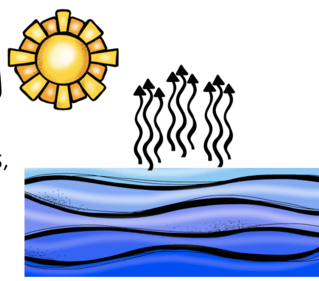
What is the energy source for the water cycle?

a)

the Sun

b)

the Earth

c)

water

d)

the Moon

148.
What part of the water cycle does this picture show?
a)
condensation
b)
precipitation
c)
evaporation
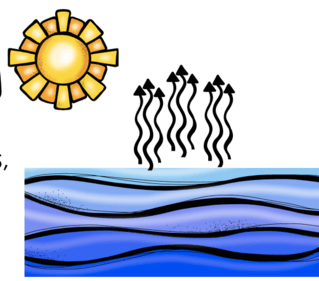
149.
What part of the water cycle does this picture show?
a)
condensation
b)
precipitation
c)
evaporation
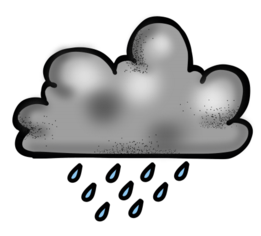
150.
What part of the water cycle does this picture show?
a)
condensation
b)
precipitation
c)
evaporation
151.
When water condenses, the water vapor in the air gets ___________ and changes back into liquid.
a)
cold
b)
hot
c)
warm
d)
solid
152.
Evaporation happens when the sun ___________ water and turns it into vapor.
a)
cools
b)
heats up
c)
freezes
d)
lights up
153.
What does groundwater do?
a)
It sends water to our buildings, houses, and water transplant places
b)
to the sky
c)
to the sun
d)
To the Earth's surfaces
154.
Which of these is an example of precipitation?
a)
snow
b)
air
c)
clouds
d)
vapor
155.
What is it called when plants give off water vapor as a waste product?
a)
condensation
b)
evaporation
c)
sublimation
d)
transpiration
156.
Where is most water found on Earth?
a)
glaciers
b)
lakes
c)
rivers
d)
oceans
157.
Which best explains why runoff is important?
a)
It returns water to other locations on Earth
b)
It increases the chance of flooding
c)
It makes evaporation occur faster
d)
It increases condensation
158.

The water cycle has no start or end

a)

True

b)

False

159.
What type of boundary occurs when two plates move away from each other?
a)
transform
b)
subduction
c)
convergent
d)
divergent
160.
What type of boundary occurs when two plates move toward each other?
a)
convergent
b)
divergent
c)
transform
d)
lateral
161.
A rift valley occurs at a ____________ boundary.
a)
divergent
b)
convergent
c)
transform
d)
horizontal
162.
A trench forms at a _________ boundary.
a)
convergent
b)
divergent
c)
transform
d)
vertical
163.
Mountains form at a ___________ boundary.
a)
transform
b)
divergent
c)
convergent
d)
subduction
164.
What type of boundary is shown at A?
a)
transform
b)
convergent
c)
divergent
d)
subduction