
NEW
Font size
 Worksheets
Ecology Unit Review
Total questions: 17
Worksheet time: 9mins
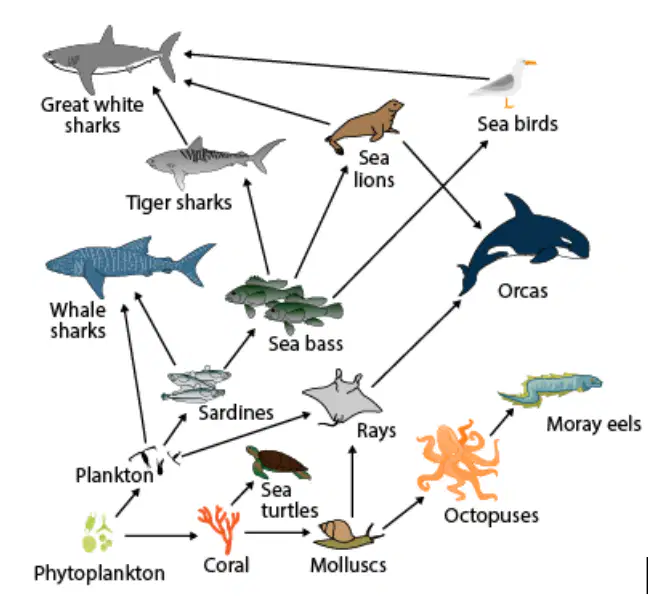
Which best describes the MOST LIKELY effect on the Phytoplankton’s biomass if more Plankton moved into the ocean ecosystem?
The biomass would be higher because there would be fewer phytoplankton to store energy.
Biomass would be higher because there would be less energy lost as heat from the phytoplankton.
The Biomass would be lower for the phytoplankton since there are more consumers now.
Biomass would be lower because there would be more energy lost as heat from the phytoplankton.
Which best explains why less energy is passed from one trophic level to the next?
Energy is stored in the decomposers
Energy is lost as heat during metabolic processes
Tertiary consumers use up all the energy
All the energy is used by the primary consumers
Which energy pyramid representing a small aquatic ecosystem shows the appropriate available biomass energy storage and transfer efficiency for each level?


Approximately how much energy would secondary consumers receive if producers in an ecosystem stored 10,000 kcal energy as biomass?
1 kcal
10 kcal
100 kcal
1,000 kcal
What percentage of producers' energy do tertiary consumers receive? (producers start with 100%)
0.01%
0.1%
1%
10%
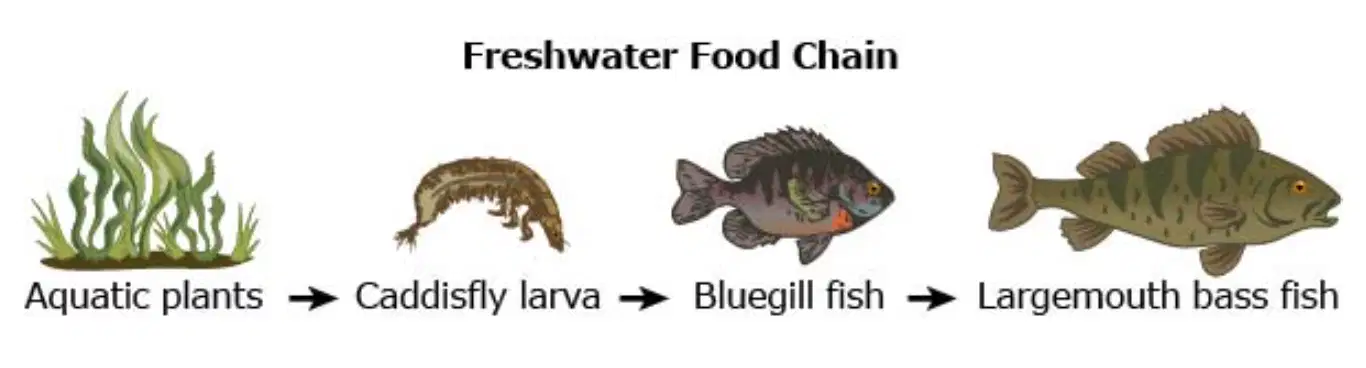
Which statement BEST compares how matter and energy move among organisms in the food chain?
Matter cycles among organisms and energy flows among organisms in the system, and both matter and energy are conserved.
Matter and energy both flow among all organisms in the system, but only energy is conserved.
Matter and energy both cycle among all organisms in the system, and both matter and energy are conserved.
Matter flows among organisms and energy cycles among organisms in the system, but only matter is conserved.

Biomass can describe the total mass of organisms in a given trophic level. A general biomass pyramid and freshwater food chain is shown. Which statement correctly describes the energy level of the group of organisms?
Aquatic plants are producers that receive the smallest amount of energy in the pyramid.
Aquatic plants are tertiary consumers that receive the largest amount of energy in the pyramid.
Largemouth bass fish are producers that receive the largest amount of energy in the pyramid.
Largemouth bass fish are tertiary consumers that receive the smallest amount of energy in the pyramid.

If the desert ecosystem of this food chain experiences a prolonged drought where many of the plants die, which BEST predicts the effect on the carrying capacity of the ecosystem?
The carrying capacity of the ecosystem will increase because there will be more space available for organisms.
The carrying capacity of the ecosystem will decrease because there will be less food available for organisms.
The carrying capacity of the ecosystem will remain the same because the number of organisms will not change.
The carrying capacity of the ecosystem will increase because the organisms will adapt to the new conditions.

If all the red-tailed hawks, coyotes, and rattlesnakes are removed from the ecosystem, which BEST predicts the effect on the population of desert cottontails?
The cottontail population will experience unlimited growth without predators to control their populations.
The cottontail population will experience rapid growth without predators but will eventually stabilize due to a lack of resources.
The cottontail population will experience growth due to an increase in resources but will eventually stabilize due to increased competition.
The cottontail population will experience rapid growth due to a lack of competition for resources.
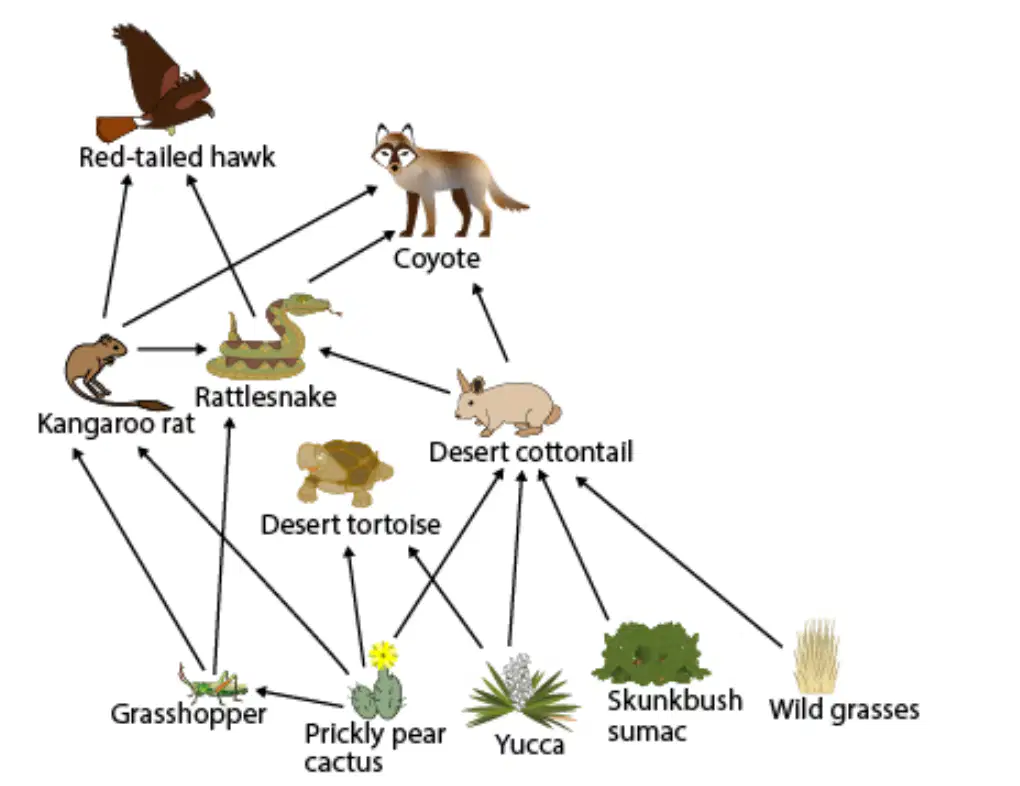
Which BEST describes how limiting factors affect all of the species in this ecosystem?
The species are all affected by the same limiting factors because they live in the same ecosystem.
All of the consumer species are affected by the same limiting factors because they have the same diet.
The species are affected by different limiting factors because they have different roles within the ecosystem.
No species in the ecosystem are affected by the same limiting factors because they all have different needs.
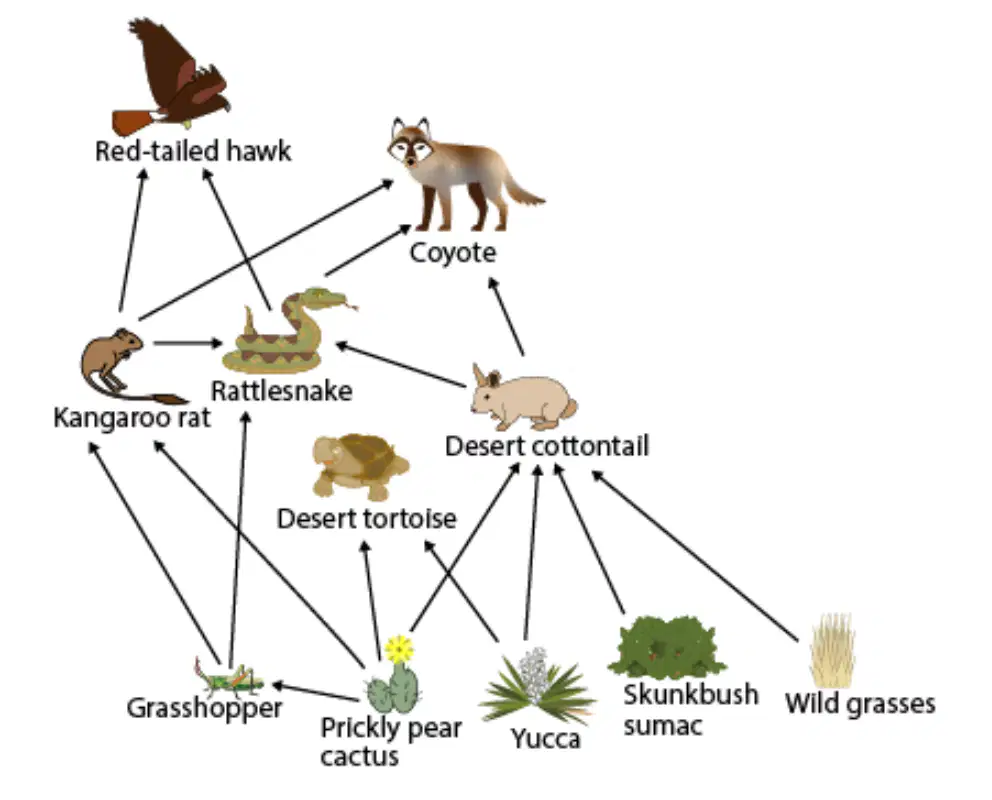
Choose evidence from the food web to support the fact that species are affected by different limiting factors because they have different roles in the ecosystem.
The desert tortoise and the desert cottontail both consume prickly pear cactus and yucca plants.
The coyote is limited by competition, and the kangaroo rat is limited by competition and predation.
The red-tailed hawk and the rattlesnake are both limited by competition for the same food sources.
The skunkbush sumac and the yucca are both limited by the amount of available sunlight and water.
Which of the following is an example of mutualism?
Oxpecker birds remove parasites from the skin of large mammals, while gaining food and protection from predators.
Tapeworms living in the intestines of mammals, absorbing nutrients from the host without providing any benefit.
Predatory fish consuming smaller fish in a river ecosystem, controlling the population of prey species.
Orchids growing on the branches of trees, deriving support and access to sunlight, while the tree is unaffected.
Which of the following is an example of parasitism?
Barnacles attach themselves to whales, hitching a ride and benefiting from the whale's movement without harming it.
Bees pollinate flowers while obtaining nectar, benefiting both the bees and the flowers.
Ticks feed on the blood of mammals, causing irritation and potentially transmitting diseases.
Clownfish live among the tentacles of sea anemones, providing protection for the clownfish while the sea anemone is unaffected.
Which of the following is an example of commensalism?
Hermit crabs use empty shells for protection, leaving their old shells behind for other organisms to inhabit.
Birds nesting in trees, providing shelter for the birds while not affecting the tree.
Remora fish attach themselves to sharks, benefiting from the shark's movements without harming it.
Symbiotic bacteria living in the human gut, aiding in digestion without causing harm to the host.
What is the primary reason natural grasslands in the Central Valley have been cleared?
To build new housing developments
To create space for agricultural crops
To reduce the risk of wildfires
To establish wildlife reserves
How does agriculture affect biodiversity?
It increases the variety of plant and animal species.
It helps improve soil health.
It reduces the variety of plants and animals in the area.
It has no impact on biodiversity.
Which of the following is a solution to reduce the environmental impact of agriculture?
Expanding monoculture practices
Increasing the use of chemical fertilizers
Implementing more sustainable farming techniques
Clearing more land for farming

