
 Worksheets
Live Quiz for Nucleic Acids
Total questions: 250
Worksheet time: 3hrs 1mins
Which nucleotide is found in RNA but not in DNA?
Uracil
Guanine
Cytosine
Adenine
Which nucleotide is found in DNA but not in RNA?
Uracil
Guanine
Cytosine
Thymine

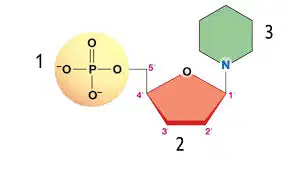
Yellow (#1) is a______________.
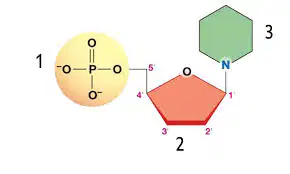
Red (#2) is a______________.
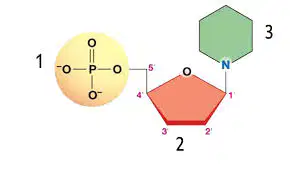
Green (#3) is a______________.
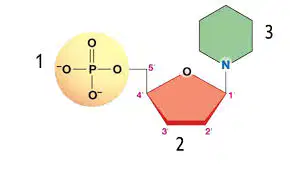
Green (#3) is a______________.
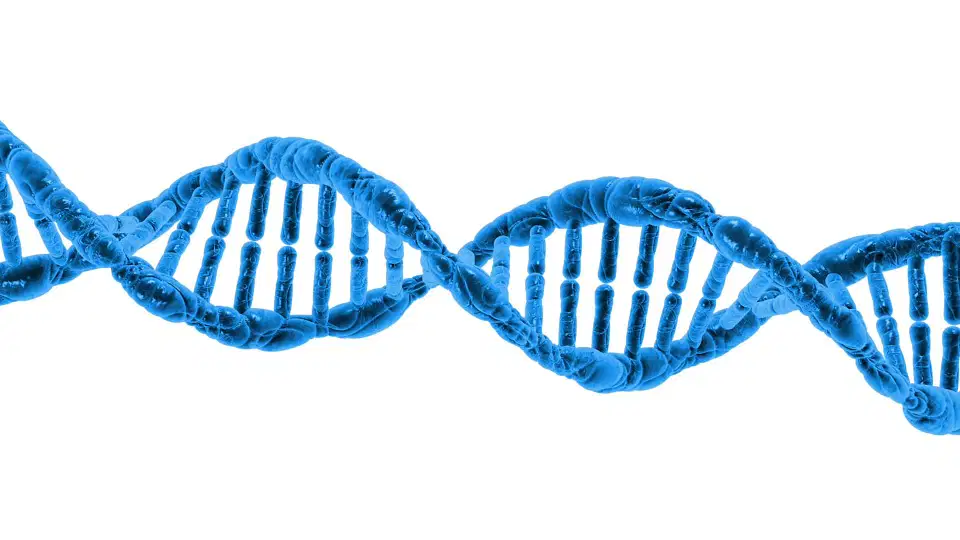
These bonds between the bases hold the two strands of DNA together
resilient
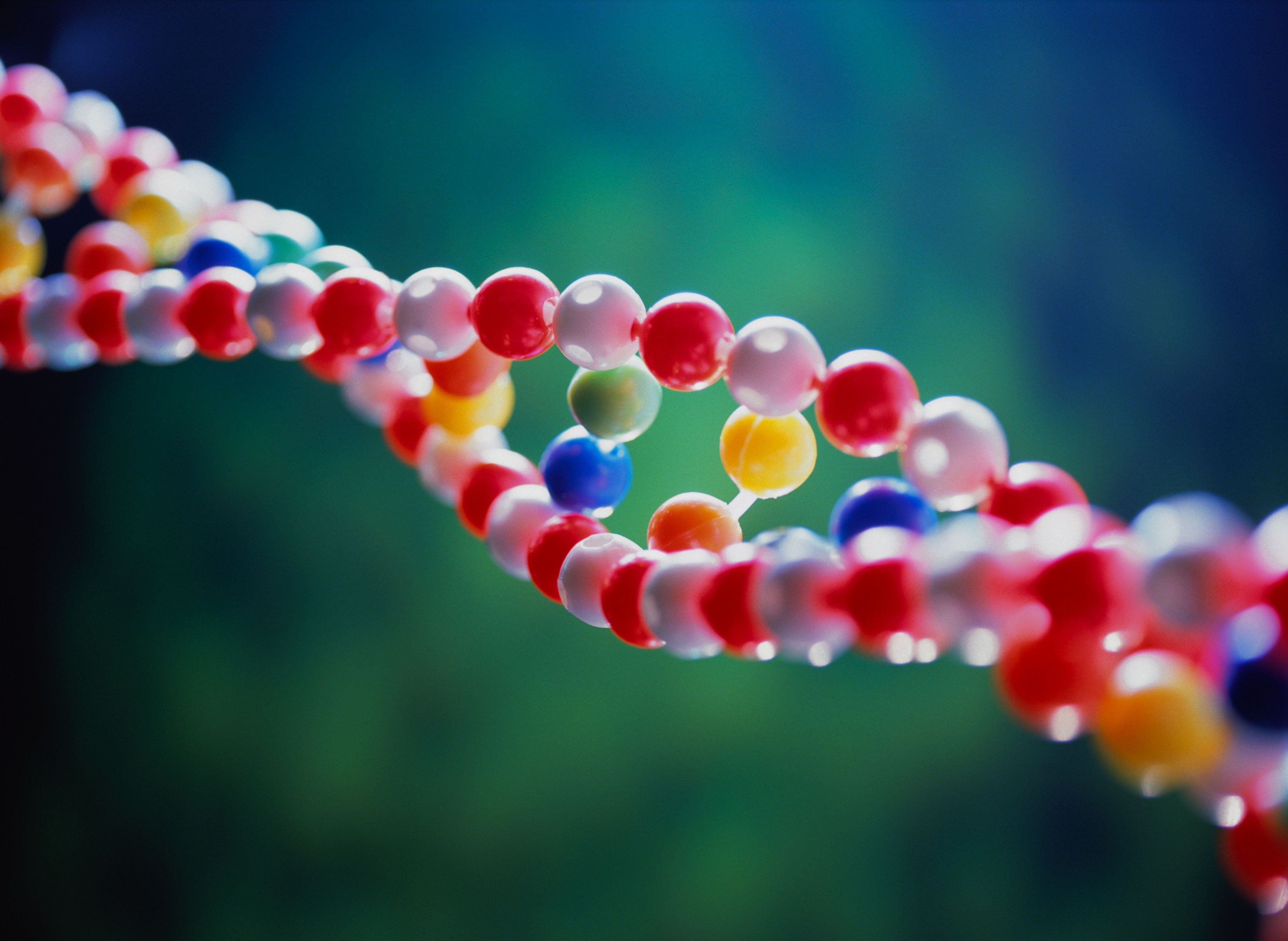
It is the biggest molecule in the human body
It is stored in the nucleus
It contains the instructions for building all the proteins cells need to do their work
It transfers and stores energy
Humans have [FILL IN]
46 pairs of chromosomes
23 pairs of chromosomes
78 chromosomes
39 pairs of chromosomes
A gene is
a short segment of DNA in a chromosome
all the DNA in an organism
what DNA is organized into
The genome of an organism is
a short segment of DNA in a chromosome
all the DNA in an organism
what DNA is organized into
The bond between G and C bases is [FILL IN] the bond between A and T bases.
weaker than
the same strength as
stronger than
Chromosomes are
a short segment of DNA in a chromosome
all the DNA in an organism
what DNA is organized into

How does RNA differ from DNA (what things does it have that DNA does not)?
RNA contains uracil and deoxyribose; it is double stranded
RNA contains ribose and thymine; it is single stranded
RNA contains uracil and ribose; it is single stranded
RNA contains uracil and ribose; it is double-stranded
Which is the correct order from smallest to largest?
Genome, Chromosome, Gene, Nucleotide
nucleotide, gene, chromosome, genome
gene, nucleotide, chromosome, genome
genome, nucleotide, gene, chromosome
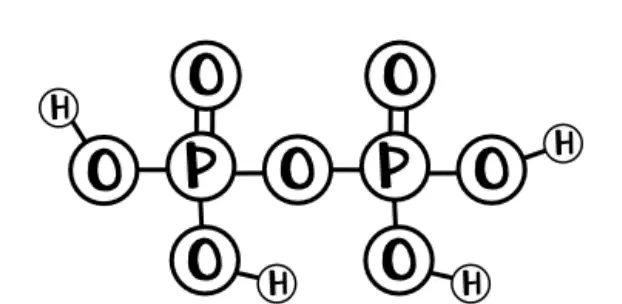
What part of a nucleotide is this?
nitrogenous base
sugar
phosphate group
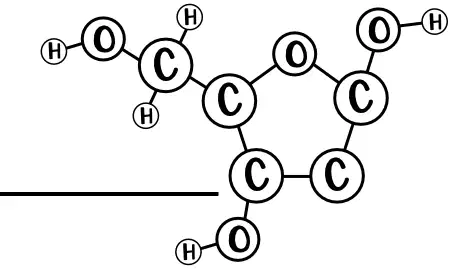
What part of a nucleotide is this?
nitrogenous base
sugar
phosphate group
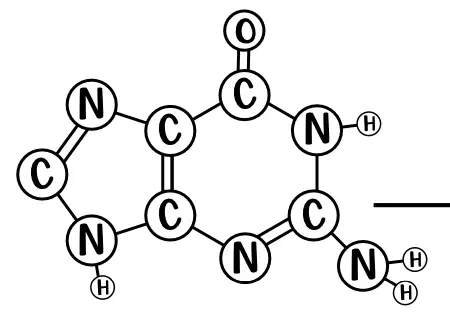
What part of a nucleotide is this?
nitrogenous base
sugar
phosphate group
The names of sugars often end in
-ose
-ase
-ize
-esis
The names of enzymes often end in
-ose
-ase
-ize
-esis
The sugars in nucleotides are called "pentose" because
They are carbohydrate molecules
They have 5 carbons (ring with five sides)
They are monomers
They can only have one shape
The organic molecules that store and transmit hereditary and genetic information are
_____________.

What is "A"?
Nucleotide
Deoxyribose Sugar
Nitrogenous base
Phosphate
What is "B"?
Nucleotide
Deoxyribose Sugar
Nitrogenous base
Phosphate
What is "C"?
Nucleotide
Deoxyribose Sugar
Nitrogenous base
Phosphate
What is the molecule in the image?
Nucleotide
Deoxyribose Sugar
Nitrogenous base
Phosphate

What do the dotted lines between the nitrogenous bases (A,T,C,G) represent in the image provided?
Covalent bonds
Ionic bonds
Peptide bonds
Hydrogen bonds

What is bonded to Adenine in the image to form a section of the DNA molecule?
Guanine and Phosphate group
Cytosine and Deoxyribose sugar
Thymine and Deoxyribose sugar
Deoxyribose sugar and Phosphate group
double strand
single strand
contains uracil
Where do we find DNA?
in the nucleus of cells
in the ribosomes
in the endoplasmic reticulum
What are the four bases found in DNA?
U, A, T, B
B, O, A, T
A, G, C, T
U, V, W, X
Which bases pair together?
A--> T, C--> G
A --> G, C --> T
A--> C, G --> T
DNA's Shape is known as a
A Ladder
A Double Helix
A Single Helix
A Backbone
Which complementary base pairing is stronger, and why?
A-T, because it uses covalent bonding
C-G, because it uses hydrogen bonding
C-G because there are three hydrogen bonds holding the bases together
A-T pairing and C-G pairing are the same strength
What is the function of mRNA?
carry DNA's instructions to the ribosome
transport amino acids to ribosome
unknown
make a message of DNA
What nucleotide base can only be found in RNA?
uracil
guanine
thyamine
cytosine
CAT TCA CTG


What is the correct order to make a protein?
Protein, DNA, RNA
RNA, DNA, Protein
DNA, RNA, Protein
Protein, RNA, DNA
Which RNA carries the message?
mRNA
rRNA
tRNA
Why must transcription occur where DNA can be found?
because DNA can't leave
because ribosomes are in the nucleus
because DNA polymerase is found there
because helicase unzips the DNA
How many nucleotides equal 1 amino acid?
1
2
3
4
Which organelle is the location where protein is made?
Ribosome
Nucleus
Cytoplasm
Nucleotide
When these bond together, they form a protein
Amino Acids
Peptide Bonds
Ribose
Nucleotides

DNA holds the code for making
lipids
carbohydrates
proteins
sugars
GAT-TAC-AGA-TTA-CAT?
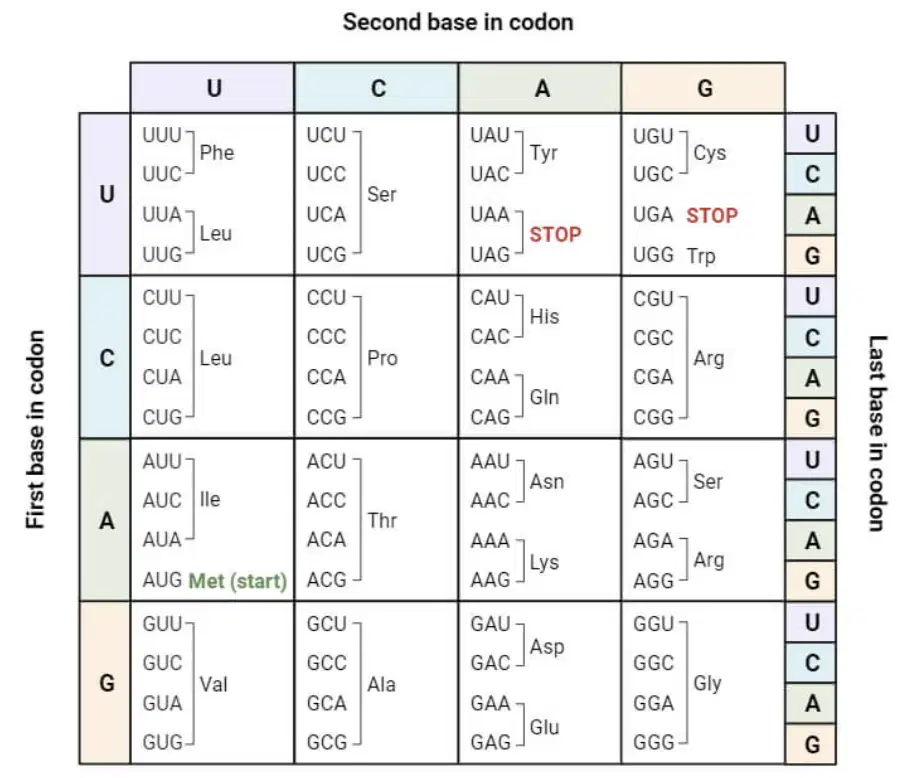
ATCGTA
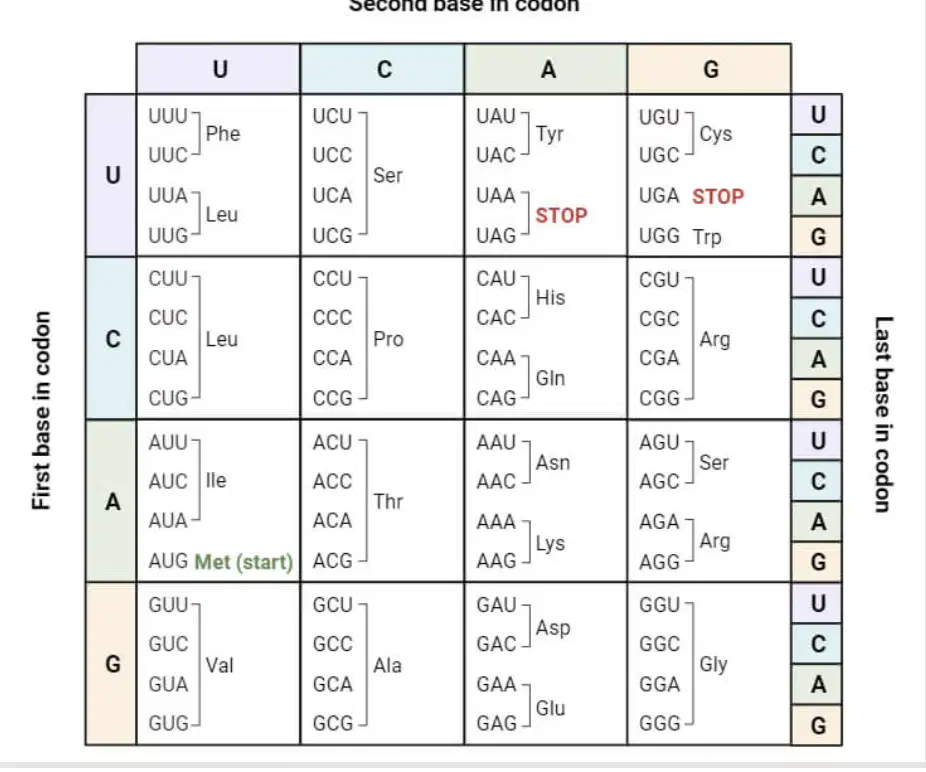
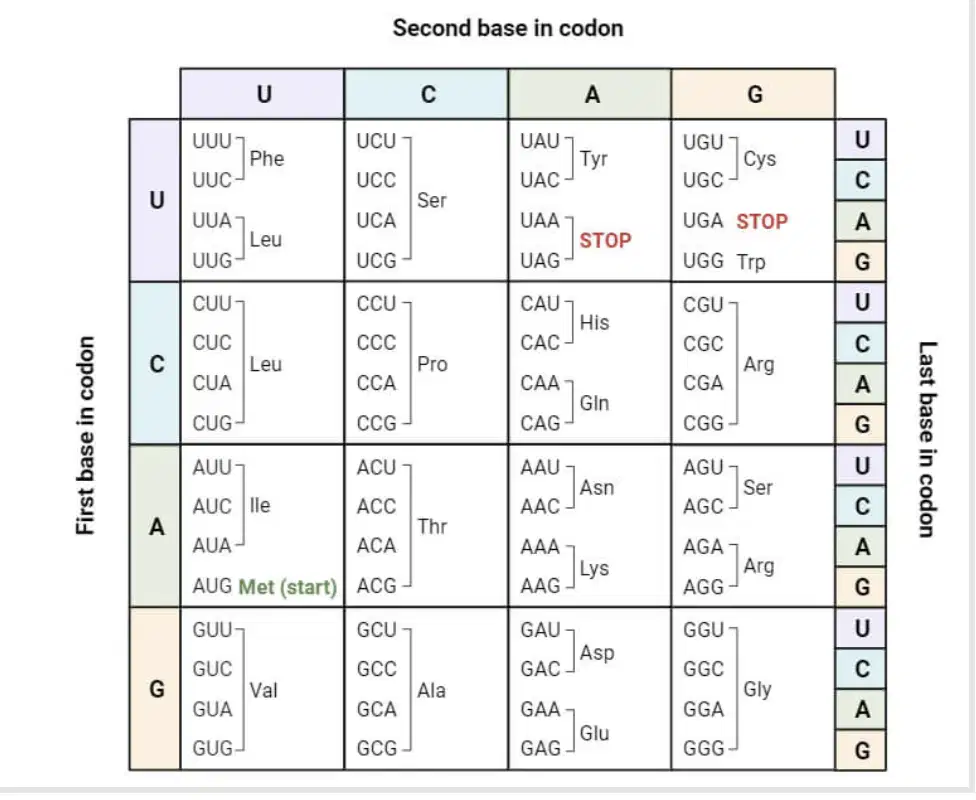
There are [fill in] amino acids
4
12
20
23
We know what amino acid a molecule of DNA is coding for by looking at the [fill in] of the nucleotides?
number of nucleotides
the order and bases of the nucleotides
the number and bases of the nucleotides
the color of the nucleotides
What do we use a codon chart for?
to figure out which protein is being made in a ribosome
to calculate the number of amino acids that make up a particular protein
to figure out how DNA is replicating
to figure out which amino acid a group of three nucleotides is coding for
"Termination" refers to the point when
DNA replication is complete
the mRNA has finshed copying DNA and detaches from the DNA
a cell splits into two separate cells with identical DNA
an amino acid becomes a protein
In transcription, the "template" is the
DNA strand that mRNA is making a complementary copy of
The DNA strand that is not copied during transcription
the mRNA strand copying the DNA codes for amino acids
The double helix
DNA transcription copies
the entire genome (all the chromosomes)
a gene
a chromosome
DNA replication copies
the entire genome (all the chromosomes)
a gene
a chromosome
DNA replication copies
the entire genome (all the chromosomes)
a gene
a chromosome
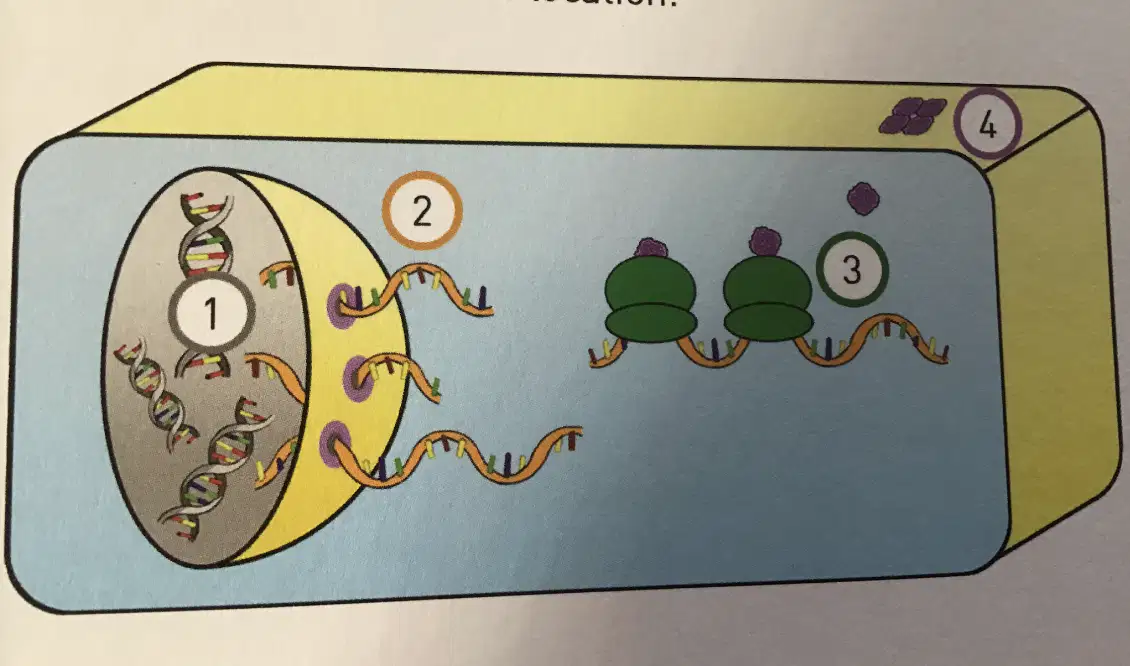
What happens at 4?
In the nucleus a gene is copied into mRNA (messenger RNA)
The mRNA leaves the nucleus and heads to a ribosome
The ribosome uses tRNA to read the message and make a protein
A protein is made (in this example, a channel protein for a cell membrane)
What happens at 3?
In the nucleus a gene is copied into mRNA (messenger RNA)
The mRNA leaves the nucleus and heads to a ribosome
The ribosome uses tRNA to read the message and make a protein
A protein is made (in this example, a channel protein for a cell membrane)
What happens at 2?
In the nucleus a gene is copied into mRNA (messenger RNA)
The mRNA leaves the nucleus and heads to a ribosome
The ribosome uses tRNA to read the message and make a protein
A protein is made (in this example, a channel protein for a cell membrane)
What happens at 1?
In the nucleus a gene is copied into mRNA (messenger RNA)
The mRNA leaves the nucleus and heads to a ribosome
The ribosome uses tRNA to read the message and make a protein
A protein is made (in this example, a channel protein for a cell membrane)
What is the "start condon"?
AGT
AUG
CCG
GCA
What is the "stop codon"?
TGA
AAU
UAA
AUG
What is the correct order in DNA replication?
DNA polymerase, lipase, primase, helicase
helicase, primase, DNA polymerase, lipase
Primase, helicase, DNA polymerase, lipase
helicase, lipase, DNA polymerase, primase
Polymerase
builds the complementary DNA strand
Ligase
bonds DNA fragments together
Primase
Indicates whee DNA replication begins
Helicase
"unzips" the DNA
What is the name of the place where the double helix is unwound?
Replication Fork
The Y zone
Replication Spoon
Ribosomes
primase
lipase

What part of the DNA strand is replication taking place in?
replication bubble
replication fork
nucleic window
mitochondria
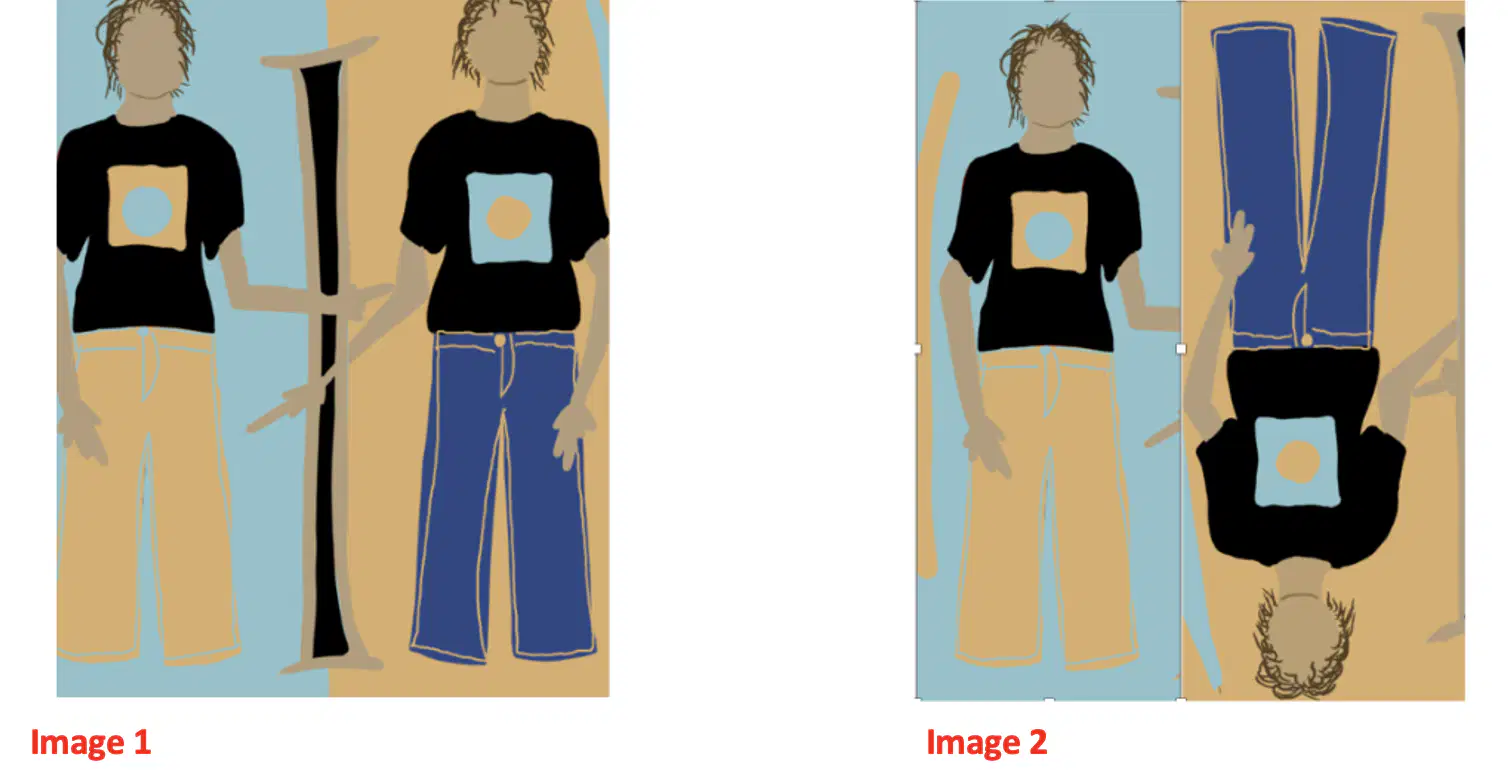
Which image represents anti-parallel structure?
Image 1
Image 2
Every DNA molecule has two strands. When DNA is replicated,
both strands get passed on to the daughter cell without adding new material
complementary copies (A for T, G for C, etc.) are made of both strands at the same time
both strands are copied exactly (A for A, T for T, etc) at the same time
one strand is copied at a time (A for T, G for C, etc.)
Where is most of a cell's life spent?
DNA replication
mitosis
interphase
When does a normal cell undergo DNA replication?
before mitosis
after division
at the very beginning of interphase
every 46 days
What kind of cells does the process of mitosis make?
egg and sperm cells
cells used for reproduction
body cells
mainly digestive cells
Which of these is NOT part of mitosis?
cell division
replication of DNA
separation of chromosomes
nuclear membrane dissolves
The time in a cell's life when it grows, replicates DNA and does its job is:
prophase
metaphase
mitosis
interphase
If a cell spends 70% of its time in the mitosis part of its life, it might be
a pancreatic cell
a cell for sexual reproduction
a cancerous cell
a normal cell
A histone is
DNA and RNA
a lipid
a protein
an enzyme
Histones are important to DNA because
they provide the bonds that hold the bases together
they make up the backbone of DNA
they support DNA folding so it can fit into the nucleus
they are what makes up DNA--they are a nucleic acid

Is this individual male or female?
Male
Female
Pairs of similar, but not identical, chromosomes are called...
homologous chromosomes
sister chromatids
When a cell divides, DNA strands coil around proteins to form ...
chromatin
chromosomes
Homologous chromosome pairs are a combination of how many chromosomes from each parent?
1 from each parent
2 from each parent

What is an organized picture of all of an organism’s homologous chromosome pairs lined up with each other?
Pedigree
Karyotype
Cells that contain 2 sets of chromosomes are called ...
haploid
diploid
How many pairs of sex chromosomes do human cells contain?
22
1
46
Do homologous chromosomes always look identical?
Yes, same everything (shape, size, position, and bands)
No, not quite (different positions but same band patterns and similar size)

Which phase is this in?
Interphase
Metaphase
Anaphase
Telephase

Which phase is this in?
Prophase
Metaphase
Anaphase
Telephase

Which phase is this in?
Prophase
Metaphase
Anaphase
Telephase

Which phase is this in?
Prophase
Interphase/replication
Anaphase
Telophase/cytokinesis
Prophase
Metaphase
Anaphase
Telephase
cytokenises
What phase is anaphase?


What phase is metaphase?
What phase is Telephase?
What phase is Prophase?
The splitting of the cytoplasm and cell membranes is called?
Interphase
Telophase
Centromere
Cytokinesis
If there are 20 chromosomes in the nucleus before mitosis how many will there be in each new daughter cell after cytokinesis?
20
10
40
200


The middle of a chromosome
Centriole
Cytokinesis
Centromere
Chromatid

Two replicated cells split from each other and are able to move on their own.
Metaphase
Prophase
Cytokinesis
Telophase
Find the complementary DNA sequence: AATCGAC
UUAGCUG
AATCGAC
CCGATCT
TTAGCTG

Which structure holds 2 sister chromatids together?
Centrioles
Spindle Fibers
Centromeres
Which structure sends out spindle fibers?
Centrioles
Spindle Fibers
Centromeres
Which are 2 identical copies of the same chromosome that are held together with a centromere?
sister chromatids
chromosomes
Which of these best represents the idea of DNA being packaged into chromosomes?
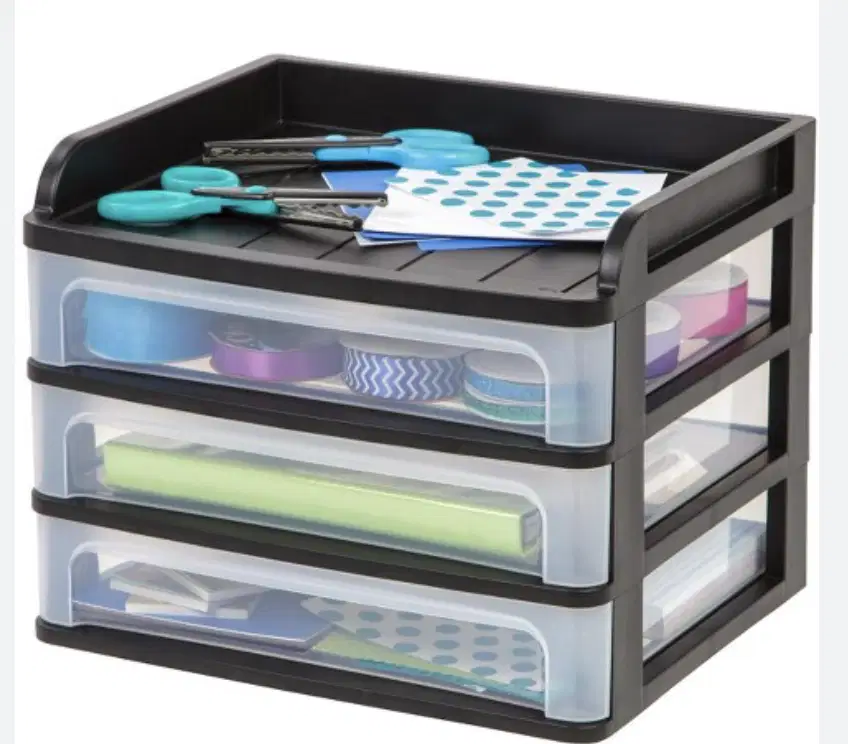


Where is most of a cell's life spent?
DNA replication
mitosis
interphase
When does a normal cell undergo DNA replication?
before mitosis
after division
at the very beginning of interphase
every 46 days
What kind of cells does the process of mitosis make?
egg and sperm cells
cells used for reproduction
body cells
mainly digestive cells
Which of these is NOT part of mitosis?
cell division
replication of DNA
separation of chromosomes
nuclear membrane dissolves
The time in a cell's life when it grows, replicates DNA and does its job is:
prophase
metaphase
mitosis
interphase
If a cell spends 70% of its time in the mitosis part of its life, it might be
a pancreatic cell
a cell for sexual reproduction
a cancerous cell
a normal cell
A histone is
DNA and RNA
a lipid
a protein
an enzyme
Histones are important to DNA because
they provide the bonds that hold the bases together
they make up the backbone of DNA
they support DNA folding so it can fit into the nucleus
they are what makes up DNA--they are a nucleic acid
Is this individual male or female?
Male
Female
Pairs of similar, but not identical, chromosomes are called...
homologous chromosomes
sister chromatids
When a cell divides, DNA strands coil around proteins to form ...
chromatin
chromosomes
Homologous chromosome pairs are a combination of how many chromosomes from each parent?
1 from each parent
2 from each parent
What is an organized picture of all of an organism’s homologous chromosome pairs lined up with each other?
Pedigree
Karyotype
Cells that contain 2 sets of chromosomes are called ...
haploid
diploid
How many pairs of sex chromosomes do human cells contain?
22
1
46
Do homologous chromosomes always look identical?
Yes, same everything (shape, size, position, and bands)
No, not quite (different positions but same band patterns and similar size)
Which phase is this in?
Interphase
Metaphase
Anaphase
Telephase
Which phase is this in?
Prophase
Metaphase
Anaphase
Telephase
Which phase is this in?
Prophase
Metaphase
Anaphase
Telephase
Which phase is this in?
Prophase
Interphase/replication
Anaphase
Telophase/cytokinesis
Prophase
Metaphase
Anaphase
Telephase
cytokenises
What phase is anaphase?
What phase is metaphase?
What phase is Telephase?
What phase is Prophase?
The splitting of the cytoplasm and cell membranes is called?
Interphase
Telophase
Centromere
Cytokinesis
If there are 20 chromosomes in the nucleus before mitosis how many will there be in each new daughter cell after cytokinesis?
20
10
40
200
The middle of a chromosome
Centriole
Cytokinesis
Centromere
Chromatid
Two replicated cells split from each other and are able to move on their own.
Metaphase
Prophase
Cytokinesis
Telophase
Find the complementary DNA sequence: AATCGAC
UUAGCUG
AATCGAC
CCGATCT
TTAGCTG
Which structure holds 2 sister chromatids together?
Centrioles
Spindle Fibers
Centromeres
Which structure sends out spindle fibers?
Centrioles
Spindle Fibers
Centromeres
Which are 2 identical copies of the same chromosome that are held together with a centromere?
sister chromatids
chromosomes
Which of these best represents the idea of DNA being packaged into chromosomes?
How many chromosomes do human gametes have?
46
23
18
36

Crossing over usually occurs between:
Sister Chromatids
Homologous Chromosomes
Alleles
Non-Homologous Chromosomes
How many chromosomes do humans normally have in each cell?
23
46
92
44
Which of the following is NOT a function of chromosomes?
Carrying genetic information
Determining the sex of an organism
Providing energy to cells
Ensuring DNA is accurately copied and distributed in cell division
Homologues chromosomes are chromosomes that are (a) the same size and they contain the same (b) of (c) in the same (d) .
In each of your human body cells, there are (a) individual chromosomes, existing in (b) pairs.
For a white shark's DNA, 2N=82. How many chromosomes are in its gametes?
47
41
164
94
True or False? Before cells undergo meiosis they pass through interphase first.
true
false

In which stage of MEIOSIS does crossing over occur? (The exchange of genetic material between chromosomes in a tetrad.)
Anaphase I
Metaphase I
Prophase I
Telophase I

In humans, the haploid number of chromosomes is ____.
23
46
69
92
Which of the following is the best definition for MEIOSIS?
the process of two haploid cells uniting
the counting of chromosomes within a diploid cell
a two-step process that reduces the number of chromosomes in half such that there is only one copy of all the chromosomes
the equational division of a cell into two identical copies
How many cells are formed at the end of Meiosis II?
2
3
4
8
How many cells are formed at the end of Meiosis II?
2
3
4
8
Meiosis is needed because
It is not needed but some organisms benefit from it
Cells involved in sexual reproduction should have only half the number of chromosomes
Every cell in an organism needs to have identical DNA
Every human cell has 92 chromosomes
if a body cell normally has 24 chromosomes how many will it have at the end of mitosis?
6
12
24
48
In mitosis, one parent cell -
Forms two identical daughter cells
Forms four identical daughter cells
Forms two genetically diverse daughter cells
Forms four genetically diverse daughter cells
Products of meiosis are genetically
different from the parent
identical to the parent
Ends with diploid number of chromosomes
Mitosis
Meiosis
Both
Forms gametes
Mitosis
Meiosis
Both
Produces non-identical cells
Mitosis
Meiosis
Both

What process results in the division of 1 cell into 2 identical daughter cells?
Mitosis
Meiosis
Transcription
Cross-Over
Translation
During what stage of the cell cycle do organelles get duplicated?
interphase
transcription
mitosis
meiosis
What is the longest phase of the cell cycle?
Metaphase
Prophase
Cytokinesis
Interphase
In meiosis II, the chromosomes must replicate before dividing.
True
False
In meiosis II, the chromosomes must replicate before dividing.
True
False
What is the final result of meiosis?
4 genetically different haploid cells
4 genetically identical haploid cells
4 genetically different diploid cells
4 genetically identical diploid cells
Select the image that represents meiosis:


During mitosis, if an organism has 10 chromosomes, how many will the new daughter cells have?
10
8
5
2
During meiosis, if an organism has 10 chromosomes, how many will the new daughter cells have?
10
8
5
2
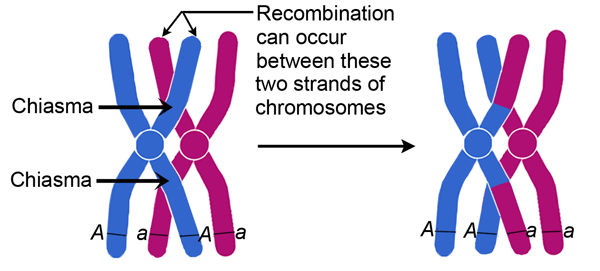
segregation of sister chromatids
condensation and segregation of alleles
mutationin which the DNA content of the gene is altered
crossing - over in which genes are exchanged
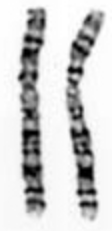
A pair of identical chromosomes (one inherited from mom and one inherited from dad) are called ______________________________.
centromeres
homologous chromosomes
autosomes
The number of chromosomes increases over generations of a species (because both parents donate a full copy of DNA) true or false?
false
true
Interphase must occur once before
meiosis can happen. (Same thing for
mitosis). What would happen if
interphase didn’t occur first?
I understand that this may be an open response question on my exam. I will write it down before I go on to the next question and think about how to answer it.
I will skip open response questions and hope they don't count for too much
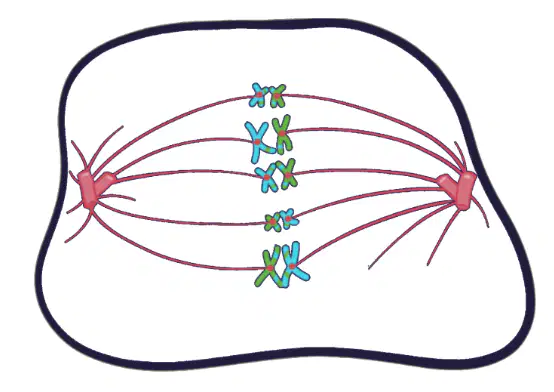
Meiosis does PMAT twice! That
means there is a prophase I and a
prophase II. There is a metaphase I and
a metaphase II. Etc… From the cartoon
here with chromosomes in the middle
of the cell, how would you know
whether it was in metaphase I or
metaphase II?
I understand that this may be an open response question on my exam. I will write it down before I go on to the next question and think about how to answer it.
I will skip open response questions and hope they don't count for too much
Crossing over is a very important event
in Prophase I of meiosis! What happens
during crossing over and what is the
significance?
I understand that this may be an open response question on my exam. I will write it down before I go on to the next question and think about how to answer it.
I will skip open response questions and hope they don't count for too much

