
 Worksheets
OC - WH - World History Final Examination (Spring 2025)
Total questions: 125
Worksheet time: 1hrs 25mins

Which of the following were "Cold War" policies or beliefs of the United States?
Containment
Truman Doctrine
Domino Theory
Marshall Plan

What international organization was formed AFTER World War 2 as a vehicle of nations of the world to help prevent war and supply assistance to all nations in need at any given time? (Hint: The Soviets and Americans joined it)
The League of Nations
NATO
The Warsaw Pact
The United Nations (UN)
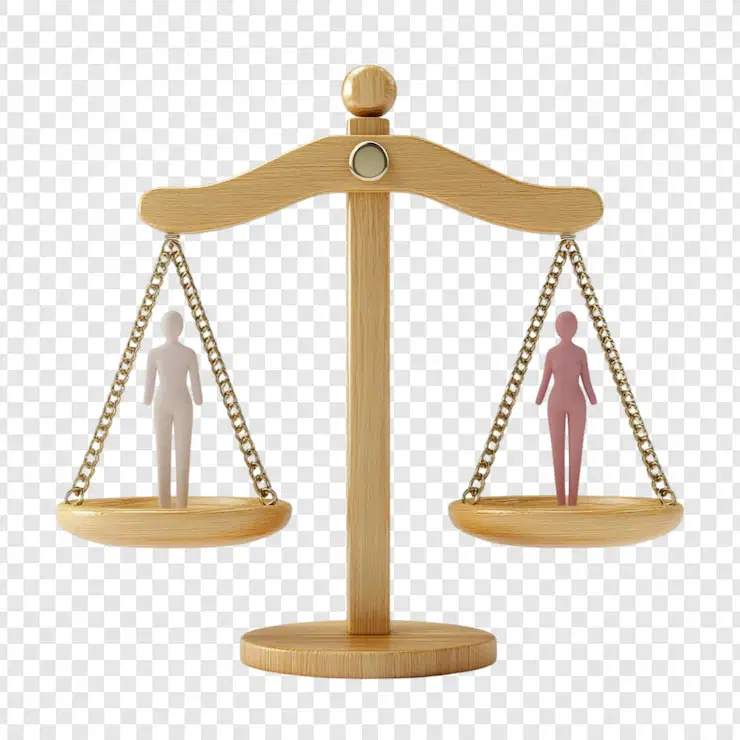
Contemporary issue in which the question of who is best suited to make the key decisions for society, the wealthy and high achievers or the majority will of the population. (a)

Contemporary issue in which the ethics of machine learning on human problems is debated as fears grow that "machines" will enslave humans. (a)

As a rich and powerful nation, what groups did President Truman suggest America had a responsibility to share science and technology with because failing to do so would have them turn to Communism both inside and outside of our country?
Women
Christians
The poor and developing nations
Youth

From most recent to longest ago, order the Cold War world leaders. USE THEIR FIRST DAY IN POWER TO DETERMINE.
Eisenhower
Kruschev
Mao Zedong
Truman
Stalin

Of Wilson's 14 Points, which did the European leaders eventually agree to establish
International Free Trade
Open Access to Seas
League of Nations
An end to Imperial Powers

Which plan for peace heavily blamed Germany for causing World War I?
Wilson's 14 Points
Treaty of Versailles
Zimmerman Telegram
Tel Aviv Treatise

A policy of glorifying military power and keeping a standing army always prepared for war
Militarism
Alliance
Imperialism
Nationalism

What is the acronym for the causes (Nationalism, Imperialism, Militarism, and Alliances) that started World War I in Europe?
TAME
MAIN
AIM
PLAN

What army did Hitler fight for in World War One?
Austrian Army
British Army
French Army
German Army

What type of government did Germany have right after World War I, in the Weimar years?
a democracy
a monarchy
a dictatorship

Which of these TWO nations benefits the MOST from the “peace treaty” following World War 1? (Choose 2)
Italy
Japan
Germany
Britain
France

Which of the following were true concerning the RESULTS of the Versailles Treaty after World War 1?
(Note: THREE are correct. Must pick ALL three)
The United States felt like they were being given too much blame for the war.
Japan was an important Asian presence for the Triple Entente and was virtually ignored by the Treaty.
Italy had fought on the "winning" side and was ignored by the treaty.
Germany was given most of the blame for the war and forced to pay ridiculous amounts of reparitions.

Which of the following was the most accurate depiction of how "The Fourteen Points" were written?
Over time in the journals of President Wilson.
During a famous speech of President Wilson's when he was President of Princeton University
Wilson wrote it with help from a United Nations' delegation that was formed of world-renowned politicians.
Wilson and the "best and brightest" of American Social Scientists, professors, authors, etc. spent months formulating it after the armistice of WW1

What did the Russian Revolution happen during?
World War One
Industrial Revolution
The Civil War
The Enlightenment
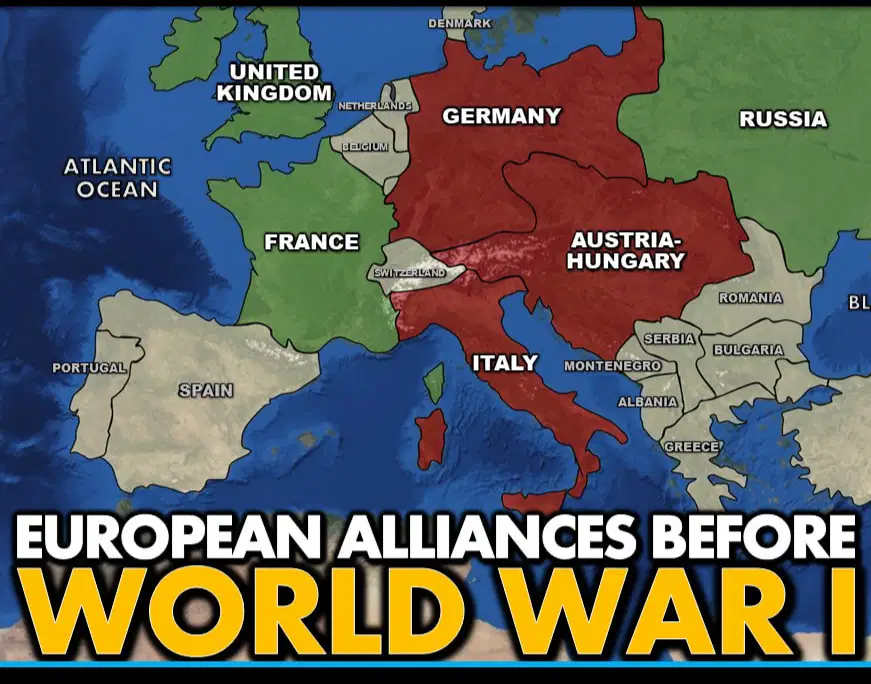
Match the following World War 1 Alliances
Russia - 1
Triple Entente - 1
Germany - 1
Triple Alliance - 1
United States- 2
Triple Entente -2
Austria-Hungary - 2
Triple Alliance -2
France - 3
Triple Entente -3

Which of the following BEST describes the process of Nazi control of Germany?
An enraged Hitler and his Nazis provoked uprisings and riots all over Germany after he is released from prison in the mid-1920s.
Playing on Germans' resentments of WW1, Versailles, and the Great Depression, the Nazis are able to slowly, but steadily gain power by the mid-1930s.
After conspiring with the Mussolini-led Fascists in Italy, "secret agents" are able to takeover the German Government in 1929 (immediately after the Stock Market crashed).
Promising protection and an improved economy, the Germany people voted the Nazis in to power in 1932 in a landslide election victory.

Which of the following DOES NOT fit in the story of the Nazis rise to power in Germany?
(Choose the ONE wrong answer)
Upset WW1 veterans form a small political party that would become known as the "Nazis"
Encouraged by Mussolini's "March on Rome", the Nazis plan a "putsch" in Munich that fails and results in Hitler's imprisonment
Hitler is released from jail after a short stay. During his time in jail, Hitler writes "Mein Kampf" outlining the beliefs of the Nazis
In the first year after his release from prison, Hitler speaks in front of thousands of cheering Germans who support his blaming of "Communists" and "Jews" for all their problems.

Which of the following THREE events fit in the story of the "rise of the Nazis" to power in Germany? (Must choose all three)
In the mid to late 1920s, the Nazis almost ceased to exist and were hardly known.
After the Stock Market Crash of '29, the Nazis message becomes more popular to a desperate German population.
Hitler tours the nation in the early days of the Depression and is a very talented speaker who raises the popularity of the Nazis.
Hitler and the Nazis team up with the Communists in Germany to outvote those that wanted Democracy.

Which THREE (must choose 3) events contributed to the rise to power of Adolf Hitler and the Nazis in Germany?
Nazis won a significant (though not a majority) of government seats in the '32 Election.
In an attempt to satisfy the Nazis and their supporters while giving Hitler no real power, the Reichstag appointed Hitler "Chancellor"
President Hindenberg dies and with the help of the "Night of Long Knives", Hitler becomes the most powerful person in Germany.
Hitler served as the top General in the German military in 1931 and delivered a major victory for Germany that made him popular with voters.

Which of the following events leading up to World War 2 occurred FIRST?
The Nazis and Soviets both invade Poland
The Nazis conquer Austria with little to no opposition.
Japan attacks Pearl Harbor, Hawaii
Italy under Mussolini invades and conquers Ethiopia.

Which of the following was NOT a "conquest" of Germany PRIOR to the U.S. entering the war?
Sudetenland
Czechoslovakia
France
Britain

After Hitler and Stalin signed the "Non-Aggression Pact", which Eastern European nation did they BOTH invade shortly thereafter?
Ukraine
Hungary
Poland
Romania

What happened to France in 1940 (early on in World War 2)?
It masterminded the D-Day invasion on its shores
It joined Nazi Germany to invade Britain
It joined the Axis Powers alliance with Germany and Italy
It was invaded and conquered within weeks by Nazi Germany.

Which were the TWO Air Forces battling in 1941 in the "Battle for Britain"? (Must choose both for credit)
Tuskegee Airmen
Luftwaffe
Royal Air Force
Soviet Red Army

The London Blitz, Dresden, Hiroshimo and Nagasaki are all examples of what disturbing trend of warfare that occurred during World War 2?
Using chemical weapons
Using nuclear weapons
Targeting civilians in big cities in a massive air bombing
Systematic genocide (targeting of a specific ethnicity)

Who was considered the original "Big 3" during World War 2?
(Hint: they met at important WW2 conferences)
Truman, Atlee, and Stalin
FDR, Churchill, and Stalin
Hitler, Mussolini, and Hirohito

Which battle was considered the "turning point" of the European campaign of World War 2 in which the Soviets lost over 1 million but still defeated the invading Nazi forces?
D-Day (Normandy)
Invasion of Sicily
Siege of Moscow
Battle of Stalingrad

Auschwitz, Dachau, and Birkenbau are all associated with which World War 2 era event?
Major Bombing campaigns
Sites of Nazi invasions
Sites of major negotiations to to end the war.
The Holocaust

Which of the following WW2 battles is considered the "turning point" in the Pacific Campaign because it was the first major American victory that continued that trend through the end of the war?
Wake Island
Bikini Island
Iwo Jima
Midway
Organize these options into the right WW2 "campaign" category
Battle of Midway
Battle of Stalingrad
D-Day (Battle of Normandy)
Battle of the Bulge (Belgium)
Allied invasion of Sicily
Battle of the Philippines
Pearl Harbor
Hiroshima and Nagasaki

Adolf Hitler was born in what country?
Germany
Austria
Switzerland
France

What does Mein Kampf mean in English?
My Journey
My Story
My Struggle
My Triumph

Who did Hitler blame for Germany "losing" World War One?
French Government
British Government
German Government
German Army

What was the result of the uprising Hitler led in Munich in 1923?
It succeeded and he took over the government and set up a dictatorship.
It failed, but he escaped and built up the Nazi Party so it could succeed the next time.
It succeeded, but some of his supporters betrayed him and exiled him out of Germany
It failed and he was arrested and wrote Mein Kampf during his 9 months in prison.

What was the big German economic problem in the 1920s?
bankruptcy
inflation
the deficit
Jews and Communists taking most of the jobs

Which of the following occurred in Germany on the "Night of Long Knives"?
The Nazis assassinated close to 100 of its political rivals so that Hitler could gain power.
The Nazis authorities arrested Jews across Germany and vandalized Jewish businesses and Synagogues.
Hitler and the Nazis planned a coup d'etat of Munich in hopes it would spread across Germany.
The Nazis arrested all Jews and transported them to prison camps.

How did King Victor Emmanuel of Italy respond to the March on Rome in 1922?
Gave Mussolini the job of Prime Minister
Ran away from Italy
Sent the army to attack the Blackshirts
Called for a civil war to be fought

Which group of Italians were Mussolini's early supporters?
Veterans of World War I
Doctors and lawyers
Teachers
Peasants and workers

Which accurately describes the March on Rome?
Mussolini and the National Fascist Party marched to Rome, and King Victor Emmanuel III invited Mussolini to discuss his demands
Communists and Socialists declared an ill-prepared general strike, which was stopped easily by fascists and government troops
Civilians outraged by abolition of universal suffrage marched on Rome to take back their kingdom from Mussolini
A parade held in Mussolini's honor was marched all the way to Rome

Match the aspect of the rise of Fascism in Europe
Nickname of Mussolini's private army
Black Shirts
Nickname of Hitler's private army
Brown Shirts
King (government) gave power without a fight
Fascist Italy
Top political opponents murdered in order to obtain power
Nazi Germany
Had many upset WW1 Veterans in paramilitary group
Both Fascist Italy and Nazi Germany

Joseph Stalin's leadership of the Soviet Union can be best characterized as a period of
religious freedom and tolerance
democratic reform and nationalism
censorship and terror
humanism and democracy

With which country was the FIRST Hitler made an alliance with?
France
Italy
Great Britain
United States

Which of the quote shows how determined Churchill was to win WW2?
"You were given the choice between war and dishonor. You chose dishonor, and you will have war."
"An appeaser is one who feeds a crocodile, hoping it will eat him last."
"We shall fight in the fields and in the streets, we shall fight in the hills; we shall never surrender."
"I am extending an olive branch to Mr. Hitler, hoping that he accepts our terms for peace."
Which of the following events leading up to World War 2 occurred FIRST?
The Nazis and Soviets both invade Poland
The Nazis conquer Austria with little to no opposition.
Japan attacks Pearl Harbor, Hawaii
Italy under Mussolini invades and conquers Ethiopia.

Which of the following events concerning the Nazi's process of gaining autocratic control in Germany occurred FIRST?
Forced evacuation of Jews into the "Ghettos"
Kristallnacht
Night of the Long Knives
Anschluss - the conquest of Austria
Which of the following BEST describes the process of Nazi control of Germany?
An enraged Hitler and his Nazis provoked uprisings and riots all over Germany after he is released from prison in the mid-1920s.
Playing on Germans' resentments of WW1, Versailles, and the Great Depression, the Nazis are able to slowly, but steadily gain power by the mid-1930s.
After conspiring with the Mussolini-led Fascists in Italy, "secret agents" are able to takeover the German Government in 1929 (immediately after the Stock Market crashed).
Promising protection and an improved economy, the Germany people voted the Nazis in to power in 1932 in a landslide election victory.
Which of the following DOES NOT fit in the story of the Nazis rise to power in Germany?
Upset WW1 veterans form a small political party that would become known as the "Nazis"
Encouraged by Mussolini's "March on Rome", the Nazis plan a "putsch" in Munich that fails and results in Hitler's imprisonment
Hitler in released from jail after a short stay. During his time in jail, Hitler writes "Mein Kampf" outlining the beliefs of the Nazis
In the first year after his release from prison, Hitler speaks in front of thousands of cheering Germans who support his blaming of "Communists" and "Jews" for all their problems.

How did Hitler successfully rebuild the German army during the 1930s?
Hitler helped put German unemployment during the Depression by opening "secret" war factories he hid from inspectors
He made it appear to the public that he was building massive ships for his Navy but was focusing on the Luftwaffe (Air Force)
Since he could not rebuild conventional weapons due to the "Versailles" restrictions, he focused on developing an Atomic Bomb.
He defiantly rebuilt all aspects of the military in public even though he was not supposed to because of the Versailles Treaty
Which THREE (must choose 3) events are accurate in describing Hitler's rise to the top of the Nazi Party?
He was passionate about the party's cause and authentically supported it.
He was a great orator who could stir up crowds with his speeches
He was successful in his role as Propaganda Minister after WW1.
He killed all of the leaders in the early 1920s and was imprisoned, but became leader

Which of the following terms best fits the description of how Europe handled Hitler and Germany prior to World War 2 as it conquered country-after-country in Europe?
Intimidation
Appeasement
Admiration
War
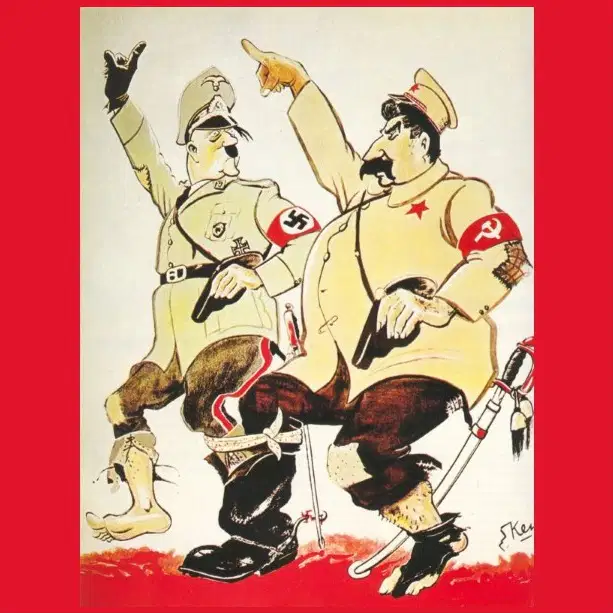
Categorize what belongs with Stalinist Russia, Nazi Germany, or applies to both.
Gulags
Dictatorship
Totalitarianism
Prison Camps
Purges
Enemies = Communists, Jews
Benefitted from Appeasement
Ideology = Communism

Which world leader decided to drop Atomic Bombs on the Japanese to save a forecasted 1 million lives in a land invasion?
Joseph Stalin
Winston Churchill
Franklin D. Roosevelt
Harry Truman

What international organization was formed AFTER World War 1 as a vehicle of nations of the world to help prevent war and supply assistance to all nations in need at any given time? (Hint: The United States did NOT join it.)
The League of Nations
NATO
The Warsaw Pact
The United Nations (UN)


The ___________ helped to rebuild countries of Western Europe after WWII.
The Marshall Plan
The TJ Maxx Plan
The GI Bill
Yalta Conference

The period of hostility between the U.S. and the Soviet Union.
The Cuban Missile Crisis
The Arms Race
The Cold War
The Warshaw Struggle

Total War is an attribute of WW2. It means that war strategies focus on _______________. This is different than most conventional wars before WW2
Soldiers on the front lines
Bombing war-making factories
Civilians (non-military citizens(
Total weapons from nuclear bombs to swords

During World War 1, German submarines began sinking unarmed and unresisting merchant and passenger ships without warning.
In retaliation for the British naval blockade of Germany.
In an effort to keep the United States out of the war.
Because international law now allowed this new style of warfare.
When the United States entered the war.
In a last-ditch effort to win the war.

In World War 1, what type of warfare contributed to the stalemate on the Western Front?
guerilla
conventional
trench
submarine

As the "Great War" (WW1) came to an end, each side signed a ___________________ to stop the fighting.
Alliance
Truce Agreement
Armistice Agreement

The Western Front was established as a fighting line between which two countries?
Great Britain and France
France and Germany
Russia and Germany
Austria-Hungry and Russia

pride in one's country
Militarism
Alliance
Imperialism
Nationalism

A policy of extending a country's power and influence through diplomacy or military force.
Militarism
Alliance
Imperialism
Nationalism

A union of two or more groups
Militarism
Alliance
Imperialism
Nationalism

Ideas spread to influence public opinion for or against a cause.
Neutrality
Propaganda
Rationing
Trench Warfare

A position of not taking sides in a conflict
Neutrality
Propaganda
Rationing
Trench Warfare

Match the following World War 1-related historical figures
Planned the failed Gallipoli Invasion
Winston Churchill
Elected in 1916 on "He Kept us out of war" only to get us into WW1 months after re-election
Woodrow Wilson
Russian Czar who allowed democratic reforms only to be overthrown and replaced by the Bolsheviks
Nicholas II
Teenager who joined a Serbian Nationalist group and murdered two people that was the SPARK that started WWI
Gavrilo Princip
Second-in-command of Austria-Hungary. Assassinated in Sarajevo, Bosnia in 1914
Archduke Franz Ferdinand

With the outbreak of World War I in 1914, the great majority of Americans
Had close cultural, linguistic, and economic ties with the Central Powers.
Favored U.S. mediation in the conflict.
Earnestly hoped to stay out of the war.
Supported the Central Powers.
Favored entering the war in support of the Allies.

What was the primary ideological conflict during the Cold War?
Fascism vs. Communism
Monarchy vs. Republic
Capitalism vs. Socialism
Democracy vs. Communism

Which U.S. President had an important Cold War-era Doctrine named after him when he created it in the 1940s after World War 2?
John F. Kennedy
Dwight Eisenhower
Harry Truman
Franklin D. Roosevelt
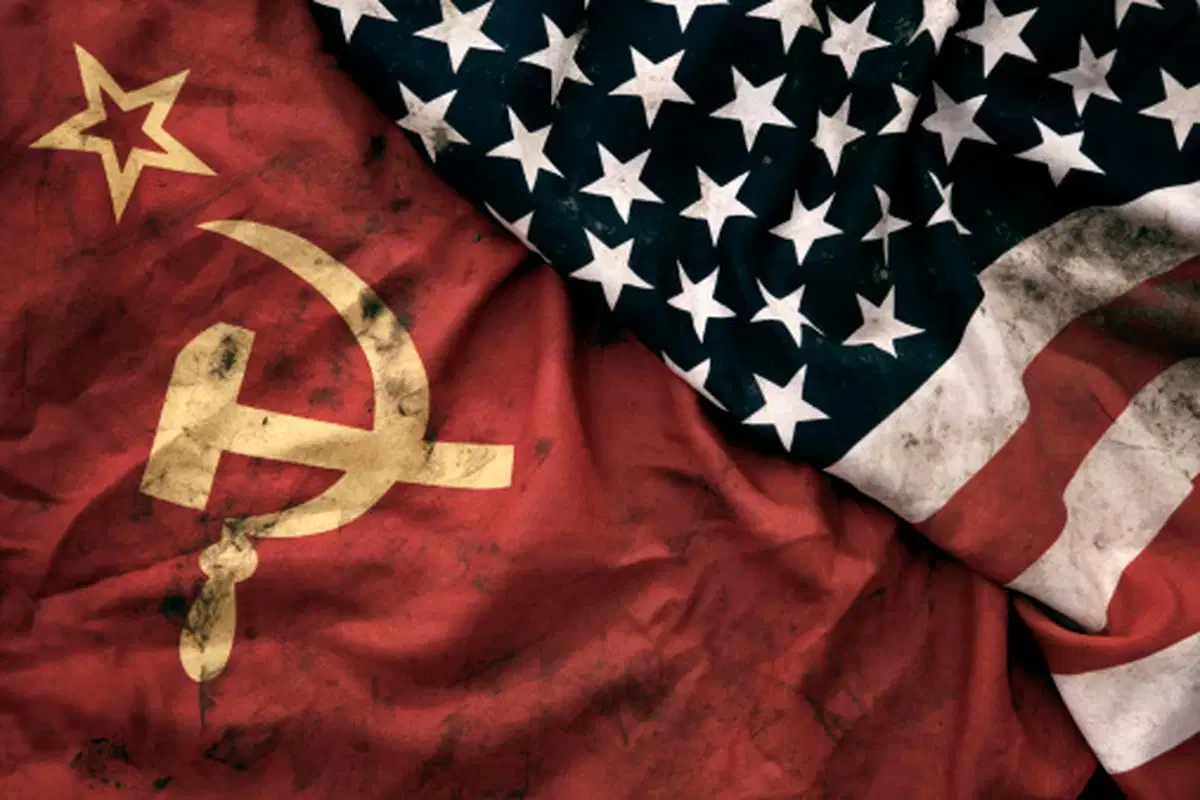
What theory suggested that if one nation fell to communism, its neighbors would follow?
Balance of Power Theory
Mutually Assured Destruction
Containment Theory
Domino Theory

What was the outcome of the Cuban Missile Crisis?
Nuclear war erupted
The U.S. invaded Cuba
Missiles were removed from Cuba
The Soviet Union gained control of Cuba

What was the Space Race primarily about?
Economic competition
Military dominance
Technological and ideological superiority
Cultural exchange
What was the main goal of détente in the 1970s?
To increase military spending
To ease tensions between the superpowers
To isolate the Soviet Union
To expand communism

Which U.S. President referred to the Soviet Union as an 'evil empire'?
Ronald Reagan
Richard Nixon
Jimmy Carter
Gerald Ford
What was the Strategic Defense Initiative?
A plan to invade the Soviet Union
An economic aid program
A missile defense system
A space exploration project
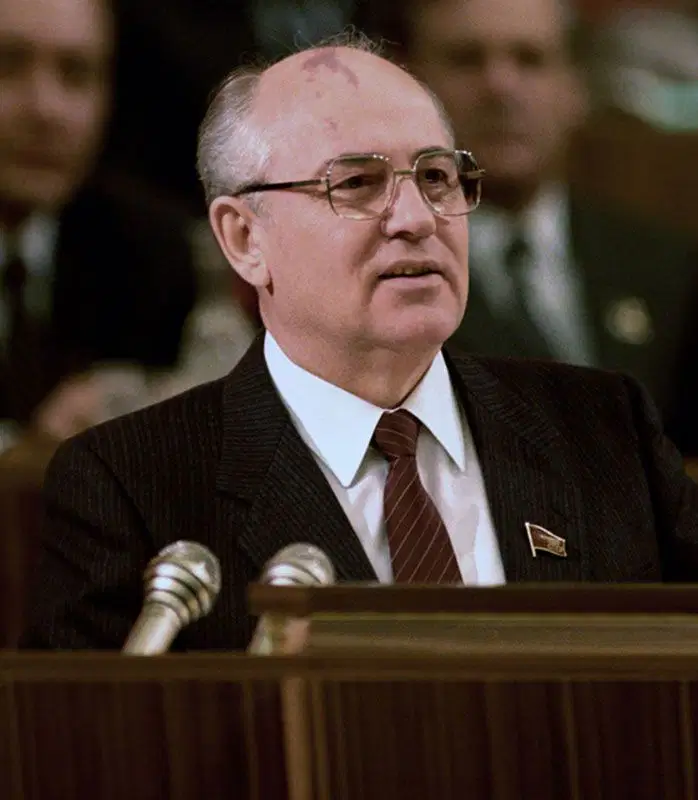
What were Gorbachev's reforms known as?
Perestroika and Glasnost
Domino Theory and Mutually Assured Destruction
Détente and Containment
Marshall Plan and Truman Doctrine

What event symbolized the collapse of communist governments in Eastern Europe?
The launch of Sputnik
The Cuban Missile Crisis
The fall of the Berlin Wall
The signing of the SALT agreements

What was the primary reason for the U.S. involvement in the Vietnam War?
To support French colonial interests
To prevent the spread of communism
To establish a military base in Asia
To gain control of Vietnam's resources

Which event marked the beginning of the Space Race?
The launch of Sputnik
The moon landing
The Cuban Missile Crisis
The signing of the Outer Space Treaty

What was the main focus of the Truman Doctrine?
To promote global trade
To contain the spread of communism
To establish the United Nations
To develop nuclear weapons
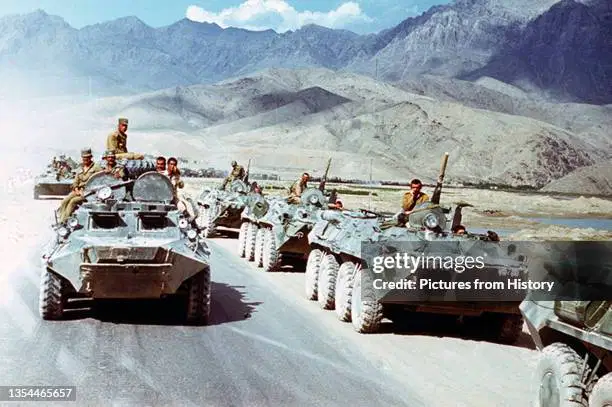
Which conflict reignited tensions between the U.S. and the Soviet Union in 1979?
The Gulf War
The Korean War
The Soviet-Afghanistan War
The Vietnam War

What was the primary goal of the U.S. during the Cold War?
To isolate itself from global affairs
To form a global government
To spread communism
To promote democracy and capitalism

What was the outcome of the Vietnam War?
A divided Vietnam
A U.S. victory
A communist victory
A stalemate

What was the significance of the Cuban Missile Crisis?
It caused the Soviet Union to collapse
It led to the end of the Cold War
It highlighted the threat of nuclear war
It resulted in the U.S. gaining control of Cuba

"December 7, 1941...a day that will live in INFAMY" is a famous World War 2 speech by...
Winston Churchill
George Patton
Franklin Roosevelt
Adolf Hitler

Which of the following was NOT a reason Benito Mussolini was able to ascend to power so quickly after World War 1?
He was a well-known newspaper journalist, easily able to spread his ideas.
He was an effective radio personality in its early days, easily able to spread his ideas.
He successfully trained a paramilitary group that took Italy by force.
His message helped build a large paramilitary group that THREATENED the Italian government.
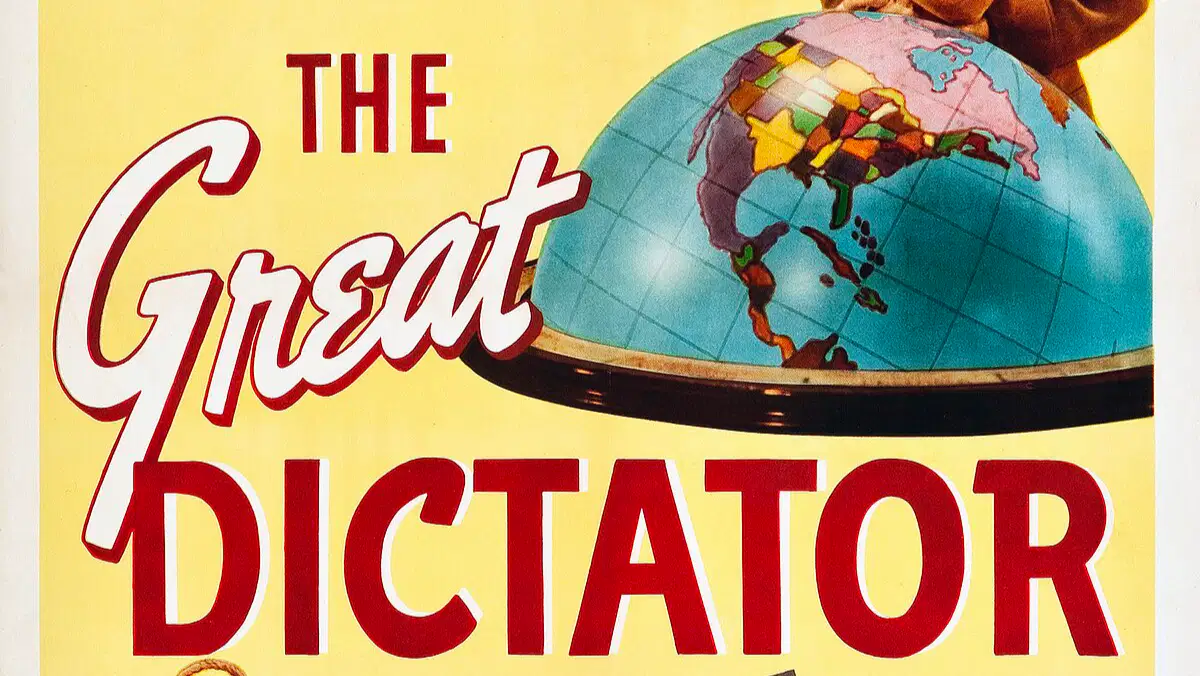
Which of the following best describes the important 1940 film, "The Great Dictator"?
It was one of Hitler's successful movies that helped him keep control of Germany.
It was a serious documentary in the United States which showed Americans Hitler's atrocities.
It was a clever comedy produced by a famous silent-film actor that warned Americans about the threat of Hitler.
It was a German documentary film that claimed the "Aryan Race" was superior.

Which WW2-era leader was an important military leader is WW1 and WW2, helped create the modern mobile tank, slapped a soldier struggling with PTSD, served as a vital decoy on D-Day, led our forces in the Battle of the Bulge and liquidated the concentration camp at Birkenau?
Douglas MacArthur
George Patton
Tojo
Winston Churchill

Which World War 2-era leader was the mastermind of a disastrous battle in World War 1, volunteered for the WW1 trenches, was the first western politician to see Hitler for what he was in the 30s, became Prime Minister, and was the mastermind of a critically successful invasion in WW2?
Neville Chamberlain
Winston Churchill
Franklin Roosevelt
Benito Mussolini

Which World War 2-era leader was a brilliant military leader in the Pacific, became Prime Minister, initiated the "two-prong" strategy after an oil embargo which included planning Pearl Harbor, resigned as Prime Minister prior to the end of the war.
Winston Churchill
Hideki Tojo
Douglas MacArthur
George Patton

Which WW2-era leader was a former teacher, former journalist, effective radio personality, first successful Fascist leader in Europe, invaded Ethiopia, was Hitler's mentor, then became Hitler's inferior in WW2, and was ultimately killed by his fellow countrymen?
Joseph Stalin
Adolf Hitler
Benito Mussolini
Winston Churchill

Which WW2-era leader was arguably one of the best military generals of all time in his nation, famous for leading his men on the battlefield, personal disliked FDR, promised "I shall return" when chased out of the Philippines, fulfilled his promise by reconquering the Philippines, and was the architect of the successful "island-hopping" strategy in the Pacific during WW2?
George Patton
Douglas MacArthur
Franklin Roosevelt
Neville Chamberlin

Which WW2-era leader was the Head of the Navy in WW1, was stricken by Polio in the 1920s, won the Presidency in 1932 telling Americans "...the only thing to fear is fear itself", personally disliked Douglas MacArthur but knew he was essential for success, proclaimed "December 7, 1941...a day of infamy", became the LONGEST running President in history, and sadly died right before his nation would be victorious in WW2?
Neville Chamberlin
Winston Churchill
Woodrow Wilson
Franklin Roosevelt

Which WW2-era leader was born in one country, but adopted another in his early adulthood, fought for its military in WW1, led an unsuccessful coup, went to jail, wrote a book about his ideology, became leader of his country after killing about 100 political rivals in one day, secretly rebuilt his nation's military, benefitted from "appeasement", planned the horrific "final solution" and committed suicide at the end of WW2 before he could be captured.
Benito Mussolin
Joseph Stalin
Adolf Hitler
Neville Chamberlain

Which WW2-era leader rose to power and control of his country by purging millions to death or gulags, employed 'five-year' plans to transform his economy, formed an unlikely alliance with Hitler and then was invaded by Hitler, became an "ally" of the U.S. and Britain and their bitter enemy after World War 2?
Joseph Stalin
Adolf Hitler
Benito Mussolini
Hideki Tojo
Chinese


1 Million
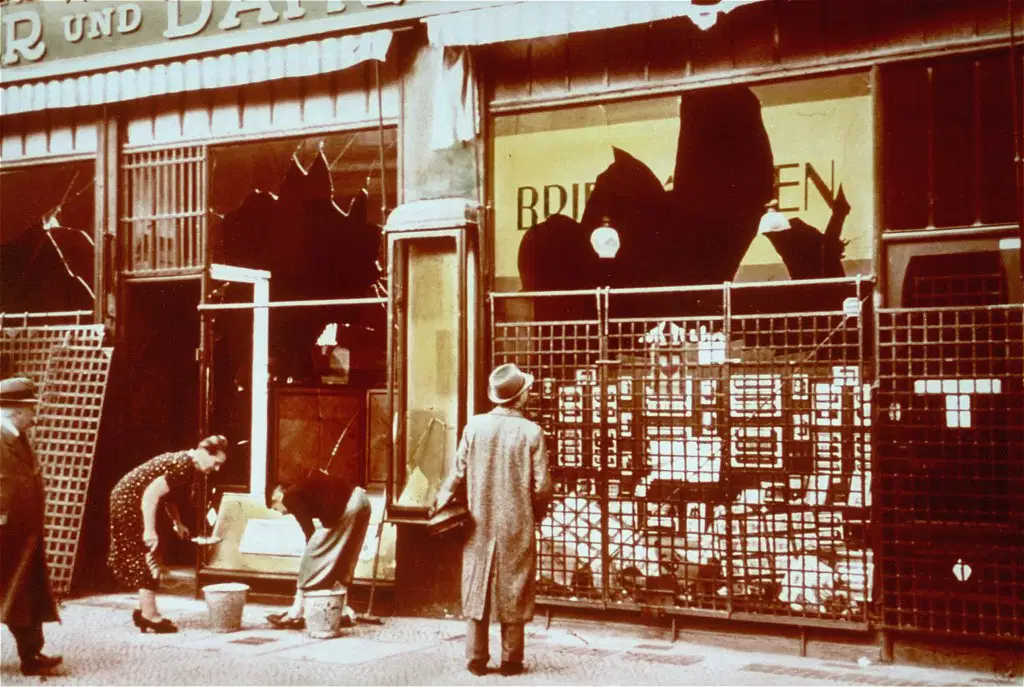
"The Night of the Broken Glass", The name refers to the wave of violent anti-Jewish pogroms which took place on November 9 and 10, 1938.
Einsatzgruppen
Blitzkrieg
Kristallnacht
Reich-Stag

Why was this night known as "the night of the broken glass"
Someone broke a glass cup and forgot to clean it up
The nazi's were playing baseball and broke a window
The nazi's broke through synagogues, schools, and other jewish buildings, and broken glass was all over the streets
The jews threw glass at SS officers as a protest

The gas used in the gas chambers, originally designed as a pesticide.


Which of the following best describes the Great Depression?
A mental health epidemic
A devastating weather crisis
An economic calamity
A massive war

A symbolic depiction of the start of the Great Depression (following the Stock Market Crash of 1929), the "World Wars" documentary showed WHO jumping out of a skyscraper in New York City (sadly an actual occurrence)?
The President
A person in a mental hospital
A stock market trader on Wall Street
A firefighter

Why did the Great Depression turn out to be a good thing for Adolf Hitler and the Nazi Party?
Jews in Germany suffered the most during the Depression, making the Nazis job easier.
Germans grew even more desperate and started to listen to the Nazis radical ideas.
It allowed them to escape from prison because Germany couldn't run the prisons well.
The German government gave the Nazis jobs as part of a work program.

Which of the following were reasons the United States' public supported isolationism (staying out of worldwide military conflicts) during the 1930s as Hitler got more and more powerful? (must choose BOTH correct answers)
They supported the Nazi ideology and thought Hitler was a good leader
They felt "cooked" by WW1 when 100,000s of Americans died over a "European conflict"
The Great Depression was in full force and Americans wanted to focus on America
The United States was on the brink of Civil War over slavery and could not be bothered by events outside of the country.

"The Allied victory [in WWI] was not a victory of right over wrong, but a victory of might over weakness... The peace imposed upon the defeated was a peace of vengeance." - Winston Churchill
In the above quote who is Churchill referring to as "THE DEFEATED" and who is he referring to instituted a "PEACE OF VENGEANCE"?
Germany = "Defeated"
Britain and France = "Peace of
Vengeance"
United States = "Defeated"
Germany = "Peace of Vengeance"
Britain = "Defeated"
Germany = "Peace of Vengeance"
Germany = "Defeated"
Soviet Union = "Peace of Vengeance"

How was "LEBENSRAUM" a motivation for Hitler and the Nazi's aggressive invasions and conquests in the late 1930s and early 1940s?
It means "Jews are rats". The Nazis claimed the nations they conquered were controlled by Jews.
It means "Night of the Long Knives". The Nazis said the only path to peace was conquering your enemies
It means "Living Space". The Nazis believed the Aryan Race (Germans) were entitled to more land in Europe to settle and rule as the master race.
It means "My Struggle". The Nazis claimed their invasions were part of the struggle to achieve world domination.

Triumph des Wilens, Jew Süss, and Der Ewige Jude are examples of Hitler and the Nazis successful use of WHAT to spread their propaganda.
Posters
Motion Pictures (Films)
Radio Episodes
Popular Music

Which of the following BEST explains the execution of the Holocaust?
A last second idea, panic, and MASSACRE of millions of people.
A systematic long-planned idea that was done mostly in secret with a trend of diminished rights to eventual mass murder.
An event that happened in some area due to Nazi officers being radically anti-Semitic, but some other areas did not experience anything.
Transporting Jews and "undesirables" to one area and then bombing the area.

How was the T-4 Program of the Nazis a prelude to the Holocaust?
It was a Euthanasia program for people of all ages with disabilities that were considered "undesirable" and justified to kill.
It was a DNA project that identified everyone that had Jewish blood.
It was a sinister program in which Nazi Scientist test execution chambers meant for concentration camps.
It was a segregation of society which made all Jews move to one area of Germany so they could easily gather them later for the Holocaust.

Four of these places were invaded by Hitler's Germany as RIGHTFUL GERMAN LAND that was being reclaimed over the wrongful treatment of Germany after WW1 or was necessary to UNIFY ethnic Germans. One of these places was a territory NOT being reclaimed by the Nazis. Choose the ONE THAT IS NOT....
Sudentenland
Rhineland
western Poland
Austria
Czechoslovakia

Geoffrey Hinton, one of the pioneers of Artificial Intelligence, gave what analogy about the rapid impact of A.I. and its future impact on mankind?
A shark that is lurking and will most definitely strike mankind.
A completely safe toy you would allow an infant to play with.
A really cute Tiger Cub you take as a pet and hope it doesn't grow up to devour mankind.
A space alien that is completely unknown and we should be cautious with.

What percentage risk does Geoffrey Hinton, A.I. pioneer, predict A.I could take over mankind at some point in the future?
0%
10-20%
30-40%
100%
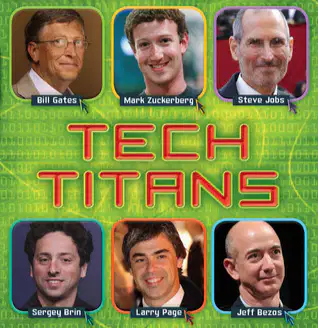
Geoffrey Hinton is disappointed with current leaders in the Tech Industry who control A.I. because...
he believes they are selfishly advocating LESS A.I. regulation, valuing profit over the well-being of mankind.
he believes they are keeping the best of A.I. to themselves and not sharing them with mankind.
he is frustrated that they are not updating A.I. to be more effective.
he is accusing them of selling A.I. secrets to the militaries of the world who will develop devastating weapons.
The belief that a select group of individuals, often distinguished by wealth, education, or expertise, is best suited to govern and make decisions for society
Elitism
Pluralism
Populism
Nationalism

The idea that ordinary citizens, not privileged groups, should drive political and social decisions is an aspect of...
Elitism
Technocracy
Populism
Marxism
Which recent global event in the early 2020s served as a contrast between how elites differ from populists in how such an event should be handled?
The COVID Pandemic
World War 2
The end of the Cold War
The Financial Crisis of 2008

