
 Worksheets
AP Biology Study Guide for the FINAL 2026
Total questions: 250
Worksheet time: 4hrs 49mins
Matter
has mass.
All of the choices are correct.
occupies space.
is what life is composed of
is composed of elements.
Which of the following elements is Not one of the six most common in living organisms?
carbon
oxygen
iron
nitrogen
hydrogen
The characteristic way in which atoms of an element react is most related to the
number of electrons in the outermost shell
number of electrons in the innermost shell
number of neutrons in the outermost shell
number of neutrons in the nucleus
size of the nucleus
10. An orbital is best described as
the electron shell closest to the nucleus.
the outermost electron shell of an atom.
the volume of space in which electrons are most often found.
the original energy level of electrons in photosynthesis.
An atom, such as calcium, which has two electrons in the outer shell, would most likely
share to acquire a complete outer shell.
lose these two electrons and become a negatively charged ion.
lose these two electrons and become a positively charged ion.
bind with carbon by way of hydrogen bonds.
bind with another calcium to satisfy its energy needs.
In which of these are the electrons shared unequally?
double covalent bond
triple covalent bond
hydrogen bond
polar covalent bond
ionic and covalent bonds


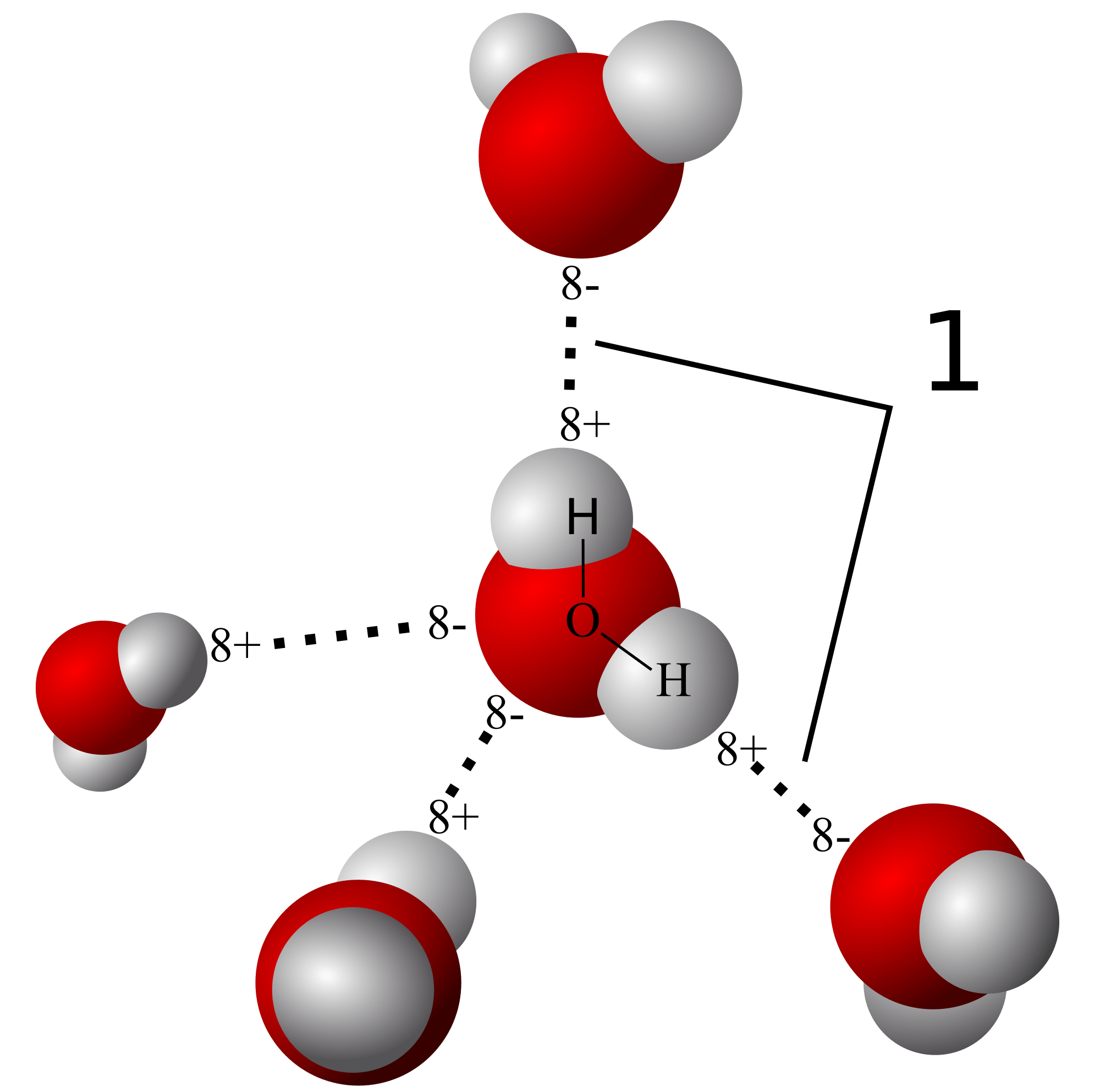
Attractions between water molecules are called
Covalent bonds
Ionic bonds
Polar bonds
Hydrogen bonds
The bond between NaCl is an example of what kind of Bond
Ionic
Covalent
Both
Neither
Hydrophillic
polar or ionic that loves water
nonpolar that hates water
nonpolar that loves water
polar or ionic that hates water
Hydrophobic
nonpolar that hates water
polar that loves water
ionic that loves water
ionic that hates water
Cohesion
property of water that explains why water is attracted to other polar molecules
property of water that explains why water is attracted to other water molecules
property of water that explains why water defies gravity and travels up surfaces such as paper
Surface tension
strong intermolecular force due to hydrogen bonds between the water molecules
property of water that allows water to become attracted to other polar or ionic molecules
property of water that allows water to become attracted to other water molecules
True/False: Water is less dense as a solid
True because the hydrogen bonds expand between the water molecules and form a crystal
False because ice floats on water
True because the covalent bonds expand between the water molecules and form a crystal
Which kind of cell is prokaryotic, may or may not have a cell wall, and has no membrane bound organelles?
Animal
Bacteria
Fungi
Plant
Major component of the lipid bilayer cell membrane.
Cholesterol
Channel Proteins
Phospholipids
Glycolipid/glycoprotein complexes

The hydrophilic head of the phospholipid ___ to interact with water and is said to be ____.
Loves, polar
Loves, nonpolar
Hates, polar
Hates, nonpolar
The hydrophobic tails of the phospholipid ___ to interact with water and is said to be ____.
Loves, polar
Loves, nonpolar
Hates, polar
Hates, nonpolar
Because the cell membrane is composed of many small parts that move together as a system, it is said to be _____ _____ (two words).
(a)
Select any substances that can simply diffuse through the cell membrane.
Oxygen gas
Sugar
Charged ions
Small
Charged
The diffusion of water through the cell membrane along its own concentration gradient is known as (a) .
Select all forms of cell transport that require ATP energy.
Facilitated diffusion
Endocytosis
Exocytosis
Active Transport
The use of a protein pump (ions like Na+, K+, H+, etc.) is an example of ___ because ___.
exocytosis; ions are moved out of the cell
active transport; ATP is required
facilitated diffusion; a protein is needed for transport
endocytosis; ions are moved into the cell
Because cell membranes only allow certain substances to pass through them, they're said to be (a) .

This cell is experiencing which kind of situation?
Hypertonic
Hypotonic
Isotonic
In this kind of situation, the *initial* concentration of water is greatest _____________ the cell.
Inside of
Outside of
In this kind of situation, water will move _____ the cell, causing it to ___________.
into, swell
out of, swell
into, shrink
out of, shrink
In this kind of situation, the solutes will move _____ the cell, causing it to ___________.
into, swell
out of, swell
into, shrink
out of, shrink
TRICK QUESTION Mrs. J! You almost got me. I know the membrane is IMPERMEABLE to the solutes, so they stay put while the WATER moves!
Because cell function is so heavily dependent on effectively transporting materials across the cell membrane, cell size is limited due to the need for a (a) ratio of surface area to volume.
The point of organelles such as the mitochondria, golgi, ER, etc. all having membranes is to ...
Provide extra protection to those critical organelles
Increase surface area for materials transport
Prevent hazardous materials from escaping the organelles and damaging the rest of the cell
All of the above
Which organelle uses digestive enzymes to break down old cellular components and/or invading bacteria/virsus and recycles those components to other organelles for use in building new macromolecules?
Gap junction
Nucleus
Golgi Body
Lysosome
This theory states that membrane bound organelles evolved from once free-living prokaryotes that were engulfed to compose the eukaryotic cells that we observe today.
(a)
Who is the (ATP producing, glycolysis/krebs cycle running) powerhouse of the cell?
(a)
Select all forms of passive transport below.
Diffusion
Facilitated Diffusion
Endocytosis
Exocytosis
Osmosis
Facilitated diffusion occurs when what kind(s) of molecules require a channel or carrier protein to enter the cell membrane?
small, non-polar
large, non-polar
small, polar
large, polar
Which substance would most easily pass through the cell membrane?
Oxygen
Glucose
Sodium ions
Water
During osmosis, water always moves from an area of ____ solute concentration to ____ solute concentration.
high, high
high, low
low, low
low, high
Enzymes ___________________ activation energy to speed up chemical reactions.
increase
decrease
How does the active site of an enzyme determine the substrate for that enzyme?
The active site has the right polarity to interact with the substrate.
The active site is hydrophobic and interacts with other hydrophobic amino acids on the substrate
The active site has a specific shape that fits the shape of the substrate
The active site uses energy to form covalent bonds with the substrate
How does a competitive inhibitor affect an enzymes function?
It binds to an allosteric site that alters the shape of the enzyme
It changes the polarity of the enzyme, decreasing the rate of reaction
It denatures the enzyme which increases the activation energy for the reaction.
It binds to the active site, preventing the enzyme from catalyzing the reaction
Which of these factors can affect the initial rate of an enzyme reaction?
Enzyme concentration
Substrate concentration
Temperature
pH
All of the above

Based on this graph, which enzyme would function best in a basic environment?
A
B
Why is the hydrolysis of ATP important to a cells function?
It provides a source of phosphate for the cell.
It releases energy that can be used to power cellular processes
It absorbs excess hydrogen ions in the cell to regulate the internal pH
It acts as a catalyst for chemical reactions in the cell.
What is the best reason that plants do not perform photosynthesis at night?
They close their stomata at night to rest
They do not have an energy source to power the light reactions
Only a few types of plants are nocturnal
There is less carbon dioxide released into the air at night
What are the net products of photosynthesis?
6 CO2, 6 H2O, Energy
6 O2 and 6 H2O
C6H12O6 and 6 O2
6 CO2 and C6H12O6
What factors affect the rate of photosynthesis?
CO2 concentration
H2O available
Temperature
Light intensity
All of the above
How does a plant obtain the carbon necessary to form glucose?
Through the light reactions
From stored sugars in the roots of the plant
From the catabolic breakdown of water
Through CO2 absorbed from the atmosphere
What are the products of the light reaction directly needed by the Calvin cycle in photosynthesis?
H ions and carbon dioxide
Photons absorbed by chlorophyll
FADH2 and Oxygen
ATP and NADPH
Which phase of photosynthesis produces organic sugars?
The light reactions
The Calvin cycle
The link reaction
Electron transport chain
What are the products of the Krebs Cycle?
Pyruvate, water, ATP, NADH
Acetyl CoA, NADH
NADH, FADH2, carbon dioxide, ATP
ATP, glucose
What are the products of glycolysis?
Pyruvate, ATP, water, NADH
Carbon dioxide, FADH2, NADH, ATP
32 ATP
NADPH and ATP
What are the products of the light reaction of photosynthesis?
Oxygen, NADPH, ATP
Glucose, NADP, ADP
Carbon dioxide, water, ATP
Oxygen, FADH2, ATP
What is the function of NAD in cellular respiration?
It catalyzes the conversion of glucose into ATP
It provides inorganic phosphate needed by ATP synthase
It acts as an electron and proton acceptor to carry energy to the electron transport chain
It is the coenzyme needed to convert glucose into pyruvate
What powers the ATP synthase enzymes in mitochondria and chloroplasts?
The energy absorbed during the light reactions.
The electronegativity of oxygen
Energy released by breaking the chemical bonds in glucose
The diffusion of hydrogen
How are the ATP synthase enzymes in photosynthesis and cellular respiration similar?
They both rely on chemiosmosis of hydrogens down a gradient to power phosphorylation
They are both located in the cytoplasm of the cell
They both use oxygen to create a concentration gradient
They both receive hydrogen ions from FADH2
When will lactic acid build up in animal cells?
When there is excess carbon dioxide
When the cells produce too much ATP
When there is not enough oxygen to fuel the mitochondria
When the cells need to remove excess oxygen to avoid damaging their components.
An enzyme's shape determines its
function
substrate
product
activation energy
An enzyme's active site
is determined by the proteins primary, secondary, tertiary and quaternary structure.
is specific to a particular substrate
may be blocked by a competitive inhibitor
all of the above
The light dependent reactions make the following products
ATP and NADH
ATP and NADPH
ATP and FADH2
all of the above
During the Calvin Cycle
ATP from the light dependent reactions is used to make glucose
NADH from the light dependent reaction is used to make glucose
1 ATP molecule is generated by one turn
extra ATP is used to regenrate CO2
Which process is the first step of all energy producing metabolic pathways?
Glycolysis
Krebs Cycle
Calvin Cycle
ETC
Which of the following is the correct order for aerobic cell respiration?
Glycolysis, Krebs Cycle, Pyruvate Oxidation and ETC
Glycolysis, Pyruvate Oxidation, Krebs Cycle and ETC
Pyruvate Oxidation, Krebs Cycle, ETC and Glycolysis
ETC, Pyruvate Oxidation, Glycolysis, and Krebs Cycle
Which stage of Aerobic Cell Respiration produces the most ATP?
Glycolysis
Pyruvate Oxidation
Krebs Cycle
ETC and oxidative phosphorilation
Which is the final electron acceptor in aerobic cellular respiration?
Carbon Dioxide
Oxygen
Rubisco
Glucose
An enzyme's shape determines its
function
substrate
product
activation energy
An enzyme works by
decreasing the activation energy
Adding energy during induced fit
Breaking or making new bonds during induced fit
All of the above
The light dependent reactions make the following products
ATP and NADH
ATP and NADPH
ATP and FADH2
all of the above
The enzyme rubisco can
use carbon dioxide to make glucose
use oxygen to make glucose
use both gases to make glucose
none of the above
During the Calvin Cycle
ATP from the light dependent reactions is used to make glucose
NADH from the light dependent reaction is used to make glucose
1 ATP molecule is generated by one turn
extra ATP is used to regenrate CO2
What is the name of the signaling molecule in cell communication?
ligand
receptor
operon
inhibitor
Choose the correct order of communication.
reception, response, transduction
transduction, reception, response
response, transduction, reception
reception, transduction, response
All signals and receptors are the same in all cells.
True
False
All cells have the same response to the same signal.
True
False

Identify the type of receiver seen here.
G-protein coupled receptor
gated ion channel
RTKs
cAMP
Long distance signals involving hormones are ________ signals.
paracrine
synaptic
endocrine
Adrenaline is released from your adrenal glands to affect various systems in the body. This is an example of ____ signaling.
synaptic
endocrine
paracrine
autocrine
Which are two widely used second messengers?
cAMP
RTK's
Ca2+
sodium

Which kind of receptors are seen here?
G-coupled protein receptor
RTK's
Gated ion channels
Phosphorylation cascades are often used for
reception
responses
amplification
termination
Programmed cell death is known as
mutation
termination
cytokinesis
apoptosis

What type of signaling is shown here?
autocrine
synaptic
endocrine
paracrine
What determines whether a signal molecule binds on the surface or enters the cell?
size
polarity
ability to cross the membrane
all of these
Which of the following can activate a protein by transferring a phosphate group to it?
cAMP
G-protein
protein kinases
phosphatases
Which two terms describe this image?
long distance signal
local signal
synaptic
paracrine
What is the first step of apoptosis?
the organelles fragment
the cell is engulfed by a scavenger
the DNA is destroyed
The cell blebs
Many cancer cells signal themselves to grow and divide. This is an example of ______ signaling.
long distance
autocrine
paracrine
hormone
After a cellular response, how is it terminated?
separate the ligand and receptor
block the transduction pathway
it will keep responding
send out a different signal

Communication between neighboring/touching cells is common in plants.
True
False
We have discovered a vast majority of cell surface receptor proteins.
True
False

G1 is associated with what event?
doubling of cell content
DNA replication
The beginning of mitosis
breakdown of the nuclear membrane
The amount of DNA in a cell is measured right after mitosis and found to be 8 picograms. How many picograms of DNA would be found in a nucleus in the G2 phase?
4
8
16
24
Why do cells such as neurons divide very rarely?
They no longer have active nuclei
They have entered G0
they can no longer break down cyclins
They no longer produce MPF
What two components make an active MPF
a growth factor and a mitotic factor
ATP synthetase and a protease
cyclin and tubulin
cyclin and a cyclin-dependent kinase
Which molecule triggers the cell to pass the G2 checkpoint and enter mitosis?
PDGF
MPF
cyclin
cdk

What is the role of protein kinases?
remove phosphate groups to deactivate enzymes
trigger apoptosis
add phosphate groups and energy to activate enzymes
stop the cell cycle
Which of these may be assessed by various proteins during a "checkpoint"? CHECK ALL THAT APPLY
Ensure that all chromosomes have lined up in the center of the cell before sister chromatids separate
Ensure that spindle fibers have attached to all centromeres before cell division
Ensure that DNA has been replicated properly

Which region represents the G2 phase?

In a monohybrid cross of complete dominance, what is the phenotypic ratio?
1:2:1
3:1
9:3:3:1
12:4
In a monohybrid cross of incomplete dominance, what is the phenotypic ratio?
1:2:1
3:1
9:3:3:1
12:4
In a dihybrid cross of complete dominance, what is the phenotypic ratio?
1:2:1
3:1
9:3:3:1
12:4
In a population of 100 offspring, how many would you expect to be homozygous dominant in a cross between a homozygous dominant and a homozygous recessive parent?
0
25
50
75
100
In a population of 200 offspring, how many would you expect to be homozygous recessive in a cross between a heterozygous and a homozygous recessive parent?
0
50
100
150
200
In an incomplete dominance cross between a white flower and a red flower, what is the probability of a pink offspring?
0%
25%
50%
75%
100%
In a complete dominance cross between a white, terminal (recessive) and red, axial (dominant) flower, what is the probability of a red, axial offspring?
1/16
3/16
9/16
16/16
In a cross between an individual with type A blood and an individual with type B blood, what is the probability of an offspring with type O blood?
0/4
1/4
1/2
3/4
4/4
In a cross between two roan cows (codominant), what is the probability of a white cow?
0/4
1/4
2/4
3/4
4/4
Identify which of the following descriptions about dominance are correct
Incomplete dominance involves the homozygous dominant and heterozygous looking the same
Incomplete dominance involves the heterozygous offspring resulting in an intermediate between the two dominant traits
Codominance involves the heterozygous offspring resulting in an intermediate between the two dominant traits
Codominance involves the homozygous dominant and heterozygous looking the same
"True-breeding" individuals have a ____ gentoype.
Homozygous
Heterozygous
According to the rules of Mendelian inheritance, a heterozygous individual will have the ____ phenotype.
Dominant
Intermediate
Recessive
Which law of Mendelian inheritance states that the two alleles of a genotype will separate into different haploid cells during meiosis?
Law of Independent Assortment
Rule of Dominance
Law of Segregation
Rule of Inheritance
In pea plants, purple flowers are dominant and white flowers are recessive. Suppose two purple-flowered parents produce 100 offspring. 27 of those offspring have white flowers. What are the genotypes of the parents?
PP x Pp
Pp x Pp
PP x PP
PP x pp
In pea plants, yellow seeds are dominant over green seeds. A true-breeding yellow-seeded plant is crossed with a true-breeding green-seeded plant. What would be the expected phenotypes in the offspring?
100% green seeds
75% yellow seeds, 25% green seeds
50% yellow seeds, 50% green seeds
100% yellow seeds
In pea plants, yellow seeds are dominant over green seeds, and round seeds are dominant over wrinkled seeds. A pea plant with yellow, round seeds is crossed with a pea plant with green, round seeds. They have 1000 offspring. All of them have round seeds, and approximately 1/2 of them have yellow seeds. What are the most likely genotypes of the parents?
YyRr x YyRr
YyRR x yyRr
YyRr x YYRr
YyRr x yyRr
In pea plants, yellow seeds are dominant over green seeds, and round seeds are dominant over wrinkled seeds. A true-breeding plant with green, wrinkled seeds is crossed with a heterozygous plant with yellow, round seeds. What are the expected phenotype probabilities in their offspring?
100% yellow, round offspring
9/16 yellow round
3/16 yellow wrink.
3/16 green round
1/6 green wrink.
25% of each phenotype combination
50% yellow, round offspring & 50% green, wrinkled offspring
In pea plants, tallness is dominant over shortness, and purple flowers are dominant over white flowers. A heterozygous tall plant with white flowers is crossed with a heterozygous tall plant that is true-bred for purple flowers. What is the probability that these plants would produce short offspring with white flowers?
0%
25%
50%
75%
100%
In snails, shell color is determined by one gene. One version of this gene produce dark shells, and one produces light shells. Individuals that inherit one of each allele have striped shells. This represents an example of ____.
Incomplete dominance
Codominance
Multiple alleles
Polygenic inheritance
In a species of mouse, several genes contribute to the mouse's fur color. Dominant alleles for these genes usually contribute to darker fur; therefore, the more dominant alleles a mouse inherits, the darker its fur will be. This represents an example of ____.
Incomplete dominance
Codominance
Multiple alleles
Polygenic inheritance
In which type of inheritance does one gene have the ability to "override" the phenotype that is normally produced by the alleles of another gene?
Pleiotropy
Codominance
Epistasis
Polygenic inheritance
A blue-flowered plant self-pollinated and produced 100 seeds. 25 of these seeds grew into plants with blue flowers, 50 grew into plants with purple flowers, and 25 grew into plants with pink flowers. What conclusion can be made from this data?
The blue-flowered plant is homozygous dominant (BB).
The pink-flowered offspring are heterozygous (Bb).
The alleles for blue and pink petals are codominant.
The blue allele is incompletely dominant over the pink allele.
Eye color in a particular species of fly is determined by two alleles -- a dominant one produces red color, and the recessive one produces white eyes. A true-bred red-eyed female is crossed with a white-eyed male. The F1 generation all have red eyes. The F1 flies are allowed to interbreed, and they produce 100 offspring -- 50 red-eyed females, 25 red-eyed males, and 25 white-eyed males. What conclusion can be made?
The genes are linked.
The gene for eye color is located on the X chromosome.
The gene for eye color is located on the Y chromosome.
The gene for eye color is located on an autosome.
In mitochondrial inheritance, what pattern is typically observed?
Mothers will pass on mitochondrial mutations to all of her children.
Fathers will pass on mitochondrial mutations to all of his children.
Mothers will pass on mitochondrial mutations to her sons only.
Fathers will pass on mitochondrial mutations to his daughters only.

Which pattern of inheritance is most likely shown in this pedigree?
Autosomal recessive
Autosomal dominant
X-linked recessive
X-linked dominant

Which pattern of inheritance is most likely shown in this pedigree?
Autosomal recessive
Autosomal dominant
X-linked recessive
X-linked dominant

In a certain type of chicken, the allele for gray feathers is recessive to the allele for black feathers, and the allele for a spotted pattern is recessive to the allele for a solid pattern. Chickens that are heterozygous for both traits were crossed and the phenotypes for the offspring were recorded. Which of the following is the closest to the calculated chi-square value for the experiment?
0.000
0.088
0.88
1.88
A scientist crossed flies that are heterozygous for two traits and performed a chi-square analysis of the offspring to determine if the data are consistent with the expectations for independent assortment. The chi-square calculated value for the experiment was 6.03. The critical value was 7.81. Based on the chi-square calculated value, which of the following statements is most accurate?
The null hypothesis should be rejected.
The null hypothesis should not be rejected.
Select all that apply -- Genes that are unlinked can independently assort due to ...
Being located very far apart on the same chromosome
Being located very close together on the same chromosome
Being located on different chromosomes
In a species of plant, blue flowers are dominant over red flowers, and long pollen is dominant over round pollen. Two parents (one with blue flowers + long pollen, and one with red flowers + round pollen) are crossed. They produce offspring with the phenotypes listed below. Which phenotype(s) are considered "recombinant"?
Offspring with blue flowers + long pollen
Offspring with blue flowers + round pollen
Offspring with red flowers + long pollen
Offspring with red flowers + round pollen

In fruit flies, red eyes (R) are dominant over purple eyes (r), and normal wings (N) are dominant over vestigial wings (n). A double heterozygote (RrNn) is crossed with a homozygous recessive tester (rrnn). The table shows the offspring they produced. Based on this data, these genes are most likely ____.
Close together on the same chromosome
Far apart on the same chromosome
On separate chromosomes

The recombination frequencies of four genes A, B, C, and D are shown. Based on this, what order do the genes have on a chromosome?
CBDA
ABCD
DABC
DCBA
The recombination frequencies of four genes A, B, C, and D are shown. Based on this, which two genes are LEAST likely to experience recombination?
A + B
B + C
C + A
D + C
A + D

In fruit flies, red eyes (R) are dominant over purple eyes (r), and normal wings (N) are dominant over vestigial wings (n). A double heterozygote (RrNn) is crossed with a homozygous recessive tester (rrnn). The table shows the offspring they produced. Based on this data, what is the recombination frequency of these two genes? (Type your answer as a percent. Round to the nearest whole number.)
(a)
In humans, the gene for male-pattern baldness is located on the X chromosome. Inheriting male-pattern baldness is recessive, and it can also affect females. A female who does not have male-pattern baldness, but had a father with it, has children with a man without male-pattern baldness. What is the probability that they will produce children with this trait?
0%
25%
50%
75%
100%
All the genes in both a prokaryotic cell and a eukaryotic cell are expressed at the same time.
True
False
In order for a gene to be expressed, ___ must bind to the gene's ___, a specific sequence of nucleotides at one end of the gene, thus initiating transcription.
DNA polymerase, promotor
DNA polymerase, operator
RNA polymerase, promotor
RNA polymerase, operator
An operon is
a genetic on/off switch in prokaryotes
a genetic on/off switch in eukaryotes
a group of related genes and the associated gene switches in prokaryotes
a group of related genes and the associated gene switches in eukaryotes
Genes can be shut off (not expressed) when a ___ binds to the ____.
activator, operator
repressor, operator
corepressor, operator
repressor, promotor
What is the inducer in the lac operon?
cAMP
glucose
lactose
CRP
Negative control of gene expression is mediated by __ and results in a(n) __ in the frequency of transcription.
activators, increase
activators, decrease
repressors, increase
repressors, decrease
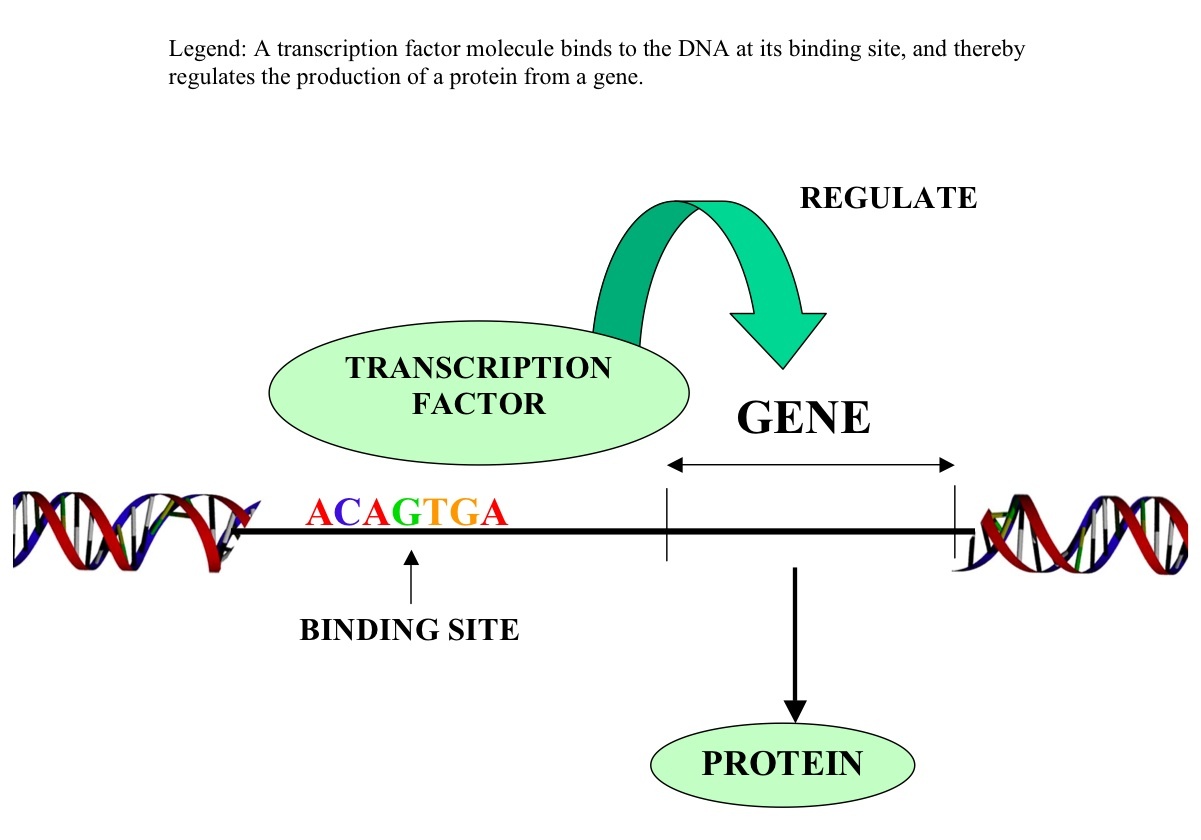
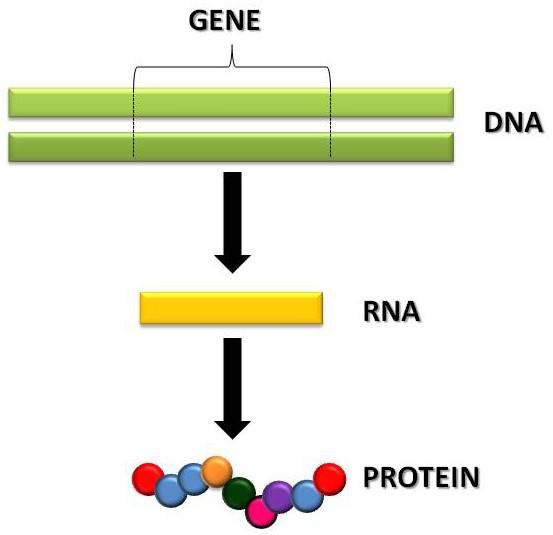
In an operon, the sequence of DNA that serves as a binding site for a repressor, and thereby regulates the expression of structural genes.
promoter
inducer
operator
repressor


In the top picture the operon is
on
off
What is 1 (the YELLOW molecule) in the diagram?
RNA polymerase
Inducer
Repressor
Operator
In eukaryotes, DNA is tightly coiled around ____ in chromatin
Histones
Whey
Casein
Hemoglobin

Gene regulation is the process that is used to:
help make sugars for cells in plants.
make glycosomes in cells.
turn genes on and off.
Not sure, need help.

Operons are found in the cells of which of the following types of organisms?
prokaryotes
eukaryotes
animals only
viruses
Which of these is a condition that must be met for Hardy-Weinberg equilibrium?
Extremely small population size
No natural selection
Gene flow
Nonrandom mating
If the frequency of dominant phenotype is 0.36, what is the frequency of the dominant allele?
0.2
0.48
0.6
0.8
What does p stand for?
Dominant allele
Recessive allele
Homozygous dominant
Homozygous recessive
Heterozygous
Which of the following is the equation that you would use for Hardy-Weinberg?
p + 2q = 1
2p + 2q = 1
2p + q = 1
p + q = 1
Which of the following is the equation that you use for Hardy-Weinberg equilibrium?
p2 +2pq + q2 = 1
p2 + q2 = 1
p3 + q3 = 1
p3 + 3pq + q3 = 1
In generation 1, the recessive allele has a frequency of 0.6, and in generation 40 the recessive phenotype has a frequency of 0.36. Is the population in Hardy-Weinberg?
No, the frequency changed from one generation to another
Yes, the frequency changed from one generation to another
No, the frequency remained the same from one generation to another
Yes, the frequency remained the same from one generation to another
If there are 400 red flowers, 200 pink flowers, and 100 white flowers. Solve for the frequency of the dominant allele.
0.76
0.86
0.57
0.71
If there are 400 red flowers, 200 pink flowers, and 100 white flowers. Solve for the frequency of the recessive allele.
0.28
0.14
0.38
0.42
If a population is suffering from genetic drift, which of the Hardy-Weinberg conditions is not being met?
No gene flow
Random mating
Extremely large population size
No mutations
If the frequency of recessive alleles is 0.2, what is the frequency of the homozygous recessive individuals?
0.04
0.16
0.4
0.8
What factors would increase the frequency of a genotype in a population over time?
Increased reproduction rates in a population
Selective pressures that make the trait favorable
Genetic drift
Mutations in the population
Why would the presence of a particular genotype or phenotype decrease in a population over time?
Due to increased competition
Reproductive isolation
Changes in the environment that now make the trait less favorable
Gene flow
What are selection pressures?
Conditions that prevent a population from evolving
Organisms that shape and influence the ecosystem
Random changes in allele frequencies in a population
Any changes in biotic or abiotic factors that influence survivability
What is artificial selection?
When humans selectively breed organisms together to select for traits most desirable to us
When a new species has formed
When new organisms migrate into an area and introduce new genes
When organisms are separated from other members of their population due to new geographic barriers
What is the founder effect?
When survivors of a natural disaster repopulate the environment
When a small population breaks off of an existing population
Changes in the genetic makeup of a population over time
The migration of organisms between two similar populations
How does genetic drift usually affect a population?
Usually it increases the size of a population
Usually it increases the selective pressures on a population
Usually it decreases the genetic variation of the population
Usually it introduces new genes into a population
What are the two types of genetic drift commonly seen?
Temporal isolation and hybrid sterility
Disruptive selection and convergent evolution
Founder effect and bottleneck effect
Gene flow and artificial selection

According to this cladogram, which animal has the closest common ancestor to a crocodile?
Mammals
Lizards and Snakes
Turtles
Birds

Which animal is the out-group?
Mammals
Turtles
Crocodiles
Birds
What is the bottleneck effect?
When survivors of a natural disaster repopulate the area
When selective pressures change and new traits become the most fit for an area.
When members of one population migrate to another population
When new organisms migrate to an area and start a new population
In mice brown fur (B) is dominant over white fur (b). Scientists observed a population of 2000 mice, and found the frequency of the B allele to be 0.7. 10 years later the scientists revisited the population and found the frequency of the B allele to be 0.4.
In the original study, what percentage of the mice would have white fur?
70%
49%
9%
30%
In mice brown fur (B) is dominant over white fur (b). Scientists observed a population of 2000 mice, and found the frequency of the B allele to be 0.7. 10 years later the scientists revisited the population and found the frequency of the B allele to be 0.4.
What could explain the decrease in the frequency of the B allele over the 10 years?
Gene flow that introduced new organisms into the population
New selective pressures that make white fur more favorable
A drought that made the landscape brown and dusty
A mutation that made the b allele dominant
If a recessive disorder is found to affect 1 in 500 live births, what is the frequency of the recessive allele in the population?
0.002
0.9553
0.9125
0.0447
If a recessive disorder is found to affect 1 in 500 live births, what is the frequency of the dominant allele?
0.002
0.9553
0.0447
0.9125
If 36% of a population shows the recessive trait, what percentage of the population would be expected to be heterozygous?
60%
16%
48%
40%
How are biomolecular homologies used to determine phylogeny?
By comparing the similarities in DNA or amino acid sequences
By comparing the behaviors and environments of organisms
By comparing the morphological similarities in organisms
By estimating and comparing the relative ages of the organisms
What are homologous structures?
Structures that are morphologically different but serve the same function
Similar shared structures that may serve different functions
What do homologous structures tell scientists about species who share them?
That the organisms lived during the same time period
That the organisms were exposed to the same selective pressures
That they have undergone convergent evolution
That the organisms share a common ancestor
What is an ancestral trait in a cladogram?
Traits that are new for a recent species
A trait that is shared by more than one lineage
A trait that has disappeared over time
The trait that is present in only one organism
What are the universal conserved processes that support the theory that all life originated from prokaryotic cells?
Protein expression
Glycolysis
DNA replication
All of the above

Which species on this cladogram have four walking legs?
Lancelet
Leopards only
All of the species have this trait
Salamander, turtle, leopards
What are prezygotic barriers to reproduction?
Any barrier that reproductively isolates species
Barriers that prevent the production of a fertilized egg
When the offspring of two organisms are sterile
Barriers that prevent a zygote from developing into a viable offspring
Darwin’s finches on the Galapagos Islands were separated by what kind of reproductive barrier?
Temporal isolation
Behavioral isolation
Geographic isolation
Gamete isolation
What is the difference between allopatric and sympatric speciation?
Sympatric - populations are geographically separated ; Allopatric - populations live together but are reproductively isolated
Allopatric - populations are geographically separated ; Sympatric - populations live together but are reproductively isolated
How can mass extinctions lead to adaptive radiation?
By introducing new post-zygotic barriers
By opening many niches for survivors to fill
By rapidly increasing the reproduction rates to repopulate the Earth
By introducing new selective pressures on populations
What is the difference between punctuated equilibrium and gradualism?
Gradualism believes evolution happens in rapid bursts as environments gradually change
Punctuated equilibrium believes evolution happens in rapid bursts followed by long periods of stability
Gradualism believes evolution occurs continuously and slowly
Punctuated equilibrium believes evolution occurs slowly as environments recover from disasters
What evidence supports the RNA world hypothesis?
All components of RNA can be generated abiotically
RNA can store and regulate the expression of genetic information
RNA can self replicate and perform protein synthesis
All of the above
How can geographic isolation lead to speciation?
These prevent species from reproducing due to different mating seasons
By preventing the mixing of populations and exposing them to different selective pressures
These make the offspring of two species sterile and/or inviable
By changing the courtship rituals of organisms so that they no longer match
What does background extinction rate mean?
The total number of extinctions that have occurred in Earth's history
How many organisms are going extinct without us knowing
The average number of extinctions observed in the fossil record during periods of stability
How many extinctions are currently happening
How is background extinction rate used to determine if a mass extinction is happening?
Comparing the background rate to the current rate
The background extinction rate is the level of extinctions that occurs during a mass extinction
Dividing background rate by historical rate
Comparing the background rate to the rate of extinctions during the most recent mass extinction
The big 3 resources for populations are
food
water
oxygen
shelter/space
Which of the following affect population growth
resoureces
climate/weather
primary productivity
predators
everything listed
Exponential growth of a population is represented by dN/dt=
rN(K + N)
rN(N--KK)
rN(KK-N)
rmaxN
If the population maintains the current growth pattern, a plot of its growth would resemble which of the following?
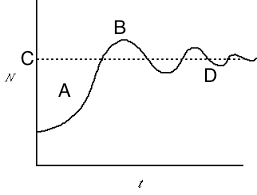

Use the graph above to identify a mature, well-established population in favorable conditions.
A
B
C
D

Use the graph above to identify the carrying capacity of the environment.
B
C
D
E

Use the graph above to identify a population in unfavorable conditions.
B
C
D
E

Use the graph above to identify the exponential growth phase of a new population.
A
B
D
E
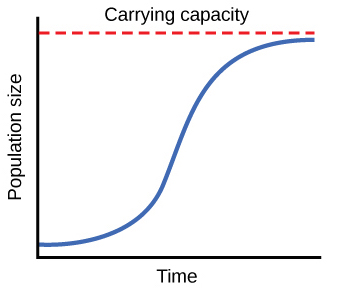

What is the carrying capacity of the following population?
1000
8000
800
600

What is the rate of change for the population grown without a parasite from day 200 to day 400?
200 days
a loss of approximately 15 beetles/200 days
a loss of approximately 30 beetles/200 days
30 beetles
As N approaches K for a certain population, which of the following is predicted by the logistic equation?
The population will increase exponentially
The growth rate will approach 0.
The carrying capacity of the environment will increase.
The growth rate will not change.

Often the growth cycle of one population has an effect on the cycle of another. As moose populations increase, for example, wolf populations also increase. Thus, if we are considering the logistic equation for the wolf population
which of the factors accounts for the effect of the moose population?
dt
N
r
K

Dispersal pattern 1 is one of the most common in nature because...
there is power in numbers
its easier for organisms to fight diseases with this pattern
its easier to obtain resources
there is less competition
What are 2 ways animals may deal with a decrease in energy availability?
fat storage
loose leaves
migration
mimicry
What is one way plants deal with a decrease of energy?
fat storage
loose leaves
store excess water
stare proteins
What property of water allows it to form hydrogen bonds with other molecules?
High heat capacity
Polarity
Low density as a solid
Nonpolarity
Which organelle is responsible for photosynthesis in plant cells?
Mitochondria
Chloroplast
Lysosome
Ribosome
What is the main function of the Golgi Body in a cell?
Protein synthesis
Energy production
Cell division
Processing and packaging of proteins
What property of water allows it to form hydrogen bonds with other molecules?
High heat capacity
Polarity
Low density
Nonpolarity
Which type of molecule is most likely to diffuse through a cell membrane without the need for a channel or carrier protein?
Large, polar
Small, non-polar
Large, non-polar
Small, polar
What is the primary function of the Golgi apparatus in a cell?
Protein synthesis
Energy production
Cell division
Processing and packaging of proteins

