
 Worksheets
Observations of an Ecosystem
Total questions: 54
Worksheet time: 40mins

An ecologist made the following observations of an ecosystem. The water is contaminated with PCBs from an industrial spill. PCBs have been found to biomagnify in a food chain. Which organism(s) IN THE DATA TABLE BELOW would have the highest concentration of PCBs in their tissues? Which would have the least?
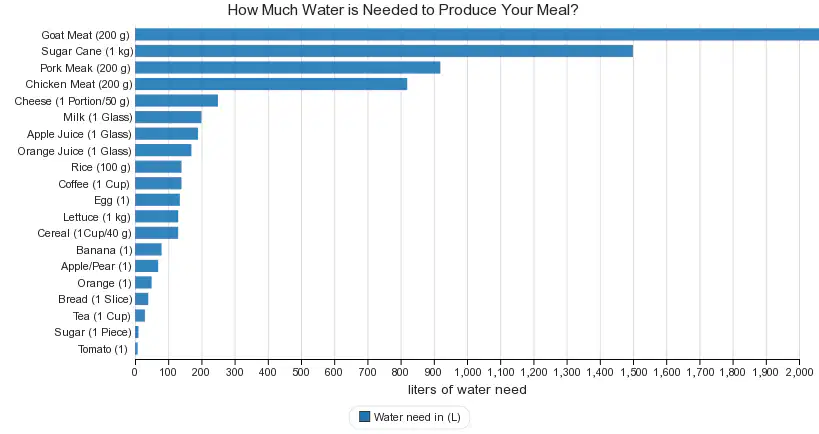
Calculate the approximate amount of water used to produce a meal consisting of pork with rice (100 g), 1 glass of apple juice, and a pear.

What are some ways an individual could reduce his or her water footprint? Use data from the chart to support your answer.
Identify at least THREE things we can expect as global temperatures increase. (please number each one)
Which of the following statements about industrialized agriculture is NOT true? Mark only one oval.
Industrialized agriculture relies on expensive equipment and uses large amounts of seed.
Industrialized agriculture is also called high-input agriculture.
Industrialized agriculture uses large amounts of financial capital, fossil fuels, water, and chemical fertilizers and pesticides.
Industrialized agriculture produces about 10% of the world's food.
In the United States, industrialized farming is controlled by Mark only one oval.
local farmers and their families
a few giant, multinational corporations
government
Industrialized agriculture practices monoculture, which is Mark only one oval.
producing a single crop at a time.
increasing the biodiversity of farmland.
protecting crops from pests.
planting a variety of crops in each field at the same time.
Which of the following statements is NOT true about traditional agriculture:
Traditional agriculture is low-input compared with industrialized agriculture.
Traditional agriculture provides the vast majority of the world's food crops.
Traditional agriculture grows less of the world's food than industrial agriculture.
Many traditional farmers practice polyculture.
Crops are grown without the use of chemical pesticides or fertilizers in:
industrialized agriculture
traditional agriculture
organic agriculture
regenerative agriculture
Polyculture
is the practice of growing several crops on the same plot simultaneously.
Polyculture keeps the topsoil covered, reducing soil erosion from wind and water.
Polyculture increases biodiversity, reducing the chance of losing all or most of the year's food supply to pests.
all of the above
Which of the following statements is NOT true of regenerative agriculture?
lessens the effects of climate change
allows the soil to store more carbon
protects soil microbes
benefits large corporations
Food deserts
are areas in urban areas that do not have access to grocery stores
often cause urban residents to get food from small convenience stores or fast food restaurants
causes people to have diets that have a negative impact on their health.
all of the above
In sub-Saharan Africa where electricity is costly and unreliable these systems allow farmers to grow fruits and vegetables during the dry season:
terrace farming
no till agriculture
solar powered irrigation systems
buffer zones
In the city of Milwaukee, Wisconsin Will Allen's farm Growing Power does all of the following EXCEPT:
teaches 1,000 school children a year where their food comes from
provides fresh produce to residents that live in a food desert
provides jobs building greenhouses and working on the farm
uses chemical fertilizers to help the growth of their plants
This soil conservation practice keeps carbon in the soil and safeguards soil microbes by not disturbing the soil they live in.
drip irrigation
planting buffer zones along rivers and streams
no till agriculture
terrace farming
This agricultural method is often practiced in areas of tropical rainforest to clear forested land for planting crops.
no till agriculture
slash and burn farming
planting perennial crops
planting buffers along water ways
Soil salinization can result from
the evaporation of irrigation water leaving salts behind in the soil
too much carbon in the soil
too much nitrogen in the soil
Soil salinization is a concern for farmers because
plants cannot tolerate high levels of nutrients in the soil.
plants cannot tolerate high levels of salts in the soil.
Soil salinization is not a concern because it does not hinder plant growth.
Which of the following is NOT a true statement about the Dust Bowl?
resulted in topsoil from the Great Plains being blown as far east as Washington, DC
was a soil erosion disaster that hit the southern Great Plains of the United States
was caused by the "great plow up" of grasses that left topsoil uncovered, without roots holding it in place
did not have an impact on the lives of Americans in the 1930's.
The benefits of the Green Revolution included: PICK TWO
developing sustainable methods of growing food
increasing crop yields, to grow more food for more people
lowering the cost of food
protecting the health of the world's soil
The negative impacts of the Green Revolution on land use and soil health were: PICK TWO
increased use of chemical fertilizers and pesticides
increased use of fossil fuels
improvements to people's health
better nutrition

Planting cover crops
prevents soil erosion by leaving plant roots in place to hold soil in place
is an unsustainable agricultural practice
results in the loss of nutrients from the soil
is not a part of regenerative agricultural practices
The following statement about genetically modified organisms is NOT true:
Genetically modified organisms are proven to be detrimental to human health.
GMO's are often produced by transferring the genes of one species into another species
Genetically modified organisms can help farmers lessen their use of pesticides
Genetically modified organisms can be drought resistant, helping farmers to deal with climate change
This resource is used faster than it can be replenished.
Renewable
Nonrenewable
Wind
Solar
Which of the foundational energy sources is primarily used for electricity?
coal
oil
natural gas
nuclear power
Which of the following fossil fuels is primarily used for transportation?
coal
oil
natural gas
nuclear
This nonrenewable energy source formed in ancient swamps when the remains of dead plants became peat which was buried in layers of the Earth under heat and pressure for millions of years.
oil
natural gas
coal
uranium
These nonrenewable energy resources formed in ancient seas, from the remains of dead algae buried under heat and pressure for millions of years.
nuclear and coal
wind and solar
oil and natural gas
hydroelectric and geothermal
How long did it take fossil fuels to form?
3 million years
30 million years
300 million years
800 million years
How are fossil fuels related to the greenhouse effect? Mark only one oval.
Fossil fuels are not related to the green house effect.
The combustion of fossil fuels adds oxygen, a green house gas, to the atmosphere.
When fossil fuels are buried under the Earth they cause climate change.
Burning fossil fuels releases carbon dioxide, a green house gas, to the atmosphere.

Use the pie chart to answer questions 8 and 9.
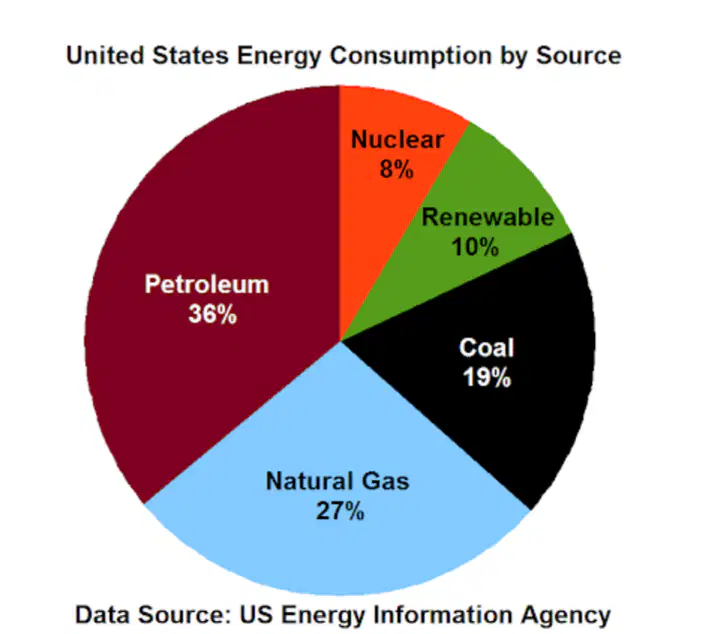
According to this pie chart what percentage of energy consumed is from fossil fuels?
18%
90%
82%
10%
Which energy source supplied more power, coal or renewables?
coal
renewables
nuclear
The following can be released from pulverized rocks during coal mining and end up in nearby waterways
salts
heavy metals
toxic chemicals
all of these
Which of the following statements is NOT true about coal?
Coal can be found in the Appalachian mountains in West Virginia
Coal provides fast, simple electricity generation
Coal is one of the cheapest sources of energy
Burning coal does not contribute to climate change or air pollution
A type of mining that clears large expanses of forests and uses explosives to remove the top of a mountain and expose seams of coal underneath the removed soil and rocks.
underground mining
offshore drilling
fracking
mountaintop removal
We have ________________ left of our coal reserves.
10 - 20 years
50 - 75 years
hundreds of years
we are in danger of running out of coal shortly
Burning coal contributes to which of the following:
Local air pollution such as smog that causes respiratory illnesses
Acid precipitation
Global climate change
The bioaccumulation of mercury in our food chains
Burning coal contributes to each of these environmental and health problems
Which of the following statements about oil is NOT true?
Oil is a high energy fuel, making it difficult to replace
The United States uses one tanker of oil every 45 minutes
The world uses one tanker of oil every 13 minutes
Burning oil does not release any CO2 emissions
Concern(s) about continuing to use oil as an energy source include:
As we push into more remote areas, oil drilling will become more dangerous
Oil will become more expensive as demand for transportation increases
Our replacement for oil will be different sources of oil, rather than a different source of energy
All of these are concerns about our use of oil as an energy source
_______ can be used to fill in the gap when solar and wind power are not available.
Coal
Oil
Natural gas
Hydraulic fracturing is used to extract ____________.
Coal
Oil
Natural gas
Wind power
The primary concern with “fracking” is
Mercury in our oceans
Contamination of drinking water
Acid precipitation
Fracking is a “clean” process with no concerns
The following is statement is NOT true about natural gas
There is a good supply of natural gas
Natural gas is an inexpensive power source
Combustion of natural gas produces more carbon dioxide than the combustion of coal
Natural gas is a low carbon fossil fuel
The biggest challenge(s) with nuclear power is/are
Carbon dioxide emissions
Waste management
Accidents
Nuclear weapons proliferation
b, c and d
What element is used as fuel in nuclear reactors?
Carbon
Hydrogen
Nitrogen
Uranium
What type of reaction is currently used to produce the energy required in a nuclear reactor?
Fission
Fusion
Single replacement reaction
Double replacement reaction
In a fission reaction atoms ____________________
split apart
join together
are not affected
enter the orbit
Which of the following statements IS true about nuclear waste? Mark only one oval.
It should be stored in porous containers
It will decay within 100 years
It is easily transported for storage elsewhere
It stays radioactive for thousands of years
The number we need to pay attention to in order to reduce the impacts of climate change is the concentration (ppm) of. Mark only one oval.
oxygen in the atmosphere
nitrogen in the atmosphere
carbon dioxide in the atmosphere
ozone in the atmosphere
How many degrees of warming are delegates worried about? Mark only one oval.
1 degree celsius
2 degrees celsius
3 degrees celsius
4 degrees celsius
Some variation in the planet's temperature over time is natural. Why has 2/3 of the increase in temperature taken place over the last 40 years?
This is when we began to explore other continents.
This is when we began to ship goods around the world.
Ever since we started burning fossil fuels such as coal and oil during the Industrial Revolution.
Ever since we began using nuclear energy for electricity.
Stressful environmental conditions cause coral to expel the algae that live within their cells. When this happens the coral lose color. This phenomenon is known as (a) .
Mollusks such as clams have weaker shells due to ______________________. (pick the most specific answer)
water pollution
ocean acidification
coral bleaching
acid precipitation

