wayground logo

Free Printable Worksheets

Font size

S
M
L
XL
Worksheets

Big, great, enormous, huge Review - CT3

Total questions: 134

Worksheet time: 1hrs 7mins

Name
Class
Date
1.

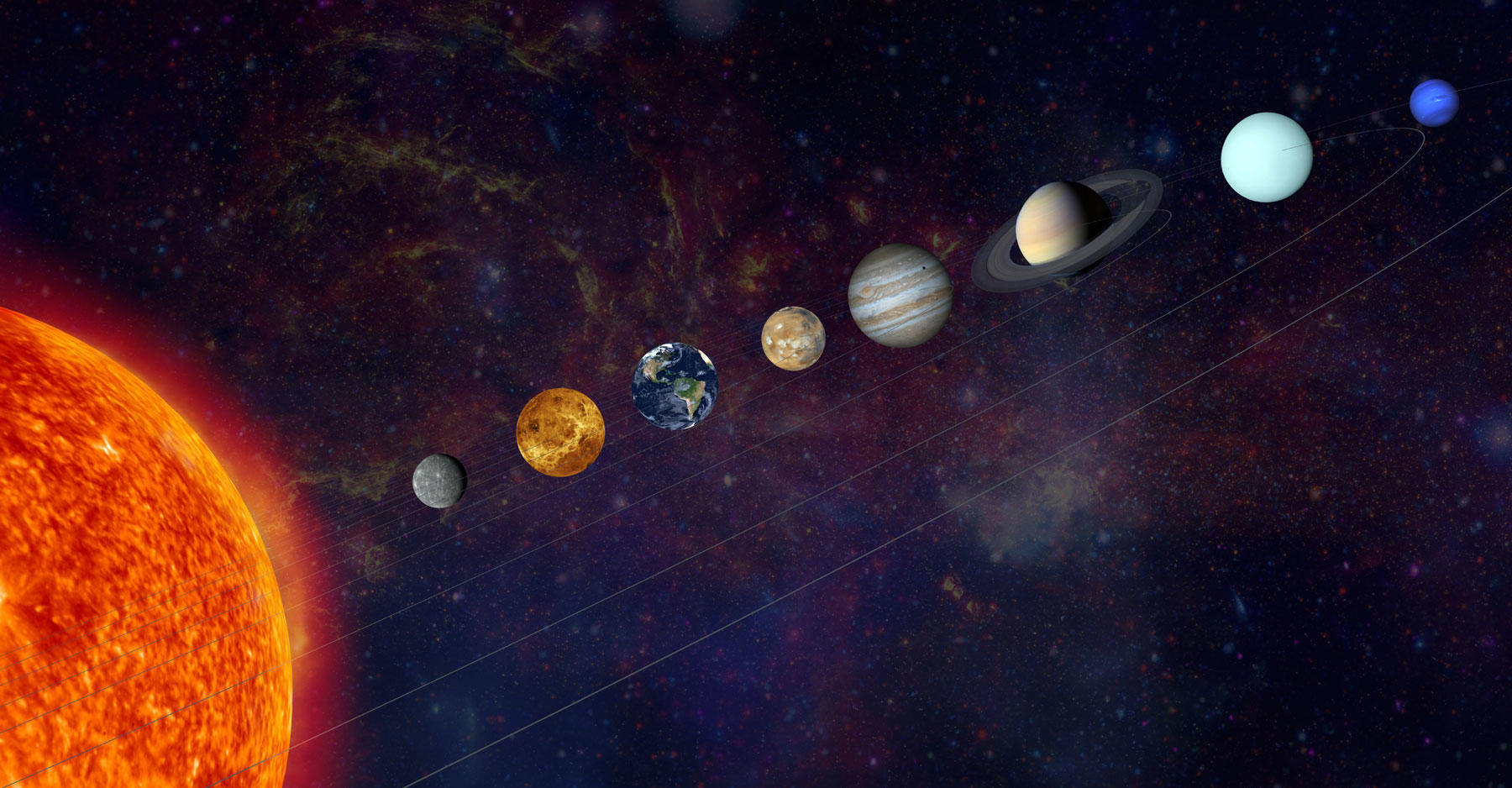
1st planet from the sun 

a)

Mercury 

b)

Venus 

c)

Earth 

d)

Mars

2.

2nd  planet from the sun 

a)

Mercury 

b)

Venus 

c)

Earth 

d)

Mars 

3.

3rd  planet from the sun 

a)

Mercury 

b)

Venus 

c)

Earth 

d)

Mars 

4.

4th planet from the sun 

a)

Mercury 

b)

Venus 

c)

Earth 

d)

Mars

5.

5th planet from the sun 

a)

Jupiter 

b)

Saturn 

c)

Uranus 

d)

Neptune 

6.

6th planet from the sun 

a)

Jupiter

b)

Saturn 

c)

Uranus 

d)

Neptune 

7.

7th planet from the sun 

a)

Jupiter 

b)

Saturn 

c)

Uranus 

d)

Neptune 

8.

8th  planet from the sun 

a)

Jupiter 

b)

Saturn 

c)

Uranus 

d)

Neptune 

9.

What is at the center of our solar system?

a)

asteroid belt

b)

Earth

c)

sun

d)

moon

10.

How many planets are in our solar system?

a)

6

b)

7

c)

8

d)

9

11.

Which planet is the largest?

a)

Jupiter

b)

Saturn

c)

Uranus

d)

Neptune

12.

The solar system consists of the sun, smaller objects, and ...

a)

8 planets and their moons

b)

6 planets 

c)

only moons

d)

more than 100 stars

13.

Saturn is known for it's _______. 

a)

rings

b)

atmopshere

c)

moons

d)

temperature 

14.

Saturn's rings are made of chunks of 

a)

volcanoes

b)

ice and rock

c)

nitrogen and helium 

d)

ice and 

15.

Which two facts describe Earth?

a)

largest inner planet

b)

outer planet

c)

terrestrial planet

d)

gas giant

16.

Compared to the inner planets, the outer planets are...

a)

larger

b)

warmer

c)

denser

d)

better

17.

Which planet is known for it's red, rust covered surface?

a)

Venus

b)

Mercury

c)

Mars

d)

Jupiter

18.

Which is the hottest planet?

a)

Mercury

b)

Venus

c)

Earth

d)

Neptune

19.

which planet is the third from the sun?

a)

Mercury 

b)

Neptune 

c)

Pluto 

d)

Earth 

20.

The spinning of an object on its axis is called______

a)

orbit

b)

rotation

c)

revolution

d)

tide

21.

The earth orbits around...

a)

the sun.

b)

the moon

c)

other planets

d)

the Milky Way

22.

What are the four terrestrial (inner) planets?

a)

Earth, Uranus, Mercury, Venus

b)

Mercury Venus Earth Saturn

c)

Mars, Earth , Mercury, Venus

d)

Mars, Earth, Neptune, Mercury

23.

The inner planets are also called...

a)

terrestrial planets

b)

gas giants

24.

Gas giants

a)

Inner planets

b)

Outer planets

c)

Both

d)

Venus

25.

The greater mass a planet has, 

a)

the greater the gravitational force it has

b)

the less gravitational force it has

c)

gravitational force does not depend on mass

26.

Which planet was once known as the ninth planet?

a)

Pluto

b)

Mercury

c)

Mars

d)

Earth

27.

The red planet

a)

Earth

b)

Mars

c)

Jupiter

d)

Venus

28.

Which is the farthest planet from the sun?

a)

Neptune

b)

Saturn

c)

Jupiter

d)

Uranus

29.

Which is the smallest planet?

a)

Mercury

b)

Mars

c)

Earth

d)

Venus

30.

Saturn is known for it's _______. 

a)

rings

b)

atmopshere

c)

moons

d)

temperature 

31.

Saturn's rings are made of chunks of 

a)

volcanoes

b)

ice and rock

c)

nitrogen and helium 

d)

ice and 

32.

Uranus is different that other planets because it rotates on it's side. 

a)

True

b)

False

33.

Which planet is the largest?

a)

Jupiter

b)

Saturn

c)

Uranus

d)

Neptune

34.

All planets in our solar system are the same size.

a)

true

b)

false

35.

Choose the largest planet in our solar system.

a)

Jupiter

b)

Neptune

c)

Mercury

d)

Earth

36.

Choose components of our solar system.

a)

planets

b)

moons

c)

asteroids

d)

comets

e)

sun

37.

Choose the third planet in the solar system.

a)

Jupter

b)

Neptune

c)

Mars

d)

Earth

38.

Name the star closest to Earth.

a)

Polaris

b)

Sun

c)

Vega

d)

Alpha Centauri

39.

Choose the smallest planet in our solar system.

a)

Mercury

b)

Venus

c)

Europa

d)

Earth

40.

Choose the planet in our solar system that rotates on its side.

a)

Jupiter

b)

Neptune

c)

Uranus

d)

Earth

41.

Choose the planet closest to the sun.

a)

Neptune

b)

Mercury

c)

Earth

d)

Pluto

42.

Choose the planet closest in size to Earth.

a)

Mars

b)

Jupiter

c)

the moon

d)

the sun

43.

Mars is often called __________ due to rust in rocks.

a)

Red Planet

b)

Blue Planet

c)

Green Planet

d)

Orange Planet

44.

Which is the largest object in our solar system?

a)

Sun

b)

Jupiter

c)

Earth

d)

Pluto

45.

Which planet is closest to the sun?

a)

Uranus

b)

Mercury

c)

Neptune

d)

Earth

46.

Which of the following is an accurate model of how the Sun, Earth, and Moon move?

a)

Sun and moon orbit Earth

b)

Earth and moon orbit Sun

c)

Earth orbit's the Sun and the moon orbits Earth

d)

Earth and sun orbit moon

47.

One of the main differences between the outer and inner planets is __________.

a)

The inner planets all have water

b)

the inner planets are much bigger than the outer planets

c)

the outer planets are gas planets

d)

the outer planets have rings, and the inner planets don't

48.

The order of the planets is:

a)

Mars,Venus,Earth,
Mercury,Saturn
Jupiter, Uranus, Neptune

b)

Earth,Venus,Mars
Jupiter, Neptune,
Mercury,Saturn,
Uranus

c)

Mercury,Venus,Earth
Mars,Jupiter,
Saturn,Uranus
Neptune

49.

Which planet is the largest?

a)

Jupiter

b)

Saturn

c)

Uranus

d)

Neptune

50.

The surface of this planet appears red due to rusting iron in the rocks.

a)

Mercury

b)

Mars

c)

Pluto

d)

Venus

51.
Almost Earth’s twin in size and mass, this planet has very thick atmosphere.
a)
Venus
b)
Mars
c)
Mercury
d)
Neptune
52.

This cold, blue planet was discovered by a mathematical prediction.

a)

Neptune

b)

Jupiter

c)

Mars

d)

Venus

53.
Only planet known to have life
a)
Earth
b)
Mars
c)
Venus
d)
Mercury
54.
What is a common characteristic of the inner planets?
a)
Large
b)
Gaseous
c)
Rings
d)
Rocky Surface
55.
True or False
The planets are all equally distanced from each other.
a)
True
b)
False
56.
Which planet is the smallest?
a)
Mercury
b)
Venus
c)
Earth
d)
Mars
57.
Which planet rotates to give day/night every 24 hours?
a)
Mercury
b)
Venus
c)
Earth
d)
Mars
58.
What is in between the inner planets and the outer planets?
a)
Asteroid belt
b)
Kuiper belt
c)
Sun
d)
Moon
59.
Which planet has a Great Dark Spot?
a)
Jupiter
b)
Saturn
c)
Uranus
d)
Neptune
60.

................................. are small rocky or metallic bodies that orbit the sun in the solar system.

a)

Planets

b)

Asteroids

c)

Comets

d)

Meteorite

61.

Where is the Asteroid belt located?

a)

Between Earth and Mars

b)

Between Venus and Mars

c)

Between Mars and Jupiter

d)

Between Mercury and Venus

62.
Made of ice, dust and gas
a)
asteroid
b)
meteoroid
c)
comet
d)
meteor
63.
Appears as a streak in the sky.
a)
asteroid
b)
meteoroid
c)
comet
d)
meteor
64.
Often called shooting stars.
a)
asteroid
b)
meteoroid
c)
comet
d)
meteor
65.

Piece of rock that burns up as it passes through the earth's atmosphere.

a)

asteroid

b)

meteoroid

c)

comet

d)

meteor

66.
Piece of a meteoroid that strikes the earth's surface
a)
comet
b)
asteroid
c)
meteor
d)
meteorite
67.

One similarity between asteroids, comets and meteoroids is that they all:

a)

are made of rock

b)

come from the Asteroid Belt

c)

come from the Oort Cloud

d)

orbit the sun

68.

A meteorite is DIFFERENT from a comet mainly because

a)

a meteorite has a tail of ice and gas.

b)

a meteorite is found in orbit between Jupiter and Mars.

c)

a meteorite enters the Earth's atmoshere.

d)

a meteorite is made of rock and snow.

69.

I am located between Mars and Jupiter.

a)

Comet belt

b)

Asteroid belt

c)

Meteor belt

d)

Stars

70.

Which object in space is NOT made of rock and metal/iron?

a)

Asteroid

b)

Meteor

c)

Meteorite

d)

Comet

71.

Asteroids can be found found in regions called the ................. and ....................

a)

Kuiper Belt

b)

Asteroid Belt

c)

Oort Cloud

d)

Earth's surface

72.

A comet forms a tail when

a)

It is deep in outer space and begins to melt

b)

It gets close to the sun and begins to melt

73.

A meteor that does not burn up in Earth's atmosphere and reaches Earth's surface

a)

Meteorite

b)

Meteoroid

c)

Meteor

74.
A light streaking across the night sky is classified as a/an....
a)
Meteorite
b)
Asteroid
c)
Comet
d)
Meteor
75.
The only planet that can support life is _____________________________.
a)
Mercury
b)
Neptune
c)
Pluto
d)
Earth
76.
What is the habitable zone?
a)
A zone with the correct distance away from a star
b)
A zone in space where water turns into vapor
c)
A zone where life can not be sustained
d)
A zone in space where water is frozen
77.
In order for life as we know it to exist, a planet must have ______________________
a)
heat
b)
animals
c)
liquid water
d)
solar energy
78.
Earth’s atmosphere contains water vapor and carbon dioxide. These greenhouse gases are important because they -
a)
are substances animals need to breathe.
b)
trap thermal energy in the atmosphere.
c)

protect against magnetic particles.
d)
create Earth’s gravitational field.
79.
Which helps protect the earth from radiation?
a)
Water
b)
Atmosphere
c)
Mantle
d)
Gravity
80.
Mars is inside the habitable zone.
a)
true
b)
false
81.
The Goldilocks Zone is determined by the
a)
mass and brightness of the planet
b)
mass of the planet
c)
mass and temperture of the star
d)
gravity of the star
82.

What is the goal of the Kepler mission?

a)

Survey a portion of our region of the Milky Way Galaxy to discover dozens of Earth-sized planets in or near teh habitable zone.

b)

Survey a portion of our region of the Milky Way galaxy to discover dozens of Earth-sized planets in or near the in-habitable zone.

c)

Survey a portion of our region of the Milky Way galaxy to discover dozens of Mercury-sized planets in or near the habitable zone.

d)

Survey a portion of our region of the Milky Way galaxy to discover dozens of Earth-sized planets in or near the habitable zone.

83.

If a planet was positioned half in & half out of the habitable zone it would be able to...

a)

Sustain life because it half of the amount of water will be in liquid form.

b)

Possibly sustain life based on having some water being in liquid form & geothermal activity.

c)

Not support life because half of the water is frozen.

d)

Partially support life, but half of the organisms will freeze when the planet rotates halfway out of the habitable zone.

84.

Scientist search for planets similar to earth based on these characteristics...

a)

The number of other planets that surround the star similar to our Sun.

b)

Distance from star & number of moons the planet has.

c)

The color & size of the star.

d)

Proximity, temperature, and mass of a nearby star.

85.
The force that keeps planets on their orbit...
a)
orbit
b)
stars
c)
planets
d)
gravity
86.
Atmosphere is :
a)
only consisting of argon and oxygen
b)
gases on the floor of the Earth
c)
all the gases around a planet
d)
all the gases near the solar beams
87.
The path a planet takes as it revolves around the sun
a)
phase
b)
orbit
c)
galaxy directed
d)
gravitational force
88.
Why don’t astronauts’ muscles and bones stay strong while in space?
a)
They do not have enough food to eat.
b)
There is no weight to put pressure on their muscles and bones.
c)
They are not able to exercise in space.
d)
They do not have muscles in space.
89.
Why are rockets needed to get to space?
a)
They carry the astronauts in the nozzle.
b)
They have the ability to overcome Earth’s gravity.
c)
They use less fuel than other space craft.
d)
They are the safest mode of travel.
90.
The only planet that can support life is _____________________________.
a)
Mercury
b)
Neptune
c)
Pluto
d)
Earth
91.
Astronauts use special soap that _____.
a)
does not require a washcloth
b)
does not require water to rinse
c)
has strong chemicals
d)
does not have an odor
92.
How would astronauts traveling to Mars have enough water for such a long trip?
a)
They would get it from the sink.
b)
They would store enough on board for the entire trip
c)
They would need to ration and recycle their water.
d)
They would not need much water.
93.
Which is not a reason we need special suits for space exploration?
a)
regulate temperature
b)
provide oxygen (O2)
c)
protect from radiation
d)
keep the astronaut cool
94.
What is the habitable zone?
a)
A zone with the correct distance away from a star
b)
A zone in space where water turns into vapor
c)
A zone where life can not be sustained
d)
A zone in space where water is frozen
95.
In order for life as we know it to exist, a planet must have ______________________
a)
heat
b)
animals
c)
liquid water
d)
solar energy
96.
Which helps protect the earth from radiation?
a)
Water
b)
Atmosphere
c)
Mantle
d)
Gravity
97.
An astronaut should not remove his or her helmet while working outside the space station because the helmet provides -
a)
nitrogen
b)
oxygen
c)
water
d)
food
98.
To offset the effects of the low-gravity space environment on the body, astronauts must -
a)
exercise regularly.
b)
eat high-fat meals.
c)
shower twice a day.
d)
take naps every day.
99.
Astronaut beds have straps attached to provide a safe sleeping environment. What condition of space do the straps accommodate?
a)
Lack of oxygen
b)
Vacuum of space
c)
Microgravity environment
d)
Extreme temperatures
100.
Which of the following accommodations is designed to overcome the unique difficulties associated with showering in space?
a)
A skid-proof floor mat
b)
A drain in the floor of the shower
c)
A vacuum system to control water movement
d)
A bench inside the shower
101.
A spacesuit includes a helmet, gloves, shoes, and a total body covering. What vital part of the spacesuit that keeps the astronaut alive is missing from this list?
a)
A handheld computer
b)
A robotic arm
c)
An oxygen system
d)
A jet pack
102.
There is no air in space. Which of the following accommodations is required for an astronaut to directly communicate with another astronaut in space?
a)
Computer
b)
Radio
c)
Jet Pack
d)
Satellite
103.
Earth’s atmosphere contains water vapor and carbon dioxide. These greenhouse gases are important because they -
a)
are substances animals need to breathe.
b)
trap thermal energy in the atmosphere.
c)

protect against magnetic particles.
d)
create Earth’s gravitational field.
104.
Global warming has been linked to a decrease in 
a)
the size of the polar ice caps 
b)
the temperature of Earth 
c)
the rate of species extinction 
d)
the rate of carbon dioxide production
105.
Which human activity would preserve nonrenewable resources?
a)
deforestation
b)
removing carnivores from a forest 
c)
recycling
d)
heating homes with fossil fuels  
106.
Continued depletion of the ozone layer will most likely result in
a)
an increase in skin cancer among humans 
b)
a decrease in atmospheric pollutants 
c)
an increase in marine ecosystem stability 
d)
a decrease in climatic changes
107.
The acidity of a local stream would most likely be affected by
a)
a change in the percentage of decomposers living in the stream
b)
a new source of air pollution 
c)
a new predator species being introduced to the ecosystem
d)
a decrease in the amount of sunlight that reaches the stream
108.
Increased industrialization will most likely
a)
decrease available habitats 
b)
increase environmental carrying capacity 
c)
increase the stability of ecosystems 
d)
decrease global warming
109.
Which human activity is correctly paired with its likely future consequence?
a)
overfishing in the Atlantic — increase in supply of flounder and salmon as food for people 
b)
development of electric cars or hybrid vehicles — increased rate of global warming 
c)
use of fossil fuels — depletion of underground coal, oil, and natural gas supplies 
d)
genetically engineering animals — less food available to feed the world’s population
110.
Which human activity would most likely deplete nonrenewable resources?
a)
use of natural enemies to eliminate insect pests
b)
development of wildlife refuges 
c)
governmental restriction of industrial pollution 
d)
increased use of fossil fuels
111.
Deforestation of areas considered to be rich sources of genetic material could limit future agricultural and medical advances due to
a)
the maintenance of dynamic equilibrium 
b)
the loss of biodiversity 
c)
an increase in the ecosystem’s carrying capacity
d)
the depletion of the ozone layer
112.
Deforestation by burning has been described as a "double whammy" to the environment, meaning it has 2 negative impacts. Why is this description accurate? 
a)
Forest burning releases CO2 while decreasing oxygen, which disrupts cycles
b)
Deforestation reduces the amount of oxygen in the atmosphere, which depletes the ozone layer
c)
Forest clearing is often followed by land development, which often leads to increased noise pollution
d)
Deforestation increases the number of plant and animal species by destroying habitat
113.
Approximately 75 percent of the Earth's surface is covered in water. So why is water considered such a precious resource?
a)
The greenhouse effect is causing most of the world's freshwater to be trapped in the atmosphere
b)
Only a small fraction of the Earth's water is freshwater available for drinking and irrigation
c)
Each year, more freshwater is being trapped in icecaps located at the North and South Poles
d)
Global warming caused by greenhouse gas emissions will likely cause Earth's oceans to evaporate
114.
Many common products, such as wooden furniture, paper, and books, are made from trees. Which of the following is a likely consequence of humans cutting down a forest in order to make use of the natural resources there? 
a)
the decrease of chemical runoff into the oceans
b)
increased acid rain
c)
the increase of light pollution in cities
d)
the destruction of habitats
115.
What causes smog?
a)
The burning of particulates
b)
The formation of ozone
c)
Acid Rain
d)
the interaction of sunlight with pollutants produced by fossil fuels
116.
What are renewable resources?
a)
Resources that are used faster than they form
b)
a.  Resources that can replenish themselves over time
c)
a.  Resources that exist only in urban areas
d)
Resources that exist only in rural areas
117.
Human activities that degrade ecosystems result in a loss of diversity of the living and nonliving environment.  Two ways in which humans frequently harm ecosystems and affect other organisms is through land use and pollution.

How does land use cause a reduction in biodiversity? 
a)
It decreases the space and resources available to certain species
b)
It causes herbivores to become carnivorous
c)
It provides a more hospitable living environment
d)
It causes all the natural Earth cycles to stop
118.
Humans often change ecosystems as a result of population growth, consumption, and technology. Which of the following exemplifies a way in which humans modify ecosystems? 
a)
factory and automotive emissions causing acid rain 
b)
redirecting and storing freshwater behind dams 
c)
cutting down trees to build new buildings and roads 
d)
all of these
119.
Which of the following is a renewable resource?
a)
coal
b)
solar energy
c)
natural gas
d)
oil
120.
Increased industrialization will most likely
a)
decrease available habitats 
b)
increase environmental carrying capacity 
c)
increase the stability of ecosystems 
d)
decrease global warming
121.

1. What is one of the greatest threats to biodiversity on Earth?

a)

habitat destruction

b)

loss of drinking water

c)

decrease in food supply

d)

pollution

122.

1. Why might an introduced animal species overrun native species in an ecosystem?

a)

. Its population size is smaller than those of native species.

b)

. It is more energy efficient, so it eats less food.

c)

It is a predator of the native species.

d)

It often has no natural enemies

123.

Which of these is one cause of deforestation?

a)

Urbanization

b)

Buying a Christmas tree during the holidays

c)

Overbreeding birds in the wild

d)

Cutting down the tree in your backyard

124.
What is deforestation?
a)
Clearing Earth's forests on a massive scale
b)
Eating too much vegetables
c)
Going to a forest and pulling weeds
d)
Clearing the five trees in my backyard
125.

When human-made chemicals and garbage find their way into nature and harm the air, soil, and water it is called

a)

pollution

b)

habitat destruction

c)

overexploitation

d)

climate change

126.

The largest threat to biodiversity is

a)

bacteria

b)

fungi

c)

humans

d)

plants

127.
Most water pollution is the result of
a)
human activities.
b)
drought.
c)
volcanic eruptions.
d)
storms.
128.
What is the major cause for air pollution? 
a)
factories and cars
b)
cigarretes 
c)
deforestation
d)
oil spills
129.
Approximately 75 percent of the Earth's surface is covered in water. So why is water considered such a precious resource?
a)
The greenhouse effect is causing most of the world's freshwater to be trapped in the atmosphere
b)
Only a small fraction of the Earth's water is freshwater available for drinking and irrigation
c)
Each year, more freshwater is being trapped in icecaps located at the North and South Poles
d)
Global warming caused by greenhouse gas emissions will likely cause Earth's oceans to evaporate
130.
Albert wants to practice conservation. He has decided to examine his lifestyle in order to identify areas in which he can reduce the resources he consumes, reuse resources he already has, and recycle resources that he cannot reuse. In which of the following ways can Albert best reduce the resources he currently consumes?
a)
Use paper grocery bags as gift wrap
b)
Ride a bike to work instead of taking his car
c)
Subscribe to a daily rather than a weekly newspaper
d)
Use an organic rather than synthetic fertilizer in his garden
131.
Global warming has been linked to a decrease in 
a)
the size of the polar ice caps 
b)
the temperature of Earth 
c)
the rate of species extinction 
d)
the rate of carbon dioxide production
132.
About 97% of the water on Earth is ___________________.
a)
fresh water
b)
groundwater
c)
salt water
d)
ice
133.
Less rainfall in an area and higher temperatures could lead to ____________.
a)
urbanization
b)
deforestation
c)
desertification
d)
higher pollution
134.

Urbanization is

a)

clearing of trees in a forested area

b)

spread of desert like conditions due to actions of humans

c)

large numbers of people moving to small areas