
 Worksheets
Quiz #1_Chapters 3 & 5_OpenStax_ Summer 2024
Total questions: 50
Worksheet time: 2hrs 33mins

A belief or attitude that one’s own culture is superior to all others is called:
ethnocentrism
nationalism
xenocentrism
imperialism

Some people think ethnocentrism is harmful when someone assumes that
it is acceptable to discriminate against those from different cultural backgrounds
one should only focus on their own cultural norms and values
the customs and traditions of their own culture are superior to all others

Evaluating another culture solely by the standards of one's own culture is called:
Afrocentrism
Judgmentalism
Egocentrism
Ethnocentrism

German Nazi regime believed that they were a superior race and considered Jews as an inferior race. This reflects an _____________.
Ethnocentrism
Cultural Relativism

The principle that an individual's beliefs and activities should be understood by others in terms of that individual's culture.
Cultural relativism
Ethnocentrism
Xenocentrism
Multiculturalism

Women in India wear red on their wedding day while most Christians wear white. This reflects a/an _______________.
Ethnocentrism
Cultural Relativism

The beliefs and behaviors that a social group shares are known as:
Culture
Counterculture
Subculture
Religion

What term describes the rules that dictate acceptable behavior within a society, which most members follow?
Norms
Values
Beliefs
Customs

Norms can be different in different societies:
True
False
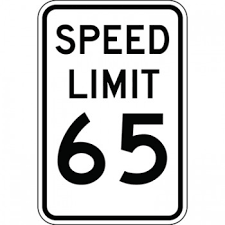
A speed limit sign is an example of a:
Formal Norm
Informal Norm
Behaviors, beliefs, and characteristics of a particular social, ethnic, or age group
government
economy
culture
The spread of a cultural trait from its original location
Cultural relativism
Xenophobia
Cultural diffusion
High culture refers to cultural patterns that distinguish a society's __________
popularity
normal standards
common behavior
elite
Low culture includes the cultural behaviours and ideas that are ________ with most people in a society
accepted
popular
common
normal
Subcultures are groups within a society that
merge
blend in
stand out
conform
Which term refers to a group that actively resists and challenges the prevailing cultural norms?
counter culture
sub culture
cultural lag
lack of culture
What is one of the main effects of Globalization?
Increased isolation of countries
Enhanced cultural exchange
Reduction in international trade
Decreased communication between nations
Which of the following is an example of globalization?
Local farmers selling produce in a village market
International companies operating in multiple countries
Neighborhood garage sale
Refers to the
physical objects and artifacts
created by humans.
Material Culture
Culture Lag
Non-material Culture
Cultural Studies
It refers to the delay in cultural adjustments to changing social conditions.
Culture Shock
Culture Lag
Material Culture
Non-material Culture
People's traditions, their customs, and their values are a part of their
culture
economy
politics
environment
Which social unit plays a key role in instilling cultural values and norms?
the government
the media
the family
the schools
The Sapir-Whorf hypothesis implies that _________.
our language influences our thoughts and worldview
language is a mere reflection of our thoughts
animals can develop complex languages
some cultures do not use spoken language
Norms are rules or expectations that are socially enforced.
True
False
Cultures are composed of shared behaviors and beliefs that are learned.
true
false
What does the sociological term 'socialization' refer to?
the process by which individuals learn and adopt the norms, values, and behaviors appropriate to their society
the distinction between different personality types
the way people behave in social gatherings
an individual's emotional state in a group setting
What occurs in Lawrence Kohlberg’s conventional level?
Morality is developed by pain and pleasure.
Children begin to consider what society considers moral and immoral.
Parental beliefs have no influence on children’s morality.
Children develop the ability to have abstract thoughts.
From a sociological perspective, which factor does not greatly influence a person’s socialization?
Race
Blood type
Class
Gender
Chris Langan’s story illustrates that:
neither socialization nor intelligence affects college admissions.
socialization can be more important than intelligence.
intelligence is more important than socialization.
children raised in one-parent households tend to have higher IQs.
Why are wealthy parents more likely than poor parents to socialize their children toward creativity and problem-solving?
Wealthy parents are not concerned about their children rebelling against their rules.
Wealthy parents are socializing their children toward the skills of white-collar employment.
Wealthy parents never engage in repetitive tasks.
Wealthy parents are more concerned with money than with a good education.
How do schools prepare children to one day enter the workforce?
By socializing them in teamwork
With a standardized curriculum
Through the hidden curriculum
All of the above
Which of the following is typically the earliest agent of socialization?
Workplace
Mass media
School
Family
The process that teaches the norms, values, and other aspects of a culture to new group members.
Internalization
Socialization
Primary Socialization
Secondary Socialization
Who is known for the theory of the looking-glass self?
Sigmund Freud
B.F. Skinner
Charles Cooley
Jean Piaget
Our self-identity is influenced by our interpretation of others' perceptions of us
Instinct
Personality
Looking Glass Self
Sociobiology
As children get older, which agent of socialization tends to replace parents as their most intense and immediate influence?
peers
the media
schools
religion
Environment, upbringing, social influence
Nature
Nurture
If a child develops good football skills because she plays football every day with her dad, it would be
Nature
Nurture
In twin studies, researchers are interested in ______________.
the differences between identical twins raised in different environments.
how being a twin influences cognitive development and personality traits.
the similarities between fraternal twins because they share some genetic material.
the frequency of twin births in various populations.
What is the passage of genetic instructions from one generation to the next?
Genetics
DNA
Heredity
Nucleus
Complete the analogy:
nature is to hereditary factors;
nurture is to ____________
human development
genetics
personal traits
environmental variables
Which of the following is an example of a formal social control?
Peer pressure
Family expectations
Legal sanctions
Community norms
Which of the following is an example of an agent of socialization?
Books
Friends
YouTube
All of the above
Socialization is the lifelong process through which individuals learn and internalize the values, beliefs, and norms of their society.
True
False

