
 Worksheets
Science 8 Final Quizzes
Total questions: 214
Worksheet time: 5hrs 20mins
A plant growing towards a light source is an example of which of the following?
attracting a mate
destroying infectious germs
responding to a stimuli
obtaining moisture from the air
Infants will often smile when they hear a parent’s voice. In this situation, the parent’s voice is considered
stimulus
response
adaptation
resource
Which of the following is an example of homeostasis?
adapting to your environment
maintaining an appropriate respiration rate
the sum of all of your chemical reactions
being composed of more than one cell

Which characteristic of living things is represented in the picture?
Share similar chemicals
Grows and develops
Responds to stimuli
Evolves (as a population)
Responding to change helps an organism to survive. Which are a response to change in an environment? There are two correct choices.
A cell reproduces asexually.
You get hot and sweat.
A cell only grows in a certain environment.
Hummingbirds migrate to the south for the winter.
Both prokaryotes and eukaryotes have DNA.
True
False
Prokaryotic cells do not have…….
membrane bound organelles
cell membrane
DNA
genetic material

Which type of cell?
Prokaryote
Eukaryote
Both
Neither
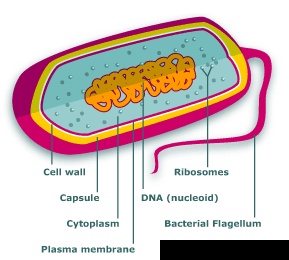
Plants and animal cells are examples of ___ cells
prokaryotic cells
eukaryotic cells
both eukaryotic and prokaryotic
neither
Which organelle is responsible for storing a eukaryotic cells genetic material?
Cytoplasm
Nucleus
Mitochondria
Chloroplast
Which of the following is NOT a characteristic of a Prokaryotic cell?
unicellular
floating DNA
very small
complex
What is the main function of ribosomes in cells?
To control what enters and exits the cell
To produce energy
To contain DNA
To make proteins
What distinguishes a eukaryotic cell from a prokaryotic cell?
Eukaryotic cells have membrane-bound organelles
Eukaryotic cells are smaller
Prokaryotic cells have a nucleus
Eukaryotic cells have no DNA
What is the role of the cell membrane?
To control what goes in and out of the cell
To provide structural support
To make proteins
To produce energy
Please label the cell pictured.
nucleus
cell membrane
organelles
Match the following cells to their pictures.

Animal Cell

Plant Cell

Bacteria Cell
Plant cells and animal cells are both (a) cells. (b) cells contain cell walls that offer them more support. They also have (c) that hold water & nutrients for the cells.
DNA is located in the nucleus
prokaryotes
eukaryotes
Do not have a nucleus
prokaryotes
eukaryotes
Eukaryotic cells are
the smallest of cells
those without DNA inside of a nucleus
more complex than prokaryotic cells
found only making up multicellular organisms
Both prokaryotes and eukaryotes
have a nucleus
have DNA
do not have DNA
have DNA in the form of chromosomes
Both prokaryotes and eukaryotes have a
nucleus
mitochondria
cell membrane and cytoplasm

A disease causing organism
Pathogen
Poison
Vaccine
Prokaryote
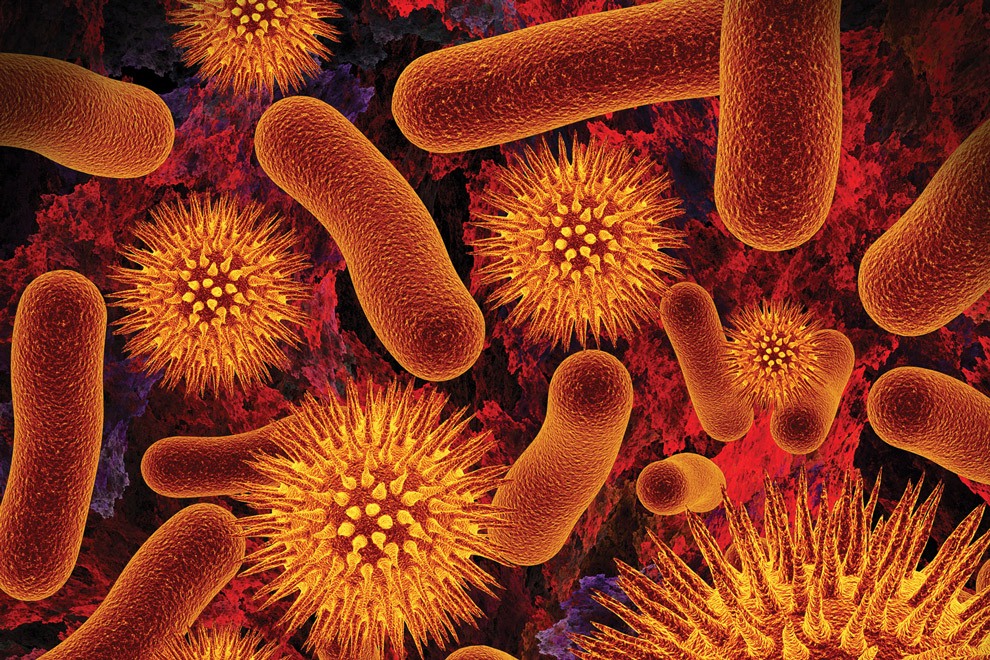
Helpful
Harmful
Both
Neither
Where you would find microorganisms?
in ponds, lakes, and oceans
on food that is rotten
everywhere
in animals, plants, and humans
Which of the following is necessary for photosynthesis?
Sunlight
Oxygen
Glucose
Soil
Which of the following is a product of photosynthesis?
Water
Glucose
Sunlight
Carbon dioxide
Which of the following is produced during cellular respiration?
Protein
Carbon dioxide
Oxygen
Glucose
Which of the following are needed for cellular respiration?
Carbon dioxide and sunlight
Oxygen and glucose
Water and carbon dioxide
ATP and Oxygen
What organelle is responsible for photosynthesis?
Mitochondria
Cell wall
Golgi Apparatus
Chloroplast
The reactants of photosynthesis are:
glucose and water
carbon dioxide and water
glucose and oxygen
carbon dioxide and oxygen
What are the products of photosynthesis?
carbon dioxide and water
glucose and oxygen
carbon dioxide and oxygen
glucose and water
Which gas is removed from the atmosphere during photosynthesis?
Hydrogen
Oxygen
Carbon Dioxide
Nitrogen
Mitochondria are responsible for what?
Photosynthesis
Cellular respiration
Fermentation
Both photosynthesis and cellular respiration

you breathe in oxygen for
photosynthesis
fermentation
mitosis
cellular respiration
What are the inputs (reactants) of photosynthesis? (a)

Cellular Respiration's goal is to (a)
Which of the following is the best description of the process photosynthesis?
Water, oxygen, and light are inputs while carbon dioxide and glucose are outputs
Water, oxygen, carbon dioxide, and light are inputs and glucose is the output.
Water, carbon dioxide, and light are inputs while oxygen and glucose are outputs.
Glucose, oxygen, and light are inputs while carbon dioxide and water are outputs.

Why are many plants green?
plant cells are green
plants absorb green light
chlorophyll reflects green light
rigid cell walls are green
What is the role of the immune system?
To pump blood throughout the body
To protect the body from disease-causing agents
To contain disease-causing organisms to a single area of the body
To give Mr. Elwonger something to test us over
What are the two groups of the immune system?
Acquired and Innate
Acquired and Learned
External and internal
Complex and simple
The innate immune system is...
Always working and doesn't require any special preparation
Needs to be "primed" before it can work to its full effectiveness
Very specific and only defends against a specific pathogen
Not very effective at preventing intruders
Which of these is an example of innate immunity? (TWO correct answers, pick both)
Skin
Antibodies
T-Cells
Mucus
Which of these is an example of acquired immunity? (TWO correct answers, select both)
Macrophages
T-Cells
Antibodies
Antigens
Which of the following regarding viruses and bacteria is not true?
Viruses are non-living
Bacteria are living
Viruses can reproduce outside of a host cell
Antibiotics are ineffective against viruses
Vaccinations work by...
Strengthening the immune system by chemically changing B-cells
Tricking the body into thinking the needle is a pathogen
Injecting dead or weakened bacteria or viruses (or proteins from them) into the bloodstream to trigger the production of antibodies
Vaccines don't work and are just the government's way of injecting microchips into the population so they can keep track of us.
Why might you become ill after visiting a friend who is sick with the flu?
The room your friend was in was too warm.
You ate the same kind of food your friend ate.
You did not dress properly.
The virus that causes the flu entered your body.
Part of the body's defense against pathogens, in which fluid and white blood cells leak from blood vessels into tissues and destroy pathogens by breaking them down?
Protective barrier
Inflammatory response
Immune response
Stomach acid
One of your body's first defense against an incoming pathogen is/are
white blood cells
your skin
red blood cells
antibiotics
Viruses need to invade a cell in order to reproduce and make more of the virus. True or false?
TRUE
FALSE
Skin and mucous are your body's first line of defense against invaders. Their job is to keep out anything that is from the outside. This type of defense is
specific.
non-specific.

The cell-mediated and humoral responses are both specific immune responses because they target specific invaders. Something they have in common is that they both involve cells that keep a memory of the invader. These cells trigger the immune system to respond quickly if the invader ever returns.
memory cells
antibodies
mast cells
cytotoxic T-cells
How many lines of defence in our body?
1
2
3
4
Which of the following lines are non-specific defense?
First line
Second line
Third line
Which of the following are involved in the first line of defence?
Skin
Acid in the stomach
Sweat and sebum oil
Tears and ear wax
White blood cell
Which of the following is involved in the second line of defence?
White blood cell
Skin
Tears
Hydrochloric acid in stomach
Which of the following is a specific defense in the body?
First line
Second line
Third line
Label the states of matter
Solid
Liquid
Gas
Plasma
Sort the states of matter
Solid
Definite shape and volume
Liquid
Definite volume but no definite shape
Gas
No definite shape or volume
Definite shape and volume
Particles are tightly packed together
Examples include ice, wood, and metal
No definite shape but definite volume
Particles are loosely packed together
Examples include water, oil, and milk
Highly ionized gas
Consists of positively charged ions and free electrons
Examples include lightning and stars
Particles vibrate in fixed position
Particles are touching but move freely
Particles move at high speed
Particles are at extreme speed and temperture
How do particles move if in a solid?
Not at all.
Quickly
Slow
They don't move they vibrate
What is condensation?
water vapor turns to gas
Gas turning into liquid
Liquid turning into a water vapor
Solid turning into gas
The colder the temperature, the _______ the particle's motion.
Faster
Slower
Smaller
Larger
When the temperature increases, the pressure ____.
Decreases
Stays the Same
Increases
Need more information
Molecules are constantly moving, this is known as _______ Theory of Matter.
Movement
Atomic
Potential
Kinetic
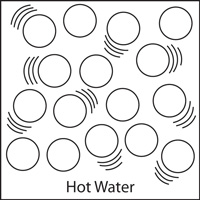
Why does food coloring diffuse faster in hot water vs cold water?
Molecules are more dense allowing them to move faster
Molecules have more energy allowing them to move faster
The food coloring attaches to water molecules, slowing them down
Molecules have more weight with more food coloring
What is sublimation?
Solid to Liquid
Liquid to gas
Gas to Solid
Solid to gas


This state of matter has a constant volume, but fits the space of the container holding it.
Solid
Liquid
Gas
Plasma
This state of matter has a firm, unchanging physical structure.
Solid
Liquid
Gas
Plasma
Which process could cause a material to change state from gas to liquid?
Adding heat
Adding energy
Removing particles
Removing energy
If I add heat to a solid, how will the motion of the particles be affected?
They will move slower
They will stop moving
They will move faster
They will move to a different container

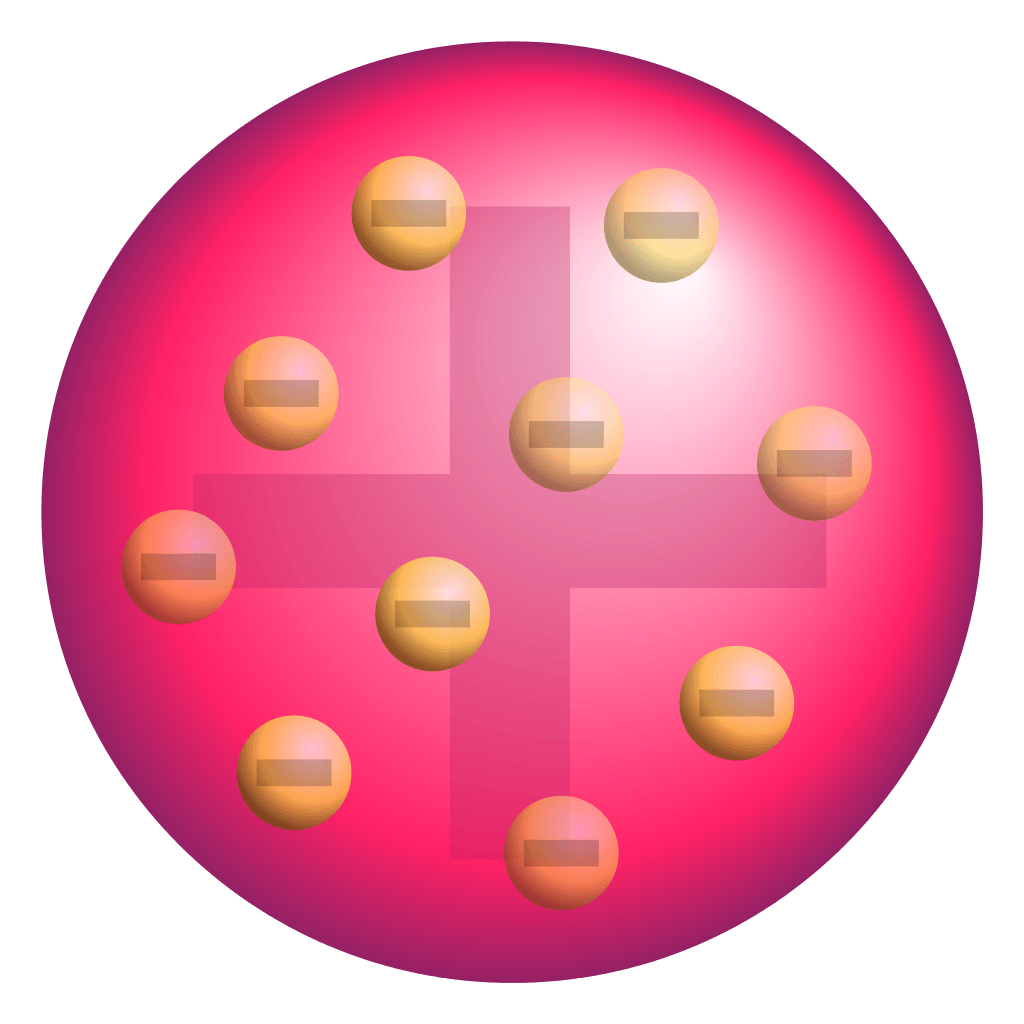
What were J. J. Thomson's three contributions to the atomic theory?
Discovered the electron
Discovered the nucleus -did the gold foil experiment
Used the cathode ray tube in his discovery
Created a model of the atom with electrons moving around the nucleus in fixed orbits
Created the "plum pudding" model of the atom

What were Ernest Rutherford's three contributions to atomic theory?
Discovered that the atom is mostly empty space
Discovered the nucleus- did the gold foil experiment
Used the cathode ray tube in his discovery
Discovered the electron
Discovered that the proton had a positive charge




Label the parts of an atom.
What is the most current atomic model?


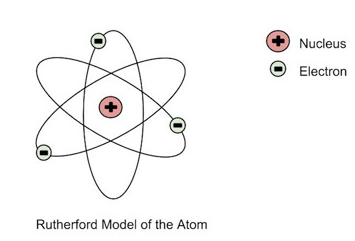

Atoms are made up of ________________
energy
electrons
subatomic particles
gasses
Explain the structure of an atom according to the Rutherford model.
Large, positively charged nucleus at the center, surrounded by positively charged electrons
Small, dense, negatively charged nucleus at the center, surrounded by positively charged electrons
Large, dense, negatively charged nucleus at the center, surrounded by negatively charged electrons
Small, dense, positively charged nucleus at the center, surrounded by negatively charged electrons orbiting the nucleus

Physical or chemical?
Physical
Chemical

Physical or chemical?
Physical
Chemical

Physical or chemical?
Chemical
Physical

Physical or Chemical?
Physical
Chemical

Physical or chemical?
Physical
Chemical
Physical Properties can be ________
observed without changing the matter being studied
observed and measured but the matter has to be changed
observed and measured without changing the matter being studied
How are chemical properties observed?
during chemical reactions
when a chemical is poured in a beaker
when a chemical is at room temperature
Flammability means the ability to _______ and is a _________ property.
melt; chemical
rust; physical
change; physical
burn; chemical
What is the outcome of observing a chemical property?
Nothing
A new substance is formed with different properties
NaCl
A rise in thermal conductivity

Density is a(n)....
Chemical Property
Physical Property
Not a property

Which electromagnetic waves have the highest frequencies and the shortest wavelengths?
microwaves
visible light
gamma rays
x-rays

A wave with a large wavelength will have a ______ frequency and _____ energy
high, low
low, high
high, high
low, low

Which type of waves are used in broadcasting?
infrared rays
X-rays
radio waves
gamma rays

Select the correct order of waves on the EMS from the longest wavelength to the shortest wavelength
Radio, Micro, Infra, Visible, Ultra, X-ray, Gamma
Gamma, X-ray, Ultra, Vis, Infra, Micro, Radio
Vis, Micro, Infra, Ultra, X-ray, Gamma, Radio
Micro, Radio, Vis, Infra, Ultra, X-ray, Gamma

Electromagnetic waves that help your body produce vitamin D are called?
Ultraviolet rays
X-rays
Radio waves
Gamma rays
How are electromagnetic waves different from other waves?
They have very short wavelengths
They transmit energy instead of matter
They can travel through empty space
They can change direction by reflection

Which section of the spectrum is the ONLY one we can see?
Ultraviolet Rays
Gamma Rays
X-Rays
Visible Light

As the frequency of an electromagnetic wave increases, the amount of energy in that wave...
increases.
stays the same.
decreases.

High frequency waves have _________ wavelengths.
varying
long
the same
short

Which electromagnetic waves are used in devices such as heat lamps & TV remote controls?
Ultraviolet Rays
Microwaves
Infrared Rays
Gamma Rays

The electromagnetic spectrum includes the complete range of electromagnetic waves placed in order of:
increasing amplitude
increasing frequency
increasing wavelength
Radio waves
Has the longest wavelengths and the lowest frequency
Microwaves
Used in cell phone communication and police radar systems
Infrared rays
It is used in thermal imaging
UV rays
Overexposure to this can result in sunburns and skin cancer
Gamma Rays
Has the highest energy of all electromagnetic radiation and is the most damaging to human tissue
Used for medical imaging to diagnose health issues in bones and teeth
visible light
ultraviolet rays
x-rays
gamma rays
What is the difference between frequency and wavelength?
The shorter wavelength, the less frequency.
The longer the wavelength, the frequency is greater.
The longer the wavelength, the frequency is less.

Which term means the distance from the crest of one wave to the next crest?
Amplitude
Frequency
Wavelength
Which term means the number of waves that pass a point in 1 second?
Amplitude
Frequency
Wavelength

Increasing the amplitude of a wave ______ the wave’s energy.
Increases
Decreases
Does not change
Which has the SHORTEST wavelength and therefore the highest frequency/most energy? Hint: These waves are also used in cancer treatments.
Gamma Rays
Radio Waves
Ultraviolet Rays
X-rays

Which wave has a low frequency, a long wavelength, and low energy?
A
B
Not enough information to determine

Which wave has a high frequency, a short wavelength, and high energy?
A
B
Not enough information to determine
Match the following terms of Light Properties.

Refraction

Reflection of all visible light

Absorption of all visible light
How does light travels?
In a straight line
in a curved path
in a zig-zag path

A leaf is green because
All colors are reflected except green
The light is not part of the EM
All colors are absorbed except green
The sun light shining on the leaf is green

Match these parts of a light wave
Amplitude
height of the wave
wavelength
distance from crest to crest or trough to trough
crest
top
trough
bottom
frequency
how often waves occur
match these types of energy with how they can be used
Infrared
"seeing" the heat of a person or animal in the dark
Radio
music, communication
Microwaves
cooking
Ultraviolet (UV)
growing plants, tanning, cleaning
X-Rays
"seeing" inside the body (bones)
Refraction occurs when waves enter a new (a) and change (b) .


What is the definition reflection?
The bending of waves as they enter a new medium
Bouncing back of waves from a surface that it can’t pass through
The bending of waves as they pass through openings or around corners
When two interfering waves have a displacement in the same direction, two crests and two troughs overlap. Increased amplitude.
What is the definition of Refraction?
The bending of waves as they enter a new medium
When two interfering waves have a displacement in the opposite direction, crest and trough overlap. Zero amplitude.
When two interfering waves have a displacement in the same direction, two crests and two troughs overlap. Increased amplitude.
What is the definition of Diffraction?
The bending of waves as they enter a new medium
Bouncing back of waves from a surface that it can’t pass through
When two interfering waves have a displacement in the opposite direction, crest and trough overlap. Zero amplitude.
The bending of waves as they pass through openings or around corners


Reflection
seeing your image in a mirror
Refraction
seeing a rainbow after a rainshower
Diffraction
hearing sound from the hallway
Scattering
the reason the sky is blue
Transmission
light passing through the windows
Wave changes direction when moving from one medium to another
Refraction
Wave stays in the same medium but bends around an obstacle.
Diffraction
Wave encounters a barrier that causes the wave to return.
Reflection
Wave completely passes through a medium.
Transmission
Waves combine together to form a larger wave.
Interference
Which of these words are parts of waves or wave behaviour? Tick all the correct ones!
Wavelength
Amplitude
Frequency
Bombast
Reflection
What is frequency?
The number of waves per second
The time for one complete wave
The length of one complete wave
To get a good reflection, a surface should be...
Sparkly
Rough
Smooth
Metal
Waves transfer (a)

The angle of incidence is equal to the angle of reflection
Law of Reflection
Law of Light
Incidence Ray
The Normal

The ray of light that strikes a mirror
Reflected Ray
Incidence Ray
Angle of Incidence
Angle of Reflection

The ray that bounces off the mirror.
Angle of Reflection
Incidience Ray
Reflected Ray
Angle of Reflection

The angle between the incident ray and the normal. (X on the diagram)
Angle of X-Ray
Angle of Reflection
Angle of Incidence
Angle of Normal

The angle between the reflected ray and the normal (labelled Y on the diagram).
Angle of Incidence
Angle of Reflection
Angle of Normal
Angle of Light

An imaginary line that is drawn at a right angle (90 degrees) to a mirror (Green line)
Reflection Ray
Normal
Incidence Ray
Light Ray

If the angle of incidence in the diagram is 80°, the angle of reflection will be:
10°
100°
90°
80°
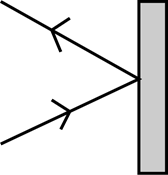
In the illustration, the light ray striking the object is-
In order to see a picture it must
produce light
reflect light
absorb light
Light always travels in a
straight line
wavy line
curved line
zig-zag line
A ray of light is incident on a plane mirror and the angle of incidence is 25 degrees. What is the angle of reflection?
A. 0 degrees
B. 50 degrees
C. 90 degrees
D. 25 degrees

Given that the angle of incidence = 30 degrees
Which is the correct diagam?
A
B
C
D

How would you increase the size of the shadow on the screen?
move the solid objects closer to the light source
move the light source away from the solid objects
move the solid objects closer to the screen
decrease the size of the solid objects

A section of the lithosphere that slowly moves over the asthenosphere.
plate
lithosphere
boundary

The theory that pieces of Earth’s lithosphere are in constant motion.
Theory of Gravity
Theory of Continental Drift
Theory of Plate Tectonics

What is the source of plate tectonic movement?
earthquakes
convection currents
volcanoes

True or False: Oceanic crust is newer and more dense than continental crust.
True
False

Plate boundary where plates divide, or move apart from one another.
Divergent Boundary
Transform Boundary
Convergent (Collision) Boundary
Convergent (Subduction) Boundary

Plate boundary where plates collide and one boundary sinks below the other one.
Divergent Boundary
Transform Boundary
Convergent (Collision) Boundary
Convergent (Subduction) Boundary
Plate boundary where continental plates collide.
Divergent Boundary
Transform Boundary
Convergent (Collision) Boundary
Convergent (Subduction) Boundary

Plate boundary where plates slide horizontally past each other.
Divergent Boundary
Transform Boundary
Convergent (Collision) Boundary
Convergent (Subduction) Boundary

Mid-ocean ridges are caused at this type of plate boundary.
Divergent Boundary
Transform Boundary
Convergent (Collision) Boundary
Convergent (Subduction) Boundary

Rift valleys are caused at this type of plate boundary.
Divergent Boundary
Transform Boundary
Convergent (Collision) Boundary
Convergent (Subduction) Boundary

Volcanic mountains form at this type of plate boundary when part of a subducting plate melts and rises through the crust.
Divergent Boundary
Transform Boundary
Convergent Boundary

Subduction zones form at this type of plate boundary because of the density of the plates.
Divergent Boundary
Transform Boundary
Convergent Boundary
Wegener had evidence to support his Theory of Continental Drift. Which of these are pieces of evidence he had:
The continents seem to fit together like puzzle pieces (matching coastlines)
The similar rocks and rock layers on the coasts of continents that match up
all of these
Fossils records also support similar species found on matching coastlines

The Wegener's theory that the continents have not always been in their present locations but have moved there over millions of years
Continental Drift Theory
Plate Tectonics
Alfred Wegener
Lystrasaurus

What is the correct order (starting from the surface) of Earth’s layers?
crust, outer core, inner core, mantle
mantle, outer core, inner core, crust
crust, mantle, outer core, inner core
outer core, inner core, crust, mantle
The lithosphere is is made of dense solid meal while the asthenosphere is made of liquid molten metal

Most geologists think that the movement of Earth’s plates is caused by _______
convection currents in the mantle
continental drift.
subduction in the mantle
conduction of heat energy

Sea-floor spreading is ...
when continents collide.
what happens at the mid-oceanic ridge where a divergent boundary is causing two plates to move away from one another resulting in spreading of the sea floor.
when continents subduct.
none of these.

During the 1950's, patterns like the ones shown in the diagram below were found within the crust on the ocean floor. What did this discovery provide evidence for?
two plates converging
two plates sliding past each other
New rock is being formed at the mid-ocean ridge at a divergent boundary
how hot spot volcanoes form

The diagram illustrates that
seafloor spreading occurs when two plates collide
the oldest oceanic crust is located far from where the plates are separating
the continents are slowly moving toward each other
the youngest oceanic crust is located far from where it is separating

Magnetic bands on the ocean floor are evidence that Earth’s magnetic field changes.
TRUE
FALSE

The process where cold, dense oceanic slabs are subducted under continental lithosphere.
Slab Pull
Ridge Push
Magnetic Reversal
Convection Current

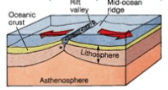
divergent
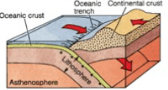
convergent
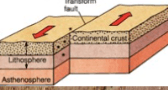
transform
Match the following as either Continental crust or Oceanic crust
Continental
crust
older
Continental
crust
less dense
Oceanic
crust
recycles
Oceanic
crust
basalt rock
Continental
crust
thicker
How do scientists detect tectonic plate motion?
They measure the amount of change in ocean depth using meter sticks.
They collect data using submarines and deep-ocean robots.
They detect motion using special equipment, such as GPS.
They calculate the difference in the time it takes Earth to make one complete revolution around the Sun, and use this information to determine growth in plates.
One well-known transform boundary is the San Andreas fault system in ____________.
California
North Dakota
Hawaii
China

Motion along a transform plate boundary causes
Earthquakes
Volcanoes

Volcanoes are often found near what kind of plate boundaries?
Convergent and divergent
Transform

What kind of plate boundary forms mountain ranges?
Convergent
Divergent
Transform

Most volcanoes and earthquakes occur along plate boundaries on the circum-Pacific belt, which is better known as the _____.
Ring of Sauron
Ring of Fire

A type of fault in which rocks on either side move past each other sideways with little up or down motion.
Epicenter
Normal Fault
Reverse Fault
Strike Slip Fault
Where do volcanoes typically form?
At plate boundaries.
In the middle of tectonic plates.

Which layer is made (mostly) of SOLID iron and nickel?
crust
mantle
outer core
inner core

Which layer of the Earth is the THINNEST?
crust
mantle
outer core
inner core
Which layer of the earth is responsible for convection currents?
crust
outer core
mantle
inner core

Identify the layer of the earth labeled # 6
crust
mantle
outer core
inner core

