
Font size
 Worksheets
Topic 1: Measurement of Joint Mobility
Total questions: 30
Worksheet time: 23mins

According to the arthrokinematics principles of concavity and convexity, which of the following statements about the MCP joint (as shown in the image) is TRUE?
Slide opposite to the angular movement during the movement
Slide the same direction as the angular movement during the movement

According to the arthrokinematics rule of concavity and convexity, which of the following describes the accessory motion during the movement shown in the picture?
Roll and glide in the same direction
Roll and glide in the opposite direction
Roll first and then glide in the same direction
Glide first and then roll in the opposite direction
Which of the following is TRUE regarding the ROM assessment?
PROM should be initiated first to identify the end-feel
PROM gives information on the muscle strength
AROM gives information on the painful range
AROM is the maximum range presents in a joint
Which of the following is FALSE regarding ROM assessment?
AROM gives information subject's movement coordination
PROM gives information on subject's reluctance to move
AROM gives information on extensibility of the soft tissue
PROM gives information on the integrity of joint surfaces
A patient walks into the physiotherapy clinic complaining of the sudden onset of severe right wrist pain and an inability to move the right wrist joint. On palpation, the patient seems to have grade 4 tenderness around the wrist area, accompanied by some swelling. Which of the following is the first step of the ROM assessment?
Observe the movement pattern of restriction
Carefully perform gentle PROM assessment to determine the end-feel
Assess the left side first and then proceed to assess the right side
None of the options
During hip PROM assessment, the therapist felt an abrupt stop nearing the end range. This is described as________________ end-feel.
a normal hard
an abnormal hard
a normal firm
an abnormal firm
A 64-year-old patient who has has right knee contracture and he is not able to completely straighten his right knee. On observation, the therapist noted the right knee is slightly bent at rest. During ROM assessment of the knee joint, the therapist should _______________.
try to position the knee straight in an anatomical position
modify the patient's position and then try to position his knee straight
continue to measure the knee ROM and note the deficiency
skip ROM measurement for now and review it again in his next visit
Which of the following is FALSE regarding the measurement of ROM?
It is compulsory to expose the affected joint during ROM measurement.
The standard position is allowed to be modified if patient requests.
PROM assessment is necessary if the patient has active full ROM with end-range pain.
Goniometer measurement step can be skipped if the patient has AFROM with end-range pain during observation.
Which of the following is NOT a factor that affects the PROM assessment?
Muscle tightness
Muscle weakness
Joint stiffness
Pain
Which of the following methods is NOT recommended to prevent substitute/ trick movements during ROM measurement?
Give proper instructions to patient during the ROM measurement procedure
Demonstrate movement prior to ROM measurement
Get patient to manually stabilize the area during ROM measurement
Have patient relax the assessment area prior to ROM measurement
Which of the following is a contraindication for ROM measurement?
Patient's with hemophilia
Regions with marked osteoporosis
Patient's suspected to have myositis ossificans
Presence of an inflammatory process in a joint
Patients under medications for pain or muscle relaxants
A patient has undergone left Achilles tendon repair surgery yesterday. He was referred for physiotherapy on post-op day 1. The therapist should _____________.
perform gentle PROM assessment of the left ankle joint
only perform gentle AROM assessment of the left ankle joint
observe the AROM and then proceed to perform gentle PROM assessment of the left ankle joint
check the movements of the left knee and hip joint only
A small fragment of bone suspended in the joint fluid can cause a restriction of the joint that may follow a ________________
capsular pattern of restriction
non-capsular pattern of restriction
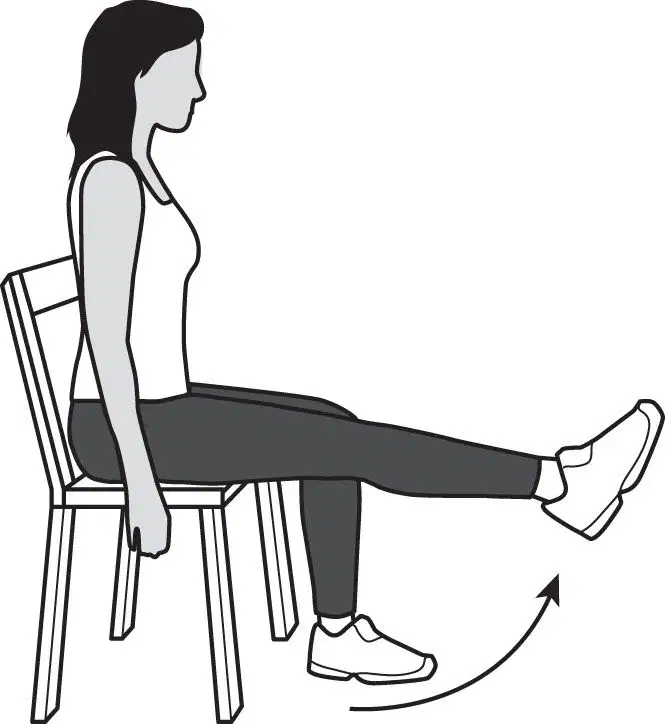
Which of the following describes the tibiofemoral joint during the movement shown in the picture?
the tibia rolls and glides in the opposite direction
the tibia rolls and glides in the same direction
the tibia rolls in an anterior direction and slides in posterior direction
the femur rolls and glides in the same direction
the femur rolls and glides in the opposite direction
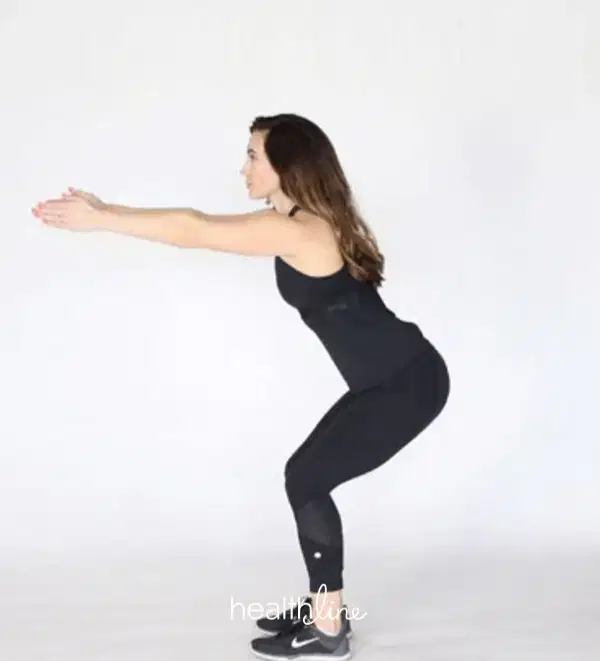
Which of the following describes the tibiofemoral joint during the movement shown in the picture?
The tibia rolls and slides in the opposite direction
The femur rolls and slides in the opposite direction
The femur rolls and slides in the same direction
The tibia rolls and slides in the same
The normal end-feel described as “soft” is typically associated with which movement?
Elbow extension
Knee flexion
Shoulder abduction
Hip extension
Which statement about capsular pattern of restriction is correct?
It occurs in all joints
It is usually caused by ligament injury only
It reflects a predictable limitation of specific movements in a joint
It can be eliminated by stretching one muscle
Non-capsular patterns of restriction are most likely due to:
Joint capsule pathology
Muscle imbalance, ligament adhesion, or intra-articular derangement
Systemic diseases
Normal aging
Which factor does NOT typically affect the range of motion?
Patient’s age
Temperature of the room
Patient's mood
Pain at the joint
The end-feel described as “firm” is usually due to:
Ligament or capsule stretch
Muscle bulk
Bone contacting bone
Fluid accumulation
A non-capsular pattern may indicate all EXCEPT:
Ligament adhesion
Muscle strain
Inflammation of the entire joint capsule
Internal derangement
A 42-year-old man presents with restricted shoulder abduction following adhesive capsulitis. Passive movement reveals that external rotation is most limited, followed by abduction, then internal rotation. Which interpretation BEST explains this finding?
Non-capsular pattern due to ligament sprain
Capsular pattern of the shoulder joint
Extra-articular muscle tightness
Internal derangement of the joint
During knee flexion assessment, a therapist notes that the tibia rolls posteriorly but fails to glide anteriorly, resulting in early joint compression and limited ROM. Which arthrokinematic principle BEST explains this finding?
Roll occurs without glide to enhance stability
Convex–concave rule violation
Spin predominates over roll principle
Gross physiological movements principle
Osteokinematics compensates for arthrokinematics
A 30-year-old athlete has limited active ankle dorsiflexion. PROM is greater than AROM, with no pain at end range.
Which factor MOST likely limits the AROM?
Ligament rupture
Bone block
Muscle weakness
Intra-articular loose body
Which assessment finding BEST indicates a non-capsular pattern of restriction?
Limitation in all directions equally
External rotation most limited
Sudden mechanical block during one movement only
Firm end-feel in all planes
Progressive stiffness in all motions
During PROM assessment, the therapist stabilizes the proximal segment and applies gentle overpressure at end range.
The PRIMARY purpose of this overpressure is to assess:
Muscle strength
Patient willingness
End-feel and limiting structures
Coordination
Functional ability
Which situation represents a contraindication to both AROM and PROM assessment?
Painful joint condition
Recently healed fracture
Suspected joint dislocation
Muscle weakness
A therapist measures hip flexion ROM in a patient with high BMI and notes reduced values compared to normative data, despite normal joint integrity and muscle strength.
Which factor MOST likely explains this reduced ROM?
Examiner inexperience
Gender differences
Age-related stiffness
Soft tissue approximation
Instrument error
A 65-year-old woman following prolonged immobilization of the wrist shows reduced PROM in flexion with a firm, leathery resistance felt at end range. There is no sharp pain.
What is the MOST likely structure limiting the motion?
Muscle spasm
Bone block
Joint capsule
Tendon rupture
Inflammatory synovium
During passive supination, the radial head rotates around its longitudinal axis within the annular ligament, with minimal translation at the joint surface.
Which arthrokinematic movement is MOST responsible for this motion?
Roll
Glide
Spin
Roll with opposite glide

