
NEW
Font size
 Worksheets
Chinese Music Exploration
Total questions: 18
Worksheet time: 9mins
What are some traditional instruments used in Chinese music?
shamisen, koto, taiko, shakuhachi
tabla, sitar, sarangi, sarod
erhu, pipa, guzheng, dizi, xiao
bagpipes
How does music play a role in Chinese culture?
Music in Chinese culture is only used for entertainment purposes
Chinese Music is only played during Chinese New Year
Chinese culture has no connection to music
Chinese music is used in traditional ceremonies, festivals, opera, and daily activities.
Discuss the evolution of Chinese traditional music.
It has evolved over thousands of years, influenced by various dynasties, regions, and cultural exchanges.
Instruments like cello and double bass have always been part of Chinese traditional music
The evolution of Chinese traditional music was solely influenced by Western music
Chinese traditional music has remained unchanged for centuries
Name the sections of a Chinese orchestra.
bowed strings, plucked strings, winds, percussion
string section, wind section, brass section, cymbal section
string section, brass section, woodwind section, percussion section
string section, wind section, brass section, drum section
What materials are commonly used to make Chinese musical instruments?
bamboo, wood, silk, metal
plastic, acrylic
glassc, ceramic
cotton and other plant parts
Explain how Yang Qin is played.
Striking the strings with bamboo sticks
Bowing
Strumming
Blowing
What are Chinese instruments often trying to mimic?
Sounds of nature
Sounds of animals
Musical instruments
City noises
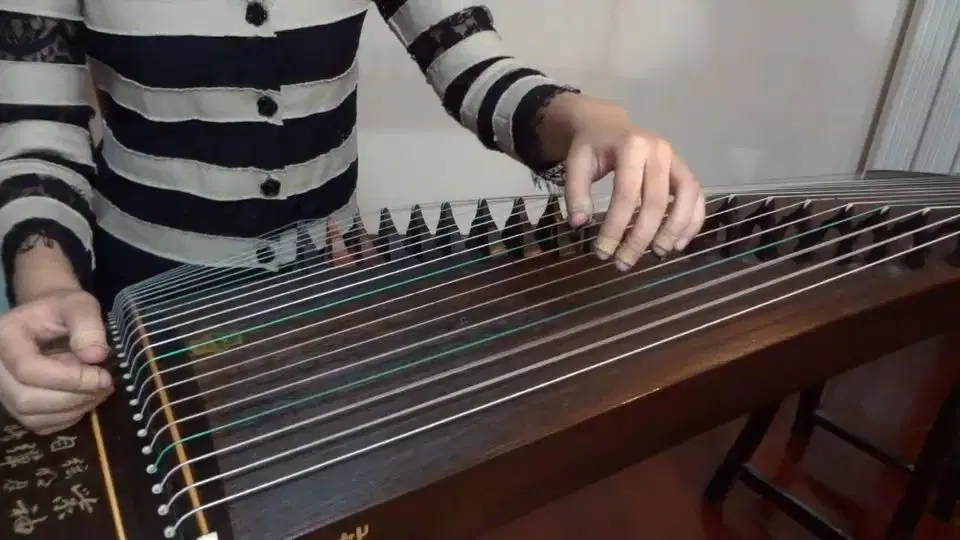
Why do the Guzheng players wear artificial nails?
To protect their nails
To protect the guzheng
To produce a louder and clearer sound
To create special effects
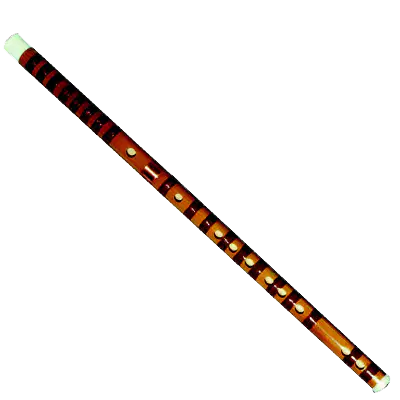
Which section does the Dizi belong to?
Percussion
Winds
Bowed strings
Plucked strings
In olden times, what was the Chinese
Drum "Gu" (鼓) usually used for?
To send war signals
To cheer people on during farming
To coordinate marching during funerals
To keep the rhythm going during buddhist rituals
Explain the concept of pentatonic scale in Chinese music.
The pentatonic scale in Chinese music has seven notes per octave.
The pentatonic scale in Chinese music is derived from Western music theory.
The pentatonic scale in Chinese music is a scale with five notes per octave, commonly used in traditional Chinese melodies.
The pentatonic scale in Chinese music is only used in modern compositions.

How many strings does a Pipa have?
4 strings
11 strings
8 strings
2 strings
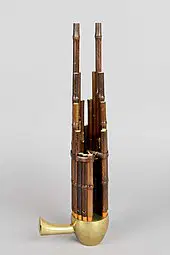
What is this instrument?
suona
Zhong Ruan
Dizi
Sheng
There was an archaelogical
discovery of flutes in China. What
were the flutes made out of?
Animal Bones
Bamboo
Wood
Animal teeth
What is the Erhu bow made out of?
Panda hair
Carbon fibre
Horse hair
Nylon
What is the name of Singapore's biggest Chinese orchestra?
Hua Yu Orchestra (HYO)
Singapore Nanyang Symphony (SNS)
Teng Ensemble
Singapore Chinese Orchestra (SCO)
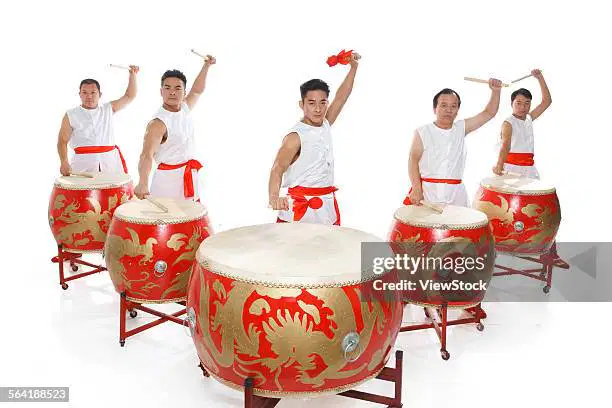
What animal is the Chinese Drum usually used to mimic?
Alligators
Tigers & Lions
Elephants
Sharks
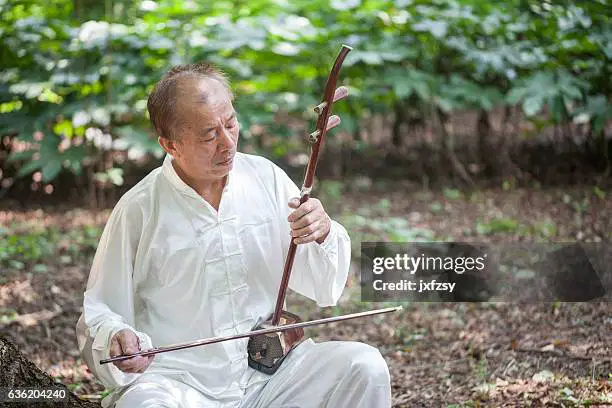
What animal is the Erhu great at mimicking?
Horses
Tigers
Sheep
Monkeys

