
 Worksheets
Chemistry Quiz on Alcohols and Ethers
Total questions: 145
Worksheet time: 1hrs 13mins
What type of reaction occurs in the addition of sodium metal to alcohols?
Replacement of hydrogen in hydroxyl group of alcohols by a metal
Replacement of the hydroxyl group of alcohols by a metal
Replacement of hydroxyl group of alcohol by halogen
Oxidation of alcohols
What type of reaction occurs in the Lucas Test?
Replacement of hydrogen in hydroxyl group of alcohols
Replacement of the hydroxyl group of alcohols by a metal
Replacement of hydroxyl group of alcohol by halogen
Oxidation of alcohols
What type of reaction occurs in the reaction of alcohols with potassium dichromate?
Replacement of hydrogen in hydroxyl group of alcohols
Replacement of the hydroxyl group of alcohols by a metal
Replacement of hydroxyl group of alcohol by halogen
Oxidation of alcohols
Reaction involved in the reaction of methyl alcohol with salicylic acid.
A. Oxidation
C. Lucas Test
D. Chromic Acid Test
What is the general formula of peroxyacids?
RCOOH
RCOR
RCOOOH
RCOOR
They are used to convert alkenes to epoxides.
concentrated acids
hydrohalic acids
Peroxyacids
Weak acids
The ether that was used in the ether experiment is a symmetrical ether.
true
false
Ether is highly flammable.
true
false
Ether is slightly soluble in water because it is non-polar.
true
false
The -OH in ether makes it polar.
true
false
They are the intermédiate products in the oxidation of primary alcohols.
esters
ethers
carboxylic acids
aldehydes
General formula for ketones
RCOR
RCHO
ROR
RCOOH
Functional group in aldehydes
-C=0-
-COOH
-CHO
-0-
Carbaldehydes are cyclic aldehydes.
true
false
Benzophenone is a heterocyclic ketone.
true
false
Positive result in the reaction of alcohols with sodium metal.
Bubbles
Brown precipitate
Cloudiness
Oily layer

What is the correct name?
Ethanal
Methanal
Ethanone
Methanone

Give the common name of
Propyl methyl ether
Butyl ether
Methyl propyl ether
Diethyl Ether
What product is responsible for the positive result in the Lucas Test?
Alkoxide
Alkyl chloride
Hydrogen gas
Manganese dioxide
Positive result in the reaction of methyl alcohol with salicylic acid.
Sweet odor
Minty odor
Cloudiness
Bubble formation

What is the correct name?
4-Methyl-3-pentanone
2-Methyl-3-pentanone
4-Methyl-3-pentanal
2-Methyl-3-pentanal
What is the IUPAC name?
5-Propoxyoctane
4-Propoxyoctane
1-Propyl-1-propoxypentane
1-Butyl-1-propoxypropane
Which of the following alcohol reacts readily with sodium metal?
2-Butanol
3-Methyl-2-hepten-1-ol
Cyclohexanol
2-Methyl-2-propanol
General formula for ether
R-CO-R
R-O-R
R-OH
RCOOH

What is the name of this aldehyde
Ethylmethylethanal
2-Methylbutanal
Methy|propanal
3-Methylbutanal
What was formed after dipping the heated copper spiral in methanol?
Furfural
Resorcinol
Cupric oxide
Formaldehyde
What product is responsible for the positive result in the reaction of alcohols with sodium metal?
Alkoxide
Alkyl chloride
Hydrogen gas
Manganese dioxide
They are alkoxy derivatives of hydrocarbons.
Alcohols
Esters
Ethers
Amines
What is the best solvent for ether?
Water
Conc. HCI
Conc. NaOH
Ethyl alcohol
A reaction where alcohol is converted to a simple ether.
Williamson ether synthesis
Reduction
Dehydration
What was liberated upon adding acidified potassium iodide to ether?
Iodine
Starch
Hydrogen
Peroxide
What is the product in the reaction of oxirane with hydrochloric acid?
1,2 -Ethanediol
Chloroethanol
Methoxyethanol
Propanol
Choose the correct name for C6H50CH2CH3
Methoxybenzene
Phenoxyethane
Ethoxybenzene
Ethoxymethane
What is the product in the reaction of oxirane with Methanol?
1,2 -Ethanediol
Chloroethanol
Methoxyethanol
Propanol
What is the product in the reaction of oxirane with hydrochloric acid?
1,2 -Ethanediol
Chloroethanol
Methoxyethanol
Propanol
Which among the following is not used in a solubility test in ether?
NaCl
Water
Conc. NaOH
Peroxide
Which alcohol reacts with sodium at a very slow rate?
2-Butanol
3-Methyl-2-hepten-1-ol
Cyclohexanol
2-Methyl-2-propanol

What is the correct name?
Benzene oxide
Furan
Tetrahydrofuran
Epoxycyclohexene
What color was obtained after adding acidified potassium iodide to ether?
Dark blue
Blue green
Orange
Yellow
Positive result in the reaction of n-Butyl alcohol with potassium dichromate.
Clear solution
Bubbles
Cloudiness
Blue green coloration
What makes ether explosive?
Presence of iodine
Presence of peroxides
Presence of light
Presence of heat
Which solvent causes the cleavage of ether linkage?
Ethyl alcohol
Petroleum ether
Солс.НСl
Conc. NaOH
What color was obtained after adding starch paste to the mixture of acidified potassium iodide and ether?
Dark blue
Blue green
Orange
Yellow
An either can be broken down to an alcohol and alkyl halide in the presence of
epoxide
Grignard reagent
sodium
concentrated acid
What is the positive result in the test for the presence of peroxides in ether?
Minty odor
Blue green coloration
Yellow then dark blue color
Sweet odor
What is the product in the reaction of oxirane with aqueous acid?
Propanol
Chloroethanol
Methoxyethanol
1,2-Ethanediol
In which solvent is ether insoluble?
Ethyl alcohol
Petroleum ether
Conc. HCI
Conc NaOH
Sodium phenoxide is form when phenol reacts with
Sodium
Concentrated acids
Sodium hydroxide
Hydrohalic acids
What is the product in the reaction of oxirane with Methyl magnesium chloride?
1,2 -Ethanediol
Chloroethanol
Methoxyethanol
Propanol
What ether was used in the ether experiment?
Dimethyl ether
Diethyl ether
Ethyl methyl ether
Methyl propyl ether
What product is responsible for the positive result in the reaction of methyl alcohol with salicylic acid.
Butyraldehyde
Butanone
Methyl salicylate
Butyl salicylate
Positive result in the test for methanol.
Violet ring in between 2 layers
Minty odor
Cloudiness
Bubble formation
What is the correct step in the test for peroxide compounds in ether?
I. Acidy with dilute sulfuric acid
Il. Add 1-2 drops of starch paste
III. Add 2 ml of potassium iodide
I, II, Il
Ill, I, II
I, III, II
II, I, III

Give the name of this ketone
3-Methyl-3-cyclohexenone
3-Methyl-3-hexenone
5-Methyl-4-methylcyclohexanone
5-Methyl-4-cyclohexenone
Which equipment is not used in the experiment for ethers?
Dropper
Pipette
Test tube
Water bath
What product is responsible for the positive result in the reaction of n-Butyl alcohol with potassium dichromate?
Alkyl chloride
Alkoxide
Butyraldehyde
Hydrogen gas

What is this ether
Propyl ether
Diethyl ether
Butyl ether
Dibutyl ether
Positive result in the Lucas Test.
Clear solution
Bubbles
Cloudiness
Brown precipitate
Which alcohol gives a negative result with Lucas reagent?
2-Butanol
Cyclohexanol
3-Methyl-2-hepten-1-ol
2-Methyl-2-propanol
What was added to the ether and water mixture that decreases its solubility in water?
NaCI
Petroleum ether
Ethyl alcohol
Conc. NaOH
What product is responsible for the positive result in the reaction of sec-Butyl alcohol with potassium dichromate?
Alkoxide
Hydrogen gas
Alkyl chloride
Butanone
Which test is used to detect the presence of peroxides in ether?
Lucas Test
Chromic Acid Test
Potassium lodide Test
Iodine Test
What is the product if Cyclooctene is treated with meta-Chloroparabenzoic acid in the presence of Dichloromethane?
Epoxycyclooctane
Epoxycyclooctene
Epoxyoctene
Epoxyoctane
Which solvent was not used in the solubility test for ether?
NaOH
Phenol
Acetone
HCI
A reaction where an alkyl halide reacts with sodium alkoxide to form unsymmetrical ether.
Williamson ether synthesis
Dehydration
Reduction
Grignard Reaction
Which alcohol reacts readily with Lucas reagent?
2-Butanol
Cyclohexanol
3-Methyl-2-hepten-1-ol
2-Methyl-2-propanol

Give the name of this ketone?
1-lodo-3-pentanoner
1-lodo-4-pentanone
5-lodo-2-pentanone
5-lodo-4-pentanones
What will be the product if Isopropyl alcohol is treated with Sodium metal followed by the addition of Methyl chloride?
2-Ethoxypropane
2-Methoxypropane
Sodium propoxide
Ethyl bromide
Which alcohol does not react with potassium dichromate?
1-Butanol
3-Methyl-2-hepten-1-ol
Cyclohexanol
2-Methyl-2-propanol
What is the common name for Methanal?
Methanoic acid
Methyl alcohol
Formaldehyde
Acetaldehyde
What should be added if homogenous solution is not obtained when ether and water is shaken vigorously?
More water
More ether
More NaCl
Heat
12. Enanthaldehyde exists as liquid at room temperature.
TRUE
FALSE
Which of the following boils readily?
A. n-Pentane
B. Butyraldehyde
C. 2-Butanone
D. n-Butyl alcohol
14. What is form from the reaction of 3-Chloro-2-pentanol with potassium permanganate?
A. 3-Chloro-2-pentanone
B. 3-Chloropentanal
C. 3-Chloropentanoic acid
D. No possible product
What is form from the reaction of Isobutyl alcohol with potassium dichromate?
2-Methylpropanal
2-Butanone
2-Methyl-2-propanone
No possible product
3-Pentanone reacts with Tollen's reagent by redox reaction.
TRUE
FALSE
Reaction of 3-Pentanone with Hydrogen gas in the presence of Nickel catalyst forms a secondary alcohol.
TRUE
FALSE
Reaction of Cyclohexanecarbaldehyde with oxygen forms Cyclohexanoic acid.
TRUE
FALSE
Reaction of Cyclohexanecarbaldehyde with hydrogen in the presence of nickel catalyst forms a secondary alcohol.
TRUE
FALSE
Carbonyl group makes acetone to be miscible with water.
TRUE
FALSE
Addition of HCI to sodium propionate yields propionic acid.
TRUE
FALSE
Caprylic acid is more soluble in water than Valeric acid.
TRUE
False
Carboxylic acids ionized completely in water to form carboxylate cations.
true
false

Choose the IUPAC name of this carboxylic acid:
4-Methyl-3-iodobenzoic acid
3-lodo-4-methylbenzoic acid
4-Carboxy -2-iodotoluene
1-Carboxyl-3-iodo-4-methylbenzene
Decanoic acid exists as solid at room temperature.
true
false

Identify the name
p. Hydroxybenzoic acid
o-Hydroxybenzoic acid
m-Hydroxybenzoic acid
1,4-Hydroxybenzoic acid
p-Methoxy benzoic acid is a weaker acid than o-Methoxy benzoic acid.
true
false
Propanoic acid is the final oxidation product of
Isopropyl alcohol
n-Propyl alcohol
Isopropionaldehyde
Dimethyl ketone

Select the IUPAC name
5,6-Dibromobenzoic acid
1,2-Dibromobenzoic acid
2,3-Dibromobenzoic acid
1,2-Dibromo-3-carboxy|benzene
The presence of unsaturation lowers the melting points of aliphatic carboxylic acids
true
false
What forms when cyclopentane carboxylic acid reacts with methyl alcohol?
Methylcyclopentanecarboxylate
Cyclopentanol
Methylcyclopentanol
Methylcarboxylate
What is the common name of the simplest carboxylic acid?
formic acid
methanoic acid
acetic acid
ethanoic acid
What is the functional group in carboxylic acids?
a carbonyl group attached to hydrogen
a carbonyl group attached to two carbon atoms
a carbonyl group attached to a hydroxyl group
a carbonyl group attached to amino group
What is the IUPAC name of (CH3)3CCH(CH3)CH2COOH?
A) 3,4,4- Trimethylpentanoic acid (correct)
B) 3-Methylheptanoic acid
C) 3-Methylhexanoic acid
D) Isopentanoic acid
What is the product upon treating Pentaldehyde with potassium dichromate?
Valeric acid
Butanoic acid
n-Pentyl alcohol
pentene
What is the reduction product of carboxylic acids?
Primary alcohols
tertiary alcohols
ketones
Secondary alcohols
What product is form when butanoic acid reacts with methanol?
Butylmethanoic acid
Butylmethanoate
)Methylbutanoate
Methylbutanoic acid
Which is not a physical property of carboxylic acid?
polar
proton acceptor
have higher boiling point than alkanes of the same molecular weight
more soluble in water than alcohol
Which is the most reactive acid derivative?
Acyl chloride
Amides
Esters
Acid Anhydrides
Which is used in making nylon 66?
Hexanedioic acid
Acetic acid
Phthalic acid
Glutaric acid

Whar is the name?
2-Methoxypropane
2 Propoxy-2-methylpropane
2-Methoxy-2-methylpropane
2-Propoxymethane
Methyl amines can form hydrogen bonds with each other thereby insoluble in water.
True
False

What is the common name?
Isopropyldimethyl amine
Dimethylisopropyl amine
N,N-dimethylisopropylamine
Dimethylpropyl amine
What is the common name of 4-Methylaniline?
p-Aminotoluene
1-Aminotoluene
4-Amino-1-methylbenzene
p-Toluidine

What is the name of this amine?
2,3-Dibromoaniline
5,6-Dibromoaniline
1-Amino-5,6-dibromobenzene
1-Amino-2,3-dibromobenzene

Give the common name
m-Bromoaminobenzene
m-Bromoaniline
3-Bromoaminobenzene
3-Bromoaniline
Secondary alcohols when treated with potassium dichromate results in the formation of
Ketone
Aldehyde
Carboxylic acid
Ether

What is the IUPAC name of this acyl chloride?
Methanoyl chloride
Ethanoyl chloride
Formyl chloride
Acetyl chloride
Secondary amines are insoluble in water.
False
True
Amines donate protons in aqueous solution.
True
False
Aromatic primary amine has a benzyl group bonded to nitrogen aside from the two hydrogen atoms.
True
False
What reaction causes the conversion of methyl benzene to benzoic acid?
Decarboxylation
Reduction
Dehydration
Oxidation
Cyclohexyl amine is a heterocyclic amine.
True
False
What must be added to ethers to form alcohol and alkyl halide?
Hydrogen halide
Peroxy Acids
Gridnard reagent
Sodium hydroxide
What product is form when ethanoic acid reacts with ammonia?
Ether
Ammonium ethanoate
Aldehyde
Sodium ethanoate
What is the product upon reacting propionic acid with Ethyl lithium reagent?
Butyl amine
Diethyl ketone
Butyraldehyde
Ethyl anhydride
Low molecular weight carboxylic acids have unpleasant odor.
True
False
Acetone can be oxidized to secondary alcohol when treated with oxidizing agent.
False
True
Amines when treated with acid act as proton acceptor.
True
False

Give the name of this amine
1-Amino-2-chloro-4-fluorobenzene
6-Chloro-4-fluoroaniline
2-Chloro-4-fluoroaniline
1-Chloro-2-amino-5-fluorobenzene
What must react with acyl chloride to form amides?
Amines
Alcohol
Grignard reagent
Sodium Hydroxide
What reaction occurs in the condensation of two carboxylic acid molecules?
Oxidation
Reduction
Dehydration
Grignard synthesis
What is the best reducing agent to form aldehydes from acyl chloride?
Lithium aluminum hydride
Borane
Lithium aluminum tri(tert-butoxy) hydride
Boron trihydride in THF
Methyl amine boils readily than methyl alcohol.
True
False
What will be the product when Cyclohexanone is reduced?
Cyclohexanol
Cyclohexane
N-hexyl alcohol
2-Hexanol
The functional group of amines is always bonded to the first carbon atom.
True
False
Which is a tertiary aromatic amine?
N,N,N-Trimethyl amine
N- Benzyl phenyl amine
Benzyl amine
N,N,N- Triphenyl amine
It is formed from the addition of sodium hydroxide to phenol.
Aldehydes
Alkoxide
Sodium salts
Phenoxide
Which is the best source of esters?
Acyl chloride
Carboxylic acid
Amides
Amines
What reaction occurs in the reaction between propionic acid and ethyl lithium reagent?
Reduction of carboxylic acid
Grignard synthesis of carboxylic acid
Oxidation of carboxylic acid
Alkylation of carboxylic acid to ketones
Butyraldehyde has a lower boiling point than n-Butyl alcohol because of the H-bonding in butyraldehyde.
False
True
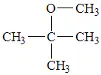
What is the name of this ether?
2-Methoxy-2-methylpropane
2-Propoxymethane
2-Methoxypropane
2-Propoxy-2-methylpropane
What forms when ethyl alcohol reacts with propanoyl chloride?
Ethyl chloride
Propyl Chloride
Diethyl ketone
Ethyl propanoate
What product is form when butanoic acid reacts with methanol?
Methylbutanoate
Butylmethanoate
Butylmethanoic acid
Methylbutanoic acid
What reaction occurs when cyclopentane carboxylic acid reacts with methanol?
Reduction
Williamson Ether Synthesis
Fischer Esterification
Acid Catalyzed Oxidation

Name this amide
Acetamide
Ethanamide
Methanamide
F
Methyl amine is a weaker base than aniline.
True
False
What forms from the condensation of two carboxylic acid molecules?
Amides
Acid anhydrides
Acyl chlorides
Esters
Reduction of an aldehyde results to the formation of
Quarternary alcohol
Secondary alcohol
Tertiary alcohol
Primary alcohol
What must react with Methyl magnesium bromide to form acetic acid?
Grignard reagent
Ammonia
NaOH
Carbon dioxide

Give the IUPAC name of this amide.
Isopropylamide
2-Methylbutanamide
2-Methylbutylamide
Sec-Butylamide
What reagent must be added to butyric acid to form butanoyl chloride?
Ammonia
Amines
Thionyl chloride
Alcohol

Give the name of this acyl chloride
Isopropanoyl chloride
Sec-butanoyl chloride
Tert-butanoyl chloride
2-Methylpropanoyl chloride
What is the intermediate product in the preparation of amides from carboxylic acid?
Ammonium salts of carboxylic acid
Sodium salts of carboxylic acid
Aldehydes
Ketones
Acid catalyzed ring opening of epoxides in alcohol forms:
Glycol
Halo alcohol
Alkoxy alcohol
Longer alcohols

