
 Worksheets
Section 02.01 VHCL INSPCTN Quiz
Total questions: 46
Worksheet time: 23mins
Why is it important to inspect your vehicle regularly?
To save time and money
To avoid getting a ticket
To ensure the vehicle looks clean
To impress other drivers
What should you watch for during a trip to ensure safety?
The color of the vehicle
Gauges for signs of trouble
The cleanliness of the vehicle
The number of passengers
What should you do after a trip inspection?
Wash the vehicle
Fill out a vehicle condition report
Change the tires
Refill the fuel tank
What is the minimum tread depth required in every major groove on front tires?
2/32 inch
3/32 inch
4/32 inch
5/32 inch
Which of the following is prohibited on the front wheels of a bus?
New tires
Re-grooved, recapped, or retreaded tires
Tires with a tread depth of 4/32 inch
Tires with no cuts or damage
What does rust around wheel nuts indicate?
The nuts are too tight
The nuts are loose
The wheel is new
The wheel is balanced
What should you do after a tire has been changed?
Drive at high speed
Re-check tightness of nuts after a short while
Ignore the tire for a month
Replace the tire again
What does missing clamps, spacers, studs, or lugs indicate?
The vehicle is safe to drive
The vehicle needs a paint job
Danger
The vehicle is new
What should you look for in the suspension system to ensure safety?
Rusty bolts
Spring hangers that allow movement of axle from proper position
Loose nuts
Clean tires
What is a sign of bad brake drums or shoes?
Shiny surface
Cracked drums
New paint
Clean appearance
What should you check if the vehicle is equipped with power steering?
Tire pressure
Hoses, pumps, and fluid level
Seat belts
Windshield wipers
What can make steering hard to steer?
Steering wheel play of more than 10 degrees
New tires
Clean windshield
Full fuel tank
Which of the following is NOT a sign of a defective air suspension system?
Leaking shock absorbers
Cracked or damaged torque rod
Intact and properly functioning u-bolts
Missing spring hangers
What must be checked to ensure the truck is not overloaded and the cargo is balanced?
The condition of the tires
The presence of emergency equipment
The cargo and its proper securing
The condition of the exhaust system
What is required to pass in order to obtain a CDL?
A written test on vehicle mechanics
A Vehicle inspection test
A driving skills test
A road safety test
What should you look for when approaching a vehicle for inspection?
The color of the vehicle
The type of fuel used
Damage or vehicle leaning to one side
The make and model of the vehicle
What should be checked in the engine compartment during a vehicle inspection?
The condition of the tires
The presence of a fire extinguisher
The engine oil level
The type of fuel used
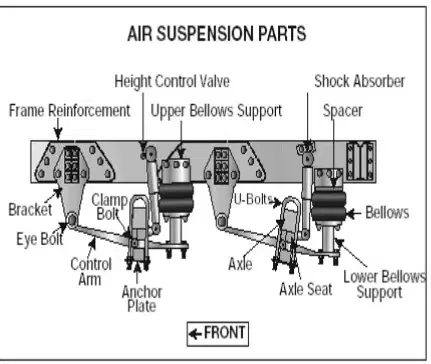
Diagram of Air Suspension Parts
Frame Reinforcement
Shock Absorber
Upper Bellows Support
All of the above
What should you do if the Anti-lock Braking System (ABS) indicator light stays on?
Continue driving as normal.
Check the ABS system for proper functioning.
Ignore the light.
Turn off the engine immediately.
What should the oil pressure gauge do within seconds after the engine is started?
Stay at zero.
Drop to a low level.
Come up to normal.
Fluctuate wildly.
What should you check for in the engine compartment before starting the engine?
Properly charged fire extinguisher.
Cracked, worn electrical wiring insulation.
Clean mirrors and windshield.
Properly adjusted seat.
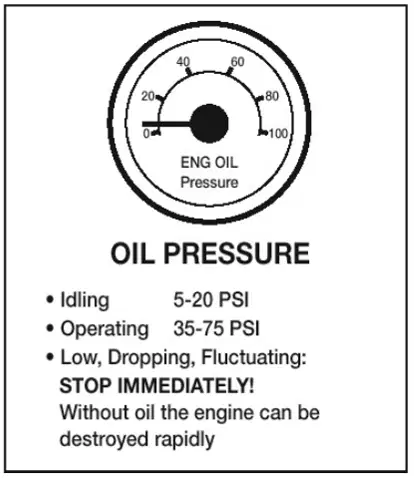
What should you do if the oil pressure is low, dropping, or fluctuating?
What should you inspect mirrors and windshield for?
Properly charged fire extinguisher.
Cracks, dirt, illegal stickers, or other obstructions.
Cracked, worn electrical wiring insulation.
Properly adjusted seat.
Which of the following is NOT part of the emergency equipment check?
Spare electrical fuses.
Three red reflective triangles.
Properly charged fire extinguisher.
Clean mirrors and windshield.
What should you do to ensure the safety belt is properly functioning?
Check that it is securely mounted, adjusts, latches properly, and is not ripped or frayed.
Check that it is the correct color.
Ensure it matches the interior of the vehicle.
Make sure it is made of leather.
What should you do after turning off the engine and taking the key with you?
Turn on the radio.
Turn on headlights (low beams) and four-way emergency flashers.
Open the windows.
Check the tire pressure.
During the walk-around inspection, what should you check at the front of the vehicle?
Condition of the rear axle.
Condition of the front axle and steering system.
Condition of the exhaust system.
Condition of the rear tires.
What should you check for on the windshield wiper arms?
Proper spring tension.
Proper color.
Proper size.
Proper length.
What should you use to test rust-streaked lug nuts for indicating looseness?
A hammer.
A wrench.
A screwdriver.
A tire iron.
What should you check for on the right front side of the vehicle?
Condition of the rear axle.
Condition of the right fuel tank(s).
Condition of the left front tire.
Condition of the rear tires.
What should you ensure about the exhaust system during the walk-around inspection?
It is clean and shiny.
It is secure, not leaking, and not touching wires, fuel, or air-lines.
It is painted black.
It is properly inflated.
What should be checked regarding the condition of tires on the right rear of a vehicle?
Properly inflated, valve stems and caps OK, no serious cuts, bulges, tread wear, tires not rubbing each other, and nothing stuck between them.
Properly inflated, valve stems and caps OK, serious cuts, bulges, tread wear, tires rubbing each other, and nothing stuck between them.
Properly inflated, valve stems and caps missing, no serious cuts, bulges, tread wear, tires not rubbing each other, and nothing stuck between them.
Properly inflated, valve stems and caps OK, no serious cuts, bulges, tread wear, tires not rubbing each other, and something stuck between them.
What should be checked regarding the condition of the rear lights and reflectors?
Rear clearance and identification lights clean, operating, and proper color (red at rear).
Rear clearance and identification lights dirty, operating, and proper color (red at rear).
Rear clearance and identification lights clean, operating, and improper color (red at rear).
Rear clearance and identification lights clean, not operating, and proper color (red at rear).
What should be checked regarding the condition of the battery(ies) on the left side of a vehicle?
Battery(ies) securely mounted to vehicle, box has secure cover, battery(ies) secured against movement, not broken or leaking.
Battery(ies) loosely mounted to vehicle, box has secure cover, battery(ies) secured against movement, not broken or leaking.
Battery(ies) securely mounted to vehicle, box has no cover, battery(ies) secured against movement, not broken or leaking.
Battery(ies) securely mounted to vehicle, box has secure cover, battery(ies) not secured against movement, not broken or leaking.
What should be checked regarding the condition of the left front turn signal light?
Clean, operating, and proper color (amber or white on signals facing the front).
Dirty, operating, and proper color (amber or white on signals facing the front).
Clean, not operating, and proper color (amber or white on signals facing the front).
Clean, operating, and improper color (amber or white on signals facing the front).
What is the most important reason for doing a vehicle inspection?
To ensure the vehicle is clean
To check the fuel level
To identify problems that may need fixing
To check the radio functionality
What things should you check during a trip?
Instruments, air pressure gauge, temperature gauges
Radio, seat covers, floor mats
Windshield wipers, sun visors, seat belts
Air freshener, cup holders, floor mats
Name some key steering system parts.
Mirrors, tires, cargo covers
Pressure gauges, ammeter, voltmeter
Steering wheel, tie rod, steering arm
Lights, seat belts, airbags
Name some suspension system defects.
Loose articles in cab, dirty windows, low fuel
Broken leaves in leaf spring, leaking shock absorbers, cracked frame
Flat tires, broken mirrors, faulty radio
Worn seat covers, broken air freshener, dirty floor mats
What three kinds of emergency equipment must you have?
First aid kit, spare tire, flashlight
Fire extinguisher, spare electrical fuses, warning devices for parked vehicles
Tool kit, jumper cables, spare keys
Blanket, water bottle, map
What is the minimum tread depth for front tires? For other tires?
1/32 inch for front tires, 2/32 inch for other tires
4/32 inch for front tires, 2/32 inch for other tires
2/32 inch for front tires, 4/32 inch for other tires
3/32 inch for front tires, 1/32 inch for other tires
Name some things you should check on the front of your vehicle during the walk around inspection.
Mirrors, tires, cargo covers
Lights, reflectors, windshield
Radio, seat covers, floor mats
Air freshener, cup holders, floor mats
What should wheel bearing seals be checked for?
Proper inflation
Cleanliness
Leaks
Color
How many red reflective triangles should you carry?
One
Two
Three
Four
How do you test hydraulic brakes for leaks?
Pump the brake pedal three times, then apply firm pressure to the pedal and hold for five seconds
Press the brake pedal once and release
Check the brake fluid level
Inspect the brake lines visually
Why put the starter switch key in your pocket during the vehicle inspection?
To prevent losing it
To avoid starting the vehicle accidentally
To keep it clean
To use it as a tool

