
 Worksheets
Kansas History Chapter 1
Total questions: 19
Worksheet time: 10mins
Name
Class
Date
1.
Which of the following words can be defined as the exact position or place on the earth's surface?
a)
Absolute Location
b)
Contiguous
c)
Erosion
d)
Relative Location
2.
Which word would best fit in the blank?
The __________________ United States includes the 48 states that are in contact with each other.
a)
Absolute Location
b)
Contiguous
c)
Erosion
d)
Relative Location
3.
The natural process of wearing away by wind, water and other elements is known as...
a)
Absolute Location
b)
Contiguous
c)
Erosion
d)
Relative Location
4.
Kansas being south of Nebraska or north of Oklahoma is known as the ________________________ because it is described in relation to another place.
a)
Absolute Location
b)
Contiguous
c)
Erosion
d)
Relative Location
5.
Little bits of matter that are carried by water or wind and are left somewhere else.
a)
Sediment
b)
Ecosystem
c)
Irrigation
d)
Navigable
6.
_______________ is a man made use of water for farming.
a)
Sediment
b)
Ecosystem
c)
Irrigation
d)
Navigable
7.
Being able to sail ships or boats through a waterway makes it ______________________.
a)
Sediment
b)
Ecosystem
c)
Irrigation
d)
Navigable
8.
A prairie is an incredibly unique and diverse __________________, or a community of organisms that interact.
a)
Sediment
b)
Ecosystem
c)
Irrigation
d)
Navigable
9.
Mountains, plains, prairies and plateaus are all examples of this, a feature of the natural environment.
a)
Physical Feature
b)
Plain
c)
NonRenewable Resource
d)
Renewable Resource
10.
Minerals, oil and coal are all examples of ______________________. They are not easily replaced once they are taken from the environment.
a)
Physical Feature
b)
Plain
c)
NonRenewable Resource
d)
Renewable Resource
11.
Water and trees are example of ____________________. They are easier to replace and replenish.
a)
Physical Feature
b)
Plain
c)
NonRenewable Resource
d)
Renewable Resource
12.
NonRenewable Resources are ______________. They are of limited supply.
a)
Physical Feature
b)
Plain
c)
Scarce
d)
Renewable Resource
13.
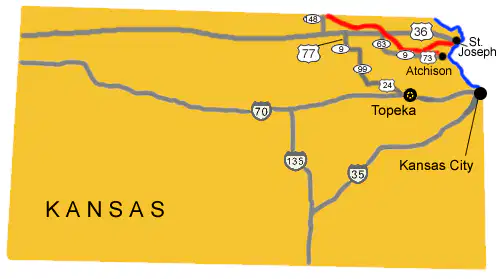
Which theme of geography does the following scenario go with?
The highways of Kansas are used to transport goods from one place to another.
a)
Location
b)
Place
c)
Region
d)
Movement
e)
Human-Environment Interaction
14.
Which theme of geography does the following scenario go with?
Kansas can be divided into physiographic areas that are different than those around them. Kansas is also divided into counties that are each slightly different than each other.
a)
Location
b)
Place
c)
Region
d)
Movement
e)
Human-Environment Interaction
15.
Which theme of geography does the following scenario go with?
Kansas is located between 37 and 40 degrees North between 94 and 102 degrees west longitude.
a)
Location
b)
Place
c)
Region
d)
Movement
e)
Human-Environment Interaction
16.
Which theme of geography does the following scenario go with?
Kansas has a temperate climate with hot summers and cold winters. Kansas is located in tornado alley and is known for the farming of corn and wheat.
a)
Location
b)
Place
c)
Region
d)
Movement
e)
Human-Environment Interaction
17.
Which theme of geography does the following scenario go with?
The people of Kansas farm and cultivate the land. They use water for the Ogallala Aquifer. People in Kansas also have built houses and changed the environment around them.
a)
Location
b)
Place
c)
Region
d)
Movement
e)
Human-Environment Interaction
18.
Which theme of geography does the following scenario go with?
Kansas has animals like wolves, coyotes, snakes and rabbits.
a)
Location
b)
Place
c)
Region
d)
Movement
e)
Human-Environment Interaction
19.
Which theme of geography does the following scenario go with?
Kansas is known as a crossroad state. Often people come and go throughout Kansas, travelling to other states. They buy goods and services as they travel through and interact with the people around them, discussing ideas and intermingling cultures.
a)
Location
b)
Place
c)
Region
d)
Movement
e)
Human-Environment Interaction
100 %

