
 Worksheets
SST Eval 1 Class 7
Total questions: 90
Worksheet time: 50mins
Many new dynasties emerged after which century?
15th Century
7th Century
12th Century
11th Century
Which people were expected to bring gifts for their king in the 17th century?
Traders
Samantha
Overlords
None of these
From whom the revenue was also collected?
Traders
Artisans
Merchants
Peasants
Who was considered as the most powerful chola ruler?
Babur
Rajendra
Rajaraja
Prithviraj Chauhan
Who destroyed the temple of Somnath?
Sultan Mahmud of Ghazni
Mohammed Ghori
Prithviraj Chauhan
All of the above
Who defeated Muhammed Ghori
Mahmud of Ghazni
Dantidurga
Prithviraj Chauhan
None of these
Land granted to Brahmanas was recorded on __________?
Silver plates
Betel leaves
Iron plates
Copper plates
Who is the founder of the Chola Empire?
Rajendra Chola
Raja Raja Chola
Vijayalaya Chola
Parantaka Chola
Rashtrakutas were subordinate to whom?
Cheras
Cholas
Chalukyas
None of these
settlements of peasents is called as
ur
nadu
shalabhoga
bhramadeya
in which year prithvi raj 3 was defeated by muhammad ghori
1132
1367
1156
1192
what was association of traders called
sabha
nagarams
nadu
vellanvagai
who found the pala dynasty
dharamapala
allaudin khilji
sikandar lodi
muhammad ghori
a group of urs is called as
nadu
tamil nadu
ur
ur village
Which dynasty ruled in the Deccan?
Gurjar-Pratiharas
Palas
Chahamans
Rashtrakutas
"Tripartite struggle" was a long-drawn conflict over the city of___________.
Ghazni
Delhi
Kanauj
Karnataka
The word ___________ means son of a king
kshatriya
Suryavanshi
Rajput
rashtra
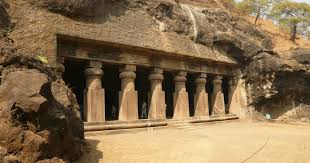
Rashtrakuta kings built temples in these caves near Mumbai:
Ellora
Ajanta
Elephanta
Karla
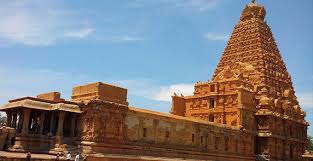
The Brihadeshwara temple was built by this ruler:
Karikala Chola
Rajendra Chola
Rajaraja I
Mahipala
Who was expected to bring gifts for their kings in the 17th century?
(a) Samantas
(b) Overlords
(c) Maha-samantas
d) Maha-mandaleshvara
Who was the Chief of Rashtrakutas?
Dantidurga
Hiranya-garbha
Harichandra
Kadamba
Land grants were recorded on:
silver plates
gold plates
copper plates
steel plates
Kitab-al- Hind was written by:
Ziyauddin Barani
Al- Biruni
Muhammad Ghori
GIyasuddin
___________, considered the most powerful Chola ruler.
Rajaraja I
Rajaraja II
Rajaraja III
Rajaraja IV
Muvendavelan means:
peasants serving three kings
chief
king
samantas
Brahmadeya means:
land gifted to temples
land gifted to Non-Brahmanas
land gifted to Brahmanas
land is given for constructing schools
Which new dynasty developed in eastern part of the country?
Cholas
Palas
Chamanas
Rashtrakutas
What was the use of money collected from taxes?
To finance the kings’ establishment
Construction of temples and forts
To fight wars
All of These
………… defeated Md. Ghori.
Ibhrahim Lodhi
Md . Tughlaq
Jalauddin Khilji
None of These
What were the major cities under the control of the chahamanas?
Delhi
Ajmer
Both a and b
None of these
Who were the parties involved in "tripartite struggle"?
Rashtrakutas
Palas
Gurjara-Pratihara
All of the above
Who destroyed the temple of Somnath?
Sultan Mahmud of Ghazni
Mohammed Ghori
Prithviraj Chauhan
All of the above
The title used to convey the power and strength of emperor:
Maharajadhiraja
Chakravartin
Both a and b
None
He raided India 17 times
Muhammad Ghori
Muhammad Ahmed
Mahmud of Ghazni
Al-Idrisi was an ______ cartographer.
Egyptian
European
Arab
Indian
________ used the term ‘Hindustan’ for the first time in the thirteenth century.
Minhaj-i-Siraj
Babur
Akbar
Siraj-ud-Daula
Forest-dwellers were sometimes pushed out of their lands with the spread of agricultural settlements.
True
False
_______________ was a fourteenth-century chronicler.
Al idrisi
Ziyauddin Barani
Babur
Akbar
In which century Babur used Hindustan to describe geography of subcontinent?
14th century
15th century
16th century
17th century
Which of the following is not the meaning of foreigner’ in the past?
Stranger
Pardesi
Ajnabi
Indigenous
Which type of people collected Manuscripts?
Poor people
Wealthy people
Local people
None of these
Who is a 'Cartographer'
A research scientist
Someone who makes maps
A chef
A person who excavates
What did the term 'Hindustan' mean when it was used in the thirteenth century by Minhaj-i-Siraj,
the areas of Punjab, Haryana
Ganga and Yamuna region
North India
the areas of Punjab, Haryana and the lands
between the Ganga and Yamuna.
A place where documents are stored or preserved is called (a)
Who were 'Scribes'
kings and Queens
Soldiers fighting for the king
scribes copied manuscripts by hand.
royal priests
What was the most common problem when scribes were involved in writing history.
Misinterpret the text
Destroy records/material
Wrote incorrect information
introduced small changes
– a word here, a sentence there.
(a) wrote his chronicle first in 1356 and
another version two years later.
Which region did Al-idrisi belong to?
Arab
France
Germany
Sri Lanka
Which of the following are sources of History?
Monuments
Coins
Artefacts and painting
All of the above
What is meant by archaeology?
The study of painting
The study of buildings
The study of politics
The study of remains
Archive was a place where -------- were kept for future reference
Coins
Grains
manuscripts
books
In which period the number and variety of textual records increased dramatically?
600 to 700
700 to 800
800 to 1200
700 to 1750
Through the period of 700 to 1750 which of the following became cheaper?
Paper
Grains
potatoes
Clothes
Who is a 'Cartographer'
A research scientist
Someone who makes maps
A chef
A person who excavates
Who was the Arab geographer who made the map of the subcontinent
(a)
What did the term 'Hindustan' mean when it was used in the thirteenth century by Minhaj-i-Siraj,
the areas of Punjab, Haryana
Ganga and Yamuna region
North India
the areas of Punjab, Haryana and the lands
between the Ganga and Yamuna.
In the early sixteenth century (a) used Hindustan to
describe the geography, the fauna and the culture of
the inhabitants of the subcontinent.
A place where documents are stored or preserved is called (a)
Who were 'Scribes'
kings and Queens
Soldiers fighting for the king
scribes copied manuscripts by hand.
royal priests
What was the most common problem when scribes were involved in writing history.
Misinterpret the text
Destroy records/material
Wrote incorrect information
introduced small changes
– a word here, a sentence there.
(a) paintings were sometimes used to illustrate the texts of manuscripts.
(a) wrote his chronicle first in 1356 and
another version two years later.
One group of people who became important in this period were the _______________, a name derived from “Rajaputra”, the son of a ruler.
Brahmins
Kshatriya
Rajputs
Warriors
Layers of the earth in order from top to bottom.
1. Core
2. Mantle
3. Crust
1. Crust
2. Mantle
3. Outer Core
4. Inner Core
1. Mantle
2. Crisp
3. Outer Crust
4. Inner Crust
1. Crisp
2. Mantle
3. Outer Crust
4.. Inner Crust
There are (a) (number of) layers in the earth.
Core is the ____ layer of the earth.
Outermost
Center/Middle
Innermost
There are (a) types of core.
The thickness of the core is ____
5300 km
3500 m
5300 m
3500 km
Recent studies have suggested that the inner core is actually found in a (1.) ____ state, due to the (2.)____ of the above layers.
1. Solid
2. Pressure
1. Gas
2. Force
1. Liquid
2. Pressure
1. Solid
2. Force
What is Lava?
Liquid substance which is present in the core and erupts from the volcanoes.
Red molten magma which erupts from the interior of the earth through volcanoes.
Hard rocks which are present underground and melt due to heat and come up till the volcanoes.
The temperature increases ____ degree Celsius for every ____ m of depth in the core.
1, 32
1, 24
5, 62
7, 52
____ is a matter in a molten state because of extremely high temperature.
Nife
Molten
Magma
Lava
Average density of the core is between 3.5g to 5.5g per cubic cm.
True
False
The temperature of the outer core is 2220 degrees Celsius whereas the temperature of the inner core is 5000 degrees Celsius.
True
False; both given degrees
False; only first degree
False; only second degree
Core is also called ____
Magma
Molten
Nife
In Nife, 'Ni' is for
Nickel
Nitrogen
Nano-tech
In Nife, 'Fe' is for ____
Fluoric Acid
Feathers
Iron
The word 'Nife' is made up of 'Ni' for Nickel and 'Fe' for iron.
True
False
The physical environment comprises of _______ components
biotic
abiotic
ecological
hydrosphere
29% of the lithosphere is occupied by ________
ocean
habitat
land
ecosystem
______________ protects us from the harmful ultra violet rays of the sun,
nitrogen
ozone
oxygen
carbon-di-oxide
All energy for life comes from the ___________.
moon
atmosphere
earth
sun
The term environment means the __________.
surroundings
lithosphere
hydrosphere
atmosphere
Environment is broadly classified in to __________ and ________.
natural and human environment
biotic and abiotic environment
The narrow zone where land, water and air come into contact with each other is called the ___.
ecosphere
lithosphere
biosphere
atmosphere
Lithosphere means
the solid domain of the earth
the liquid domain of the earth
the air domain of the earth
The life support system
transportation
music system
environment
The Environment day is celebrated on
5th January
5th June
5th August
5th September
The ______ holds the atmosphere around the earth.
Atmospheric pressure
Gravitational force of the earth
Humidity
Winds

