
 Worksheets
Building a Block Wall Quiz
Total questions: 32
Worksheet time: 16mins
What should always be the first step when building a block wall?
Mixing the mortar
Setting out blockwork
Laying the first block
Measuring the height
How many courses should you set out dry before marking their positions?
One
Two
Three
Four
What should you ensure after marking the blockwork on the concrete?
Cover the marking with mortar
Leave the marking uncovered
Remove the marking
Paint over the marking
What tool should be used to ensure the blockwork is levelled against each other?
Measuring tape
Straight edge and spirit level
Hammer
Chisel
What should you do if the straight edge is not long enough?
Use a shorter straight edge
Set up level station points
Use a different tool
Ignore the length
What angle is formed when extending the corner (quoin) using a builder’s square?
45°
60°
90°
120°
What is the purpose of the 100mm cuts in the quoin?
To increase the height of the wall
To help maintain the bond
To reduce the number of plumbing points
To make the wall more decorative
What happens to the number of plumbing points when forming a quoin?
They decrease
They remain the same
They increase
They disappear
What should you check for upon completion of each course in bricklaying?
Level
Square
Plumb
Alignment
What does the illustration in Step 4 show?
Where to level the wall
Where to plumb with this type of wall
How to mix mortar
How to lay the first course of bricks
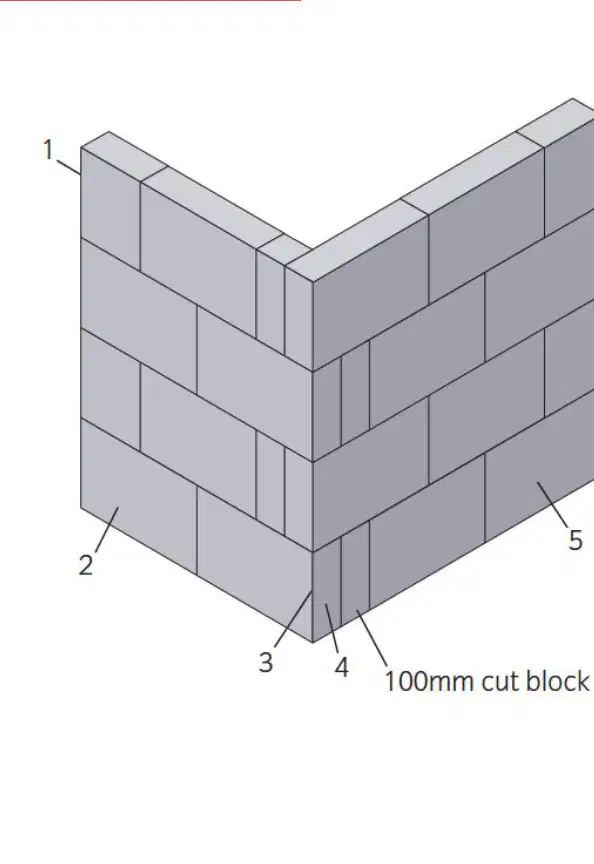
What does the illustration in Step 4 show?
How to lay bricks in a straight line
Where to plumb with this type of wall
How to mix mortar for bricklaying
How to paint a brick wall
What should you check for upon completion of each course?
Level
Color
Square
Height
What must be undertaken as the blockwork courses increase?
Painting
Ranging
Plastering
Drilling

What does the dotted line in the illustration show?
The height of the wall
The width of the block
The angle at which to hold your level or straight edge
The thickness of the mortar
What does ranging ensure about the wall?
It has a smooth surface
It has a flat surface on the face of the blockwork
It is waterproof
It is insulated
Ranging for the racking back is the same as for which other construction process?
Plastering
Painting
Brickwork
Tiling
When building a quoin in blockwork, what must always be ensured about the stepped (racking back)?
It is level.
It is plumbed.
It is painted.
It is dry.
At what stage must the plumbed stepped (racking back) be checked?
At the beginning of the project.
At the end of the project.
At each course.
Only once.
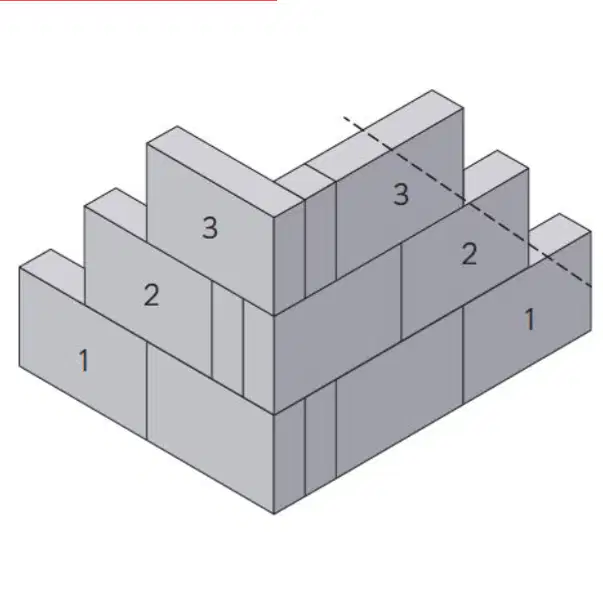
What does the dotted line in the diagram represent?
The plumb line.
The level line.
The ranging position.
The finished height.
What is the total height of each course in bricklaying, including the bed joint?
213mm
215mm
225mm
235mm
What is the height of the bed joint added to each course in bricklaying?
5mm
10mm
15mm
20mm
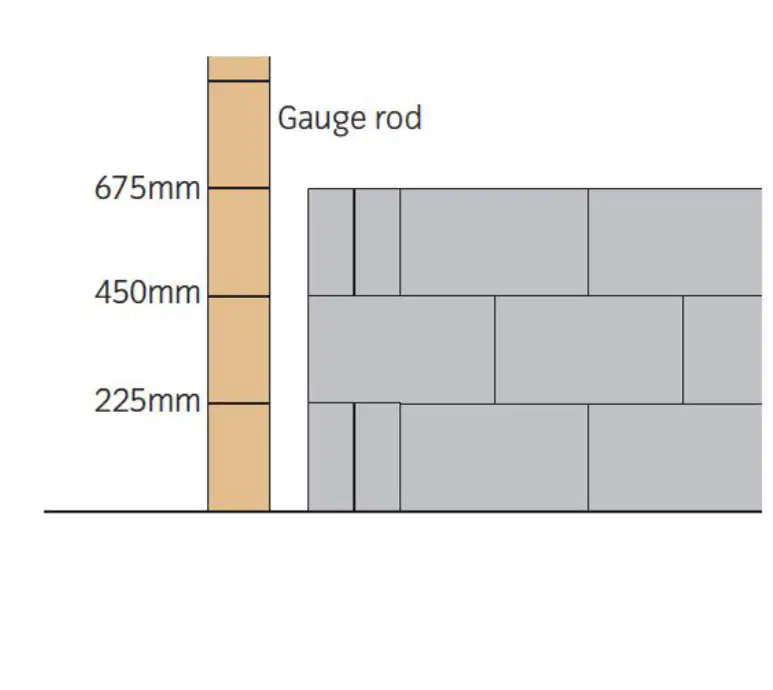
What is the height of the gauge rod section that measures three courses?
225mm
450mm
675mm
900mm

What tool is used to ensure that each course at both sides of a wall is level with each other?
Hammer
Spirit level
Measuring tape
Trowel
What must be level with each other in bricklaying according to Step 8?
The height of the bricks
Each course at both sides of a wall
The width of the wall
The length of the wall
What can be used to level each step in the courses?
A straight edge and level
A hammer and chisel
A measuring tape and pencil
A trowel and mortar
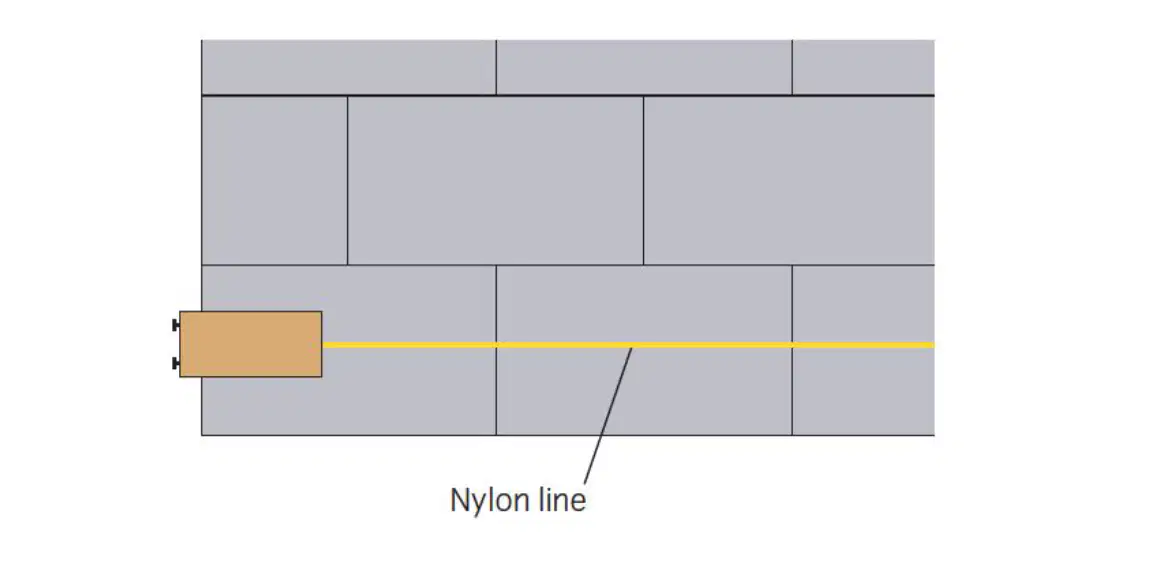
What is the best way to maintain level courses in blockwork?
Use a line and corner blocks arrangement
Use a spirit level
Use a laser level
Use a measuring tape
Why does perping become important as the wall proceeds in height?
To maintain the wall's color
To ensure the wall's stability
To improve the wall's appearance
To reduce the wall's weight
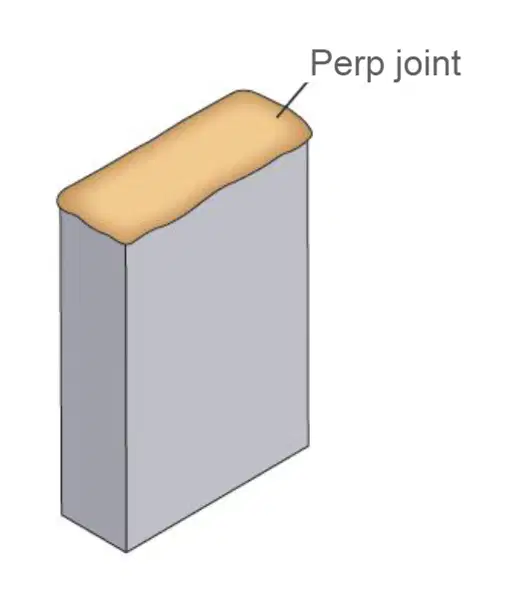
How should you lay the perp to maintain a full and complete perp?
Lay the perp horizontally
Lay the perp diagonally
Stand the block on end and lay the perp as you would a bed joint
Lay the perp vertically without standing the block
What tool is used to achieve a joint flush in bricklaying?
Hammer
Laying trowel
Chisel
Screwdriver
When finishing a joint flush, how should the trowel be used?
Push the trowel with the joint
Lift the excess up the face
Push the trowel against the face
Use the trowel to scrape the joint
What tool is used to achieve a half-round finish to a joint?
Flat jointer
Pointed jointer
Half-round jointer
Square jointer
In what order should you joint the perps and bed joints to prevent leaving any half-round jointer marks in the bed joints?
Joint the bed joints first, then the perps
Joint the perps first, then the bed joints
Joint both at the same time
It does not matter which is jointed first

