
 Worksheets
Biology IV. Biomolecules
Total questions: 187
Worksheet time: 2hrs 34mins
The Biuret Test will test for the presence of _________________.
Protein
Lipids
Starch
Simple Sugars
The Sudan IV Test will test for the presence of _________________.
Protein
Lipids
Starch
Simple Sugars
The Benedict Test will test for the presence of _________________.
Protein
Lipids
Starch
Simple Sugars
The Iodine Test will test for the presence of _________________.
Protein
Lipids
Starch
Simple Sugars
What are some characteristics of a positive Sudan IV result:
The solution will separate and produce a dark pink/red ring indicating the presence of lipid
The solution will turn a dark brown color indicating starch
The solution will turn a bright blue color indicating the presence of simple sugars
The solution will dark purple color indicating the presence of protein
If I wanted to see if my new Low Carb Bread had a lot of starch in it I would use which of the following test to decide?
Iodine Test
Benedict's Test
Sudan IV Test
Biuret Test
My cousin said that Gatorade is filled with protein, I don't believe him. Which test should I run to see if he is right or wrong?
Biuret
Iodine
Sudan IV
Benedict
A positive Biuret's Test will turn which color?
Red
Blue
Purple
Yellow
In the video, the scientist said that Sudan IV is a _________ dye, which is why we can use it to identify _______ easily.
lipophilic, fats
lipophobic, carbohydrates
lipophilic, simple sugars
lipophobic, proteins
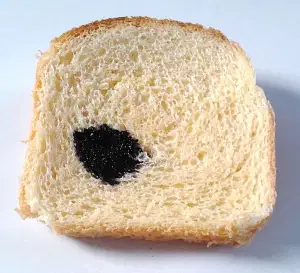
When one of our reagents contacts the starch in this bread, the white bread turns blue-black. This is an example of which of the following tests?
Iodine
Biuret
Sudan IV
Benedict's
It is a loosely used term for molecules present in organisms that are essential to one or more typically biological processes, such as cell division, morphogenesis, or development.
Biomolecules
Bioparticles
Bioatoms
Biomatters
This biomolecule is important in storing energy in the body.
Carbohydrate
Protein
Lipid
Nucleic Acid
It helps repair and build your body's tissues, allows metabolic reactions to take place and coordinates bodily functions.
Carbohydrate
Protein
Lipid
Nucleic Acid
It serve as structural components of cell membranes, function as energy storehouses, and function as important signaling molecules.
Carbohydrate
Protein
Lipid
Nucleic Acid
It is essential for the storage and expression of genetic information.
Carbohydrate
Protein
Lipid
Nucleic Acid

BREAD
carbohydrates
proteins
lipid
nucleic acid

CHICKEN MEAT
carbohydrates
proteins
lipids
nucleic acids

BUTTER
carbohydrates
proteins
lipids
nucleic acids

RIBONUCLEIC ACID (RNA)
carbohydrates
proteins
lipids
nucleic acids

DEOXYRIBONUCLEIC ACID (DNA)
carbohydrates
proteins
lipids
nucleic acids
The process of converting the nucleotide sequence of an mRNA molecule into
an amino acid sequence in a polypeptide is called what?
Translation
Transcription
Transformation
Trans Fat
Carbohydrates contain what three elements?
CHS
NOC
OCH
CHNOPS
A major role of lipids is what?
Muscle contraction
Phosphorylation of DNA
Structure of phospholipids
Structure of membranes
Carbon atoms usually form how many covalent bonds?
2
4
6
8
An amino acid is a molecule with what functional groups?
An amine and hydrochloric acid.
A hydroxyl and an amine.
A protein and a polypeptide
A carboxyl and an amine
DNA and RNA are examples of
nucleic acids.
nucleotides.
proteins.
lipids.
DNA is a
heteropolymer.
homopolymer.
peptide polymer.
ribonucleotide polymer.
The helical shape of DNA is due primarily to
aromatic side chains.
base stacking.
hydrogen bonds.
van der Waals constant.
Proteins are involved in
DNA synthesis
enzymatic processes.
lipid metabolism.
All of the choices
Which of the following is not true about proteins?
Proteins are polymers of amino acids.
Polypeptide chains fold up into a specific shape necessary for the protein’s function.
Transfer RNAs carry amino acids to where they are needed for protein production
Peptide bonds hold base pairs together.
1. Biomolecules are the large, complex molecules found in living organisms. What element is MOST COMMONLY found in biomolecules?
a) Iron (Fe)
b) Carbon
c) Calcium (Ca)
d) Gold (Au)
2. Carbohydrates are the main source of energy for your body. Which of the following is NOT a building block of carbohydrates?
a) Glucose (a simple sugar)
b) Amino Acid
c) Fructose (another simple sugar)
d) Starch (a complex carbohydrate)
3. Proteins are essential for building and repairing tissues in your body. What is the building block of proteins?
a) Fatty Acid
b) Nucleotide
c) Amino Acid
d) Saccharide
4. Lipids store energy in your body. Which of the following is an example of a lipid?
a) DNA
b) Protein
c) Fat (triglyceride)
d) Carbohydrate
5. Nucleic acids store the genetic information of an organism. What are the two main types of nucleic acids?
a) Carbohydrates and Proteins
b) DNA and RNA
c) Lipids and Proteins
d) DNA and Glucose
6. All of the following biomolecules EXCEPT for one contain nitrogen (N ) atoms. Which one is the exception?
a) Proteins
b) Nucleic Acids (DNA and RNA)
c) Carbohydrates
d) Lipids (in some cases)
7. Water is essential for life and makes up a large portion of your body. What makes water such a special molecule?
a) It is a simple molecule with unique bonding properties.
b) It is very large and complex.
c) It is a good conductor of electricity.
d) It does not dissolve other molecules well.
8. Enzymes are biological catalysts that speed up chemical reactions in your body. What are enzymes made of?
a) Carbohydrates
b) Proteins
c) Lipids
d) Nucleic Acids
9..Which biomolecules are NOT involved in providing energy for your body?
a) Carbohydrates
b) Lipids
c) Proteins
d) Nucleic Acids
10. Biomolecules are constantly being broken down and built up in your body. This process is called:
a) Cellular Respiration
b) Photosynthesis
c) Cell Division
d) Genetic Mutation
Monosaccharides are monomers of
Lipids
Nucleic Acids
Proteins
Carbohydrates
Lactose is composed of
glucose + fructose
glucose + glucose
glucose + sucrose
glucose + galactose
What is the polysaccharide used by animals to store glucose?
glycogen
fructose
starch
cellulose
What makes up the disaccharide sucrose?
glucose + glucose
glucose + fructose
glucose + galactose
glucose + maltose
Lactose (Milk Sugar)
Maltose (Grain sugar)
are examples of
How are sugars formed in nature?
Photosynthesis
Cellular respiration
Hydrolysis
Dehydration
What would be the classification of a monosaccharide made up of 5 carbons?
Triose
Tetrose
Pentose
Hexose
Which reaction is needed to join two monosaccharides?
Hydration
Dehydration
Dehydrogenation
Hydrolysis
Which carbohydrate do we store in our liver and serves as an energy reserve?
Starch
Glycogen
Glucose
Cellulose
Why carbohydrates are important to living organisms?

What is the name of these two chemical structures?


dehydration synthesis
isomerization isomerization


What type of bond is formed between two monosaccharides?
Ester bond
Glycosidic bond
Peptide bond
Double bond
Which reaction is needed to break down complex sugars?
Hydration
Dehydration
Dehydrogenation
Hydrolysis
Maltose is made from
two fructose molecules
two glucose molecules
one glucose molecule and one fructose molecule
one glucose molecule and one galactose molecule

What are processes P and Q?
P - oxidation
Q - reduction
P - reduction
Q - oxidation
P - condensation
Q - hydrolysis
P - hydrolysis
Q - condensation
What is the chemical formula for monosaccharides?
CH2O
C6H12O6
C4H3O2
CHO
What are disaccharides?
two monosaccharides bonded together
two disaccharides bonded together
one sugar molecule
all answers are correct
What is the process called when one molecule of water is ripped off to make a disaccharide?
hydrolysis
glycosidic bond
dehydration reaction
rehydration reaction
It refers to the energy storage in plants.
cellulose
starch
glycogen
chitin
A type of covalent bond that joins a carbohydrate molecule to another group, which may or may not be a carbohydrate.
Ionic Bond
Glycosidic linkage
Hydrolysis
Polar covalent bond
Table sugar
Glucose
Fructose
Galactose
Sucrose
Another structural polysaccharide that is found in the exoskeleton of arthropods.
Glycogen
Cellulose
Chitin
Starch
What is the process called when one disaccharide has a molecule of water added to it and creates two separate monosaccharides?
Dehydration reaction
Hydrolysis
Glycosidic bond
Covalent bond
glucose + galactose
Lactose
Maltose
Sucrose
Fructose
What are the three familiar monosaccharides that are considered as hexoses?
Glucose, Galactose, Fructose
Glucose, Ribose, Ribulose
Glucose, Ribulose, Fructose
Glucose, Maltose, Sucrose
What is the basic order of events in the digestion and mobilization of dietary fats?
Degradation by lipases→ emulsified by bile→ incorporation into chylomicrons→ absorption and conversion into triacylglycerols
Degradation by lipases→ absorption and conversion into triacylglycerols→incorporation into chylomicrons→ emulsified by bile
Emulsified by bile→ degradation by lipases→ absorption and conversion into triacylglycerols→ incorporation into chylomicrons
Emulsified by bile→ incorporation into chylomicrons→ absorption and conversion into triacylglycerols→ degradation by lipases
Approximately how many molecules of ATP can be produced from the oxidation of a 20 carbon fatty acid, including those produced in the Krebs cycle?
107
100
129
136
What are the major products of amino acid catabolism?
Ketone bodies and tetrahydrofolate
Tetrahydrofolate and glycogen
Ketone bodies and glucose
Glucose and tetrahydrofolate
A deficiency of oxaloacetate would most likely increase the catabolism of what potential energy source?
Acetyl-CoA
Glucogenic amino acids
Ketogenic amino acids
Acetoacetyl-CoA
What chemical properties describe a free fatty acid molecule capable of producing the most energy when used as a fuel source, relative to other free fatty acids?
Shorter hydrocarbon tail with a greater number of unsaturated bonds
Longer hydrocarbon tail with a greater number of unsaturated bonds
Longer hydrocarbon tail with a lesser number of unsaturated bonds
Shorter hydrocarbon tail with a lesser number of unsaturated bonds
What is the rate limiting step in the production of energy from free fatty acids?
Degradation of acetyl-CoA to enter the Krebs cycle
Carnitine acyl-transferase activity
β-oxidation within the mitochondrial matrix
Dehydrogenation of fatty acyl-CoA
What is lipolysis?
Hydrolysis of triacylglycerol
Formation of lipids
Breakdown of ketone bodies
Formation of ketone bodies
Which of the following hormone is not used in the hydrolysis of triacylglycerol into the fatty acids in adipose tissues?
Epinephrine
Norepinephrine
Glucagon
Insulin
Name the energy source of the brain during starvation.
Fat
Ketone bodies
Protein
Lipids
In which form the nitrogen is incorporated into an amino acid?
Nitrite
Glutamate
Nitrate
Ammonium ion
Transamination reaction in amino acid synthesis is catalyzed by enzyme_________.
Nitric oxide synthase
Decarboxylase
Aminotransferase
Glutamate decarboxylase
Intermediates of which of the following metabolic pathway have not been used in the synthesis of amino acids?
Glycolysis
Fatty acid biosynthesis
Citric acid cycle
Pentose phosphate pathway
Name the amino acid which does not take part in transamination during amino acid catabolism.
Proline
Threonine
Lysine
Serine
Products of urea cycle
1 urea, 1 NH3, 1 ATP, 1 fumaric acid
1 urea, 1 AMP, 2 ADP, 1 fumaric acid
1 aspartic acid, 1 NH3, 1 ATP, 1 fumaric acid
2 urea, 2 NH3, 1 ATP, 1 fumaric acid
Insulin is a hormone that inhibits lipolysis. Glucagon is a hormone that promotes lipolysis.
1st statement is true
2nd statement is true
Both statements are true
Both statements are false
Lipids are
organic compound
inorganic compound
The followings are the functions and role of lipids in living organism:
Thermal insulator
Thermal conductor
Act as cushion for internal organs
Structural element of cell membrane
Lipids are X while carbohydrates are Y. What is X and Y?
X is soluble
X is insoluble
Y is soluble
Y is insoluble
Lipids contain more energy per gram than carbohydrates. True or false?
True
False, lipid contains equal amount of energy per gram as carbohydrates.
False, lipid contains less the amount of energy per gram as carbohydrates.
What is the main significance of fatty acid oxidation?
Enzyme A catalyse hydrolysis of bonds between fatty acid and the rest of triacylglycerols . What is enzyme A?
Carnetin Palmitoyl Transferase 1
Carnetin Palmitoyl Transferase 2
Lipase
Acetyl-CoA
This type of fatty acids consist of ALL carbon-carbon single bonds. Which fatty acid is the statement referring to?
Unsaturated fatty acids
Saturated fatty acids
What is the main difference of saturated and unsaturated fatty acids?

Which of the following lipoprotein has the lowest density?
VLDL
LDL
HDL
Chylomicron
What is the rate-limiting step in beta oxidation of fatty acids?
Formation of fatty acyl-carnitine
Formation of fatty acetyl-CoA
In beta oxidation of FA, the sequence are as follows:
Oxidation by FAD > A > Oxidation by NAD > Thiolysis
What is reaction A?
(a)
The hydration reaction in beta oxidation of FA is catalyse by:
hydroxy acyl-CoA dehydrogenase
enoyl-CoA hydratase
acyl-CoA dehydrogenase
carnitine acylcarnitine translocase
What is the definition of proteins?
Anhydride of amino acids
Fundamental constituents of the protoplasm
Substances which were once living
All of the above
Which elements are usually found in proteins?
Carbon, hydrogen, oxygen, nitrogen, sulfur, and phosphorus
Carbon, hydrogen, oxygen, nitrogen, and sulfur
Carbon, hydrogen, oxygen, nitrogen, and phosphorus
Carbon, hydrogen, oxygen, and nitrogen
How are amino acids linked to form proteins?
Through peptide bonds by dehydration reaction
Through hydrogen bonds by hydration reaction
Through covalent bonds by hydrolysis reaction
Through ionic bonds by condensation reaction
What is the primary derived protein?
Metaproteins
Proteoses
Peptones
Peptides
Which type of protein contains all the essential amino acids in sufficient amount?
Complete or Adequate Protein
Partially Incomplete Protein
Incomplete Protein
None of the above
What is the function of proteins?
Building of tissues
Daily repair of tissues
Source of energy
All of the above
What factors influence the biological value of protein?
Amount and relative proportions of constituent amino acids
Nutritional availability of constituent amino acids
Method of food processing or preparation
All of the above
What are the physical properties of proteins?
Form colloidal solution
Form typical milky colloidal solution which foams when agitated
Non-dialyzable
All of the above
What is the primary structure of a protein?
Amino acid sequence
Localized arrangement of one amino acid
Three-dimensional appearance of protein molecule
Over-all arrangement of the tertiary structure of protein molecule
What is the fate of absorbed amino acids?
Synthesized into body protein for growth and repair
Temporarily stored in the tissues
Taken up rapidly by the liver and tissues
All of the above
Which amino acids are considered essential?
Histidine, isoleucine, leucine, lysine, methionine, arginine, phenylalanine, threonine, valine, tryptophan
Alanine, serine, glycine, aspartic acid, glutamic acid, proline, hydroxyproline, citrulline, cystine, tyrosine, norleucine, hydroxyglutamic acid
Both A and B
None of the above
What is the classification of amino acids based on the number of amino and carboxyl groups present?
Neutral, Acid, Base
Neutral, Basic, Acidic
Acid, Base, Neutral
Base, Acid, Neutral
Which type of bond is involved in the tertiary structure of proteins?
Covalent Bond
Hydrogen Bond
Salt Bridges
Hydrophobic Interaction
What is the quaternary structure of a protein?
Arrangement of adjacent amino acids
Three-dimensional appearance of protein molecule
Over-all arrangement of the tertiary structure of protein molecule
Localized arrangement of one amino acid
What determines the functions of a protein?
Primary structure
Secondary structure
Tertiary structure
Quaternary structure
What is the meaning of the Greek word 'proteios' from which the name 'protein' is derived?
To maintain balance
To take first place
To build muscle
To create energy
What percentage of the body weight consists of protein?
30%
10%
19%
25%
Which of the following is not a body fluid that contains proteins?
Blood
Saliva
Tears
Sweat
What are the usual components of proteins?
Carbon, Hydrogen, Oxygen, Nitrogen, Sodium, Potassium
Carbon, Hydrogen, Oxygen, Nitrogen, Calcium, Iron
Carbon, Hydrogen, Oxygen, Nitrogen, Sulfur, Phosphorus
Carbon, Hydrogen, Oxygen, Nitrogen, Magnesium, Zinc
How are amino acids linked to form proteins?
By ionic bonds
By covalent bonds
By hydrogen bonds
By peptide bonds
Which method is used for the isolation of proteins from natural sources by selective passage of ions and small molecules through a semi-permeable membrane?
Precipitation
Chromatography
Dialysis
Filtration
Which type of protein contains another type of molecule or compound attached to the amino acid unit?
Simple Protein
Primary Derived Protein
Secondary Derived Protein
Conjugated Protein
Which type of protein contains all the essential amino acids in sufficient amount?
Secondary Derived Protein
Primary Derived Protein
Partially Incomplete Protein
Complete or Adequate Protein
What is the primary function of proteins in the body?
To store energy
To regulate body temperature
To build tissues and repair cells
To aid in digestion
What is the fate of absorbed amino acids in the body?
They are synthesized into body protein for growth and repair
They are excreted as waste
They are used for energy production
They are stored in the liver
Proteins are the most abundant bioorganic substance. The presence of _________ in proteins sets them apart from carbohydrates and lipids.
Carbon
Hydrogen
Oxygen
Nitrogen
Building blocks of proteins (*ANSWER IN ALL CAPITAL LETTERS*)
(a)
Which of the following is/are Polar Neutral Amino Acid/s
Glutamine
Leucine
Glutamic acid
Cysteine
Lysine
Histidine, Lysine, and Arginine are examples of ____________________.
Non-polar AA
Polar Neutral AA
Polar Acidic AA
Polar Basic AA
A polar acidic amino acid is an amino acid that contains a ____________ as its side chain.
non polar
neutral
second carboxyl group
second amino group
An essential amino acid that is required for growth in children but not in adults.
(a)
Chirality can be observed in 19 out of 20 standard amino acids. Glycine is an exception as it has another hydrogen atom as its side chain.
First statement is correct. Second statement is incorrect.
First statement is incorrect. Second statement is correct.
Both statements are correct.
Both statements are incorrect.
Naturally occurring amino acids are ______________.
D-isomers
L-isomers
In the Fischer projection formula for amino acids, the D- and L- isomer is identified based on the horizontal position of ____________.
Hydrogen
Amino group
Carboxyl group
Side chain
In neutral solution, carboxyl groups tend to be protonated. On the other hand, amino groups tend to be deprotonated.
First statement is correct. Second statement is incorrect.
First statement is incorrect. Second statement is correct.
Both statements are correct.
Both statements are incorrect.
A molecule that has a positive charge on one atom and a negative charge on another atom, but which has no net charge.
(a)
In acid solution, amino and carboxyl groups_______________
are protonated
are deprotonated
does not have a charge
The pH at which an amino acid solution has no net charge because an equal number of positive and negative charges are present. (*ANSWER IN ALL CAPITAL LETTERS)
(a)
During electrophoresis, amino acids that has a negative net charge will ____________________.
migrate towards the positive electrode
migrate towards the negative electrode
not migrate
The only standard amino acid that has a sulfhydryl group side chain.
(a)
The formation of Cystine from cysteine is reversible.
True
False
Small peptide hormone that regulates the excretion of water by the kidneys.
Oxytocin
Vasopressin
Enkephalin
Glutathione
Which of the following conjugated proteins is/are classified as glycoproteins?
Hemoglobin
Gamma globulin
Ferritin
Mucin
High-density lipoproteins
The strongest of the tertiary-structure interactions
Covalent disulfide bonds
Salt bridges
Hydrogen bonds
Hydrophobic attractions
Which interactions responsible for tertiary structure are easily disrupted by changes in pH and temperature?
Covalent disulfide bonds
Salt bridges
Hydrogen bonds
Hydrophobic attractions
Hemoglobin is a protein that has a _____________ structure.
Primary
Secondary
Tertiary
Quaternary
True about fibrous proteins (Select all that applies)
Water soluble
Water insoluble
Have structural function
Have a single type secondary structure
A globular protein that functions as oxygen storage in muscles.
(a)
Reverse formation reaction for a peptide bond.
Hydrolysis
Denaturation
Oxidation
Their function is to transport dietary triacylglycerols from the intestine to the liver and to adipose tissue.
VLDL
LDL
HDL
Chylomicrons

What are 2 types of nucleic acids?
Fatty Acids and Glycerol
DNA and RNA
Amino Acids and Enzymes
Monosaccharides and Polysaccharides
Which of the following is NOT part of a nucleotide?
Nitrogenous Base
Phosphate Group
Pentose Sugar
Fatty Acid
What sugar is found in DNA?
Glucose
Ribose
Deoxyribose
Fructose
What is the shape of DNA?
Double Hyperbola
Paraolic
Double Helix
Linear
The repeating units in both DNA and RNA are called
hydrogen bonds
nucleic acids
nucleotides
amino acids
The sugar that is in the backbone of DNA is called
fructose
ribose
glucose
deoxyribose
Nucleotide bases pair in DNA through
hydrogen bonds between complementary bases
polar covalent bonds between complementary bases
sugar bonds between complementary bases
none of the choices
What nucleotide base does RNA contain that DNA does not?
adenine (A)
cytosine (C)
uracil (U)
thymine (T)
What unique ability does DNA have because it is double-stranded?
it serves as genetic material in all viruses
it can serve as a template for its own copying
it can move around the cells
none of the choices
If you have 40 adenine in a DNA molecule, how many thymine can you expect?
10
20
40
80
A piece of DNA was analysed and 15% of its nucleotides were adenine. What percentage would be uracil?
0%
15%
35%
70%
What are the components of a nucleotide?
pentose sugar and phosphate group
nitrogenous base, phospahte group, pentose sugar
nitrogenous base and DNA
nitrogenous base and pentose sugar
If a gene has 30 nucleotides, how many amino acids does it have?
3
10
60
90
Which ones are purines?
Adenine and Guanine
Adenine and Thymine
Cytosine and Guanine
Cytosine and Thymine

What sugar is found in RNA?
Ribose
Deoxyribose
Glucose
Galactose

