wayground logo

Free Printable Worksheets

Font size

S
M
L
XL
Worksheets

Unit 1: Atoms, Elements, and the Periodic Table

Total questions: 88

Worksheet time: 2hrs 36mins

Name
Class
Date
1.

Find your dreams come true, and I wonder if you know

a)

what it means

b)

what is means

c)

and i wonder if you know what it means what it means and I wonder if you what it means to find your dreams.....

2.

Which charge is POSITIVE?

a)

Proton

b)

Neutron

c)

Electron

d)

Cell

3.

Which charge is NEGATIVE?

a)

Proton

b)

Neutron

c)

Electron

d)

Cell

4.

Which particle is NEUTRAL - NO CHARGE?

a)

Proton

b)

Neutron

c)

Electron

d)

Cell

5.

All of the COLUMNS on the Periodic Table are called?

a)

Periods

b)

Rows

c)

Groups

d)

Lines

6.

All of the ROWS on the Periodic Table are called what?

a)

Periods

b)

Groups

c)

Columns

d)

Lines

7.

What is the ATOMIC # (number on top) of Oxygen- O?

a)

6

b)

7

c)

8

d)

9

8.

What is the Atomic MASS / WEIGHT (number on bottom) of Lithium- Li?

a)

9.012

b)

6.94

c)

4.002

d)

1.008

9.

How many PROTONS & ELECTRONS does Neon- Ne have?

a)

7

b)

8

c)

9

d)

10

10.

How many PROTONS / ELECTRONS does Potassium- K have?

a)

11

b)

19

c)

37

d)

87

11.

Carbon- C has an atomic MASS / WEIGHT of what?

a)

12.011

b)

6

c)

7

d)

14.007

12.

Column / Group 2 on the Periodic Table has what family name?

a)

Alkali Metals

b)

Alkali Earth Metals

c)

Halogens

d)

Noble Gases

13.

The NOBLE GASES are considered:

a)

Metals

b)

Nonmetals

c)

Metalloids

d)

None

14.

How many NEUTRONS (bottom number - top) does Nitrogen- N have?

a)

6

b)

7

c)

8

d)

9

15.

How many NEUTRONS (bottom - top) does Magnesium- Mg have?

a)

10

b)

11

c)

12

d)

13

16.

Which type of particle would you find floating around the nucleus, outside of the atom with its negative charges?

a)

Proton

b)

Neutron

c)

Electron

d)

Nucleus

17.

Which TWO particles are found housed in the nucleus of the atom?

a)

Protons and Electrons

b)

Protons and Neutrons

c)

Electrons and Neutrons

d)

Protons, Neutrons, and Electrons

18.
Adding or subtracting neutrons (charge = 0, mass = 1) makes the element change into an...
a)
ion
b)
mixture
c)
isotope
d)
neutral atom
19.
The atomic number is equal to _.
a)
the number of protons and electrons
b)
the number of neutrons only
c)
the total number of protons and neutrons
d)
the number of protons neutrons and electrons
20.
What is the charge on a lithium atom that looses 1 electron?
a)
+1
b)
0
c)
-1
d)
-2
21.
Is the element shown in this image an ion, isotope or normal atom?
a)
atom
b)
isotope
c)
cation (+ ion)
d)
anion (- ion)
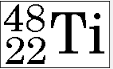
22.
How many protons does this isotope of titanium have? Hint titanium has an atomic number of 22.
a)
48
b)
22
c)
26
d)
70
23.
What element is this?  What is the mass number of this atom?
a)
sodium, 23
b)
magnesium, 23
c)
magnesium, 12
d)
sodium, 11
24.
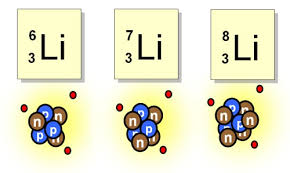
Which atom has  4 neutrons?
a)
Li-6
b)
Li-7
c)
Li-8
d)
they have the same # of neutrons
25.
What is the atomic number of Fe? (click to see image)
a)
26
b)
55.845
c)
56
d)
None of these
26.
How many neutrons does B (Boron) contain?
a)
5
b)
11
c)
6
d)
10.811
27.
Carbon has an atomic number of 6 and an atomic mass of 12. Which elements are considered isotopes of carbon?
a)
Carbon-12
b)
Carbon-13
c)
Carbon-14
d)
Both Carbon-13 and Carbon-14
28.
How many neutrons does Lithium have (atomic mass = 6.94)
a)
3
b)
4
c)
6.94
d)
24.94
29.

An atom with the same number of protons and electrons (no charge) and the expected atomic mass or number of neutrons from the periodic table.

a)

Neutral/Normal Atom

b)

Ion

c)

Isotope

30.

An atom that has gained or lost electrons in an attempt to become stable/bond with another atom.

a)

Normal/Neutral Atom

b)

Ion

c)

Isotope

31.

A negatively charged ion that has gained electrons to satisfy the octet rule (metals do this)

a)

Anion

b)

Cation

c)

Neutral Atom

d)

Isotope

32.

A positively charged ion that has lost electrons to satisfy the octet rule (non-metals do this)

a)

Anion

b)

Cation

c)

Neutral Atom

d)

Isotope

33.

Atoms of the same element that have different mass than expected because they have a different number of neutrons.

a)

Neutral Atom

b)

Ion

c)

Isotope

d)

Cation

34.

If an atom has 9 protons and 10 electrons it has a charge of ____.

a)

0

b)

-1

c)

+1

d)

-2

35.

If an atom has 4 protons and 2 electrons it has a charge of ____.

a)

0

b)

-2

c)

+2

d)

+1

36.

If an atom has a charge of +3 and an atomic number of 5 it should have _______ electrons.

a)

1

b)

2

c)

3

d)

4

37.

If an atom has a charge of -2 and an atomic number of 16 it should have _______ electrons.

a)

14

b)

16

c)

18

d)

20

38.

If an atom has a charge of 0 (neutral) and an atomic number of 8 it should have ____ electrons.

a)

0

b)

8

c)

7

d)

9

39.
How many neutrons would Fe-56 have?
a)
56
b)
26
c)
30
d)
33
40.
How many protons does P-30 have?
a)
30
b)
16
c)
12
d)
15
41.
What element has 42 protons?
a)
Ca
b)
Mo
c)
Zr
d)
Po
42.
If an atom of nickel has a charge of +3, how many electrons does the atom have?
a)
28
b)
25
c)
26
d)
31
43.
If an atom of oxygen has a charge of -2, how many electrons does the atom have?
a)
18
b)
6
c)
8
d)
10
44.
How many neutrons would V-49 have?
a)
26
b)
49
c)
23
d)
50.94
45.
How many protons does Pb-209 have?
a)
127
b)
209
c)
82
d)
291
46.
Which of the following could have 14 neutrons?
a)
Al-27
b)
Si-29
c)
Mg-25
d)
Na-22
47.
Which of the following could have 82 neutrons?
a)
W-182
b)
Ta-181
c)
Cs-132
d)
Ba-138
48.
What is the mass number of an atom of gold with 117 neutrons?
a)
117
b)
196
c)
196.97
d)
197
49.
24.1% of all the isotopes of a an element have a mass of 75.23 amu, 48.7% have a mass of 74.61 amu, and 27.2% have a mass of 75.20 amu.
What is the average mass of this element?
a)
74.92 amu
b)
24.97 amu
c)
75.01 amu
d)
74.51 amu
50.
An element with 4.35% have a mass of 49.9461 amu, 83.79% have amass of 51.9405 amu, 9.50% have a mass of 52.9407 amu, and 2.36% have a mass of 53.9389amu.
a)
51.99 amu
b)
52.19 amu
c)
53.45 amu
d)
17.33 amu
51.
4.35% of all X atoms have a mass of 39.946 amu. 83.79% have a mass of 41.941 amu, 9.50% have a mass of 42.941 amu, and 2.36% have a mass of 43.939 amu. What is the average atomic mass of atom X?
a)
41.97 amu
b)
42.19 amu
c)
10.43 amu
d)
40.04 amu
52.
An element has two naturally occurring isotopes. One is 10.013 amu and is 19.9% abundant. The other is 11.01 amu and is 80.1% abundant. What is the average atomic mass? What element is it?
a)
9.012, Beryllium
b)
12.011, Carbon
c)
6.941, Lithium
d)
10.812, Boron
53.
24.1% of all the isotopes of a an element have a mass of 75.23 amu, 48.7% have a mass of 74.61 amu, and 27.2% have a mass of 75.20 amu.
How many protons does this element have?
a)
32
b)
33
c)
34
d)
no way to know
54.

Calculate the average atomic mass of this element.

a)
106.38649amu
b)
111.91896amu
c)
107.8677amu
d)
121
55.

Compute the average atomic mass for this element.

a)
27.977
b)
28.09
c)
28.976
d)
The average mass cannot be determined from provided information.
56.

Calculate the average atomic mass of the element using the following data:

[Isotope / % abundance]

[X- 54 / 6% ] [X- 56 / 92% ] [ X-57 / 2% ]

a)

53.7 amu

b)

54.9 amu

c)

5592.0 amu

d)

55.9 amu

57.

An element exists as the three isotopes shown. What is the average atomic mass?

a)

20.74 amu

b)

22.56 amu

c)

18.39 amu

d)

24.31

58.
An isotope has three forms.  30% have a mass of 4 amu, 20% have a mass of 5 amu and 50% have a mass of 3 amu.  Average atomic mass will be closest to
a)
2 amu
b)
3 amu
c)
4 amu
d)
5 amu
59.
What is the name of the atom pictured here?
a)
Nitrogen
b)
Nitrogen-15
c)
Nitrogen-7
d)
Nitrogen-8
60.
Which of the following could have 82 neutrons?
a)
W-182
b)
Ta-181
c)
Cs-132
d)
Ba-138
61.
If X is the symbol for an element, which of the following two symbols represent    isotopes of the same element?  
I. 7735X  II. 7733X  III. 8137X  IV. 8135 X
a)
I and II
b)
III and IV
c)
I and IV
d)
I and III
62.

All of the following are found in the nucleus EXCEPT

a)

Proton

b)

Neutron

c)

Electron

d)

There are no exceptions. All are found in the nucleus

63.

What is the identity of the atom?

a)

Aluminum

b)

Silicon

c)

Cobalt

d)

Zirconium

64.

Which is the best nuclear symbol for a potassium atom with 21 neutrons?

a)
b)
c)
d)
65.

Which of the following is the nuclear symbol for lithium-6

a)
b)
c)
d)
66.

The correct hyphen notation for the nuclear symbol given is

a)

chromium - 24

b)

chromium - 50

c)

chromium - 74

d)

chromium - 26

67.

The hyphen notation of an atom of calcium with 20 protons, 20 electrons, and 22 neutrons is

a)

calcium - 20

b)

calcium - 40

c)

calcium - 62

d)

calcium - 42

68.

The number 84 in strontium - 84 represents

a)

the atomic number

b)

the mass number

c)

the average atomic mass

d)

the number of electrons

69.

What is a positive ion called?

a)

anion

b)

cation

c)

isotope

d)

covalent

70.

What is a negative ion called?

a)

anion

b)

cation

c)

covalent

d)

isotope

71.

How many electrons would a Nitrogen ion gain/lose? If it has 5 valence electrons.

a)

lose 5

b)

gain 5

c)

lose 3

d)

gain 3

72.

What is the ion formed from Sulfur? If it has 6 valence electrons.

a)

S+2

b)

S-2

c)

S+6

d)

S-6

73.

How many electrons would a Calcium ion gain/lose? If it has 2 valence electrons.

a)

lose 1

b)

gain 1

c)

lose 2

d)

gain 2

74.

If an atom loses electrons, the charge will be positive.

a)

true

b)

false

75.

A Bromine ion gains 1 electron, which of the following is the correct symbol for a Bromine ion?

a)

Br-1

b)

Br+1

c)

Br+7

d)

Br-7

76.
What is the charge of an atom that has lost one electron?
a)
-1
b)
-2
c)
+1
d)
+2
77.

An atom with 2 protons, 3 neutrons, and 4 electrons has a charge of ____.

a)

+2

b)

-2

c)

+3

d)

0

78.

If an element has 3 valence electrons, what charge will likely form on its ion ?

a)

+3

b)

+5

c)

-3

d)

-5

79.
Ions are: 
a)
atoms with a positive or negative charge
b)
atoms with no charge
c)
atoms with ONLY a positive charge
d)
atoms with ONLY a negative charge
80.

Na has 1 valence electron. It will have a charge of _______

a)

+1

b)

+2

c)

-1

d)

-2

81.

Be has 2 valence electron. It will have a charge of _______

a)

+1

b)

+2

c)

-1

d)

-2

82.

Ca has 2 valence electron. It will have a charge of _______

a)

+1

b)

+2

c)

-1

d)

-2

83.

Al has 3 valence electron. It will have a charge of _______

a)

+3

b)

-3

c)

+2

d)

-2

84.

P has 5 valence electron. It will have a charge of _______

a)

+3

b)

-3

c)

+2

d)

-2

85.

S has 6 valence electron. It will have a charge of _______

a)

-2

b)

-1

c)

+1

d)

+2

86.

Iodine has 7 valence electron. It will have a charge of _______

a)

-2

b)

-1

c)

+1

d)

+2

87.

F has 7 valence electron. It will have a charge of _______

a)

-2

b)

-1

c)

+1

d)

+2

88.

Oxygen has 6 valence electron. It will have a charge of _______.

a)

+1

b)

-1

c)

+2

d)

-2