
 Worksheets
Wound Healing Quiz
Total questions: 26
Worksheet time: 13mins
What factors can cause a wound to become chronic?
A. Only intrinsic factors
B. Only extrinsic factors
C. Both intrinsic and extrinsic factors
D. Neither intrinsic nor extrinsic factors
Which type of wound is often created surgically?
A. Chronic wound
B. Acute wound
C. Infected wound
D. Non-healing wound
During which phase of wound healing do fibroblasts proliferate?
Haemostasis
Inflammatory response
Proliferative phase
Remodelling phase
What type of acute wound involves the skin being split and underlying structures being shattered or torn?
Explosions
Animal bites
Avulsions
Crush wounds
Which of the following is an example of a wound caused by a surgical instrument?
Abrasion
Incision
Contusion
Laceration
Which type of wound is likely to have irregular, ragged edges?
Abrasion
Laceration
Contusion
Burn
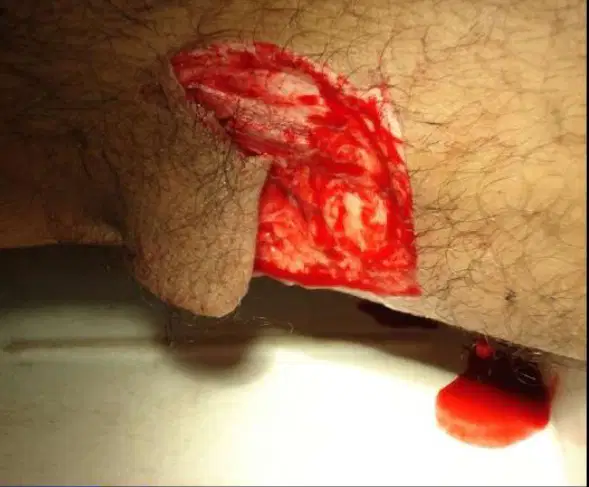
What type of injury is shown in the image?
Laceration
Contusion
Avulsion
Abrasion
In the STAR Classification System, which category describes a skin tear where the edges cannot be realigned to the normal anatomical position, and the skin or flap color is not pale, dusky, or darkened?
Category 1a
Category 1b
Category 2a
Category 2b
If a wound is macerated it will appear (which colour)
Black
Yellow
White
Red
Which type of wound closure occurs when a wound heals on its own by forming granulation tissue, epithelializing, and contracting?
Healing by Second Intention
Delayed Primary Closure
Primary Closure
Secondary Closure
What is the phase of wound healing that occurs 3 to 5 days after injury?
Proliferation/Repair
Angiogenesis
Maturation/Remodeling
Inflammation and Debridement
Which type of wound closure occurs immediately after injury?
Healing by Second Intention
Delayed Primary Closure
Primary Closure
Secondary Closure
What is the main goal of the inflammation phase of wound healing?
To increase wound strength at the fastest rate
To control hemorrhage
To remove foreign debris and bacteria from the wound
To increase blood flow and bring transudates into the wound

.
Assess the clinical appearance of the wound bed. Select the most appropriate answer.
Epithelial tissue 30%, Granulation 70%
Granulation 100%
Epithelial tissue 80%, Granulation 30%
Slough 10%, Granulating 90%
The removal of devitalised tissue in a wound is known as?
Slough
Cleansing
Debridement
Necrosis

Assess the clinical appearance of the wound bed. Select the most appropriate answer.
Slough 100%, Granulating 10%
Necrotic 100%
Slough 100%
Slough 20%, Granulating 80%
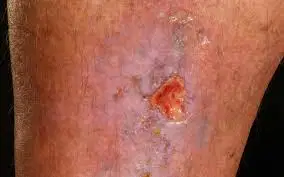
Select the mode of healing.
Third intention
Granulation
Delayed primary intention
Primary intention
Secondary intention
When educating a patient about wound healing the nurse should include what in the teaching?
long term steroid use diminishes the inflammatory response and speeds up wound healing
Chronic wounds heal better in a dry, open environment so leave them open to air.
Fat tissue heals more rapidly because there is less vascularization.
Inadequate nutrition delays wound healing and increases risk of infection.
Which phase of wound healing involves the highest activity of neutrophils?
Inflammation
Proliferation
Maturation
None of the above

Assess the wound bed. Select the predominant type of tissue in the wound bed.
Epithelisation
Granulation
Slough
Infected
Necrotic

Assess the wound bed. Select the predominant type of tissue in the wound bed.
Epithelisation
Granulation
Slough
Infected
Necrotic

Assess the wound bed. Select the predominant type of tissue in the wound bed.
Epithelisation
Granulation
Slough
Infected
Necrotic

Assess the wound bed. Select the predominant type of tissue in the wound bed.
Epithelisation
Granulation
Slough
Infected
Necrotic
What is purulent exudate?
Thin, clear and watery drainage
Thick, milky, gray/green/yellow drainage
Fresh blood
Thin, watery, pink/red drainage
What does the S stand for in the PQRST pain assessment?
Source
Severity
Suffering
Situation

Assess the wound bed. Select the predominant type of tissue in the wound bed.
Epithelisation
Granulation
Slough
Hypergranulation
Necrotic

