
 Worksheets
Grade 11 Care planning introductory questions
Total questions: 21
Worksheet time: 11mins
According to Topic 1 Care Planning, what is a care plan within a specific care setting?
A structured, written record that outlines how a client’s identified needs will be met
An informal list of tasks for carers to complete during a shift
A verbal agreement between client and carer about preferred routines
A generic policy document for the entire organisation
What does the guidance state about hand rubbing compared to handwashing?
Hand rubbing does not replace handwashing in all situations but is a critical tool during frequent care interactions
Hand rubbing completely replaces handwashing in all situations
Hand rubbing is discouraged during frequent care interactions
Hand rubbing should only be used after wearing gloves
What is the primary purpose of Personal Protective Equipment (PPE)?
To reduce the risk of exposure to infectious agents by creating a barrier between the care worker and potential sources of infection
To make care workers more comfortable during long shifts
To eliminate the need for hand hygiene practices
To identify staff roles by color-coding equipment
Which items are listed as common basic PPE? Select all that apply.
Gloves
Aprons or gowns
Surgical masks
Eye protection (when required)
Hand sanitizer dispensers
Why must donning PPE follow a logical order?
To ensure protection is effective
To reduce the time required for patient care
To comply with equipment manufacturer warranties
To minimize noise in clinical areas
Which general principles apply when donning PPE? Select all that apply.
Perform hand hygiene before donning PPE
Put on PPE in a clean area
Ensure PPE fits correctly and is secure
Remove PPE only after leaving the building
What can incorrect donning of PPE lead to?
Reduced protection and increased risk of contamination
Improved ventilation and comfort
Faster completion of care tasks
Lower costs of equipment
According to the general principles for doffing PPE (removing PPE), what action should be performed immediately after removal to reduce contamination risk?
Perform hand hygiene
Inspect PPE for damage
Store PPE for future reuse
Wipe down nearby surfaces only
What is a stated risk of improper removal of PPE?
Transfer of microorganisms to hands, clothing, or the environment
Increased durability of PPE
Reduced need for training on PPE use
Elimination of the need for hand hygiene
Which items are included in the general principles for safely doffing PPE? Select all that apply.
Removing PPE in the correct sequence
Avoiding contact with contaminated surfaces of PPE
Performing hand hygiene immediately after removal
Sharing PPE between workers
Doffing in any order
According to the World Health Organization, how many critical moments for hand hygiene are identified to prevent infection transmission?
Three
Four
Five
Six
Why do the WHO five moments for hand hygiene help care workers, according to the text?
They help recognise when hand hygiene is required, even if hands appear clean
They increase patient throughput by reducing time spent on hygiene
They reduce the need to use PPE
They replace the need for training videos
Understanding the five moments ensures that hand hygiene is applied in what manner?
Consistently and proactively, not only when prompted
Only when specifically prompted by supervisors
Only after visible contamination is present
Only at the end of each shift
What topic does the referenced PPE Skills Video cover on this page?
Donning and doffing PPE skills
Surgical timeout procedures
Sterilization of instruments
Patient transport protocols
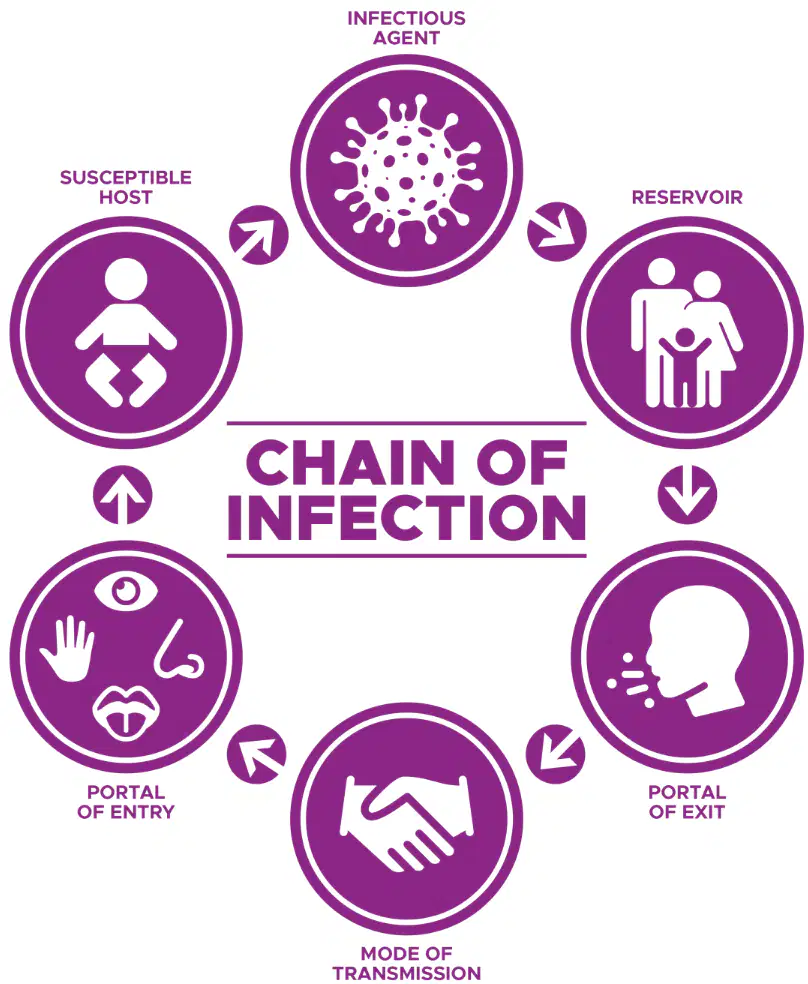
The chain of infection explains how infections spread from one host to another. According to this section, what is the primary aim of infection control?
Eliminate all microorganisms in the environment
Strengthen the immune system of every host
Break the chain of infection at one or more points
Increase the reservoir size to reduce transmission
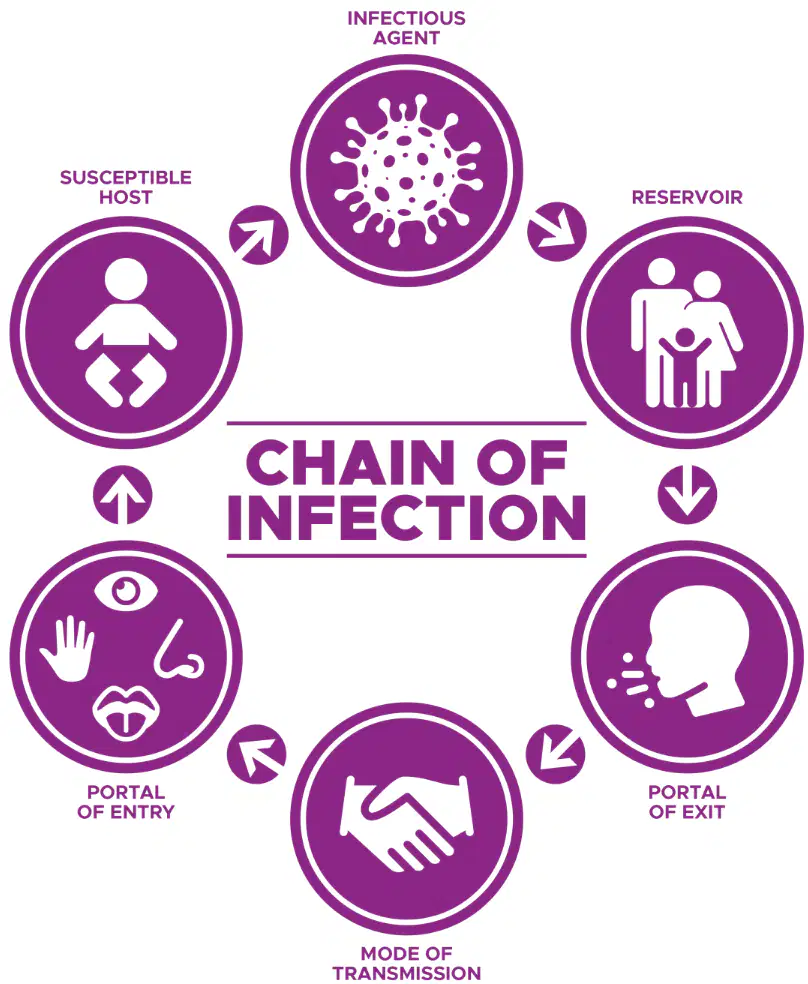
In the Chain of Infection diagram, which component refers to the microorganism that causes disease?
Reservoir
Infectious agent
Portal of entry
Susceptible host
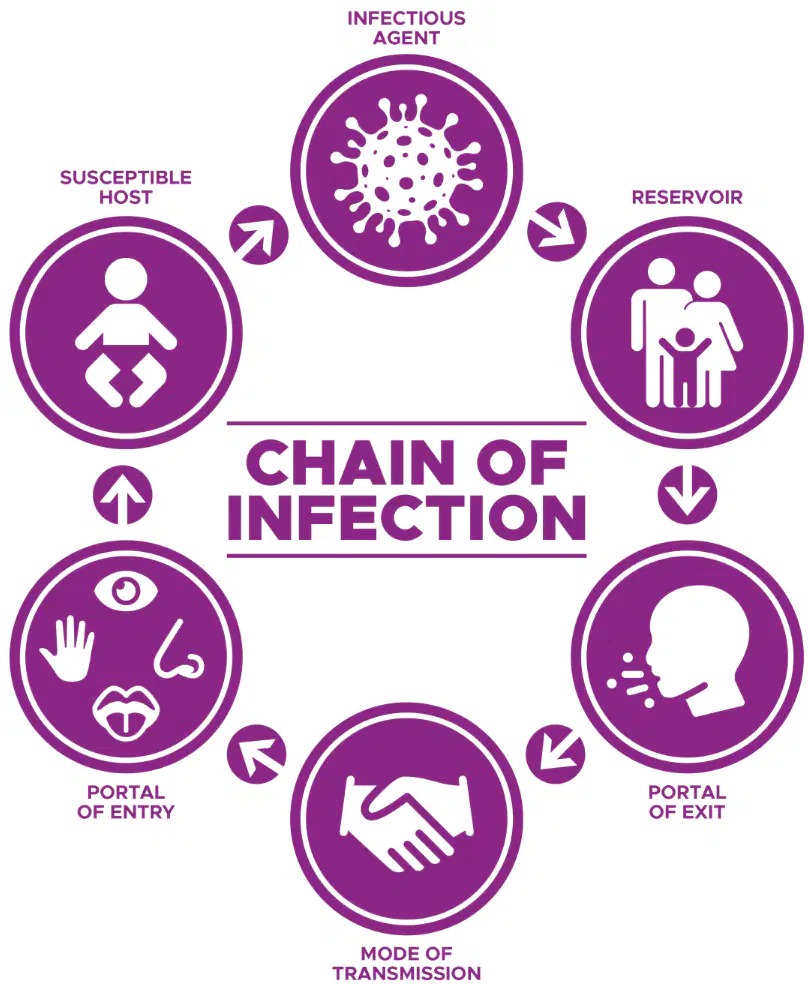
In the Chain of Infection diagram, which component identifies the usual habitat where the pathogen lives and multiplies?
Reservoir
Portal of exit
Mode of transmission
Susceptible host
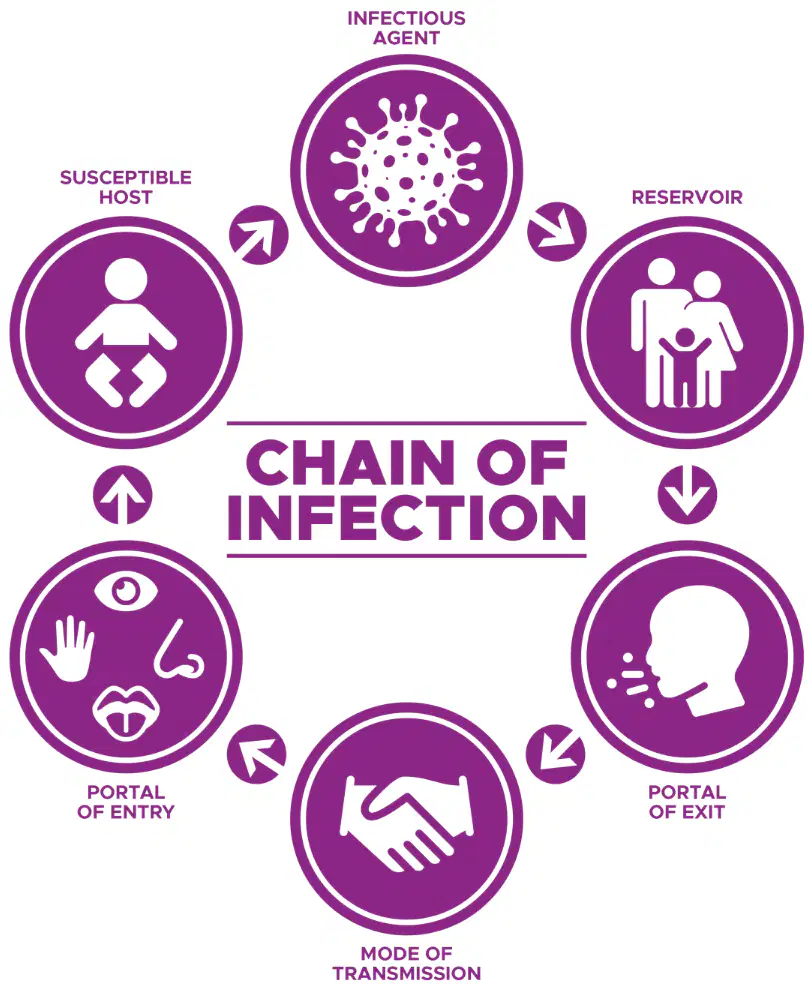
In the Chain of Infection diagram, which component represents the route by which the pathogen leaves the host?
Portal of exit
Portal of entry
Mode of transmission
Susceptible host
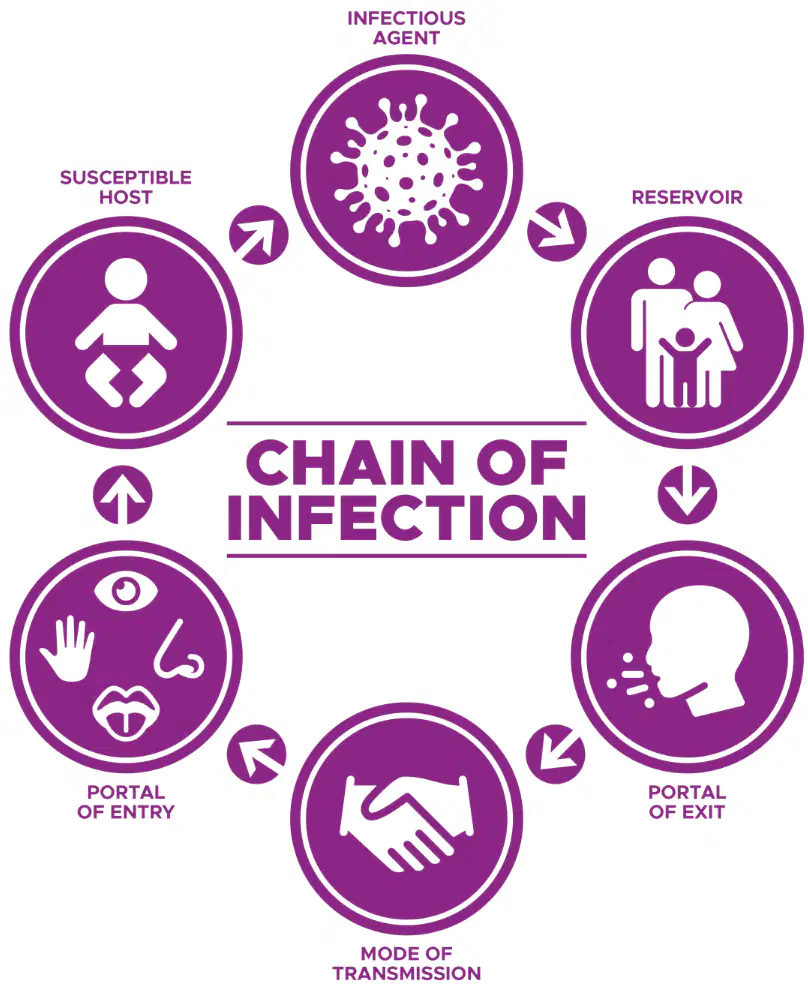
In the Chain of Infection diagram, which component describes how the pathogen is carried from one host to another?
Reservoir
Susceptible host
Mode of transmission
Portal of entry
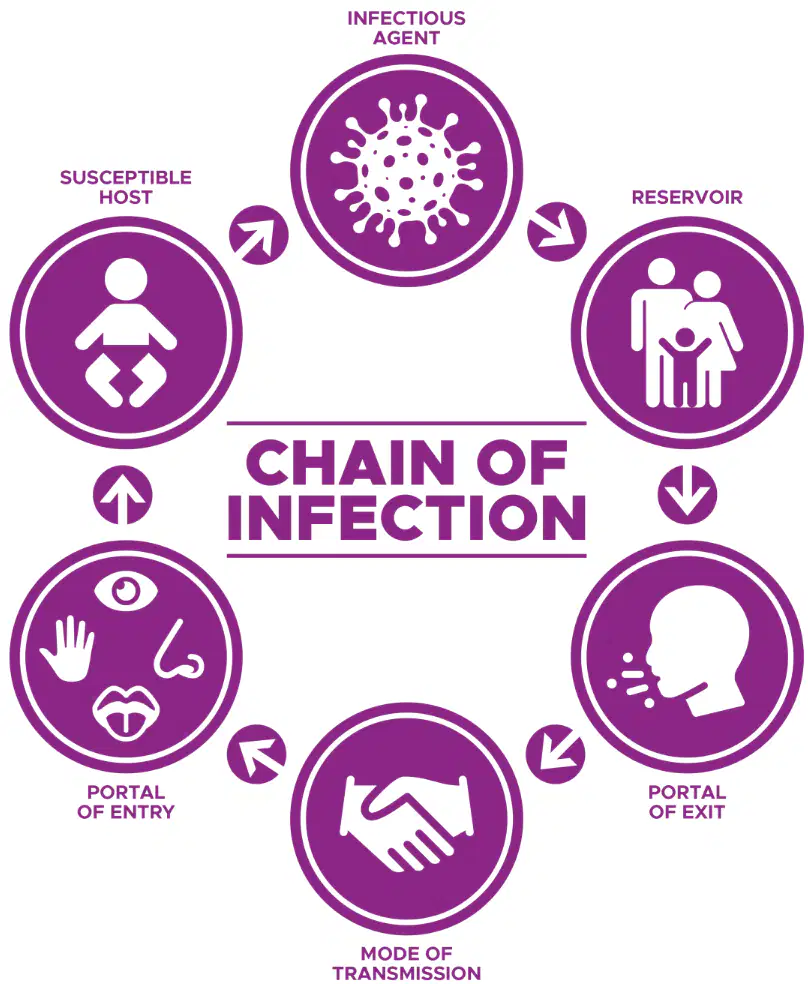
In the Chain of Infection diagram, which component indicates the pathway by which the pathogen enters a new host?
Portal of entry
Portal of exit
Infectious agent
Reservoir
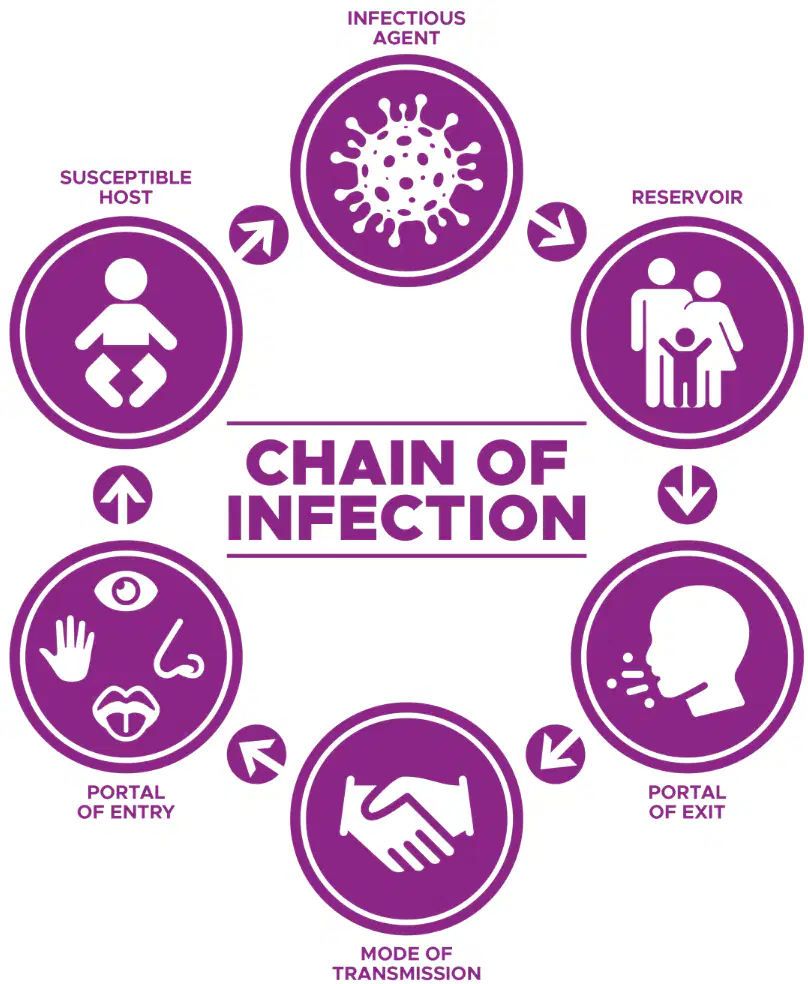
In the Chain of Infection diagram, which component refers to the person or organism that can become infected?
Reservoir
Infectious agent
Susceptible host
Mode of transmission

