
NEW
Font size
 Worksheets
Cell Practice test
Total questions: 25
Worksheet time: 2hrs 0mins

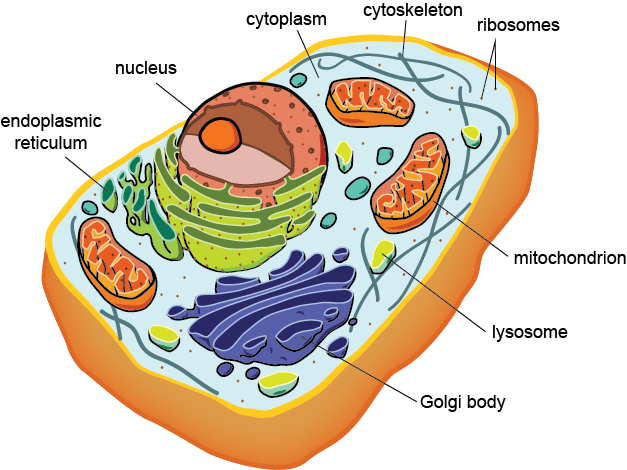
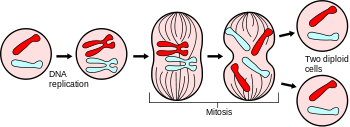
When cells are damaged, new cells are created by cell a process called cell division. How does the cell theory support this fact?
It states that all cells have a nucleus which divides.
It states that all living things are made up of one or more cells.
It states that cells come from previously existing cells.
It states that the basic units of structure and function are cells.

I like to be thought of as the "storage bubble" for both plant and animal cells. I am a...
Cell Membrane
Cytoskeleton
Vacuole
Endoplasmic Reticulum

I am the "brain" of the cell or the "control center" for everything happening within the cell. I am a...
Golgi Body/Apparatus
Nucleus
Ribosome
Lysosome

Photosynthesis takes place within me. I am a...
Mitochondria
Cell Wall
Chlorine
Chloroplast

I am often referred to as the "packaging system" within a cell. I "package" proteins and ship them to the Golgi Body. I am a...
Cytoplasm
Endoplasmic Reticulum
Baconidis
Golgi Body

I am the "waste removal expert" within a cell, removing unwanted material. Like a garbage man, I am a...
Waste Management
Nucleus
Ribosome
Lysosomes

I decide what goes in and out of the cell. I am fluid like and found in BOTH plant and animal cells. I am a...
Cell Wall
Cell Membrane
Cytoplasm
Golgi Apparatus

I provide plant cells their rigid shape. I am the...
Basketball that Nic Quarne left in Mr. Woller's room last week
Cytoskeleton
Cell Membrane
Cell Wall
Plants and animal cells have...
Mitochondria and chloroplasts
Nucleus and chloroplast
Cell wall and chloroplast
Mitchochodria and cytoplasm
what is the function of a lysosome?
To create energy for the cell
To command the cell what to do
To remove waste using digestive enzymes from the cell
To protect the cell

How can you tell that this is a prokaryote or eukaryote cell?
It is a prokaryote because it doesn't have a nucleus
It is a eukaryotic cell because it has a cell wall and a nucleus
It is eukaryotic because it does not a nucleus nor a cell membrane
It is prokaryote because it has a cell wall
The outermost layer of a plant cell and animal cell is...
Plant cell - cell membrane, animal cell - cell wall
Plant cell - cell wall; animal cell - cell membrane
Plant and animal cell - cell wall
Plant and animal cell - cell membrane
What is the jelly-like substance that keeps the organelles floating?
Cell Membrane
Nucleus
ER
Cytoplasm
Which of the following is a characteristic feature of prokaryotic cells?
Presence of a nucleus
Presence of membrane-bound organelles
Lack of a defined nucleus
Multicellular organization
Assertion (A): Mitochondria are known as the powerhouses of the cell.
Reason (R): Mitochondria contain enzymes that are necessary for photosynthesis.
Both A and R are true, and R is the correct explanation of A.
Both A and R are true, but R is not the correct explanation of A.
A is true, but R is false.
A is false, but R is true.
Assertion (A): Plant cells have a cell wall, but animal cells do not.
Reason (R): The cell wall provides structural support and protection to plant cells.
(a) Both A and R are true, and R is the correct explanation of A.
(b) Both A and R are true, but R is not the correct explanation of A.
(c) A is true, but R is false.
(d) A is false, but R is true.
Assertion (A): Ribosomes are the site of protein synthesis in the cell.
Reason (R): Ribosomes contain DNA which is essential for protein synthesis.
(a) Both A and R are true, and R is the correct explanation of A.
(b) Both A and R are true, but R is not the correct explanation of A.
(c) A is true, but R is false.
(d) A is false, but R is true.
Assertion (A): The nucleus is known as the control center of the cell.
Reason (R): The nucleus contains chromosomes which carry genetic information.
(a) Both A and R are true, and R is the correct explanation of A.
(b) Both A and R are true, but R is not the correct explanation of A.
true.
(c) A is true, but R is false.
(d) A is false, but R is true.
Assertion (A): Lysosomes are involved in the digestion of cellular waste.
Reason (R): Lysosomes contain hydrolytic enzymes that break down biomolecules.
(a) Both A and R are true, and R is the correct explanation of A.
(b) Both A and R are true, but R is not the correct explanation of A.
(c) A is true, but R is false.
(d) A is false, but R is true.

