
NEW
Font size
 Worksheets
Summer Challenge Review
Total questions: 17
Worksheet time: 6mins
Meal Planning 1-2-3 focuses on what 3 things?
Breakfast, lunch, dinner
Carbohydrates, proteins, fats
Starches, fruits & vegetables, proteins
Budgeting, shopping, cooking
Myth or fact: All plant proteins are “incomplete"
Myth
Fact
The body typically benefits from having new energy every _______ hours.
1-1.5
2-3
3-4
4-5
Which of the following would be an ideal pre-workout snack?
carrots + hummus
chocolate milkshake
pretzels + fruit
chicken salad
Which of the following contains primarily polyunsaturated fat?
avocados
olive oil
soybean oil
coconut oil
Which of the following is NOT an example of protein complementation?
whole grain bread with nut butter
falafel with pita bread
hummus with sesame crackers
scrambled egg with toast
Myth or fact: Taking more than the recommended dose of a vitamin, mineral, or supplement can improve athletic performance.
Myth
Fact
Which of the following ingredients can you be certain is a whole grain?
enriched flour
whole wheat
multigrain
organic flour
What style of eating acknowledges that mindful and intuitive eating can be challenging and sometimes planning is needed to make sure needs are being met and pleasure foods are also included?
mindful eating
emotional eating
zoned eating
thoughtful eating
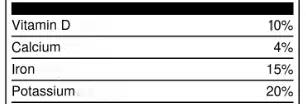
According to the % Daily Values (% DVs), this product is HIGH which nutrient(s)?
Vitamin D
Calcium
Iron
Potassium
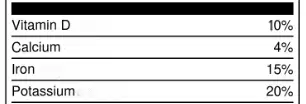
According to the % Daily Values (% DVs), this product is LOW in which nutrient(s)?
Vitamin D
Calcium
Iron
Potassium
Which of the following food labels describes a nutritional or health benefit?
"Healthy"
"Natural"
"Organic"
None of the above
Our basal energy requirements make up _____% of our energy needs.
10-35%
20-30%
60-70%
90-99%
What is the term for the natural rise in blood sugar that occurs when eating carbohydrate foods?
glycemic response
carbohydrate loading
food allergy
satisfaction time
True or False: The base of the athlete performance pyramid is consistency.
True
False
Dehydration can lead to all of the following EXCEPT:
Decreased muscle strength
Decreased speed & stamina
Decreased energy levels
Decreased risk for injury
True or False: An athlete with 2 workouts per day should aim for the moderate training plate.
True
False

