
 Worksheets
Active and Passive Transport - Basics
Total questions: 16
Worksheet time: 12mins
Name
Class
Date
1.
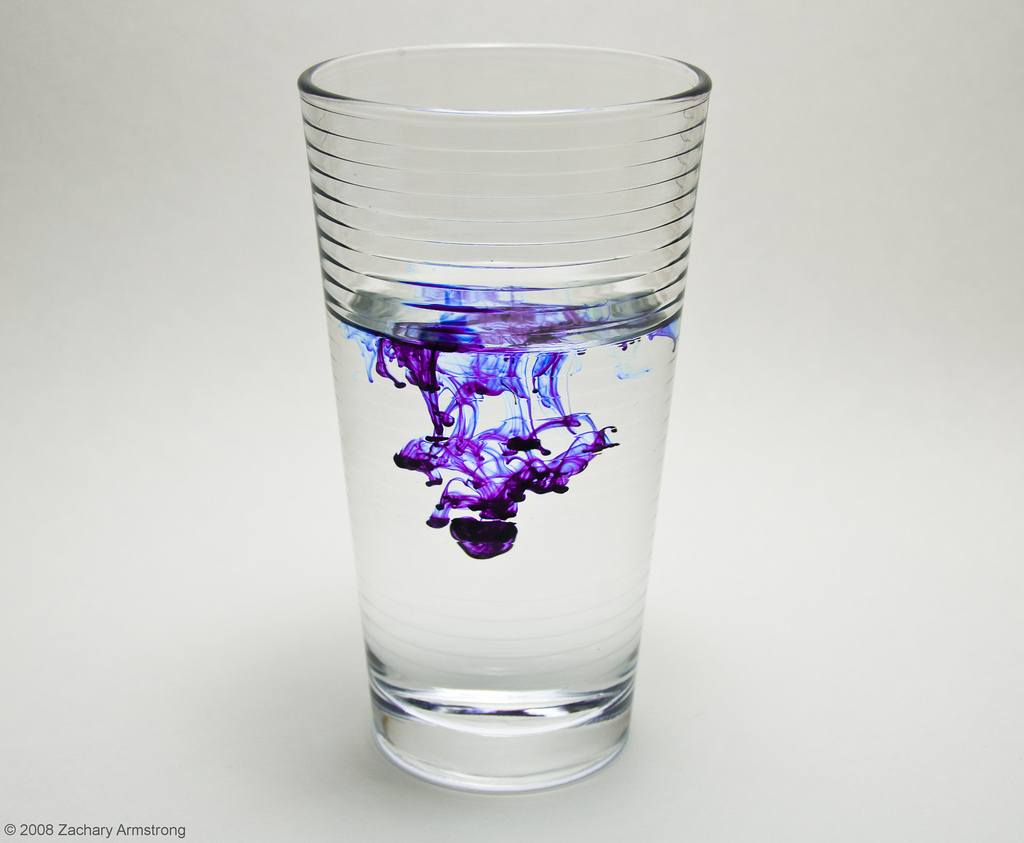
Where is there a low concentration of dye?
a)
at the bottom of cup
b)
in the color
c)
at the top of cup
d)
no concentration gradient
2.
Permeable means
a)
things can pass through
b)
the concentration levels are different
c)
it is permanent
d)
things are stuck
3.
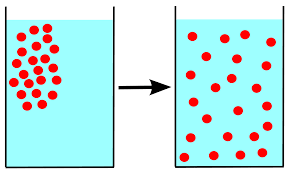
The picture below is an example of _________________.
a)
osmosis
b)
isotonic
c)
diffusion
d)
active transport
4.
Osmosis is the movement of _____ across a membrane.
a)
food
b)
energy
c)
oxygen
d)
water
5.
What is diffusion?
a)
when molecules move
b)
when molecules move from a high concentration to a low.
c)
no movement
d)
molecules move everywhere
6.
Passive transport requires no
a)
concentration gradients
b)
osmosis
c)
motion
d)
energy
7.
What is the difference between active and passive transport?
a)
Active does not need energy and passive uses ATP (energy)
b)
Active uses ATP (energy) and passive does not need energy
c)
Active stores transport proteins and passive releases
d)
Active uses hormones and passive does not
8.
Which type of transport requires an input of energy?
a)
Passive Transport
b)
Osmosis
c)
Simple Diffusion
d)
Active Transport
9.
Diffusion is a form of...
a)
Active Transport
b)
Passive Transport
10.
Which type of transport uses protein channels to help the particles move across the cell membrane?
a)
endocytosis
b)
osmosis
c)
facilitated diffusion
d)
exocytosis
11.

Active transport allows a cell to move molecules from an area of low concentration to an area of high concentration.
a)
True
b)
False
12.

Even though the concentration of salt is high in some gland cells and low in the blood, these cells can move salt out of blood and into the cells. This is an example of
a)
passive transport
b)
active transport
c)
diffusion
d)
osmosis
13.
A person with swollen gums rinses his mouth with warm salt water, and the swelling decreases. Which of the following has occurred?
a)
The swollen gums have absorbed the saltwater solution.
b)
The saltwater solution lowers the temperature of the water in the gums.
c)
The salt in the solution has moved against the concentration gradient.
d)
The water in the gums has moved out due to the high concentration of salt in the solution.
14.

_____________ allows some things to enter and leave cells, while keeping other things out of the cell.
a)
Osmosis
b)
Fermentation
c)
A selectively permeable membrane
d)
Metabolism
15.

Which of the following is a job of the cell membrane?
a)
Regulates which materials enter and leave the cell.
b)
Breaks apart lipids, carbohydrates, and proteins from foods.
c)
Stores water, salt, proteins, and carbohydrates.
d)
Keeps the cell wall in place.
16.

When does diffusion in cells stop?
a)
When vesicles burst.
b)
When equilibrium is reached.
c)
When respiration begins.
d)
When photosynthesis begins.
100 %

