
Font size
 Worksheets
VERY GOOD
Total questions: 125
Worksheet time: 3hrs 56mins
A reaction is most likely to occur when reactant particles collide with
proper energy, only
proper orientation, only
both proper energy and proper orientation
neither proper energy nor proper orientation
Copper catalyses the reaction between zinc and dilute sulfuric acid.
Zn(s) + H2SO4(aq) → ZnSO4(aq) + H2(g)
Why does copper affect the reaction?
Decreases the activation energy
Increases the activation energy
Increases the enthalpy of reaction
Decreases the enthalpy of reaction
According to collision theory, particles must collide with ____ and ____ for a reaction to occur.
sufficient rate and sufficient energy
sufficient surface area and correct orientation
sufficient catalyst and sufficient energy
sufficent energy and correct orientation
More collisions correspond to a:
faster reaction rate
slower reaction rate
unchanged reaction rate
Which of the following would lead to a slower reaction rate?
Place the reactants in hot water
Place the products in an ice bath
Place the reactants in an ice bath
Stirring the reactants with a stirring rod
SO2 + O2 ↔ SO3
If the equilibrium shifts to the right, the concentration of O2 will ___________.
SO2 + O2 ↔ SO3
If the concentration of SO2 is increased, the equilibrium of the reaction will shift ___________.↔
SO2 + O2 ↔ SO3
If the equilibrium shifts to the right, the concentration of SO3 will ___________.
heat + N2 + O2 ↔ 2NO
If O2 is removed, the concentration of N2 will _______.
heat + N2 + O2 ↔ 2NO
If the heat is added to the chemical system, the equilibrium will shift _______.
heat + N2 + O2 ↔ 2NO
If the heat is removed to the chemical system, the equilibrium will shift _______.
H2 (g) + Cl2 (g) ↔ 2HCl (g) + heat
If the temperature is cooled, the _________ reaction will be favored.
N2 (g) + 3 H2 (g) ↔ 2 NH3 (g)
If the pressure in the system is increased, _______ reaction will be favored.
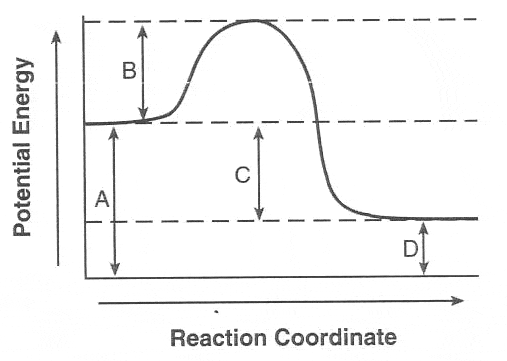
The forward reaction points towards the __________.
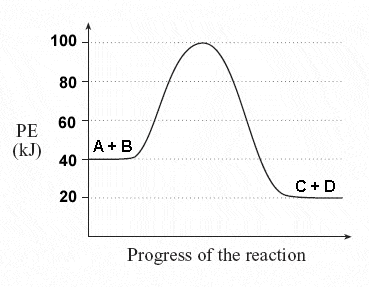
What is the change of the heat of the reaction (ΔH)?
40 kJ
20 kJ
-20 kJ
-40 kJ

A solution at equilibrium must be
concentrated
saturated
unsaturated
diluted
At STP, which 4.0-gram zinc sample will react fastest with dilute hydrochloric acid?
sheet metal
powdered
bar
granules

Which quantity can be changed by the use of a catalyst?
I and II only
I and III only
II and III only
I, II and III

Which graph best represents the relationship between the average kinetic energy of molecules of a gas and temperature in K?
A
B
C
D
Consider the reaction between gaseous iodine and gaseous hydrogen.
I2(g) + H2(g) ⇄ 2 HI(g) ΔH∅=-9 kJ
Why do some collisions between iodine and hydrogen not result in the formation of the product?
The I2 and H2 molecules do not have sufficient energy.
The system is in equilibrium.
The temperature of the system is too high.
The activation energy for this reaction is very low.
2Mg(s) + O2 (g) −> 2MgO(s).
The reaction begins because the reactants
Compared to the rate of inorganic reactions, the rate of organic reactions generally is
slower because organic particles are ions
slower because organic particles contain covalent bonds which take a long time to break
faster because organic particles are ions
faster because organic particles contain covalent bonds
What will happen if a catalyst is added to the system at equilibrium?
A + B <--> AB
The equilibrium concentration of AB will increase.
The equilibrium concentration of AB will decrease.
The rates of the forward and reverse reactions will change.
The equilibrium constant for the reaction will change.
TRUE or FALSE.
All organic compounds are obtained from living organisms or "organic materials" while all inorganic compounds are obtained from earth's mineral constituents or "inorganic materials".
(a)
TRUE or FALSE.
All organic compounds are obtained from living organisms or "organic materials" while all inorganic compounds are obtained from earth's mineral constituents or "inorganic materials".
(a)
Carbon has (a) valence electrons.
Which of the two is an Organic Compound?


____________ groups are atoms, groups of atoms or bond that determine the characteristic of an organic compound.
Aliphatic
Aromatic
Functional
Hydrocarbon
Aliphatic hydrocarbons consist only single bonds, and so are called ____________ hydrocarbons.
unsaturated
saturated
aromatic
chain
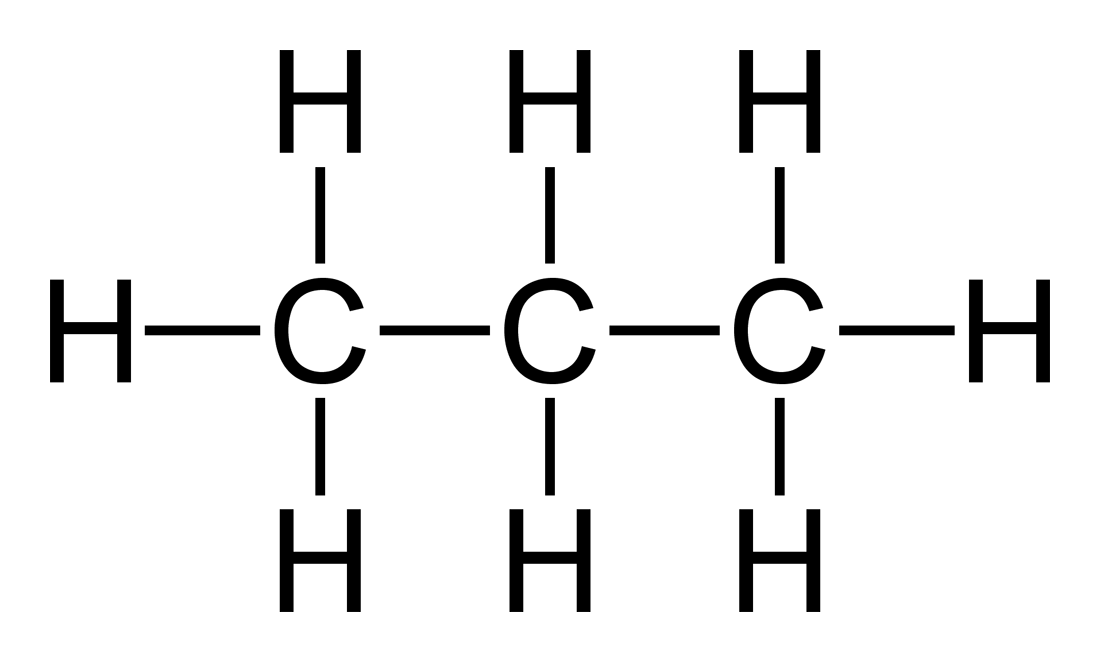
How many carbon atoms are in propane?
1
2
3
4

How many hydrogens are missing from this extended structural formula?
6
7
8
9

What is the condensed formula of this structure?
CH3CH2CH2OH
CH3COCH3
CH3CH2CHO
CH3OCH2CH3

What is the molecular formula for structure showed?
C8H18
C3H3
C8H3
C3H2(CH3)3

How many single covalent bonds does benzene (C6H6) molecule have?
3
6
9
12
Isomers are molecules that have the _________molecular formula (contain the same number of atoms) but ______ structurally (having different arrangement of the atoms in space).
differ, differ
same, differ
same, same
differ, same
What is a functional group?
Atoms or group of atoms that give specific characteristics to a molecule
Group of molecules that make up a group of atoms
Group of molecules that give specific characteristics to an atom
Group of atoms that give specific characteristics to an element

Classify the compound based on the functional group present.
Ether
Ketone
Ester
Carboxylic acid
Compounds which only contain carbon and hydrogen are termed as
hydrocarbons
organic compounds
inorganic compounds
carbohydrogens
Hydrocarbons that contain a delocalized ring of π-bonds such as benzene ring are called ___________ hydrocarbons.
aromatic
aliphatic
organic
cyclo
Aliphatic hydrocarbons consist only single bonds, and so are called ____________ hydrocarbons.
unsaturated
saturated
aromatic
chain
Hydrocarbons, the simplest family of carbon compounds, are made from these two elements:
Hydrogen and Copper
Helium and Carbon
Hydrogen and Carbon
Compounds that are composed of the same number and type of atoms but have them arranged in different ways are ___________.
isomers
isotopes
polymers
alkanes
Which of the following would have the highest boiling point?
C3H8
C4H8
C5H12
C22H44

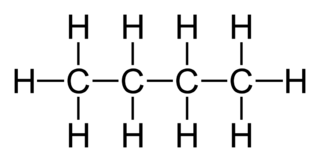
Is the name of doubled bonded, unsaturated hydrocarbons.
Alkanes
Alkenes
Allkynes
Tanins

What is the name of this hydrocarbon?
1 - butane
1 - butene
2 - butane
2 - butene
Which of the following shows the structure of propene?


Which of the following shows the structure of ethene?

What chemical is this? (C5H10)
Pentene
Pentane
Hexane
Heptene

Choose the name of the compound
4-octyne
5-octyne
4-octene
5-octene

Choose the name of the compound
1-propene
2-propene
propane
2-propyne

Choose the name of the compound
3-butyne
2-butyne
3-butene
2-butene

Choose the name of the compound
2-pentyne
3-pentyne
2-pentene
3-pentene
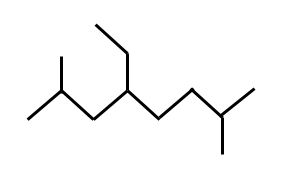
Give IUPAC nomenclature for this compound
2,7-dimethyl-5-ethyloctane
5-ethyl-2,7-dimethyloctane
2,7-dimethyl-3-ethyloctane
4-ethyl-2,7-dimethyloctane
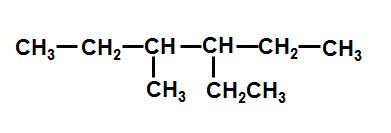
Give the IUPAC name for this compound
3-methyl-4-ethylhexane
3-ethyl-4-methylhexane
3-methyl-4-ethylheptane
3-ethyl-4-methylheptane

What functional group is shown?
amino
hydroxyl
carboxyl
sulfhydryl

What functional group is shown?
carbonyl
hydroxyl
carboxyl
amino

What functional group is shown?
halide
hydroxyl
amino
carboxyl

Name this compound.
Butanol
Butene
Oxybutanol
Butanoic acid

Name this compound.
Nitroethane
Ethylamine
Aminoethane
Ethamine
The structural formula of ethyl 2-methylpropanoate is ...


______________ are the chemicals which give fruits their smell.
fructose
lactose
esters
Which of the following can be broken down into a simpler substance?
Elements
Both Elements and Compounds
Compounds
None of the above
What is the scientific study of carbon-containing compounds called?
Organic Chemistry
Inorganic Chemistry
Biochemistry
Physical Chemistry
Which of the following is an example of an organic compound?
CO2
H2O
Glucose
NaCl
Which of the following compounds is not made from living organisms?
NaCl
CHO2
H2O
NH2OH
What is the main function of lipids?
Defend against illness
Build organelles
Store energy
Store genetic information
Which of the following is a monomer?
Carbohydrate
Protein
Nucleic Acid
Hydrocarbon
Which of the following is an example of a carbohydrate?
Butter
Cholesterol
Meat
Glucose
What elements are present in proteins?
C, H, O
C, H, O, N
C, H, O, N, P, S
C, H, O, N, S
What is the function of nucleic acids?
Defend against illness
Store genetic information
Provide energy
Build organelles
How do you recognize an organic compound by its formula?
Contains CHONS
Contains CH
Contains CHO
Contains CHONPS
Which of the following compounds is inorganic? Choose 2
C6H12O6
CH
NaOH
NH2OH
What is the main function of carbohydrates?
Defend against illness
Store genetic information
Build organelles
Provide energy
What is the main function of proteins?
Provide energy
Build organelles
Defend against illness
Store genetic information
What is the main function of nucleic acids?
Defend against illness
Store genetic information
Build organelles
Provide energy
Which of the following compounds is organic?
NaCl
C2H4O2
CO2
H2O
The chemical element of atomic number 6, a nonmetal which has two main forms (diamond and graphite) and which also occurs in impure form in charcoal, soot, and coal.
Carbon
Oxygen
Element
Nitrogen
Organic compounds that are made of only hydrogen and carbon atoms. They are found in many places, including crude oil and natural gas.
Hydrocarbons
Nucleic Acids
Proteins
Lipids/Fats
They are the most abundant compounds found in living organisms, including polysaccharides which are polymers composed of many sugar building blocks. They are used by cells to get and store energy.
Polymers
Organic Compound
Carbohydrates
Carbon
These are required for the structure, function, and regulation of the body's cells, tissues and organs. They help build organelles and help defend against illness.
Lipids
Proteins
Polymers
Monomers
1 of the 4 main categories of organic compounds. They are responsible for storing genetic information.
Compounds
Elements
Nucleic Acids
Polymers
A molecule, made from joining together many small molecules called monomers.
Lipids
Polymers
Carbohydrates
Monomers
The scientific study of the structure, properties, and reactions of carbon containing compounds.
Organic Chemistry
Organic Compounds
Inorganic Compounds
Chemical Formula
A substance formed when two or more chemical elements are chemically bonded together.
Hydrocarbons
Compound
Element
Nitrogen
A compound that does not contain a carbon atom. It does include salts, metals, and other elemental compounds
Organic Compound
Inorganic Compound
Monomers
Carbohydrates


C56H58Cl14CuN16S4



