

wayground logo

Free Printable Worksheets

NEW

Font size

S
M
L
XL
Worksheets

Membrane transport

Total questions: 28

Worksheet time: 25mins
Name
Class
Date
1.
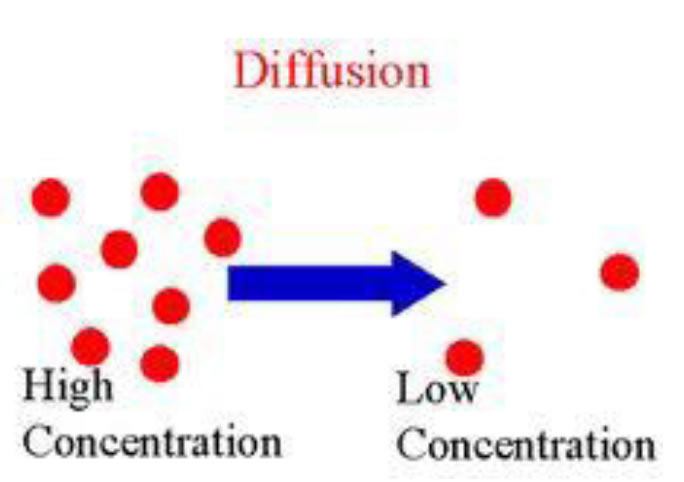
Movement of particles from high to low concentration. 
a)
Passive Transport
b)
Active Transport
2.
Osmosis is a form of ______________. 
a)
Passive Transport
b)
Active Transport
3.
a)
Passive Transport
b)
Active Transport
4.
Exocytosis
a)
Passive Transport
b)
Active Transport
5.
Endocytosis
a)
Passive Transport
b)
Active Transport
6.
Low to High
a)
Passive Transport
b)
Active Transport
7.
The diffusion of WATER across a semi-permeable membrane is
a)
osmosis
b)
diffusion
c)
endocytosis
d)
exocytosis
8.
The movement of molecules from higher concentration to lower concentration is
a)
diffusion
b)
cell division
active transport
c)
active transport
d)
tonicity
9.
Active transport requires
a)
energy
b)
the nucleus
c)
chloroplasts
d)
lysosomes
10.
The cell membrane is selectively permeable, which means...
a)
All materials can enter and leave the cell
b)
Certain things can enter while others cannot
c)
The cell manually sorts through all materials
d)
Only certain cells can interact with the cell.
11.
The movement of molecules against a concentration gradient
a)
simple diffusion
b)
facilitated diffusion
c)
active transport
d)
osmosis
12.
A molecule that diffuses down a concentration gradient goes from an area of ______ concentration into an area of ______ concentration.
a)
high, low
b)
low, high
c)
passive, active
d)
active, passive
13.
This picture represents what type of cell transport?
a)
endocytosis
b)
exocytosis
c)
osmosis
d)
passive transport
14.
A cell will _____________________ in a hypertonic solution.
a)
swell
b)
shrink
c)
will not change
d)
will explode
15.
A cell will __________________ in a hypotonic solution.
a)
swell and perhaps burst (lyse)
b)
shrink
c)
the size of the cell will not change
d)
the size of the cell will change from large to small and from small to large
16.
Active transport requires ______, moves materials from __________________, and goes _______ the concentration gradient.
a)
No energy, low to high, against
b)
ATP, high to low, with
c)
ATP, low to high, with
d)
ATP, low to high, against
17.
Controlling what goes into or out of the cell without energy is called
a)
active transport
b)
endocytosis
c)
passive transport
d)
exocytosis
18.

Examples of particles that can diffuse across through the phospholipid bilayer include:

a)

oxygen and carbon dioxide

b)

sugar

c)

water

d)

calcium ions

19.
Describes the arrangement of the cell membrane as bendable and made of many parts. 
a)
The Fluid Mosaic Model 
b)
The Major Mobility Model 
c)
The Crazy Cell Model
d)
The Maze Model
20.
Something is ___________ ____________
when some molecules can cross the membrane while others cannot. 
a)
Selectively (or Semi) Permeable 
b)
Totally Transparent
c)
Liquid Licorice 
d)
Heavily Patrolled 
21.
When both inside and outside of a cell have the same amount of water it is said that the cell has reached a state of
a)
Osmosis
b)
Diffusion
c)
Equilibrium
22.
When cells take in a liquid through active transport, what is it called?
a)
Exocytosis
b)
Phagocytosis
c)
Pinocytosis
d)
Osmosis
23.

The sodium potassium pump usually pumps

a)

potassium out of the cell and sodium into the cell

b)

sodium out of the cell and potassium into the cell

c)

sodium into the cell and water out of the cell

d)

both potassium and sodium into the cell

24.

Which factor does not affect the rate of diffusion

a)

molecule size

b)

molecule color

c)

molecule concentration

d)

temperature

25.

During active transport molecules move

a)

with the concentration gradient

b)

against the concentration gradient

c)

they are in equilibrium

d)

only out of the cell

26.

What is the movement of particles with the concentration gradient using protein "helpers" aid in moving glucose or amino acids across the membrane?

a)

diffusion

b)

facilitated diffusion

c)

active transport

d)

enzymatic reactions

27.

An example of facilitated diffusion is

a)

CO2 and O2 exchange in the lungs

b)

Glucose transport

c)

Na+ / K+ Pumps

d)

Endocytosis

28.

When a cell is in equilibrium there is

a)

no movement of molecules across the membrane

b)

molecules still may move back and forth across the membrane in equal amounts

c)

molecules can only move out of the cell

d)

molecules can move down the concentration gradient
