
 Worksheets
Round 1 (Grade 7)
Total questions: 40
Worksheet time: 40mins
Consumption refers to:
The production of goods and services
The use of goods and services to satisfy needs and wants
The export of goods
The sale of goods
Which of the following is an example of a natural resource?
A factory
Water
A computer
A car
Which of the following is a key characteristic of a democratic system?
Free and fair elections
Absolute power held by a monarch
Limited individual freedoms
State control of the media
Which of the following best describes a "need"?
A desire for luxury goods
Something essential for survival
Something that enhances comfort
A preference for a particular brand
What is a market?
A place where goods and services are produced
A system where buyers and sellers exchange goods and services
A store where goods are sold
A financial institution
Who is considered the father of archaeology?
Flinders Petrie
Howard Carter
Leonard Woolley
William Matthew Flinders Petrie
What is the term for the process of exposing hidden artifacts, sites and recording the findings from the archaeological sites?
Excavation
Survey
Documentation
Conservation
Which of the following is an example of capital as a factor of production?
A factory building
A worker's skills
Natural resources like water
A company's management
What is the primary characteristic of a monarchical system of government?
Rule by a single leader with absolute power
Rule by a small group of individuals
Rule by the majority
Rule by divine authority
What is the term for the transfer of power from one monarch to another?
Succession
Inheritance
Election
Appointment
Demand refers how much of a quantity people are …………………….. to buy at certain price.
(a)
The form of government in the Maldives is;
Monarchy
Oligarchy
Dictatorship
Presidential Republic
What is the term for the protection of individual rights and freedoms in a democratic system?
Rule of law
Separation of powers
Checks and balances
Constitutionalism
From the given list, identify a non-market?
Local shop
Coffee shop
Supermarket
Public school
Ahmed has MVR 20. He could buy either a chocolate or a note book. Since his notebook is damaged he bought a new one. Identify the opportunity cost?
Chocolate
New notebook

Identify which method of production is used to produce a personalized cake?
Mass production
Job production
Batch production
Flow production
When we have limited resources and unlimited wants are known as:
Scarcity
Economics
Opportunity cost
Production
The three basic economic questions are:
Who will fund production? How will profits be distributed? What is the role of government?
What to produce? How to produce? For whom to produce?
Where to produce? When to produce? Why to produce?
Who will consume? What will be the price? How much to produce?
A traditional economic system is characterized by:
Government control over all resources
Decisions based on customs, traditions, and beliefs
Free market competition
Advanced technological infrastructure
A capital-intensive production process is one that:
Requires a large amount of labor
Relies heavily on machinery and equipment
Involves a lot of manual work
Depends on natural resources
What is the role of a monarch in a constitutional monarchy?
Head of state and head of government
Head of state but not head of government
Head of government but not head of state
No formal role
Producing wedding cakes where each cake is unique and made to order is an example of:
Batch Production
Job Production
Mass Production
Lean Production
What is the term for the study of past human cultures through material remains?
Anthropology
Archaeology
History
Sociology
Which of the following is an archaeological technique used to date organic materials?
Radiocarbon dating
Potassium-argon dating
Dendrochronology
Stratigraphy

Identify the type of factor of production shown in the picture above.
Capital
labour
land
Entrepreneur
What is the term for the economic principle that describes the cost of the next best alternative foregone?
Opportunity cost
Marginal cost
Fixed cost
Variable cost
What is the fundamental principle of democracy?
Rule by a single leader
Rule by a small group of individuals
Rule by the majority
Rule by divine authority
What is the term for the ceremony where a new monarch ascends to the throne?
Coronation
Inauguration
Investiture
Enthronement
Demand refers how much of a quantity people are …………………….. to buy at certain price.
wanting
wish
offering
From the given list, identify a non-market?
Local shop
Coffee shop
Supermarket
Public school
What is the name of the archaeological period characterized by the use of stone tools?
Paleolithic
Ancient period
Medieval
Bronze Age
What is a dictatorship?
A form of government where power is held by a single person
A form of government where power is held by the people
A form of government where power is held by a monarch
A form of government where power is held by a small group of individuals
Ahmed has MVR 20. He could buy either a chocolate or a note book. Since his notebook is damaged he bought a new one. Identify the opportunity cost?
New notebook
Chocolate
Which of the following best defines a constitution?
A set of laws passed by the legislature
A document outlining government policies
A foundational document contains the fundamental laws of a country
A treaty between nations
When we have limited resources and unlimited wants are known as:
Scarcity
Economics
Opportunity cost
Production

Above show a picture of fishing, this will be an example of which sector of production?
Primary sector
Secondary sector
Tertiary sector
What is the argument for government intervention in an economy?
To increase role of price mechanism in allocating resources
To encourage the consumption of harmful products
To make the distribution of income uneven
To prevent private sector firms from overcharging consumers
From the given pictures, identify a basic human need?

Car

Laptop
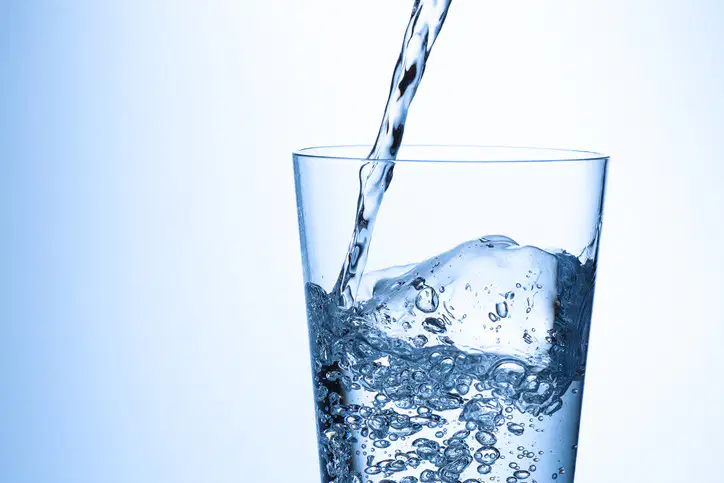
Water

Cake
Allocation of resources are:
How scare resources are distributed between competing uses.
How unlimited resources are distributed between competing uses.
How scare resources are distributed by the wealthy individuals
How scare resources are bought and sold in the economy
Ahmed is a regular customer of a local cafe'. Ahmed will be considered as :
Internal stakeholder
External stakeholder

