
Font size
 Worksheets
Unit 2 Current Issues: Cold War
Total questions: 59
Worksheet time: 52mins
Established in 1947, this stated that the United States would provide political, military, and economic help to countries who were democratic and under threat of being over-taken.
Truman Doctrine
Eisenhower Doctrine
McCarthyism
Marshall Plan
Established in 1957, this document stated that a Middle Eastern country could ask for help if they were threatened by armed aggressors. It was used in Lebanon.
Truman Doctrine
Eisenhower Doctrine
McCarthyism
Marshall Plan
This was the term used due to a US Senator using his influence to investigate "Communist threats" that had entered the US government.
Truman Doctrine
Eisenhower Doctrine
McCarthyism
Marshall Plan
Created in 1948 this was an Economic Recovery Act that would provide help to rebuild Europe after WWII.
Truman Doctrine
Eisenhower Doctrine
McCarthyism
Marshall Plan
This leader wrote the Soviet Leader at the time to have nuclear weapons placed in Cuba.
Nikita Khrushchev
Fidel Castro
Mao Zedong
Ho Chi Minh
This leader was a theorist, created movements like the Cultural Revolution and the Great Leap Forward. Later he created the Peoples Republic of China.
Nikita Khrushchev
Fidel Castro
Mao Zedong
Ho Chi Minh
This was the first televised event that allowed people to based their opinions off how candidates looked.
1960 Presidential Debates
Korean War
Sputnik I
Civil Rights Act 1964
This was the first televised event that allowed the American public to form skepticisms about the government based on the events that were broadcasted on tv.
1960 Presidential Debates
Korean War
Sputnik I
Civil Rights Act 1964
This was the first artificial satellite that was launched into space by the Soviet Union.
1960 Presidential Debates
Korean War
Sputnik I
Civil Rights Act 1964
A failed attempt of Cuban exiles to overthrow Castro's government that was backed the the United States.
Bay of Pigs
Cuban Missile Crisis
Missile Gap
Nuclear Test Ban Treaty 1963
Signed by Kennedy, this put a stop to testing nuclear weapons in the water, atmosphere, and space.
Bay of Pigs
Cuban Missile Crisis
Missile Gap
Nuclear Test Ban Treaty 1963
For 13 days, this was a confrontation between the United States & the Soviet Union because of a nuclear arsenal located on Cuba.
Bay of Pigs
Cuban Missile Crisis
Missile Gap
Nuclear Test Ban Treaty 1963
the believe that the Soviet Union had more nuclear warheads and missile power than the United States.
Bay of Pigs
Cuban Missile Crisis
Missile Gap
Nuclear Test Ban Treaty 1963

A U.S policy to prevent the spread of communism abroad.
Marshall Plan
Molotov Plan
McCarthyism
Containment Policy

What was the PRIMARY goal of the foreign policy described in this excerpt?
To increase U.S. colonization of Asia
To prevent the spread of communist influence in Asia
To end trade sanctions against Asian countries
To protect U.S. soldiers stationed in Asian countries
a competition between nations for superiority in the development and accumulation of weapons, especially between the US and the former Soviet Union during the Cold War.
Arms Race
Domino Theory
Peace Corps
Space Race
began as an arms race between the respective militaries of the United States and the Soviet Union, that soon turned into a competition to achieve spaceflight.
Arms Race
Domino Theory
Peace Corps
Space Race
an independent agency and program of the United States government that trains and deploys volunteers to provide international development assistance. It was established in March 1961
Arms Race
Domino Theory
Peace Corps
Space Race
a mandated order to desegregate the US military, this was established in 1948.
Domestic Policy
Foreign Policy
Executive Order 9981
Superpower
The general objectives that guide the activities and relationships of one state in its interactions with other states.
Domestic Policy
Foreign Policy
Executive Order 9981
Superpower
The set of decisions that a government makes relating to things that directly affect the people in its own country
Domestic Policy
Foreign Policy
Executive Order 9981
Superpower
as a policy adopted in 1956 by Virginia's state government to block the desegregation of public schools mandated by the U.S. Supreme Court in its 1954.
Massive Resistance
Massive Retaliation
National Aeronautics and Space Administration
National Defense Education Act
also known as a massive response or massive deterrence, is a military doctrine and nuclear strategy in which a state commits itself to retaliate in much greater force in the event of an attack.
Massive Resistance
Massive Retaliation
National Aeronautics and Space Administration
National Defense Education Act
independent U.S. governmental agency established in 1958 for the research and development of vehicles and activities for the exploration of space within and outside Earth’s atmosphere.
Massive Resistance
Massive Retaliation
National Aeronautics and Space Administration
National Defense Education Act
Created in 1958 became one of the most successful legislative initiatives in higher education. It established the legitimacy of federal funding of higher education and made substantial funds available for low-cost student loans, boosting public and private colleges and universities. As well as put monies towards public education in the areas of Math and Science.
Massive Resistance
Massive Retaliation
National Aeronautics and Space Administration
National Defense Education Act
This put higher education, job training, and home ownership within the reach of millions of World War II veterans.
GI Bill of Rights
Interstate Highway Act of 1956
Levittown
Baby Boom
This allowed for the creation of pathways for easy traveling of the public and military in times of turmoil.
GI Bill of Rights
Interstate Highway Act of 1956
Levittown
Baby Boom
In New York between 1946 & 1951, this was an early example of a completely pre-planned, mass-produced housing complex and is an example of the suburban lifestyle we know of today.
GI Bill of Rights
Interstate Highway Act of 1956
Levittown
Baby Boom
A temporary marked increase in the birth rate, especially the one following World War II.
GI Bill of Rights
Interstate Highway Act of 1956
Levittown
Baby Boom
A region dominated or controlled by an outside power through economic, political, cultural or military contributions.
Spheres of Influence
National Interest
EU (European Union)
Containment
Following WW2 the United States and Soviet Union were hesitant to become involved in direct conflict because
the threat of China to both nations
Pressure from Germany and Japan
potential for global nuclear destruction
mutual dependence on oil from the middle east
The United States sending military aid to Greece and Turkey is an example of what US containment policy?
Marshall Plan
Potsdam Agreement
Yalta Accords
Truman Doctrine
Describe the foreign policy for the United States after WW2?
Nothing changed in regards to our foreign policy.
The foreign policy change significantly with the scare of communism spreading.
We gave all our money to other countries, causing us to go bankrupt.
The foreign policy cause the United States to become heavily involved in South America due to Nazi deserters.
The National Defense Education Act created a greater investment in __________ so Americans would have the ability to compete globally.
military spending
labor unions
academics
race relations
Why was competition with the USSR during the space race beneficial to the United States?
Caused more emigration from the United States
Eventually led to the Cuban Missile Crisis
Led to an increase in math & science education investments
prevented other countries from develop nuclear weapons
an act or means of sealing off a place to prevent goods or people from entering or leaving.
embargo
emigration
blockade
unbar
What did the U.S. do once they discovered the missiles in Cuba?
Attacked Cuba
formed a blockade (quarantine) against new weapons entering Cuba
Asked the United Nations for help
Started negotiations with Fidel Castro
Offered to pay to have the missiles removed
What is the best definition for a proxy war?
A conflict or war that involves alliances
A war between directly between two countries
Countries who are indirectly helping or participating in conflict(s)
diplomatic discussions that try to avoid full-fledged war
The United States’ government has maintained the closest surveillance of the Soviet military buildup on the island of Cuba. Within the past week, unmistakable evidence has established the fact that a series of offensive missile sites is now in preparation on that imprisoned island. The purpose of these bases can be none other than to provide a nuclear strike capability against the Western Hemisphere.
Acting in the defense of our own security and of the entire Western Hemisphere, I have directed that the following initial steps be taken immediately:
To halt this offensive buildup, a strict quarantine on all offensive military equipment under shipment to Cuba is being initiated. All ships of any kind bound for Cuba from whatever nation or port will, if found to contain cargoes of offensive weapons, be turned back.
Adapted from President John F. Kennedy’s address on the Soviet arms buildup in Cuba, October 22, 1962
Courtesy of The American Presidency Project
How did the United States respond to the Union of Soviet Socialist Republic’s involvement in the Cuban Missile Crisis?
A.The United States blockaded Cuba to prohibit the Soviets from leaving with U.S. weapons.
B. The United States blockaded Cuba in an effort to stop the defensive buildup of Soviet troops.
C. The United States blockaded Cuba in an effort to stop the offensive buildup of Soviet weapons.
D. The United States blockaded Cuba to prohibit the Soviets from conquering Cuba as a communist nation
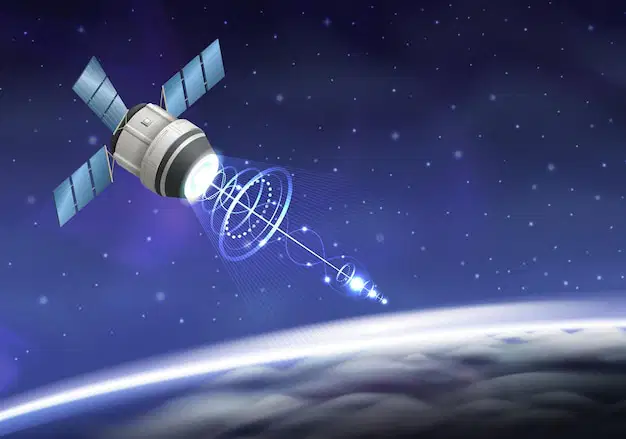
What was the true major concern of the opposing forces in the Space Race?
One country would land on the moon first
One country would claim the other planets before another could
One country would have military dominance using space weaponry
One country would make friends with the aliens
Why did President Kennedy want to send a man to the moon?
To present a chronology of human achievements
To truly beat the Soviets in reaching the end of the Space Race.
To encourage students to support the United States in the race to reach the moon.
To promote increased funding for NASA and space exploration
Why were American concerned when China collapsed to Communism in 1949
They believed China would attack the Soviet Union, escalating the Cold War.
They believed they had lost an important ally in the fight against Japan.
They feared the Chinese would drop an atomic bomb on Allied Forces in Japan.
They believed Communism would spread throughout Asia.
Why did the United States get involved in Korea?
US felt that military support was needed based on the domino theory.
President Johnson wanted to secure new resources and markets for American businesses.
The American people demanded that democracy be spread throughout Asia.
American businesses in Asia were being threatened by foreign trade.
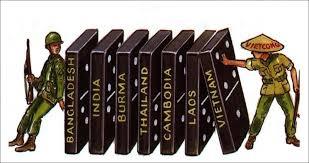


What happened as a result of the launch of Sputnik in 1957?
It started the space race between the USSR and U.S.
The U.S. government started NASA.
U.S. began to spend more money on math and science to maintain national security.
All of the above
What words should you immediately associate with the Cold War?
Hitler & the Nazis
Economic recession
Containment of Communism
Corruption & Industrialization
What defined the border between North Korea and South Korea?
Guerrilla Warfare was-
Fighting by small groups using tactics such as the ambush
Using gorillas to fight against enemy soldiers
Dressing up as gorillas and fighting while hitting your chest
Baby Boom
Period of increased births in the U.S.
Berlin Airlift
U.S. operation to resupply West Berlin
Blockade
Strategic move to block access to an enemy
Bay of Pigs
Failed Invasion of Cuba to remove Fidel Castro
How did the televised debates impact the 1960 presidential election?
The debate focused on how the candidates looked and spoke on television
The debate focused on what the candidate stated more than ever
The debate focused on how the candidates used their tone
The debate focused on the strategies that candidates used
Who were the two candidates in the first televised presidential debates?
John F. Kennedy and Richard Nixon
Lyndon B. Johnson and Barry Goldwater
Dwight D. Eisenhower and Adlai Stevenson
Gerald Ford and Jimmy Carter

