
 Worksheets
Review Unit 01 Atomic Structure & Theory
Total questions: 40
Worksheet time: 10hrs 0mins

Which of the following statements are true about Thomson's discovery of electron properties?
Select TWO correct answers.
His experiment showed all atoms have negatively charged particles.
He used gold foil to prove electrons are positive.
The mass of the proton was measured as part of his experiment.
His experiment focused only on neutrons and neutrinos.
He used a plum pudding model to demonstrate the structure of an atom.

What conclusions were drawn from Ernest Rutherford's gold foil experiment?
Select TWO correct answers.
Atoms are hard spheres.
Atoms are mostly empty space.
Atoms have the same mass but different volumes.
Atoms have the same mass and volume.
Atoms have a dense, positively charged nucleus.

Niels Bohr published a theory about atomic structure. Bohr's
theory suggested that —
electrons are found only in certain energy levels
protons have a positive charge
protons and neutrons are found in a large central nucleus
neutrons surround the nucleus
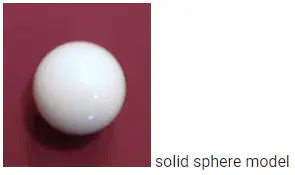
This chemist said:
all substances are made of atoms that cannot be created, divided, or destroyed
atoms join with other atoms to make new substances
atoms of the same element are exactly alike, and atoms of different elements are different in mass and size (elements)
J.J. Thomson
John Dalton
Ernest Rutherford
Neils Bohr

Which area of the diagram shows an electron occupying the lowest energy level outside the nucleus of an atom?
1
2
3
4
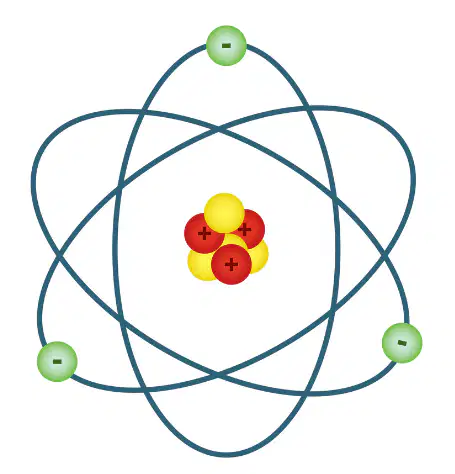
Which particle would likely represent a neutron?
red
green
yellow
Which particle has the least mass?
proton
neutron
electron
Which particle has a neutral charge?
proton
neutron
electron
Which particle is found outside the nucleus?
proton
neutron
electron
Which particle has a positive charge?
proton
neutron
electron
It is not a proton, but has roughly the same mass as a proton.
proton
neutron
electron
It is located in the nucleus along with neutrons.
protons
neutrons
electrons
Which of the following statements are true regarding atomic number, mass number, and atomic mass?
Select TWO correct answers.
The atomic number is the number of neutrons in the nucleus.
Isotopes are included in the atomic mass.
Isotopes are included in the atomic number.
The mass number is the sum of the element's protons and neutrons.
The atomic number is the sum of the element's protons and neutrons.
Which of these particles has the lightest mass?
Select TWO correct answers.


How many protons and neutrons are in one atom of 3014Si?
14 protons and 14 neutrons
14 protons and 16 neutrons
16 protons and 14 neutrons
16 protons and 16 neutrons
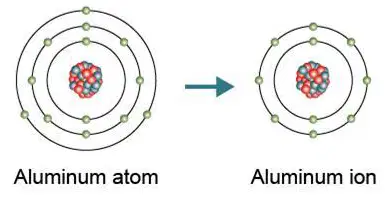
When aluminum becomes a cation and loses its highest energy level it would have (a) electrons left over and aluminum becomes Al3+.

The image shows that all the colors of visible light make up only one portion of the electromagnetic spectrum.
Select which color of visible light has the most energy.
violet
blue
green
yellow
red
Which statement best describes the process by which an electron in an atom emits light energy?
An electron continuously emits light energy as it moves in its energy level.
An electron absorbs light energy as it moves from a lower energy level to a higher energy level.
An electron releases light energy as it moves from a higher energy level to a lower energy level.
An electron emits light energy at regular intervals as more electrons join its energy level.

Compared to a photon of red light, which of the following are greater for a photon of blue light? Select TWO correct answers.
energy
wavelength
frequency
speed
period
Calculate the average atomic mass of iron 56 (% abundance = 91.754%)
and chlorine 54 (% abundance = 5.845%).
The answer should be to the nearest tenth.
(a)

Lead has an average atomic mass of 207.2. Three naturally occurring isotopes of lead are listed in the table below along with the percent abundance of two of the isotopes. Hint: add the two percentages together then subtract from 100.
21.1%
26.3%
36.9%
73.7%
How would you draw a Lewis dot diagram for the following atom of arsenic?


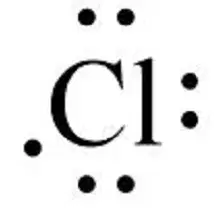
The electron configuration shown in the figure most likely belongs to an
element that —
is a good conductor of electricity
does not react with other atoms
bonds to one atom at a time
has a high melting point
Protons and Neutrons are found in the (a) .


Zinc has how many protons?
30
65
35
95

What is the mass of boron?
5
6
10
11
What does the atomic number of an element represent?
The number of protons in the nucleus
The number of neutrons in the nucleus
The total number of protons and neutrons in the nucleus
The total number of protons and electrons in an atom
How can you determine the number of neutrons in an atom if you know its atomic number and mass number?
Subtract the atomic number from the mass number
Add the atomic number to the mass number
Multiply the atomic number by the mass number
Divide the mass number by the atomic number
Which of the following is true about isotopes?
They have different atomic numbers but the same mass number
They have the same atomic number but different mass numbers
They have different numbers of electrons but the same number of protons
They are always ions

How many neutrons does sodium have?
11
12
22
23
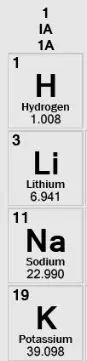
How many valence electrons does group 1 have?
1
3
11
19
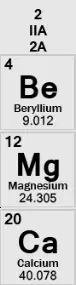
How many valence electrons does group 2 have?
2
4
12
20
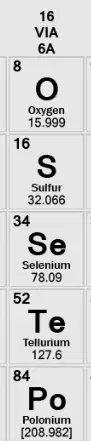
Group 16 has __ valence electrons
8
16
6
12
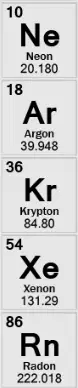
These elements are found in group 18. They have __ valence electrons.
8
10
18
36
54

