
 Worksheets
IGCSE Physics MegaQuiz
Total questions: 493
Worksheet time: 11hrs 18mins
The S.I. unit for time is
minute
seconds
hours
days
The S.I. unit for current is
volt
ohms
ampere
watt
The S.I. unit for light intensity is
joule
watt
candela
kelvin
The S.I. unit for length is
yard
meter
foot
inches
The physical quantities other than base quantities are termed as
professional quantities
energetic quantities
dependent quantities
derived quantities
Which of the following is a scalar quantity?
displacement
velocity
force
mass
Which of the following is a vector quantity
pressure
force
speed
distance
The S.I. prefix μ indicates
10−3
10−2
10+6
10−6
The S.I. prefix centi indicates x 10−2 . Which option below correctly indicates the prefixes milli and giga
10−3 and 109
103 and 106
10−9 and 109
10−9 and 106
Which pair of units are both S.I. base units?
meter, degree celsius
newton, kilogram
ampere, kelvin
joule, seconds
The S.I. prefix hecto indicates x 102 . Which option below correctly indicates the prefixes mega and nano
106 and 109
10−6 and 103
null and 10−9
103 and 10−9
What is the least count of a metre scale?
1.0 cm
0.1 cm
0.01 cm
0.001 cm
A vernier calipers can be used to measure a certain quantity. Which quantity can it measure?
temperature
length
pressure
density
A student uses a measuring cylinder to measure the volume of quantity of water.
Which of the following procedures would make her measurement less accurate?
reading the level from the bottom of the meniscus
using the largest measuring cylinder possible
keeping her eyes level with the water surface
making sure the cylinder is perfectly vertical

The diagram shows four identical spheres placed between two wooden blocks on a ruler.
What is the diameter of one sphere?
1.0 cm
2.0 cm
3.0 cm
4.0 cm
A pendulum is swinging. Five students each measure the time it takes to swing through ten complete swings.
Three students measure the time as17.2 s. Another student measures it as 16.9 s, and the fifth student measures it as 17.0 s.
What is the average period of the pendulum?
1.69 s
1.70 s
1.71 s
1.72 s
A student has a stack of 20 identical coins. The figure shows the student measuring the height of the stack using a ruler.
The student correctly determines the height of the stack as 7.7 cm.
Calculate the average thickness of one coin.
15.4 cm
3.85 cm
0.77 cm
0.39 cm
A student has been told to find the density of some liquid paraffin by measuring its mass and its volume.
Which piece of laboratory equipment should she use to measure the volume of the liquid paraffin?
Beaker
Stopwatch
Metre rule
Measuring cylinder
A student has been told to find the density of some liquid paraffin by measuring its mass and its volume.
Which piece of laboratory equipment should she use to find the mass of the liquid paraffin?
Top pan balance
Measuring cylinder
Metre rule
Stopwatch
What is the most accurate and precise method to measure the thickness of a coin?
Use a top pan balance.
Use a micrometer screw gauge.
Use a ruler and look at the scale perpendicularly.
Use the displacement method with water in a measuring cylinder.

The diagram shows the height of a stack of identical coins.
What is the thickness of one coin?
0.20 mm
2.0 mm
0.24 cm
2.0 cm

A student is asked to find the volume of a small irregularly-shaped piece of rock.
He has the following apparatus available.
Which apparatus must the student use to find the volume of the small piece of rock?
balance and rule
rule only
balance and measuring cylinder
measuring cylinder only
Which instrument is used to measure accurately the diameter of a thin metal wire?
30 cm ruler
measuring tape
metre rule
micrometer screw gauge

Water drips from a tap into a measuring cylinder.
The table shows the volume of water in the cylinder every minute for four minutes.
What is the average volume of water collected in the cylinder each minute?
22 cm3
28 cm3
56 cm3
57 cm3
What is the typical accuracy of a metre rule?
0.1 cm
0.01 cm
0.001 cm
0.01 mm
Earth and its solar system are a part of which of the following galaxies?
Andromeda
Black Eye
Milky Way
Cartwheel
Which of the following best describes a galaxy? A galaxy is –
the ending of the life cycle of all super massive stars in the universe.
a massive system of stars, gas, dust, and dark matter bound together by gravitational forces.
a visible body of liquid or frozen crystal droplets suspended above a planetary surface.
the visible path of a meteoroid as it enters Earth’s atmosphere.

Which is the largest planet in our solar system?
Earth
Jupiter
Venus
Mars


Based on the table, which planet in our solar system will have the fastest orbital speed?
Venus
Earth
Saturn
Mercury

The orbital path of a satellite is shown in the sketch. Use the sketch to answer the question.
In which of the positions A through D does the satellite have the least speed ?
A
B
C
D

Which planet in this image will have the largest orbital radius?
Mercury
Venus
Earth
Mars

Which best represents the path of a planet P as it orbits the Sun? Drawing is not to scale.
A
B
C
D

You discover a new planet in our solar system. You measure it's orbital period to be 246 days.
Where is this planet likely to be located based on this information?
Closer to the Sun than Mercury.
Located between Earth and Jupiter.
Located between Earth and Venus .
Located beyond Neptune.

Two satellites of equal mass are in circular orbit around a planet. Satellite b is twice as far out. Which feels a stronger gravitational force?
Satellite a
Satellite b
Both the same

A
B
C
D
A tunnel has a length of 50 km. A car takes 20 min to travel between the two ends of the tunnel. What is the average speed of the car?
2.5 km / h
16.6 km / h
150 km / h
1000 km / h

pole 1 and pole 2.
pole 2 and pole 3.
pole 3 and pole 4.
pole 4 and pole 5.

A
B
C
D

A
B
C
D
A small steel ball is dropped from a low balcony. Ignoring air resistance, which statement describes its motion?
It falls with decreasing acceleration.
It falls with constant acceleration.
It falls with decreasing speed.
It falls with constant speed.

Which speed/ time graph applies to an object at rest?
A
B
C
D

A
B
C
D

10 m
20 m
100 m
200 m

150 m
300 m
600 m
1200 m

4.0 s
6.0 s
10 s
16 s

A
B
C
D

A
B
C
D

A
B
C
D

A
B
C
D

A
B
C
D

A
B
C
D

A
B
C
D

A
B
C
D

A
B
C
D
What is the correct equation for refractive index
n = sinr / sini
n = sini / sinr
c = sini / sinr
Sinc = sini / sinr
What is the correct equation for acceleration
a = (v - u) / t
a = d / t
a = f x m
What is the correct equation linking force mass and acceleration
F = ma
m = Fa
a = Fm
What is the correct equation linking voltage current and resistance
V = IR
R = VI
I = VR
What is the correct equation linking charge current and time
Q = It
I = Qt
t = QI
What is the correct equation linking density mass and volume
d = m / v
d = m x v
d = v / m
What is the correct equation for gravitational potential energy
m x g x h
m x g / h
m x h / g
What is the correct equation for kinetic energy
1/2 x m x v2
m x v2
1 / 2 x v x m2
What is the correct equation linking speed of a wave frequency and wavelength
v = f x λ
v = f / λ
v = λ / f
What is the correct equation for basic pressure
p = F / A
p = F x A
p = A / F
How do you find the number of neutrons in an element
Mass number - atomic number
Atomic number - mass number
Mass number / atomic number
What is the correct equation for electrical power
P = I x V
P = V / I
P = I / V


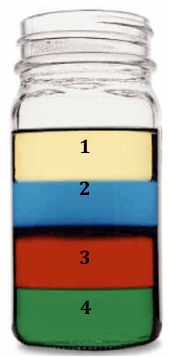


Calculate the net force
5
10
15
0

calculate the force applied to a 5 kg shopping cart if it accelerates at 3 m/s2
15
1.67
0.6
1.57
The acceleration due to gravity near the surface of Earth is equal to
9.8 m/s
9.8 kg x m/s
9.8 N
9.8 m/s2
A negative acceleration means that your object is
constant
speeding up
at rest
slowing down
Which statement correctly describes the effects of placing a heavy load in a car?
It is easier to accelerate the car and easier to bring the car to rest.
It is easier to accelerate the car but more difficult to bring the car to rest.
It is more difficult to accelerate the car and more difficult to bring the car to rest.
It is more difficult to accelerate the car but easier to bring the car to rest.
A mass of 6.0 kg rests on the surface of a planet. On this planet, g = 20 N/kg.
What is the weight of the object?
0.30 N
0.60 N
60 N
120 N
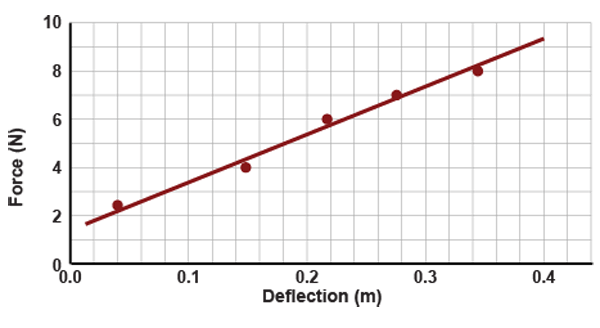
A mass of 6.0 kg rests on the surface of a planet. On this planet, g = 20 N/kg.
What is the weight of the object?
0.30 N
0.60 N
60 N
120 N
Which choice describes speed and velocity?
Speed: scalar | Velocity: scalar
Speed: scalar | Velocity: vector
Speed: vector | Velocity: scalar
Speed: vector | Velocity: vector
An object is on the surface of the Earth. Which statement describes the weight of the object?
the quantity of material that the object contains
the quantity of space that the object takes up
the gravitational force acting on the object
the object's resistance to a change in its motion


Find the momentum of a 3.0 kg mass when it is stopped.
0 kg*m/s
need to know the velocity
3.0 kg*m/s
9.8 kg * m/s

a bat strikes a 0.05 kg baseball so that its velocity changes by +30 m/s in 0.1 s. With what average force was the ball struck?
+15 N
-15 N
+300 N
-300 N
+150 N

At what speed do the two blocks move after the collision?
2 m/s
5 m/s
10 m/s
Equation for kinetic energy
Kinetic energy = 21mv2
Kinetic energy = 21mv3
Kinetic energy = 21mv
Kinetic energy = mv2
Equation for gravitational potential energy (GPE)
GPE = m×g×Δh
GPE = m×Δg×h
GPE =Δm ×g×h
GPE=F×g×h
Link between energy transferred and work done
energy transferred = work done
energy transferrred = 1/2 work done
energy transferred = work done2
energy transferred = 1 / work done
energy transferred = 4/3 π x work done3
The unit of work is
watt
hertz
joule
pascal

Each of the boxes shown is pulled for 10 m across a level, frictionless floor by the force given. Which box experiences the greatest change in its kinetic energy?
A
B
C
D
E

Starting from rest, a marble first rolls down a steeper hill, then down a less steep hill of the same height. Ignoring friction, for which is it going faster at the bottom?
Faster at the bottom of the steeper hill
Faster at the bottom of the less steep hill
Same speed at the bottom of both hills
Can’t say without knowing the mass of the marble

Four students run up the stairs in the time shown. Which student has the largest power output?
A
B
C
D
A major league pitcher can throw a baseball with a kinetic energy of 150 J. How much work must the pitcher do to the ball to give it that much KE?
150 J
0
Can’t tell without knowing the mass of the ball
A rock has 10 J of potential energy on top of a roof. If it is dropped and lands with only 8 joules of kinetic energy, how much work did air resistance do on the rock?
-18 J
-10 J
-8 J
-2 J
In the equation PE = mgh, what does the “g” mean?
Acceleration due to gravity
Force of gravity
Weight of the object
What is the unit for power?
what
watt
joule
Jewel-Osco
Which requires more work – a person walking up stairs or a person running up stairs?
walking
running
they require equal work
no work is required for either because the movement is vertical
Which requires more power – a person walking up stairs or a person running up stairs?
walking
running
they require equal power output
no power is required at all
How much work is done on a 200-kg crate that is hoisted 2 m in a time of 4 s?
400 J
1000 J
1600 J
4000 J
How much power is required to raise a 200-kg crate a vertical distance of 2 m in a time of 4 s?
400 W
1000 W
1600 W
4000 W

A
B
C
D

A
B
C
D

A
B
C
D

A
B
C
D
Electricity can be obtained from different energy resources. Which energy resource is used to obtain electricity without producing heat to boil water?
coal
geothermal
hydroelectric
nuclear

If the mass of the cart is 15kg, how much is the potential energy of the cart?
0J
1.2J
6J
58.8J
What are fossil fuels?
energy producers that comes from radioactive elements
a natural product that can be changed into other energy forms to do work
energy resources that formed from buried plants and animals that lived a very long time ago
resources that are replaced faster than they are used
All of the following are fossil fuels EXCEPT
oil
water
coal
natural gas
Where does nuclear energy come from?
Electric generators
radioactive elements
fossil fuels
geothermal energy
Which of these originally got their energy from the sun? Choose all that are correct.
Coal
Nuclear power
Tidal
Wave
HEP
Which of these energy resources is the most reliable?
Coal power
Solar
Wave
Wind
The law of conservation of energy states:
Choose 2
Energy cannot be created or destroyed
Only transformed from one type to another
Energy can be created but not destroyed
Energy cannot be transformed
I throw my pen vertically up with 15J of kinetic energy. How much gravitational potential energy does it have at the top?
Assume no air resistance.
0J
15J
0 - 15J
Impossible to calculate
Which of these is the best answer to "state a disadvantage of coal energy"?
Makes pollution
Produces carbon dioxide which causes global warming
Ugly to look at
Expensive to run, lots of jobs
Is "expensive" enough detail for an answer?
No - be specific
Yes - give me the mark
Around Tongariro, there is a large HEP network that produces 4% of NZ's electricity.
Which of these are disadvantages of using HEP?
Causes land to be flooded
Can affect river levels and wildlife on rivers e.g. Whio ducks
Expensive
Ugly
Produces carbon dioxide
What is conduction in terms of thermal energy?
Transfer of thermal energy through radiation
Transfer of thermal energy through convection
Transfer of thermal energy through sound waves
Transfer of thermal energy through direct contact between particles of a substance.
Explain the process of convection and how it relates to heat transfer.
Convection is the process of heat transfer through the movement of fluids, where heated fluid rises and cooler fluid sinks, creating a continuous circulation.
Convection involves the transfer of heat through electromagnetic waves
Convection is the process of heat transfer through solid materials
Convection is only applicable in outer space
Describe the concept of radiation and its role in thermal energy.
Radiation is the transfer of heat energy in the form of electromagnetic waves. In thermal energy, radiation plays a significant role by allowing heat to be transferred through empty space without the need for a medium.
Radiation is the transfer of sound waves in thermal energy.
Radiation is the transfer of heat energy in the form of kinetic energy.
Radiation is the transfer of light energy in thermal energy.
What is specific heat capacity and how is it calculated?
Specific heat capacity is the measure of a substance's ability to conduct heat.
Specific heat capacity is calculated by dividing the mass of a substance by the heat energy supplied.
Specific heat capacity is the amount of heat required to lower the temperature of a substance by one degree Celsius.
Specific heat capacity is the amount of heat required to raise the temperature of one unit mass of a substance by one degree Celsius. It is calculated using the formula: specific heat capacity = heat energy supplied / (mass * temperature change)
How does thermal equilibrium occur between two objects?
When one object is hotter than the other
When the two objects are in different locations
When the two objects reach the same temperature.
When the two objects are made of different materials
Differentiate between the three methods of heat transfer: conduction, convection, and radiation.
Conduction is through material, convection is through fluids, and radiation is through electromagnetic waves.
Conduction is through fluids, convection is through electromagnetic waves, and radiation is through material.
Conduction is through electromagnetic waves, convection is through material, and radiation is through fluids.
Conduction is through fluids, convection is through material, and radiation is through electromagnetic waves.
Calculate the specific heat capacity of a substance given its mass, temperature change, and heat energy transferred.
c = Q * (m * ∆T)
c = Q / m
c = Q / (m * ∆T)
c = Q * m * ∆T
Explain how heat is transferred through a metal rod via conduction.
Heat is transferred through a metal rod via conduction by the generation of sound waves
Heat is transferred through a metal rod via conduction by the movement of liquid particles
Heat is transferred through a metal rod via conduction by the vibration of atoms or free electrons in the metal.
Heat is transferred through a metal rod via conduction by the emission of light waves
Discuss the importance of specific heat capacity in everyday applications.
Specific heat capacity has no practical applications
Specific heat capacity is crucial in determining the amount of heat energy needed to change the temperature of a substance, impacting cooking, climate control, and thermal insulation.
Specific heat capacity is irrelevant in physics
Specific heat capacity only affects chemical reactions
What factors affect the rate of heat transfer between two objects?
Velocity, acceleration, force, energy
Pressure, volume, density, mass
Color difference, material type, shape, time
Temperature difference, surface area of contact, thermal conductivity, distance
A liquid at room temperature is put on a metal surface which is also at room temperature. A student blows gently across the liquid and its temperature decreases. What causes the liquid to become cooler?
Bubbles of water vapour form in the liquid and go into the air.
The moving air reduces the kinetic energy of all the particles in the liquid.
Thermal energy flows from the liquid into the metal.
The more energetic particles in the liquid escape into the air.

Very small pollen grains are suspended in water. A bright light shines from the side. When looked at through a microscope, small specks of light are seen to be moving in a random, jerky manner.
What are the moving specks of light?
pollen grains being hit by other pollen grains
pollen grains being hit by water molecules
water molecules being hit by other water molecules
water molecules being hit by pollen grains
A gas is contained in a sealed container in a laboratory. The temperature of the gas increases. What happens to the average speed and what happens to the total kinetic energy of the gas molecules?
average speed does not change, total kinetic energy does not change
average speed does not change, total kinetic energy increases
average speed increases, total kinetic energy does not change
average speed increases, total kinetic energy increases

The same mass of a gas is trapped in four identical cylinders by a piston that can move. The diagrams show the samples of gas in different conditions of volume and temperature. Which list gives the pressure of the gas in order from lowest to highest?
1 → 2 → 3 → 4
1 → 3 → 2 → 4
4 → 2 → 3 → 1
4 → 3 → 2 → 1
The liquid level in a thermometer rises when the thermometer is placed in hot water. What causes this?
The liquid contracts.
The liquid evaporates.
The liquid expands.
The liquid freezes.

The diagram shows a liquid-in-glass thermometer. Which change to the design would result in a more sensitive thermometer?
Increase the density of the liquid.
Increase the diameter of the capillary tube.
Increase the number of scale markings.
Increase the volume of the bulb.
A student calculates the energy needed to raise the temperature of an aluminium block from 50 °C to 60 °C. He then does an experiment to measure the energy used to do this. Which statement about the measured energy is correct?
The measured energy will be greater than the calculated energy because some energy is
transferred to the surroundings.
The measured energy will be greater than the calculated energy because the block absorbs
energy from the surroundings.
The measured energy will be less than the calculated energy because the mass of the block
decreases as it gets warmer.
The measured energy will be less than the calculated energy because the thermal capacity
of the block is low.
Which statements correctly describes a liquid that is boiling
no bubbles seen, takes place on the surface only
no bubbles seen, takes place throughout the liquid
bubbles seen, takes place on the surface only
bubbles seen, takes place throughout the liquid
Which statement about boiling and evaporation is correct?
Boiling requires a supply of thermal energy but evaporation does not.
Evaporation takes place at the surface of a liquid but boiling takes place throughout the
liquid.
When water boils in a kettle, its temperature decreases.
When water evaporates, its temperature increases.
Why are small gaps left between the metal rails of a railway track?
to allow for expansion of the rails on a hot day
to allow for contraction of the rails on a hot day
to allow for expansion of the rails on a cold day
to allow for contraction of the rails on a cold day
A block of metal absorbs 2000 J of thermal energy. The temperature of the block rises from 10 °C to 20 °C. The mass of the block is 2.0 kg. What is the specific heat capacity of the metal?
50 J / (kg °C)
100 J / (kg °C)
200 J / (kg °C)
400 J / (kg °C)
A block of aluminium of mass 2.0 kg has an initial temperature of 20 °C. It absorbs 7300 J of thermal energy. The specific heat capacity of aluminium is 913 J / (kg °C). What is the final temperature of the aluminium block?
4.0 °C
8.0 °C
24 °C
28 °C

The diagram shows the apparatus used to measure the specific latent heat of vaporisation of water. After the water begins to boil, 110 g of water is converted to steam in 120 s. Using these results, what is the value of the specific latent heat of vaporisation of water?
1.8 J / kg
1800 J / kg
2200 J / kg
2 200 000 J / kg

A metal rod is heated at end X. Why does end Y of the metal rod become hot?
Energy is transferred from end X of the rod to end Y by vibration of positive ions and by
movement of electrons.
Energy is transferred from end X of the rod to end Y by movement of positive ions only.
Energy is transferred from end X of the rod to end Y by vibration of positive ions only.
Energy is transferred from end X of the rod to end Y by movement of electrons only.

Two square sheets of metal, P and Q, are heated to the same temperature. The metal sheets are shown. Sheet Q is emitting more radiation than sheet P. Which statement explains this?
Dull black surfaces are better conductors of radiation.
Dull black surfaces are better emitters of radiation.
The surface area of Q is larger than that of P.
White surfaces are better absorbers of radiation.
Three students are planning an experiment to test thermal conduction in different materials. The students each propose a hypothesis.
1 I think the copper rod will be a good thermal conductor because it is a metal.
2 I think the glass rod will be a good thermal conductor because it has free electrons which vibrate and transfer energy quickly.
3 I think the wooden rod will be a poor thermal conductor because it can only transfer energy along the rod by vibrating the lattice particles.
Which of their hypotheses are correct?
1 and 2 only
1 and 3 only
2 and 3 only
1, 2 and 3
It describes the state of two objects (or an object and its surroundings) that are at the same temperature so that there is no heat flow between them.
thermal balance
thermal equilibrium
room temperature
thermal stasis
What is kinetic energy?
moving energy
potential energy
stored energy
renewable energy
The energy in which store increases as a car moves faster?
Gravitational Potential Energy
Kinetic Energy
Thermal Energy
Kinetic Energy
The energy in which store decreases as a candle burns?
Chemical energy store
Kinetic energy store
Nuclear energy store
The energy in which store increases as an elastic band is stretched?
Gravitational Potential
Chemical
Elastic
Kinetic
_________________ is when energy is transferred because a force moves an object through a distance.
Elastic
Mechanically
By radiation
By heating
_______________ is when energy is transferred due to charge flowing around a circuit.
Electrically
Kinetic
Mechanically
By radiation
________ is when energy is transferred between areas that have different temperatures.
By radiation
By heating
Mechanically
Nuclear
When you eat fruits and vegetables, the energy is stored as ...
a. thermal energy
b. food energy
c. electrical energy
d. chemical energy


Food, fuels and batteries have energy in this energy store
Chemical
Thermal
Gravitational Potential
Elastic

A stretched rubber band has energy in this energy store
Magnetic
Electrostatic
Elastic
Nuclear

Two negatively charged particles which are close together have energy in this energy store
Electrostatic
Magnetic
Nuclear
Elastic

Energy which is transferred by a force moving an object through a distance
Mechanically
Electrically
By Radiation
By Heating

Energy which is transferred by charges moving due to a potential difference (voltage)
Mechanically
Electrically
By Radiation
By Heating

Shooting an arrow from a bow converts ____ into kinetic energy.
Elastic potential energy
Chemical energy
Gravitational potential energy
Thermal energy
A ____ converts chemical energy into kinetic energy?


Which statement about evaporation is correct?
evaporation causes the temperature of the remaining liquid to decrease
evaporation does not occur from a cold liquid near its freezing point
evaporation does not occur from a dense liquid, such as mercury
evaporation occurs from all parts of a liquid
Gas is stored in a sealed container of constant volume. The temperature of the gas increases. This causes the pressure of the gas to increase. What happens to the gas molecules during this pressure increase?
The average kinetic energy of the molecules increases
The average separation of the molecules decreases
The average separation of the molecules increases
The volume of each molecule increases
Which causes the random, zig-zag movement (Brownian motion) of smoke particles suspended in air?
air molecules colliding with smoke particles
convection currents as the hot smoke rises
smoke particles colliding with each other
smoke particles reacting with oxygen molecules in the air

A sealed gas cylinder is left outside on a hot, sunny day. What happens to the average speed of the gas molecules and to the pressure of the gas in the cylinder as the temperature of the gas rises?
A
B
C
D
A swimmer feels cold after leaving warm water on a warm, windy day. Why does she feel cold even though the air is warm?
the less energetic water molecules on her skin escape quickly
the more energetic water molecules on her skin do not escape quickly
the water on her skin does not evaporate quickly enough to keep her warm
the water on her skin evaporates quickly and cools her skin
A car tyre has a constant volume. Why does the pressure of the air in the tyre increase when its temperature increases?
the air molecules hit each other less often
the air molecules hit the inside of the tyre less often
the average speed of the air molecules in the tyre is greater
there are more air molecules in the tyre

A student places his thumb firmly on the outlet of a bicycle pump, to stop the air from coming out. What happens to the pressure and what happens to the volume of the trapped air as the pump handle is pushed in?
A
B
C
D

Some gas is trapped in a container of fixed volume. The temperature of the gas increases. Which graph shows how the pressure of the gas changes with temperature?
A
B
C
D

The volume of a gas in a sealed syringe is increased. The temperature of the gas does not change. After this change is made, what has happened to the gas molecules in the syringe?
they move more quickly
they move more slowly
they hit the syringe walls less often
the hit the syringe walls more often

The pressure of a fixed mass of a cylinder is measured. The volume of the gas in the cylinder is then slowly decreased. The temperature of the gas does not change. Which graph could show the change of pressure of the gas during this process?
A
B
C
D

A student suggests some uses for containers made from good thermal conductors and for containers made from poor thermal conductors? In which row are both suggested uses correct?
A
B
C
D

Two plastic cups are placed one inside the other. A small spacer keeps the two cups separated. Hot water is poured into the inner cup and a lid is put on top, as shown. Which statement is correct?
The bench is heated by convection from the bottom of the outer cup
The lid reduces the energy lost by convection
There is no thermal conduction through the sides of either cup
Thermal radiation is prevented by the small air gap

A solid is heated from room temperature. The graph shows how its temperature changes with time as it is heated constantly. At which time has it just become completely liquid?
A
B
C
D

The diagram shows a vacuum flask used to keep liquid hot. How does thermal energy pass through the vacuum?
conduction only
convection only
radiation only
conduction and convection

The diagram shows a block of ice placed in a warm room. At which point is the temperature the lowest?
A
B
C
D

The air in a room is heated by a heater. The diagram shows the circulation of the air in the room. Which statement about the air that is heated is correct?
The air contracts and become less dense
The air contracts and becomes more dense
The air expands and becomes less dense
The air expands and becomes more dense

In a refrigerator, the cooling unit can be fitted either at the top or at the bottom. In an oven, the heater can be fitted either at the top or at the bottom. Which row shows the best position for the cooling unit and the best position for the heater?
A
B
C
D

Ice is trapped by a metal gauze at the bottom of a tube containing water. The water is heated strongly at the top, but the ice only melts very slowly. Why does the ice melt so slowly?
heat energy always travels upwards
hot water is more dense than cold water
metal gauze does not allow heat to pass through
water is a poor conductor of heat

One type of double glazing consists of two panes of glass separated by a vacuum. Which method or methods of energy transfer are prevented by the vacuum?
conduction and convection
conduction and radiation
convection and radiation
radiation only

A substance loses thermal energy (heat) to the surroundings at a steady rate. The graph shows how the temperature of the substance changes with time. What could the portion PQ of the graph represent?
gas condensing
gas cooling
liquid cooling
liquid solidifying

Which row shows the surface that is the better absorber and the surface that is the better emitter of infra-red radiation?
A
B
C
D
One end of a copper rod is heated. What is one method by which thermal energy is transferred in the copper rod?
free electrons transfer energy from the cooler end to the hotter end
free electrons transfer energy from the hotter end to the cooler end
molecules of copper move from the cooler end to the hotter end
molecules of copper move from the hotter end to the cooler end
The same quantity of thermal energy is supplied to two solid objects A and Y. The temperature increase of object X is greater than the temperature increase of object Y. Which statement explains this?
X has a lower melting point than Y
X has a lower density than Y
X has a lower thermal capacity than Y
X is a better thermal conductor than Y
Which quantity gives the thermal capacity of a beaker?
the thermal energy required to change the state of the beaker at constant temperature
the thermal energy required to raise the temperature of the beaker by 1 degree Celsius
the total mass of hot liquid that the beaker can hold
the total volume of hot liquid that the beaker can hold

The table lists the melting points and the boiling points of four different substances. Which substance is a liquid at 0 degrees Celsius?
A
B
C
D

The diagram shows electricity cables being put up on a warm day. The cables are left loose between the poles, as shown in the diagram. Why are the cables left loose?
they will contract on cold days
they will contract on very warm days
they will expand on cold days
they will expand on very warm days

A long thin bar of cooper is heated evenly along its length. What happens to the bar?
it becomes less heavy
it becomes longer
it becomes shorter
it bends at the ends
A circular metal disc is heated. Which quantity decreases?
density
diameter
thickness
volume

In an experiment, a thermometer is placed in a test tube of hot liquid. The temperature of the liquid is recorded every half minute. The table shows the results. What is the melting point of the substance?
0 degrees Celsius
33 degrees Celsius
55 degrees Celsius
73 degrees Celsius

Equal masses of two different liquids are put into identical beakers. Liquid 1 is heated for 100s and liquid 2 is heated for 200s by heaters of the same power. The temperature of both liquids increases by the same amount. Which statement is correct?
both liquids receive the same amount of energy
liquid 1 receives more energy than liquid 2
both liquids have equal thermal capacity
the thermal capacity of liquid 1 is less than thermal capacity of liquid 2

Equal masses of two different liquids are heated using the same heater. The graph shows how the temperature of each liquid changes with time. What does the graph tell us about the liquids?
Liquid 1 has a higher melting point than liquid 2
Liquid 1 has a higher boiling point than liquid 2
Liquid 1 starts to melt sooner than liquid 2
Liquid 1 starts to boil sooner than liquid 2
Which pair contains only physical quantities that vary with temperature and so could be used in making a thermometer?
activity of a radioactive source, volume of a gas
mass of a liquid, volume of a liquid
activity of a radioactive source, mass of a solid
volume of a gas, volume of a liquid
A heater supplies 80J of energy to a block of metal. The temperature of the block rises by 20 degrees Celsius. What happens to the block of metal when its temperature falls by 10 degrees Celsius?
its internal energy decreases by 40J
its internal energy decreases by 160J
its internal energy increases by 40J
its internal energy increases by 160J
A solid object has a very large thermal capacity. What does this mean?
a large amount of energy is needed to make the object become hot
a large amount of energy is needed to make the object melt
a small amount of energy is needed to make the object become hot
a small amount of energy is needed to make the object melt
K = Degrees Celsius + __________
What is internal energy
the average kinetic energy of the particles
heat energy
the sum of the kinetic and potential energy
the average potential energy
Convert
450 K to Celsius723oC
277oC
177 oC
623oC
What is the boiling point of water on the Kelvin scale?
0K
373K
100K
212K
What is the freezing/melting point of water of the Fahrenheit scale?
−273oF
0oF
32oF
273oF
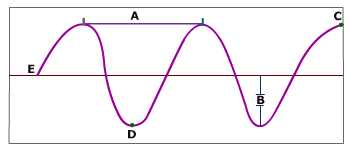


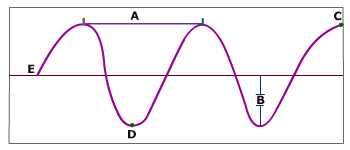
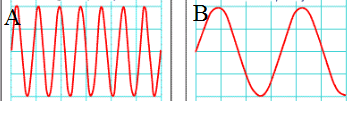
A (a) is a line where all the vibrations are in phase and the same distance from the source.
Select all of the transverse waves listed below.
Light waves
Radio waves
Water waves
Sound waves
Vibrating guitar strings

1) Refraction happens when light______
bends as it enters a new medium
bounces back when it hits a surface
by a substance

Which one of these describes a lens that causes light to come to together at a single point?
concave
opaque
convex
translucent

Identify the following image as refection or refraction.
Refraction
Reflection

Identify the following image as reflection or refraction.
Refraction
Reflection
Which of these statements describes the "Law of Reflection"?
The angle of incidence equals the angle of reflection.
The angle of incidence is less than the angle of reflection.
The angle of incidence is greater than the angle of reflection.
None of these statements describe the Law of Reflection; it depends on the material the light hits.
When light in air enters the water, what happens to its speed?
It stays the same.
It speeds up.
It slows down.
Select all of the wave types which can be refracted.
Light waves
Water waves
Sound waves
Seismic Waves
What is the Doppler Effect?
A change in frequency due to the relative motion of a wave source and an observer
When a wave overlaps with another wave
When a wave bounces off of another object
When a wave bends due to traveling through a different medium
An ambulance is driving towards you as you stand on the sidewalk. What happens to the pitch of the siren as it comes towards you?
It increases
It decreases
You are driving in a car and honk the horn at a person standing in the street. As you approach the person, what happens to the pitch of the horn according to you in the car?
It increases
It decreases
It stays the same.
You are standing on the side of the road when a police car races past you with its siren on. After the police car passes you, what happens to the pitch of the siren?
It increases
It decreases
It turns red
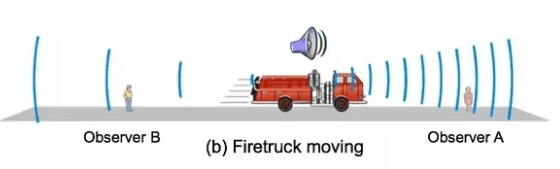
Look at the picture. Who is experiencing a higher pitched sound?
Observer A
Observer B
There's no difference


What is the focal length of the lens?
longer wavelength: blue
longer wavelength: red
longer wavelength: blue
longer wavelength: red


Several different values of i and r are measured, and a graph is drawn of sin i against sin r.
Which graph is correct?


To two decimal places, what is the refractive index of the plastic?

If a capital letter R is seen in an ordinary mirror, what does it look like?
A
B
C
D

Given that the angle of incidence = 30 degrees
a. Draw a ray diagram, labelling clearly the normal, incident ray, angle of incidence, reflected ray and angle of reflection accurately.
Which is the correct diagam?
If v is the speed of light in a medium and c is the speed of light in vacuum, the formula to calculate the refractive index (n) of a medium is
n=cv
n=v/c
n=c/v
v=nc
A microwave has a frequency of 300MHz. What is the wavelength of these waves?
1000 m
100 m
10 m
1 m

Topic: Wave Properties
A
B
C
D

Topic: Wave Properties
A
B
C
D

-
A
B
C
D

-
A
B
C
D

-
A
B
C
D

-
A
B
C
D
How is sound primarily produced?
A) Through the emission of light waves
B) By the vibration of objects
C) Through the movement of air particles
D) By the generation of electrical currents
Which of the following is an example of a sound-producing vibration?
A) The movement of a car on a road
B) The heating of water in a kettle
C) The rotation of a ceiling fan
D) Plucking a guitar string
What happens to the speed of sound in air when the temperature increases?
A) It decreases
B) It remains constant
C) It increases
D) It depends on the humidity
How does sound primarily travel through a medium?
A) By the transmission of light waves
B) By the movement of air particles
C) By the transfer of electrical charges
D) By the generation of magnetic fields
In which of the following mediums does sound travel the fastest?
A) Air
B) Water
C) Steel
D) Vacuum
What is the main factor that affects the speed of sound in a given medium?
A) Temperature of the medium
B) Color of the medium
C) Humidity of the medium
D) Density of the medium
What type of wave is a sound wave?
A) Transverse wave
B) Electromagnetic wave
C) Longitudinal wave
D) Surface wave
In a longitudinal sound wave, the particles of the medium move in which direction relative to the direction of the wave propagation?
A) Perpendicular
B) Opposite
C) At right angles
D) In the same direction
What is the term for the distance between two consecutive points in a sound wave that are in phase with each other, such as two consecutive compressions or rarefactions?
A) Wavelength
B) Amplitude
C) Frequency
D) Velocity
In a longitudinal sound wave, which part corresponds to regions of maximum compression?
A) Troughs
B) Crests
C) High points
D) Compressions
What term is used to describe regions of minimum pressure or spacing in a longitudinal sound wave?
A) Troughs
B) Crests
C) High points
D) Rarefactions
In which of the following materials does sound travel the fastest?
A) Carbon dioxide
B) Orange juice
C) Iron bar
D) Maple syrup
What is the approximate speed of sound in dry air at room temperature (around 20°C or 68°F)?
A) 1,000 meters per second
B) 343 meters per second
C) 1,200 meters per second
D) 300,000 meters per second
A student claps their hands near a wall and hears the echo 0.5 seconds later. If the distance to the wall is 170 meters, what is the speed of sound in the air?
If a thunderclap is heard 8 seconds after seeing the lightning, and the speed of sound on that day is approximately 330 meters per second, how far away is the lightning strike?
Which of the following terms describes the maximum displacement of particles in a sound wave from their rest position?
A) Wavelength
B) Frequency
C) Amplitude D
) Hertz
The number of vibrations or cycles a sound wave completes in one second is known as:
A) Amplitude
B) Wavelength
C) Frequency
D) Hertz
What is the unit of measurement for frequency?
A) Watts
B) Meters per second (m/s) C)
Hertz (Hz)
D) Decibels (dB)
What is the approximate range of frequencies that the average human can hear without difficulty?
Which of the following sounds is most likely to fall within the human hearing range?
Dog whistle at 25,000 Hz
Elephant call at 15 Hz
Bat echolocation at 180,000 Hz
A car engine at 80 Hz
If a sound has a frequency of 25,000 Hz, can the average human hear it?
A) Yes, easily
B) Yes, but only with difficulty
C) No, it is above the human hearing range
D) No, it is below the human hearing range
Ultrasound is commonly used in medical imaging to visualize internal organs. What property of ultrasound waves makes them suitable for this purpose?
A) Ultrasound waves have a high amplitude.
B) Ultrasound waves have a very high frequency.
C) Ultrasound waves travel at the speed of light.
D) Ultrasound waves are audible to the human ear.
In medical ultrasonography, the speed of sound in human tissues is approximately 1540 meters per second. If an ultrasound pulse takes 0.02 seconds to travel to a tissue and back to the transducer, how deep is the tissue being imaged?
What principle of ultrasound imaging allows us to determine the depth of an object by measuring the time it takes for sound waves to travel to and from the object?
A) Reflection
B) Refraction
C) Diffraction
D) Interference
Marine sonar is used to measure the depth of the ocean floor and detect underwater objects. If a sonar device sends out an ultrasound pulse that takes 4 seconds to bounce off an object on the ocean floor and return to the sonar, and the speed of sound in seawater is approximately 1500 meters per second, what is the depth of the ocean floor at that location?
3 km
6 km
2 km
8 km

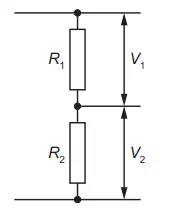
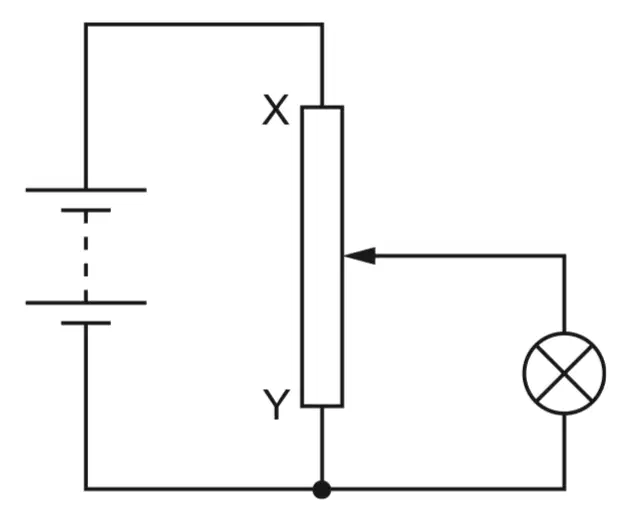
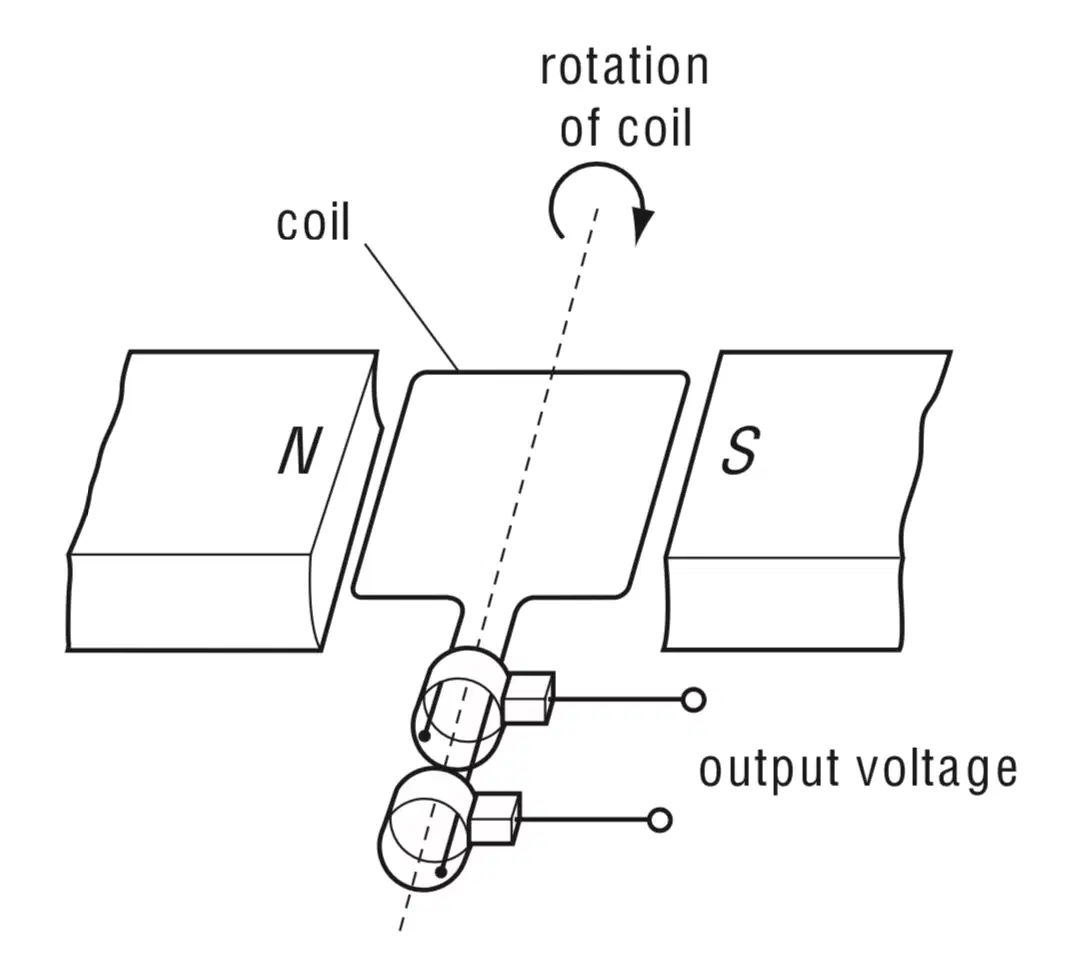
a d.c. motor
Which test could be used to find which end of the magnet is north pole?
A student has a bar magnet. He brings the magnet close to an object. The magnet and the object repel each other. What is the other object made from?
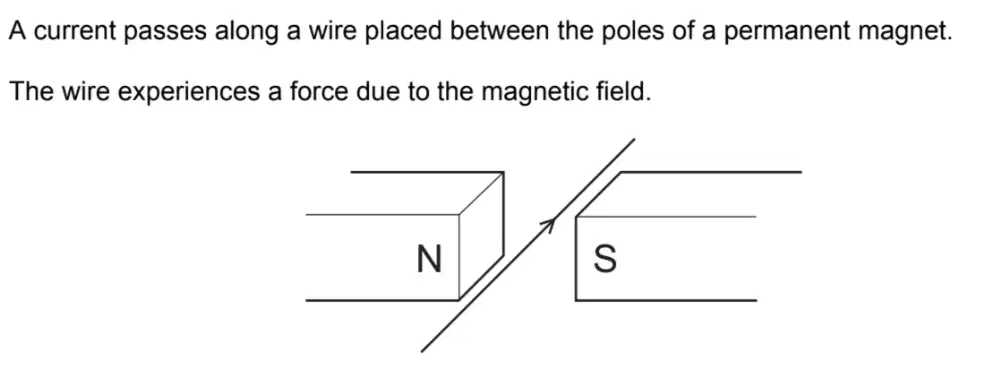
What will change the direction of this force?
Which of these is not a magnetic material?
aluminium
steel
nickel
iron


It keeps increasing.
It quickly increases and stays at maximum.
It quickly increases and then decreases.
It stays on zero.

P and Q
P and R
R and Q
R and S

Hold the bar magnet stationary inside the coil.
Move the bar magnet slowly away from the coil.
Use a coil of wire with fewer turns on it.
Use a stronger bar magnet.


Primary # of turns: 50 ; Secondary # of turns: 1000
Primary # of turns: 240 ; Secondary # of turns: 48 000
Primary # of turns: 480 ; Secondary # of turns: 24
Primary # of turns: 2000 ; Secondary # of turns: 100

The diagram shows a circuit containing a cell, a lamp and two ammeters. The current reading on the ammeter 2 is 0.20 A. What is the name for this type of circuit and what is the reading on ammeter 1?
type of circuit: series; reading on ammeter 1: 0.20A
type of circuit: series; reading on ammeter 1: greater than 0.20A
type of circuit: parallel; reading on ammeter 1: 0.20A
type of circuit: parallel; reading on ammeter 1: greater than 0.20A

current in R1: I1 = I0; current in R2: I2 < I0
current in R1: I1 = I0; current in R2: I2 = I0
current in R1: I1 > I0; current in R2: I2 = I0
current in R1: I1 > I0; current in R2: I2 < I0


Complete the sentence: An ammeter is a device that measures
voltage.
charge.
current.
resistance.
Which is the unit of measure for current?
amp
volt
coulomb
joule
Which of the following materials is not a conductor?
wire wool
ionic solution
steel
plastic
Complete the following sentence: A current is defined as
stationary electrons.
the energy in a cell.
a net flow of charge.
electrons.
Which of the following statements about conventional current is correct?
The electrons do not move.
The electrons flow in all directions.
Electrons flow from negative to positive.
Electrons flow from positive to negative.
A voltmeter measures the voltage across a component. Where should it be positioned in a circuit in order to measure voltage correctly?
in series with the component
in parallel with the component
over the cell
anywhere in the circuit
Where would you place an ammeter in a series circuit to get a reading?
next to the cell only
in parallel with the component
in parallel with the cell
anywhere in the circuit
Which of the following represents the definition of an amp?
Cs
C/s
C/s
J/C
Which of the following represents the relationship between charge, current and time?
Q = I × t
Q = I/t
Q = t/I
Q = V × t
A kettle requires a current of 2.1 A and takes 3 minutes to boil a litre of water. Calculate the charge through the wire in this time?
6.3 C
378 C
0.7 C
6.3 Q
Calculate the number of electrons passing through a wire in 5 seconds if the current through it is 2 A.
6 × 10^19
1.7 × 10^-18
10
2
Which of the following represents the definition of a volt?
C/s
J/C
JC
J
Which of the following represents the relationship between energy, voltage and charge?
E/V = Q
E = V/Q
E = V × I
E = V/I
The voltage across a kettle is 230 V. Calculate the energy supplied if 100 C of charge pass through the kettle’s wires.
0.44 J
2.3 J
440 kJ
23 kJ
The voltage across a cooker is 230 V. There is a current of 12 A for 10 minutes. Calculate the total amount of energy.
28 kJ
1.7 kJ
1.7 MJ
2 kJ

What does this circuit symbol represent?
resistor
diode
variable resistor
light dependent resistor

What does this circuit symbol represent?
Lamp/bulb
Cell
Motor
Voltmeter

What does this circuit symbol represent?
Lamp
Resistor
Fuse
Light-dependent resistor

What does this circuit symbol represent?
Variable resistor
Light emitting diode (LED)
Bulb/lamp
Diode

What does this circuit symbol represent?
Motor
Generator
Electric bell
Bulb/lamp

What does this circuit symbol represent?
Bulb/lamp
Battery
Resistor
Cell
Which component would you use to indicate that a current may be flowing?
voltmeter
buzzer
cell
resistor
In a parallel circuit, 0.8 A arrives at a junction between two wires. It splits with 0.2 A going down the first wire. What would the ammeter reading on the second wire be?
0.8 A
0.6 A
0.2 A
It will depend on the resistance of the components down that wire.
Which of the following statements about a parallel circuit that has bulbs on each wire is not correct?
If one bulb filament breaks the other bulbs will remain on.
Switches can be placed throughout the circuit so that different bulbs can be turned on and off.
The current around the circuit will be the same at all points.
Parallel circuits are used in the home for lighting.
Which of the following statements about a series circuit is not correct?
The current is the same throughout the circuit.
The voltage is shared across components.
Different bulbs can be turned on and off depending on where you place a switch.
When one bulb is broken the circuit will no longer work.
When the Moon is directly between the Sun and the Earth, what phase would the Moon be in?
Full Moon
New Moon
Half Moon
Waxing Crescent
When the Moon is directly between the Sun and the Earth, what phase would the Moon be in?
Full Moon
New Moon
Half Moon
Waxing Crescent
What evidence from the text supports why the Moon seems to change shape from night to night?
The Moon shines on Earth differently depending on the weather.
As the Moon travels around Earth, its distance from Earth changes.
The moonlight hits Earth at different places depending on the time of day.
As the Moon travels around Earth, sunlight hits it from different directions.
Which of the following forms a star?
Nebulae
Supernova
White dwarf
Black hole
Which of the following characteristics can be used to classify stars?
I Age
II Shape
III Brightness
IV Colour
I and II
III and IV
II and III
I and IV
What shape are the orbits of comets?
Rectangular
Irregular
Elliptical
Circle
What is a comet?
An object that orbits the Earth, made from rocky material, dust and ice
An object that orbits the Sun, made from rocky material and metals
An object that orbits the Sun, made from rocky material, dust and ice
An object that orbits the solar system, made from rocky material and metals
What happens to the gravitational force of attraction between two objects if the distance between them increases?
Force of attraction increases
Force of attraction decreases
Force of attraction remains constant
Force of attraction cease to exist

When a Red Giant runs out of fuel, it become a:
Supernova
Nebula
White Dwarf
Main Sequence Star


The diagram below shows the spectral lines for an element.
Which diagram best represents the spectral lines of this element when its light is observed coming from a star that is moving away from Earth?


The diagram shows a standard spectrum (the star’s fingerprint) compared to a spectrum produced from a distant star.
Which conclusion can be made by comparing the standard spectrum to the spectrum produced from this distant star?
The star’s spectral lines have shifted toward the blue end of the spectrum and the star is moving toward Earth.
The star’s spectral lines have shifted toward the blue end of the spectrum and the star is moving away from Earth.
The star’s spectral lines have shifted toward the red end of the spectrum and the star is moving toward Earth.
The star’s spectral lines have shifted toward the red end of the spectrum and the star is moving away from Earth.
Light emitted from the Sun is 535 nm. A distant galaxy emits the same light but experiences the Doppler effect. This light is seen as 590 nm. What is the speed at which the galaxy is moving (speed of light is 3 × 10⁸ m/s)?
3.3 × 10⁸ m/s
2.9 × 10⁷ m/s
3.1 × 10⁷ m/s
2.0 × 10⁸ m/s
Light from a distant galaxy is shifted to 450 nm. The same light emitted from the Sun is approximately 600 nm. What is the speed of this galaxy in relation to the Earth (speed of light is 3 × 10⁸ m/s)?
7.5 × 10⁷ m/s
12 × 108 m/s
3 × 10⁸ m/s
0.25 × 10⁷ m/s

A
B
C
D

A
B
C
D

A
B
C
D

A
B
C
D

A
B
C
D

A
B
C
D

A
B
C
D

A
B
C
D

A
B
C
D

A
B
C
D

A
B
C
D

A
B
C
D

A
B
C
D

A
B
C
D

A
B
C
D

A
B
C
D

A
B
C
D

A
B
C
D

A
B
C
D

A
B
C
D

A
B
C
D

A
B
C
D

A
B
C
D

A
B
C
D

A
B
C
D

A
B
C
D

A
B
C
D

A
B
C
D

A
B
C
D

A
B
C
D

A
B
C
D

A
B
C
D

A
B
C
D

A
B
C
D

A
B
C
D

A
B
C
D
When the Moon is directly between the Sun and the Earth, what phase would the Moon be in?
Full Moon
New Moon
Half Moon
Waxing Crescent
What evidence from the text supports why the Moon seems to change shape from night to night?
The Moon shines on Earth differently depending on the weather.
As the Moon travels around Earth, its distance from Earth changes.
The moonlight hits Earth at different places depending on the time of day.
As the Moon travels around Earth, sunlight hits it from different directions.
Which of the following forms a star?
Nebulae
Supernova
White dwarf
Black hole
Which of the following characteristics can be used to classify stars?
I Age
II Shape
III Brightness
IV Colour
I and II
III and IV
II and III
I and IV
What shape are the orbits of comets?
Rectangular
Irregular
Elliptical
Circle
What is a comet?
An object that orbits the Earth, made from rocky material, dust and ice
An object that orbits the Sun, made from rocky material and metals
An object that orbits the Sun, made from rocky material, dust and ice
An object that orbits the solar system, made from rocky material and metals
What happens to the gravitational force of attraction between two objects if the distance between them increases?
Force of attraction increases
Force of attraction decreases
Force of attraction remains constant
Force of attraction cease to exist
When a Red Giant runs out of fuel, it become a:
Supernova
Nebula
White Dwarf
Main Sequence Star
The diagram below shows the spectral lines for an element.
Which diagram best represents the spectral lines of this element when its light is observed coming from a star that is moving away from Earth?
The diagram shows a standard spectrum (the star’s fingerprint) compared to a spectrum produced from a distant star.
Which conclusion can be made by comparing the standard spectrum to the spectrum produced from this distant star?
The star’s spectral lines have shifted toward the blue end of the spectrum and the star is moving toward Earth.
The star’s spectral lines have shifted toward the blue end of the spectrum and the star is moving away from Earth.
The star’s spectral lines have shifted toward the red end of the spectrum and the star is moving toward Earth.
The star’s spectral lines have shifted toward the red end of the spectrum and the star is moving away from Earth.
Light emitted from the Sun is 535 nm. A distant galaxy emits the same light but experiences the Doppler effect. This light is seen as 590 nm. What is the speed at which the galaxy is moving (speed of light is 3 × 10⁸ m/s)?
3.3 × 10⁸ m/s
2.9 × 10⁷ m/s
3.1 × 10⁷ m/s
2.0 × 10⁸ m/s
Light from a distant galaxy is shifted to 450 nm. The same light emitted from the Sun is approximately 600 nm. What is the speed of this galaxy in relation to the Earth (speed of light is 3 × 10⁸ m/s)?
7.5 × 10⁷ m/s
12 × 108 m/s
3 × 10⁸ m/s
0.25 × 10⁷ m/s
A
B
C
D
A tunnel has a length of 50 km. A car takes 20 min to travel between the two ends of the tunnel. What is the average speed of the car?
2.5 km / h
16.6 km / h
150 km / h
1000 km / h
A small steel ball is dropped from a low balcony. Ignoring air resistance, which statement describes its motion?
It falls with decreasing acceleration.
It falls with constant acceleration.
It falls with decreasing speed.
It falls with constant speed.
Which speed/ time graph applies to an object at rest?
A
B
C
D
150 m
300 m
600 m
1200 m
A
B
C
D
A
B
C
D
A
B
C
D
measure of power
volt
ohm
watt
amp
Which wire is connected to a fuse in a plug?
Live
Neutral
Earth
Positive
What advantage does a circuit-breaker have over a fuse in an electric circuit?
A circuit-breaker provides an alternate route for the current to flow
A circuit-breaker can be reset
A fuse can be reset
A fuse is more expensive
What is the difference between a.c. and d.c?
d.c. is always a bigger current than a.c.
a.c. is always a bigger current than d.c.
a.c. remans constant in direction of current flow whereas d.c. oscillates in direction of current flow
a.c. oscillates in direction of current flow whereas d.c. remains constant in direction of current flow
There is no difference
A toaster has a power of 1800 W while operating at a voltage of 230 V. Show that the current in the toaster is about 8 A.
1800 / 230 = 7.826...
1800 / 230 = 7.827...
230 / 1800 = 8
230 / 1800 = 7.826...
The following three appliances are connected to a 120-V house circuit: i) toaster, 1 200 W, ii) coffee pot, 750 W, and iii) microwave, 800 W. If all were operated at the same time, what total current would they draw?
3.0 A
5.0 A
10 A
23 A

Which physical quantity is the same for both R1 and R2 if they have different resistance?
Current
Potential difference
Power
Resistance

This symbol represents a ..........
Bulb
Resistor
Wire
L.E.D.

Study the circuit diagram below.
Which one of the following will make each bulb in the circuit less bright?
Removing one bulb from the circuit
Removing the switch from the circuit
Adding one bulb in series to the circuit
Adding one battery in series to the circuit
What is the resistance of an object that draws 0.24 A when connected to a 120 volt circuit?
0.024 ohms
28.8 ohms
124 ohms
500 ohms

Which bulb will be the brightest?
Bulb A
Bulb B
Bulb C
They will all be the same
A plastic rod is rubbed with a dry cloth. The rod becomes positively charged.
Why has the rod become positively charged?
It has gained electrons.
It has gained neutrons
It has lost electrons
It has lost neutrons.
A circuit contains a cell of electromotive force (e.m.f.) of 2.0 V. The current in the circuit is 2.0 A.
How much energy is converted by the cell in 2.0 minutes?
2.0 J
4.0 J
8.0 J
480 J



