
 Worksheets
Science Quiz
Total questions: 15
Worksheet time: 8mins

Which of these complete the chart below?
A. Definite, Definite
B. Not Definite, Definite
C. Definite, Not Definite
D. Not Definite, Not Definite
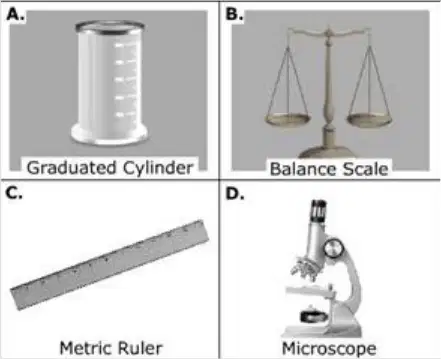
Which of the following tools can be used to measure mass?
A. Picture A
B. Picture B
C. Picture C
D. Picture D
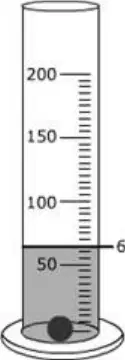
Marisol has placed a solid glass marble in 50 mL of water in this graduated cylinder to find its volume. What is the volume of the marble shown?
A. 1 ml
B. 10 ml
C. 50 ml
D. 60 ml
When you hold an ice cube in your hand for a few minutes, it will begin to melt. When ice melts how does its state change?
Its state changes from a liquid to a solid
Its state changes from a solid to a liquid
Its state changes from a solid to a gas
Its state changes from a gas to a liquid
When liquid water is heated, it changes state from a liquid to water vapor. This change in state is called:
Melting
Freezing
Clouding
Evaporation
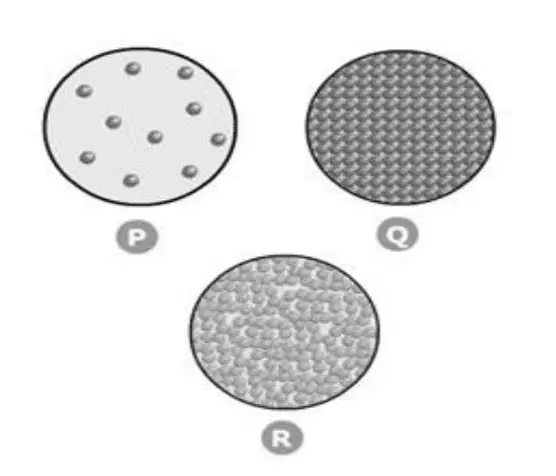
Which of these represents particles of a gas?
P and Q
Only P
Only Q
P and R
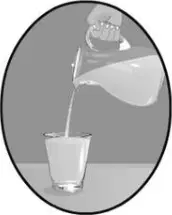
What happens when orange juice from a pitcher is poured into a glass?
The volume of the liquid increases.
The volume of the liquid decreases
The liquid changes into a solid
The liquid takes the shape of the glass
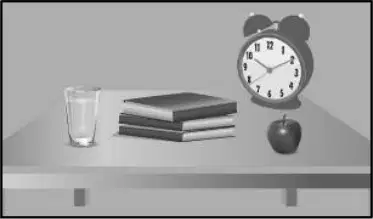
Which one of these objects will take the shape of the container it is placed in?
Water
Clock
Book
Apple
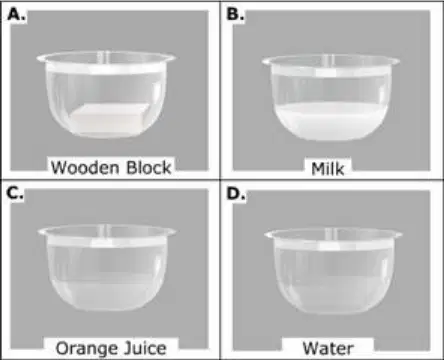
Which of these will not change its shape when placed in a different container?
Picture A
Picture B
Picture C
Picture D
The statements below are all true about mass, EXCEPT -
The amount of matter in an object is its mass.
The mass of an object does not change when the object's location changes.
The weight of an object and the object's mass is the same thing.
A balance scale can be used to measure the mass of an object.
Which of the following lists a solid first, a liquid next, and then a gas?
iron, ice, fire
wood, milk, air
rock, milk, water
plastic, water vapor, air
Matter may be a gas, a solid, or a liquid. It can change from one state to another. Which of the following may cause matter to change state?
a change in mass
a change in color
a change in volume
a change in temperature
Matter may be a gas, a solid, or a liquid. It can change from one state to another. Which of the following may cause matter to change state?
a change in mass
a change in color
a change in volume
a change in temperature
There are different characteristics for each of the states of matter. Which statement describes a difference between solids, liquids and gases?
Temperatures can change a solid to a liquid, but cannot change a liquid to a solid
Solids have a definite volume, and liquids do not have a definite volume.
The particles in a solid are much closer together than the particles in a gas.
Solids take on the shape of their containers, and liquids maintain their own shapes
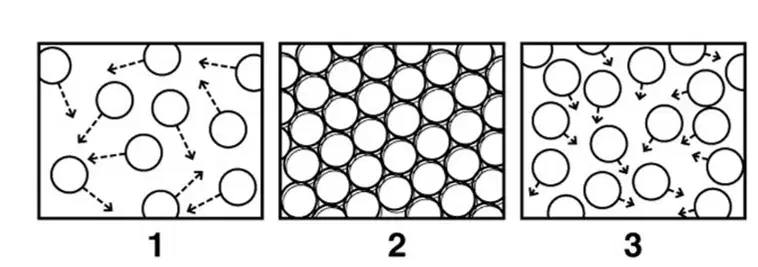
Which is a correct classification?
A. 1: liquid
B. 2: solid
C. 2: liquid
D. 3: solid

