
 Worksheets
Cells - Phase 1
Total questions: 13
Worksheet time: 7mins
Which term is used to describe the removal of toxic materials from living organisms?
A. excretion
B. nutrition
C. respiration
D. secretion
What is correct for all living organisms?
A. They are sensitive to changes in their environment.
B. They excrete solid waste from their bodies.
C. They feed on other living organisms.
D. They grow larger by increasing their cell number.
A plant bends towards the light. Which characteristics of living organisms does this show?
movement and nutrition
movement and respiration
movement and sensitivity
sensitivity and respiration
Process Q happens in cells.
carbohydrates → process Q → energy released.
What is process Q?
growth
nutrition
respiration
sensitivity
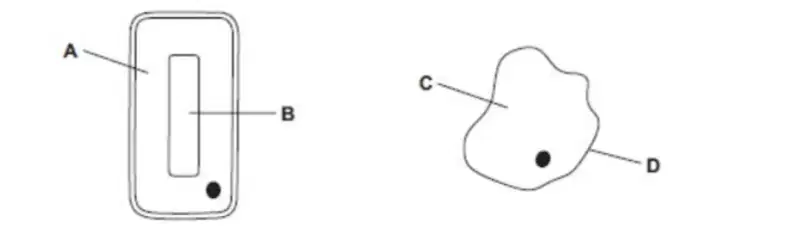
The diagram shows two cells. Which labelled part might contain chloroplasts?
A
B
C
D
Which structure controls the passage of substances into and out of a cell?
A cell membrane
B cell wall
C nucleus
D vacuole
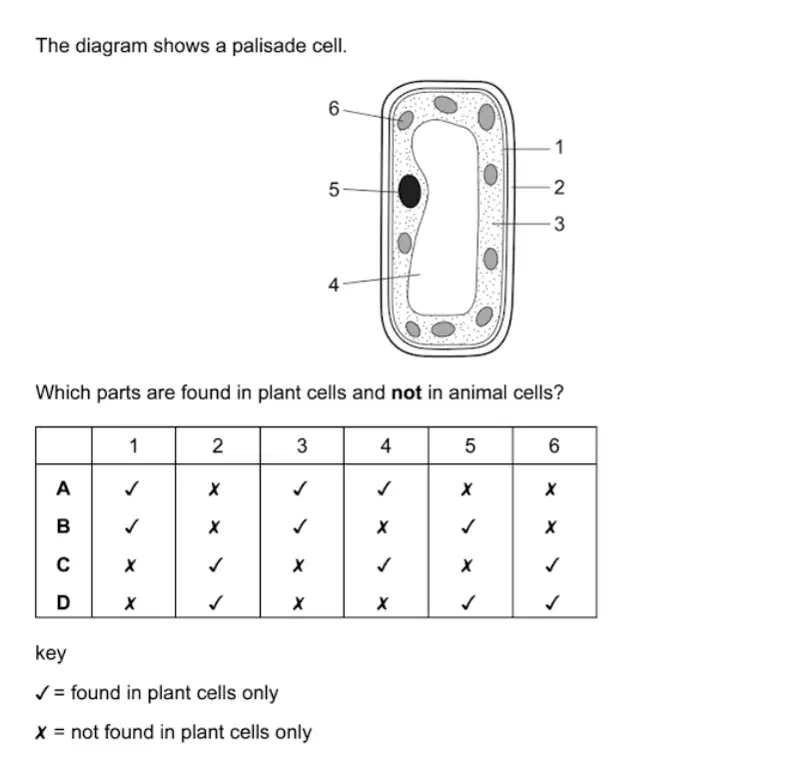
Which parts are found in plant cells and not in animal cells?
A
B
C
D
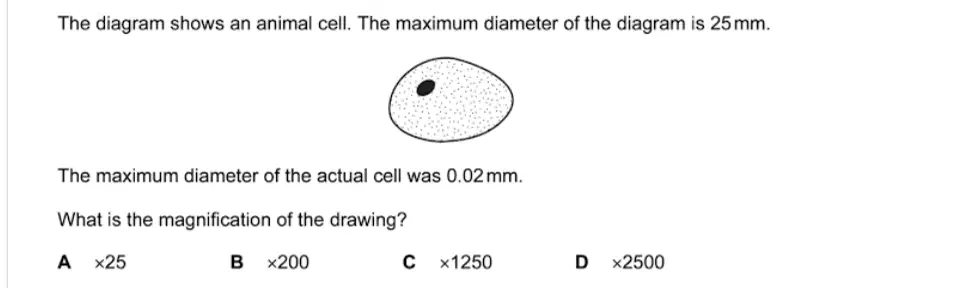
The diagram shows an animal cell. The maximum diameter of the diagram is 25 mm. The maximum diameter of the actual cell was 0.02 mm. What is the magnification of the drawing?
×25
×200
×1250
×2500
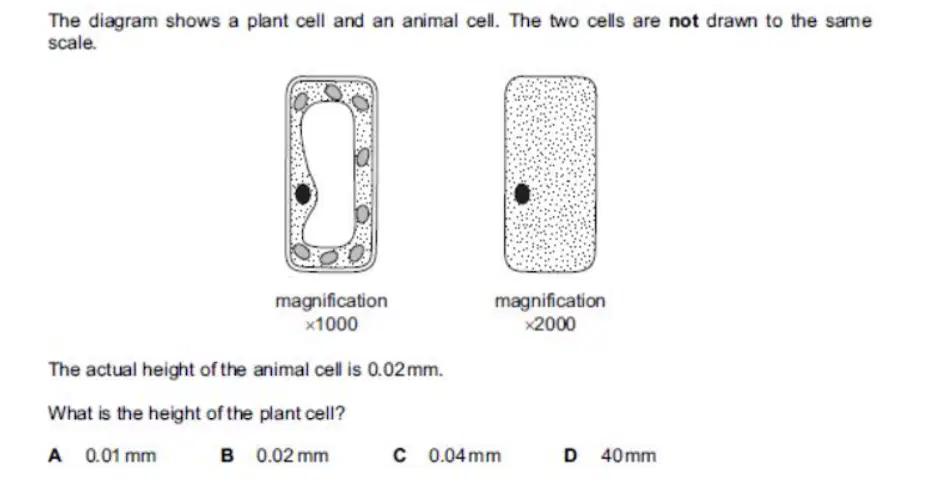
The diagram shows a plant cell and an animal cell. The two cells are not drawn to the same scale.
0.01 mm
0.02 mm
0.04 mm
40 mm
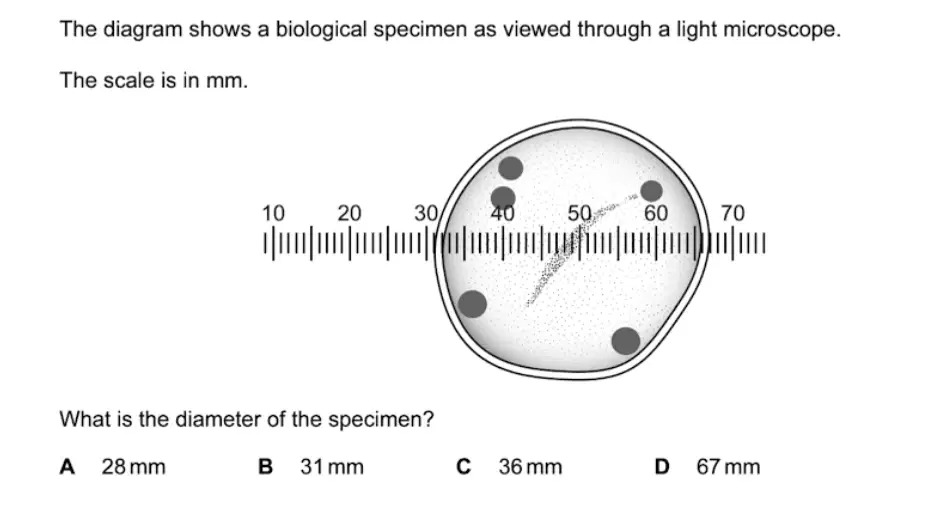
The diagram shows a biological specimen as viewed through a light microscope. The scale is in mm.
28 mm
31 mm
36 mm
67 mm
What is diffusion?
net movement of molecules down a concentration gradient
net movement of molecules up a concentration gradient
total movement of molecules down a concentration gradient
total movement of molecules up a concentration gradient
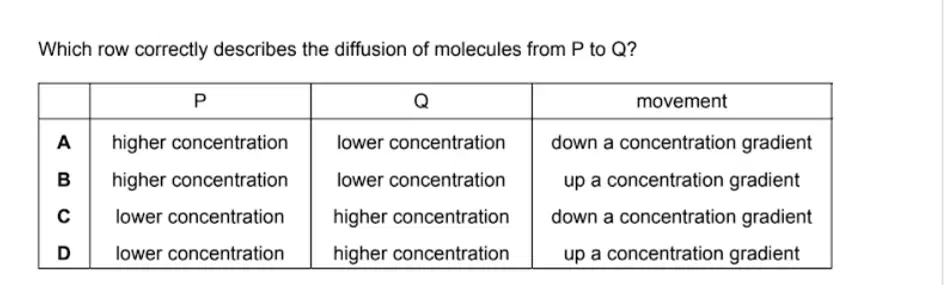
Which row correctly describes the diffusion of molecules from P to Q?
higher concentration, lower concentration, down a concentration gradient
higher concentration, lower concentration, up a concentration gradient
lower concentration, higher concentration, down a concentration gradient
lower concentration, higher concentration, up a concentration gradient
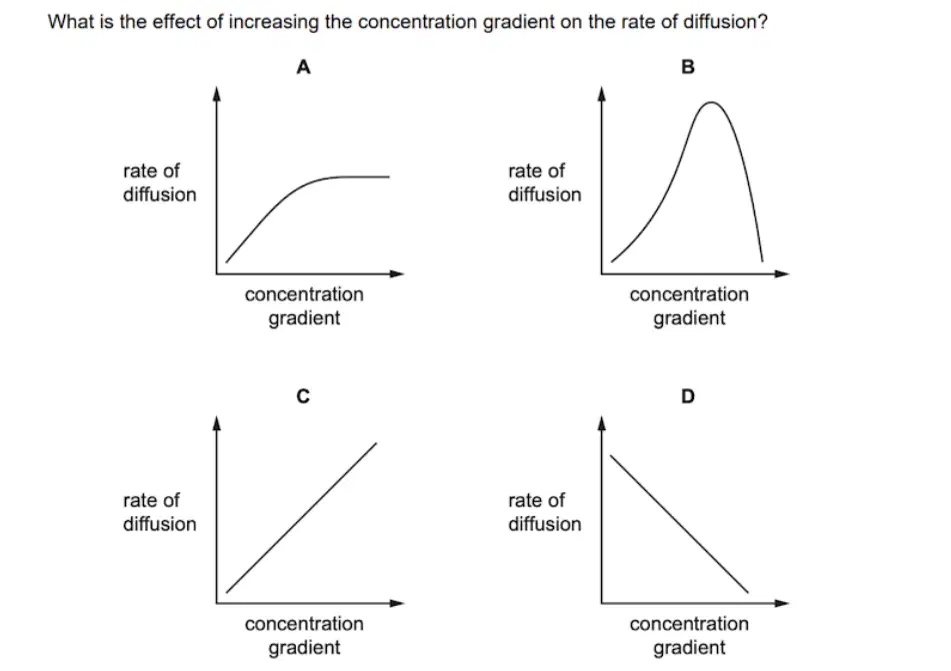
What is the effect of increasing the concentration gradient on the rate of diffusion?
A
B
C
D

