
 Worksheets
6th Grade Unit 1 Test
Total questions: 38
Worksheet time: 22mins
Name
Class
Date
1.
All living things are made of at least one (a) .
2.
What two organelles can only be found in plant cells?
a)
chloroplasts and mitochandria
b)
mitochondria and cell wall
c)
cell wall and choloplasts
d)
endoplasmic reticulum and ribosomes
3.
The __________ directs all cellular activity and contains the DNA.
a)
nucleus
b)
endoplasmic reticulum
c)
mitochandria
d)
cell membrane
4.
True or False: Both plant and animal cells can have mitochondria.
a)
True
b)
False
5.
Cells, Cells they are made of __________.
a)
organs
b)
organelles
c)
cytoplasm
d)
animals
6.
The _____________ regulates what enters and leaves the cell.
a)
cytoplasm
b)
cell membrane
c)
nucleus
d)
mitochondria
7.
The __________ is involved in cellular respiration.
a)
mitochondria
b)
cytoplasm
c)
endoplasmic reticulum
d)
ribosome
8.
The __________ is a gel like substance the holds the organelles in place.
a)
mitochondria
b)
cytoplasm
c)
endoplasmic reticulum
d)
ribosome
9.
Name one organelle and explain it's job. Please write at least one complete sentence. Try your best with spelling.
4 lines
10.
What is one example of homeostasis?
(a)
11.
A __________ is a living thing that is made up of two or more cells
a)
unicellular organism
b)
multicellular organism
c)
prokaryotic cell
d)
eukaryotic cell
12.
A __________ has genetic material that is surrounded by a lining
a)
unicellular organism
b)
multicellular organism
c)
prokaryotic cell
d)
eukaryotic cell
13.
__________ is the process by which new organisms are produced.
a)
Reproduction
b)
Homeostasis
c)
Cell Theory
d)
Organelles
14.
__________ is/are different parts of a cell that have special functions.
a)
Reproduction
b)
Homeostasis
c)
Cell Theory
d)
Organelles
15.
True or False: A volcano is a living organism.
a)
True
b)
False
16.
True or False: Sea sponges are alive.
a)
True
b)
False
17.
Name one multicellular organism.
4 lines
18.
True or False: If something doesn't display all six characteristics of life, it is not a living thing.
a)
True
b)
False
19.

Which organelle is number 5?
a)
cell membrane
b)
cell wall
c)
cytoplasm
d)
nucleus
20.
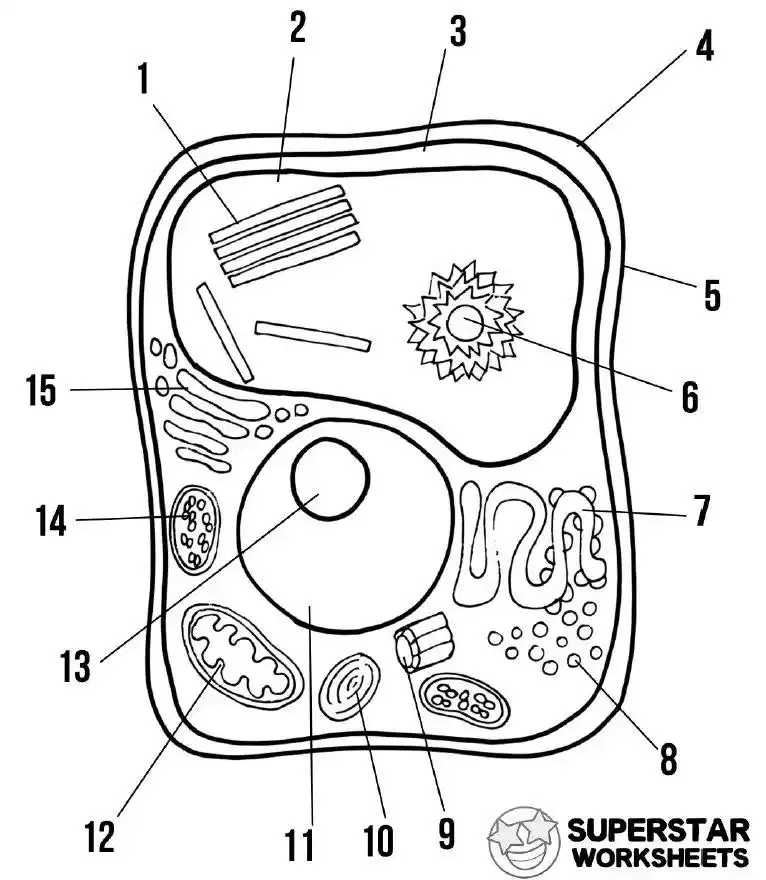
Which organelle is number 11?
a)
cell membrane
b)
cell wall
c)
cytoplasm
d)
nucleus
21.
The gel that fills the cell and protects the organelles is called the ____________.
a)
cytoplasm
b)
cell Membrane
c)
vacuole
d)
organelles
22.
Which organelle is not found in an animal cell?
a)
cell membrane
b)
cell wall
c)
mitochondria
d)
nucleus
23.
Which organelle breaks down food and releases energy?
a)
cell membrane
b)
nucleus
c)
mitochondria
d)
ribosome
24.
Which organelle makes protein for the cell?
a)
ribosome
b)
vacuole
c)
endoplasmic reticulum
d)
cytoplasm
25.
Which organelle Makes food from the sun (photosynthesis)?
a)
Cell Wall
b)
Chloroplast
c)
Cytoplasm
d)
Mitochondria
26.
Which organelle stores food, water and waste?
a)
vacuole
b)
cell membrane
c)
mitochondria
d)
nucleus
27.
Which organelle packages stuff for the cell?
a)
vacuole
b)
Golgi apparatus or Golgi body
c)
endoplasmic reticulum
d)
nucleus
28.
True or false: Prokaryotic cells do not contain genetic material.
a)
True
b)
False
29.
True or false: unicellular organisms are made up of only one cell.
a)
True
b)
False
30.
True or false: cells are made of organs.
a)
True
b)
False
31.
Which organelle provides structure and shape for the plant cell?
a)
cell membrane
b)
chloroplast
c)
cell wall
d)
cytoplasm
32.
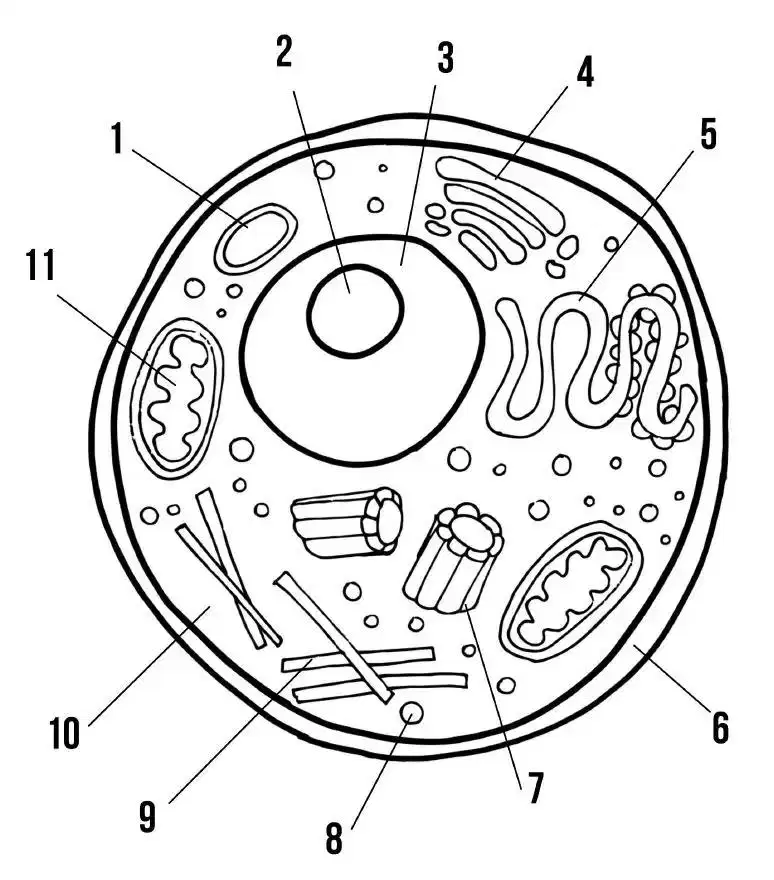
Which organelle is number 11?
a)
cytoplasm
b)
nucleus
c)
ribosome
d)
mitochondria
33.
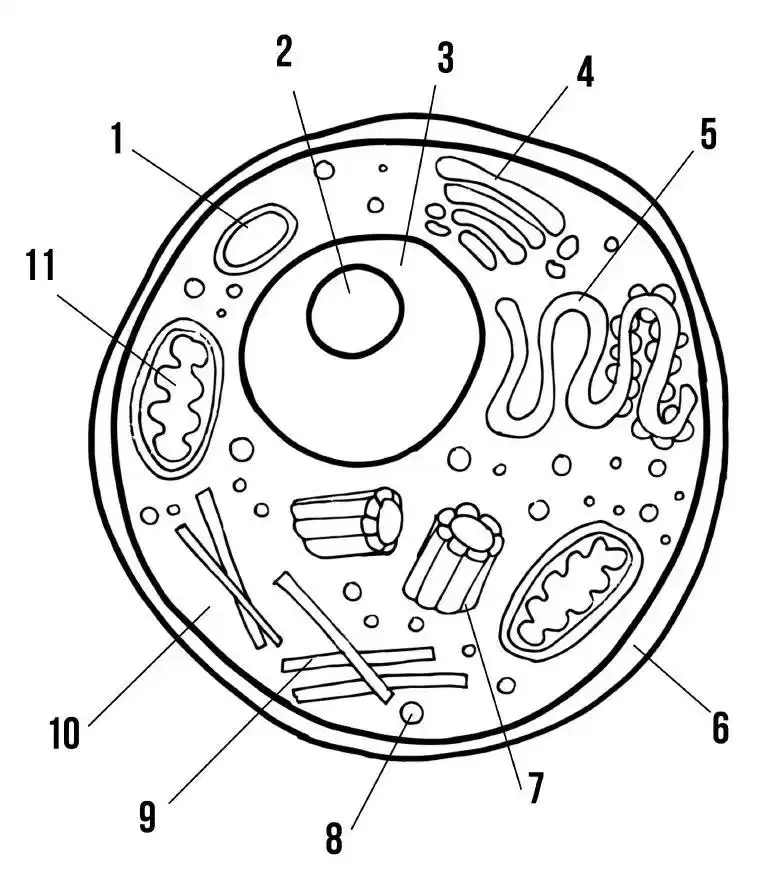
Which organelle is number 6?
a)
cytoplasm
b)
cell membrane
c)
ribosome
d)
nucleus
34.
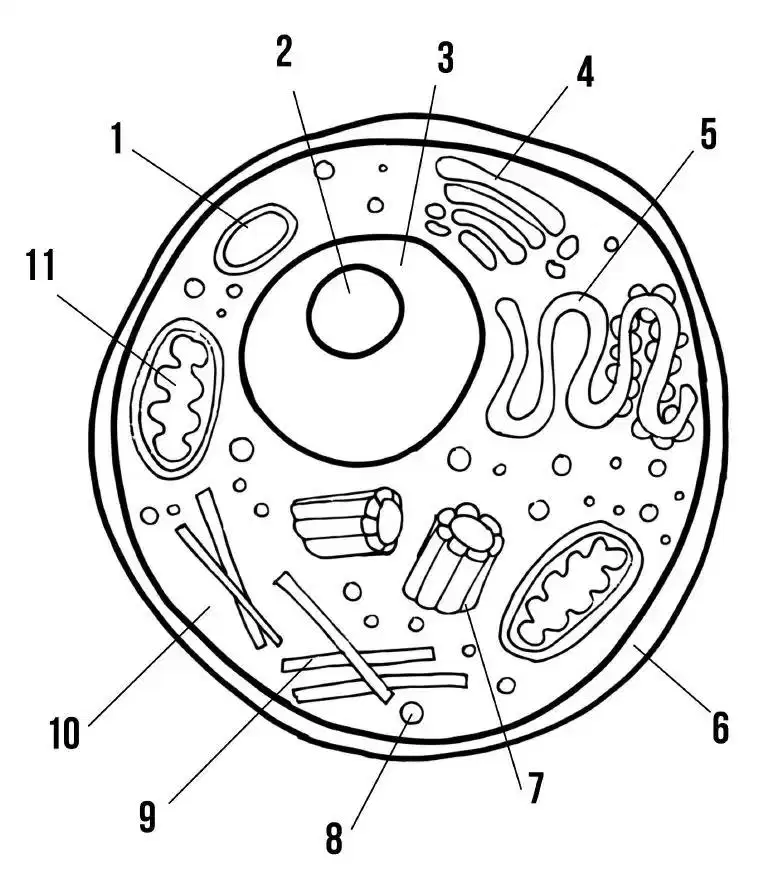
Which organelle is number 3?
a)
cytoplasm
b)
cell membrane
c)
ribosome
d)
nucleus
35.
What is the basic unit of life?
a)
Atom
b)
Molecule
c)
Cell
d)
Tissue
36.
What is the role of the ribosome in a cell?
a)
Cell division
b)
Protein synthesis
c)
Energy production
d)
Waste removal
37.
In which part of the plant cell does photosynthesis take place?
a)
Nucleus
b)
Mitochondria
c)
Chloroplast
d)
Ribosome
38.
Which organelle is known as the "powerhouse of the cell"?
a)
Nucleus
b)
Mitochondria
c)
Chloroplast
d)
Endoplasmic reticulum
100 %

