Wayground logo

Free Printable Worksheets

Font size

S
M
L
XL
Worksheets

Work and Simple Machines

Total questions: 25

Worksheet time: 38mins

Name
Class
Date
1.
Which of the following is work according to the scientific definition?
a)
pushing a box across the floor
b)
standing still while holding something heavy
c)
walking with a backpack on
d)
all of these are considered "work"
2.
Work only occurs when the direction of motion and direction of force are in the same direction.
a)
TRUE
b)
FALSE
3.
How does a single fixed pulley make work easier?
a)
It changes the direction of the force.  It is easier to pull downward.
b)
It increases the size of the force required by decreasing the distance.
4.
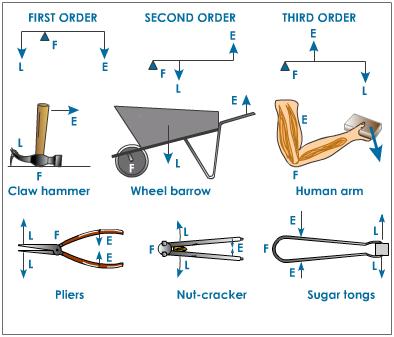
Which lever makes it easier to lift a load (box)? 
a)
a
b)
b
c)
c
d)
the 3 levers are all the same
5.
Simple machines reduce work, less work is done.
a)
TRUE
b)
FALSE
6.
Which shows work being done? (1 answer)
a)
sitting
b)
holding
c)
lifting
d)
carrying
7.
Moving an object 15 m with 2N of force equals 12J of work.
a)
TRUE
b)
FALSE
8.
Is this person doing work?
a)
YES
b)
NO
9.

Which simple machine converts a downward force into a horizontal force, which is useful in splitting an object into two parts?

a)

An inclined plane

b)

A wedge

c)

A pulley

d)

A screw

10.

What do you call the pivot point on a lever?

a)

The input force

b)

The output force

c)

The fulcrum

d)

The angle

11.

What happens when you apply a DOWNWARD force to the left side of the lever, as shown in this picture:

a)

It causes the right side of the lever to apply an UPWARD force

b)

It causes the right side of the lever to apply a DOWNWARD force

c)

The force has no effect on the lever

12.
The SI unit of work is?
a)
Joules
b)
Watts
c)
Newtons
d)
meters
13.

Which cannot be done by a machine?

a)

increase force

b)

increase work

c)

change direction of a force

d)

increase velocity

14.

What term indicates the number of times a machine multiplies the input force?

a)

efficiency

b)

power

c)

mechanical advantage

d)

resistance

15.

Force in = 200 N Force out = 600 N. What is the mechanical advantage?

a)

0.33

b)

12

c)

1200

d)

3

16.

A ___________ is a bar that is free to pivot about a fixed point.

a)

fulcrum

b)

ramp

c)

lever

d)

wedge

17.
A 5000N block is lifted 10 m. How much work was done?
a)
50000 J
b)
5000 J
c)
500 J
d)
50 J
18.
How much work does gravity do on your 63 kg teacher when she trips and falls from a height of 1.5 m?
a)
927.05 J
b)
928.05 J 
c)
926.05 J
d)
925.05 J
19.
Kinley hit the softball with a force of 3000 N and applied 100 kJ of work. How far did the ball go?
a)
35.33 m
b)
34.33 m
c)
33.33 m
d)
32.33 m
20.
If Keegan does 508 J of work pushing a cart 29 m, how much force did he apply?
a)
16.48 N
b)
18.31 N
c)
15.89 N
d)
17.52 N
21.
Which of the following does a simple machine do?
a)
allows the users to apply less force over a longer distance
b)
reduce the amount of force needed to do work
c)
change the direction of the applied force
d)
all of the above
22.
_________ is an example of a lever.
a)
Hammer
b)
Crowbar
c)
Wheelbarrow
d)
All of the above
23.
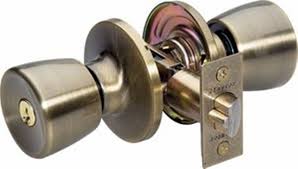
What type of simple machine is this?
a)
wheel and axle
b)
gear
c)
lever
d)
inclined plane
24.

A woman lifts a baby with 5N of force and does 30J of work. Using the work-energy principle (W = Fd), how far did she lift the baby up?

a)

A) 5 meters

b)

B) 6 meters

c)

C) 25 meters

d)

D) 30 meters

25.

A weightlifter lifts 600 newton weights 1.5 meters off the ground. How much work has he done?

a)

600 J

b)

660 J

c)

900 J

d)

1200 J