
 Worksheets
PLSC - exam 1
Total questions: 31
Worksheet time: 31mins
Please choose the best answer. Protein transportation and export happens at the ________________.
nucleus
Golgi apparatus
Ribosomes
Mitochondria
Which of the following organelles are highly involved in protein synthesis?
Endoplasmic Reticulum and Mitochondria
Endoplasmic Reticulum and nucleus
Rough Endoplasmic Reticulum and ribosomes
Smooth Endoplasmic Reticulum and ribosomes
The nucleolus contains DNA and coordinates the cell’s activities
true
false
Which of the following are found in plant cells and not in animal cells
chloroplasts, cell wall and cellular membrane
chloroplasts, cell wall, and central vacuole.
cell wall, central vacuole, and ribosomes
all of the answers are correct
What type of cells make up majority of primary plant body and are found in soft parts of the plant
parenchyma
sclerenchyma
collenchyma
none of the answers are correct
Sclerenchyma cells offer mechanical support and are dead at functional maturity.
True
False
According to your textbook, Theophrastus is known as the "Father of Botany"
True
False
Prokaryotic cells have nuclei and are often multicellular.
true
false
Carolus Linnaeus is known for ______________.
binomial nominclature
the Genus species classification
complex plant taxonomy
all of the answers are correct
This question has to do with rules of botanical names.
The Class names end in -aceae
True
False
What is the difference between an angiosperm and a gymnosperm?
What is the difference between a monocotyledon and dicotyledon? List 3 differences.
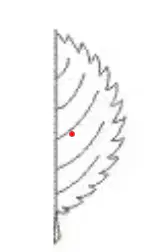
This image is a _________ leaf margin
lobed
serrate
entire
none of the answers are correct
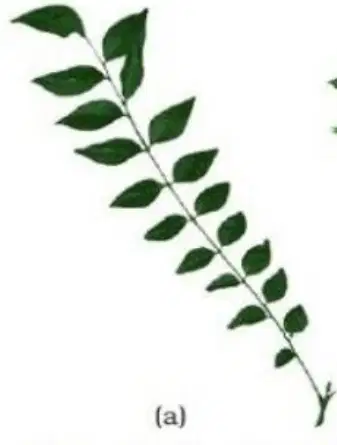
The image is of a ________________ leaf.
palmately compound
simple
pinnately compound
none of the answers are correct
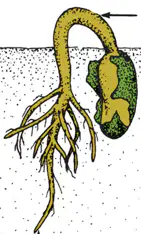
What plant organ is shown in the image?
epicotyl
plumule
hypocotyl
none of the answers are correct
The pointed protective sheath covering an emerging shoot in monocotyledons is the _____________.
Coleoptile
Epicotyl
mesocotyl
none of the answers are correct
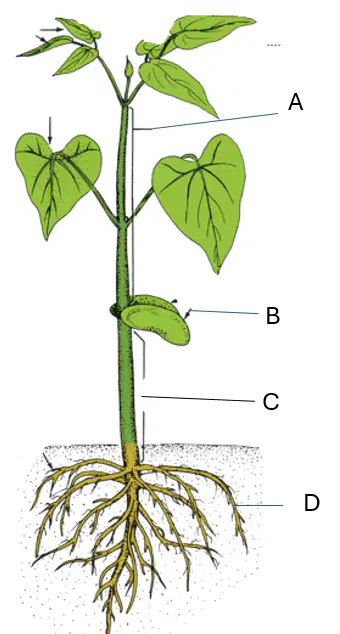
The section of the plant that is marked by "A" is the ________________.
hypcotyl
cotelydon
epicotyl
pummule
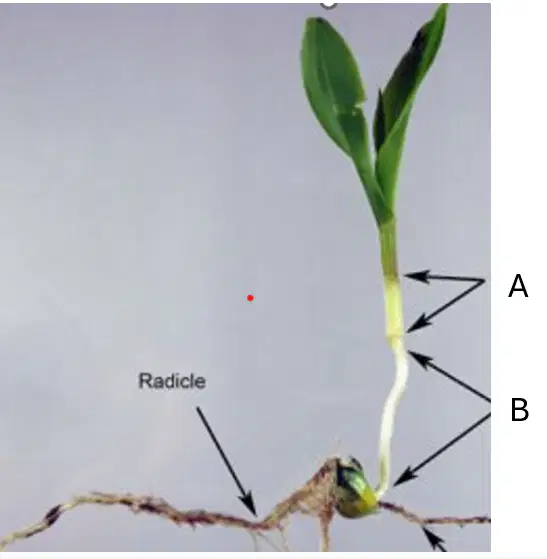
In the image, "A" is ____________ and "B" is _____________
mesocotyl and radicle
true leaf and mesocotyl
coleoptile and mesocotyl
hypocotyl and mesocotyl
Based on USDA census data, __________ has the highest crop market value of all horticultural crops in the US
Christmas trees
tree nuts, berries, fruit
vegetables, potatoes, melons
floriculture
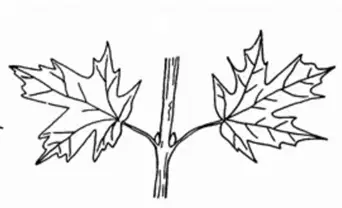
The image has:
opposite leaf arrangement
Palmate venation
both answers are correct
neither answer is correct
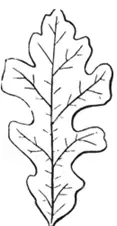
The leaf has a ____________ leaf margin.
Serrate
lobed
entire
none of the answers are correct
The ________________ allows for movement of water and compounds between cells. They are known as “living bridges” that connect plant cells.
Ribosomes
mitochondria
Plasmodesmata
cytoskeleton
Please explain the functions of the xylem and the phloem.
Explain two functions of the central vacuole.
Which organelle is known for energy production?
Mitochondria
cytoskeleton
ribosomes
nucleolus
The tonoplast is the central vacuole membrane.
True
False
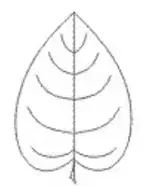
The image shows a __________ leaf shape.
Obovate
cordate
ovate
none of the answers are correct
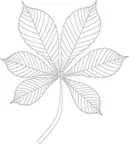
The image shows a ___________ leaf
palmately compound
pinnately compound
simple
none of the answers are correct
Vascular plants are divided into 2 divisions: Magnoliophyta (Angiosperms) and Pinophyta (Gymnosperms). Magnoliophyta are divided into two classes. Please list those two classes.
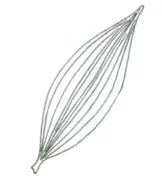
The image shows _______________ venation
palmate
pinnate
dichotomous
parrallel
What is the apical meristem?

