
 Worksheets
Basic Electronics and Micro:bit Quiz
Total questions: 22
Worksheet time: 12mins
What is a series circuit?
A circuit that limits the flow of electric current.
A circuit that uses a moving belt to accumulate electric charge.
A circuit where the voltage is equal across each component.
A circuit where the same amount of current flows through each component.
What is the function of a resistor?
To measure various electrical properties.
To detect changes in the environment.
To amplify or switch electronic signals.
To limit the flow of electric current in a circuit.
What does an accelerometer measure?
The flow of electric charge through a conductor.
The relationship between power, voltage, and current.
If the micro:bit is moving, in which direction, and how fast.
The opposition to the flow of electric current.
What is the primary characteristic of a parallel circuit?
It limits the flow of electric current.
It uses a moving belt to accumulate electric charge.
The voltage is equal across each parallel component.
The same amount of current flows through each component.
What is the purpose of a breadboard?
To amplify or switch electronic signals.
To build and test electronic circuits without soldering.
To detect changes in the environment.
To measure if the micro:bit is moving.
What is the role of a transistor?
To limit the flow of electric current in a circuit.
To measure various electrical properties.
To detect changes in the environment.
To amplify or switch electronic signals.
What does Ohm's Law relate?
The flow of electric charge through a conductor.
Voltage, current, and resistance.
The force that pushes electric current through a circuit.
Power, voltage, and current.
What is a micro:bit?
A semiconductor device used to amplify or switch electronic signals.
A tool used to build and test electronic circuits without soldering.
A source of stored electrical energy that powers electronic devices.
A small, programmable computer designed for educational purposes.
What is the function of a debugger?
To limit the flow of electric current in a circuit.
To test and find errors in code.
To measure various electrical properties.
To detect changes in the environment.
What is Watt’s Law?
A formula used to calculate the relationship between voltage, current, and resistance.
The flow of electric charge through a conductor.
The relationship between power, voltage, and current.
A step-by-step set of instructions designed to perform a task.
What happens to the current in a series circuit?
The current stays the same
The current is added
The current is reduced
The current is split between the light bulbs
What is the primary difference between series and parallel circuits regarding voltage?
Voltage is the same across all components in a series circuit but different in a parallel circuit
Voltage is different across all components in a series circuit but the same in a parallel circuit
Voltage increases in a series circuit but decreases in a parallel circuit
Voltage decreases in a series circuit but increases in a parallel circuit
In a series circuit, if one component fails, what happens to the flow of electricity?
It continues through other paths
It stops completely
It doubles
It halves
What happens to the total resistance in a series circuit when more resistors are added?
It increases
It decreases
It remains the same
It becomes zero
What is the equivalent resistance in a series circuit with two resistors of 4 ohms and 6 ohms?
2 ohms
10 ohms
24 ohms
5 ohms
What is the formula for calculating the total resistance in a series circuit?
Rtotal=R11+R21+...+Rn1
Rtotal=R1+R2+...+Rn
Rtotal=R1+R2+...+RnR1×R2×...×Rn
Rtotal=R12+R22+...+Rn2
does current stay the same in a series curcuit?
(a)
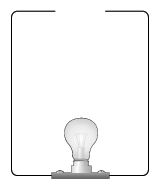


This circuit has a 24 volt battery and the resistor is 8 ohms. How many amps are running through the circuit?
3 Amps
4 Amps
2 Amps

