
 Worksheets
Unit 1 Review: TEKS 8.10
Total questions: 38
Worksheet time: 29mins
Which statement describes why the United States experiences more hurricanes in August than in January?
Ocean temperatures are higher in August than in January
Rainfall amounts are lower in August than in January
Wave heights are greater in August than in January
Wind speeds are slower in August than in January
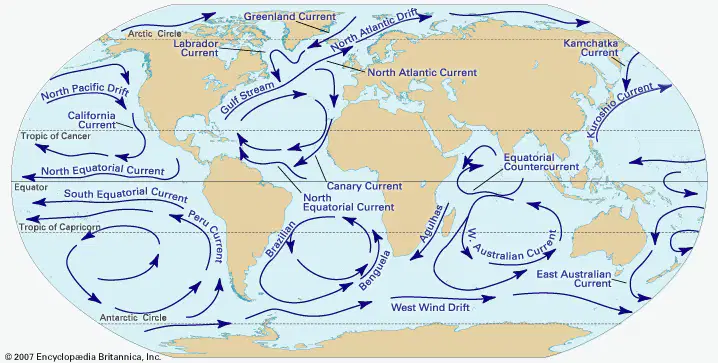
Ocean currents affect weather patterns by--
regulating when tides occur in coastal areas
trapping heat at the equator to regulate the global climate
distributing heat from the uneven absorption of solar energy
increasing the rate of evaporation to transport water to areas experiencing droughts
Which statement describes how hurricanes form over the ocean?
Cool, dry air rises from the land and begins to swirl around the eye of the storm
Warm, moist air rises from the ocean and swirls around a column of low pressure air
The updraft from a thunderstorm forms a funnel cloud that could reach land
Warm air masses rise quickly into the atmosphere, forming huge clouds
Why is the coastline of the western United States cooler in the summer compared to the eastern United States?
The west coast has a cold surface current, and the east coast has a warm surface current
The west coast has a warm surface current, and the east coast has a cold surface current
The west coast has cold winds, and the east coast has no wind
The west coast receives less warmth from the sun than the east coast
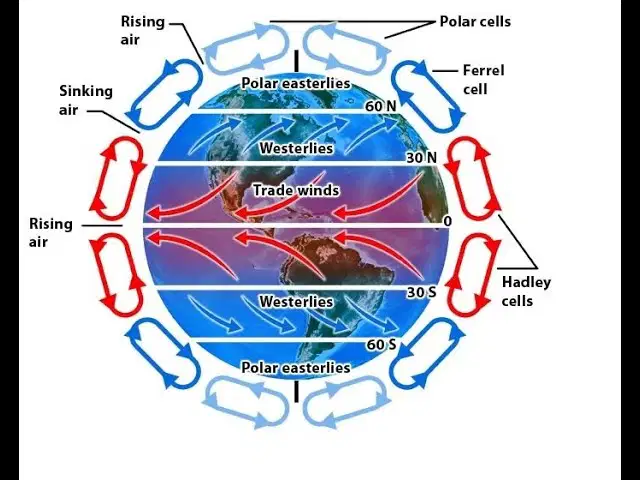
Which pattern of air movement is shown in the image?
horizontal air current
atmospheric current
Convection current
prevailing surface winds
How do convection currents explain global patterns of weather?
They bring air from one type of climate to another
They move weather from west to east across the globe
They form a pattern of high-pressure and low-pressure bands at certain latitudes, and that pressure influences weather
They transport cool water and precipitation from the equator toward the pole
Energy from the sun, the hydrosphere, and the atmosphere interacts in various ways to affect global weather. Select TWO incorrect statements.
Water vapor absorbs heat to condense and form clouds
Heat causes water to evaporate and enter the atmosphere
The sun provides energy to both the atmosphere and the hydrosphere
The atmosphere absorbs more of the sun's energy than does the hydrosphere
The unequal heating of Earth drives convection that creates winds in the atmosphere and currents in the ocean

What gives power to hurricanes?
Warm Ocean Water
Heavy clouds
Tornadoes that make it to the Ocean
Earthquakes in the Ocean
How do hurricanes form and move?
The storms form at the equator and initially move west
The storms form at the equator and initially move south
The storms form at the northern midlatitude and initially move west
The storms form at the northern midlatitude and initially move south
Hurricanes form when
a cold front meets a warm front
updrafts in a thunderstorm rotate
warm, moist air rises over an ocean
A student constructs a weather map to show how different air masses help predict the weather in different places. The student places a moist tropical air mass over the region where they live. How will that influence the weather in the area?
It will cause sunny and dry conditions
It will make the temperatures drop quickly
It will cause rain and thunderstorms to form
It will create blizzard conditions in some areas
The global movement of air occurs in convection cells. This influences weather. In general, how does air move?
From areas of higher temperature to areas of lower temperature
From the northern hemisphere to the southern hemisphere
From areas of higher pressure to areas of lower pressure
In the direction that Earth rotates on its axis

Which occurrence is the source of energy driving these winds and currents?
The uneven heating of Earth by the sun
The gravitational pull of the moon
The rotation of Earth
The Coriolis effect
Land absorbs energy from the sun much faster than water does.
True
False
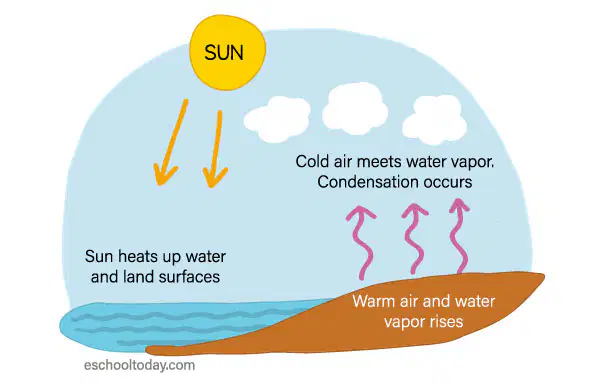
How does energy from the sun influence daytime weather in areas inland from the ocean?
Warm air above land rises because it is less dense, and then the moisture in the air condenses to form clouds.
Cool air above land rises because it is less dense, and then the moisture in the air condenses to form clouds.
Warm air above land rises because it is more dense, and then the moisture in the air condenses to form clouds.
Cool air above land sinks because it is less dense, and then the moisture in the air condenses to form clouds.

In what area would hurricanes be most likely to form and why? Choose 2 answers.
blue
red
green
Because the water is warmest there
Because the water is coldest there
Which factor is the MOST important in determining whether a part of Earth has a warm climate or a cold climate?
The direction of the prevailing winds
The number of days the sun shines each year
The angle at which the sun's rays strike the surface
The number of months the ground is covered with snow each year
The global movement of air occurs in convection cells. This influences weather. In general, how does air move?
In the direction that Earth rotates on its axis
From areas of high pressure to areas of lower pressure
From the northern hemisphere to the southern hemisphere
From areas of higher temperatures to areas of lower temperature
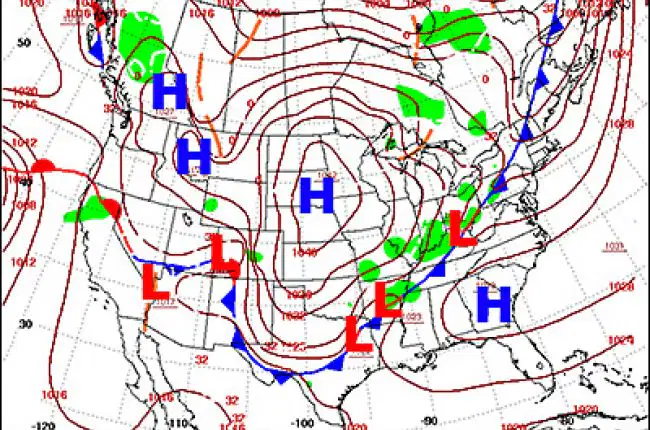
Which locations are most likely experiencing sunny skies?
Places with high temperatures
High pressure areas
Places with low temperatures
Low pressure areas
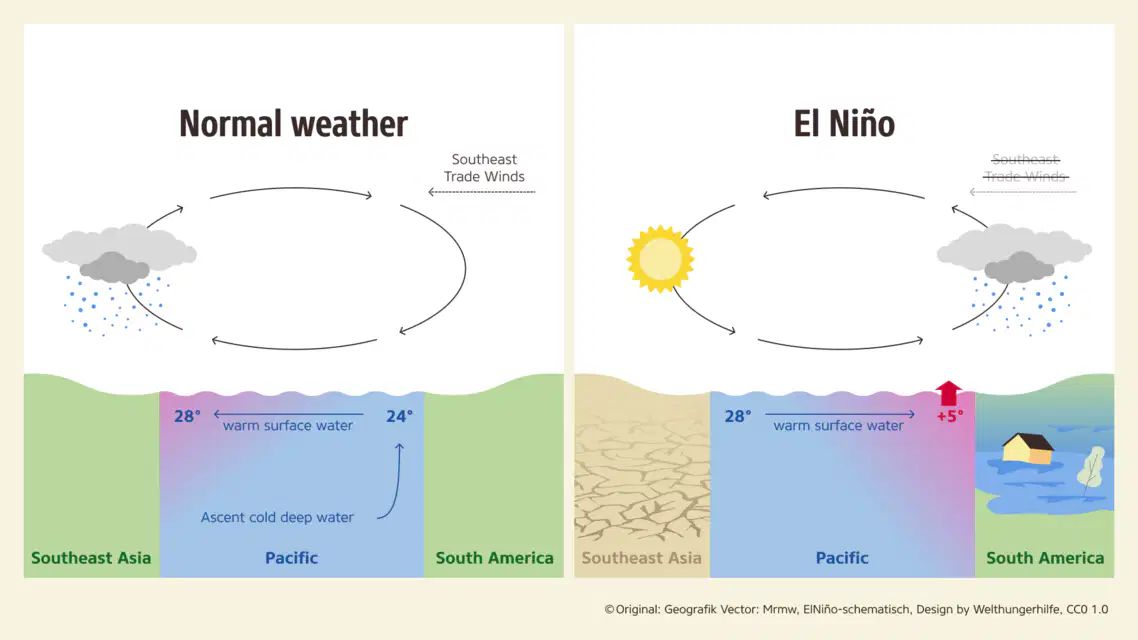
The change in water temperature near North America during an El' Nino year, will ___________________________________.
lead to extreme rain and flooding in the United States
cause there to be cooler than normal ocean water near the United States
cause there to be warmer than normal ocean water near Australia
lead to droughts and fires in the United States
How would a hurricane strengthen?
move over cold water
move over land
move over warm water
Hurricanes form in tropical waters between 8 and 20 degrees north and south of the equator. Hurricanes rarely form at higher latitudes because the water is too —
shallow
warm
deep
cold
The definition of wind
Moving air caused by air pressure and density differences in warm and cool air
Moving air caused by the ocean and tropical storms
Moving air caused by pollution and the atmosphere, specifically the troposphere
Moving air caused by weather and gravity

Which best describes this image
Convection Current
Conduction Current
Solar Cycle
Lunar Cycle

This picture represents which of the following?
Current
Global wind
Precipitation
Convection current

Where do warm currents originate from?
the Equator
the poles
Hawaii
Iceland

How do ocean currents affect weather patterns?
The control high and low tide
They trap heat at the equator so it doesn't go anywhere.
They move water to areas having droughts
They distribute heat from the equator to the Poles.
They don't affect weather patterns.

A strong low-pressure weather system forms off the coast and moves toward a land area. Which weather conditions will likely result from the low-pressure system?
clear, sunny skies and calm winds
mostly sunny skies with little to no precipitation
partly cloudy skies with little precipitation and light winds
mostly cloudy skies with moderate to heavy precipitation and strong winds

Which is most associated with a thunderstorm?
high air pressure
winds blowing from the east
winds blowing from the west
low air pressure

What type of weather is usually found in low pressure areas?
hot and dry
wet and stormy
cold and snowy
sunny and humid
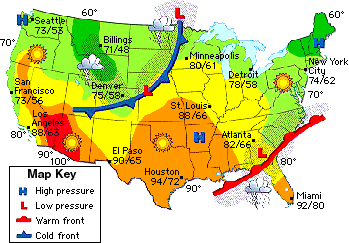
Weather refers to:
changes in the atmospheric conditions over a short time span.
long term patterns in the atmosphere.
What is the main driver of the Earth's climate system?
The Earth's core
Solar radiation
The Moon
Human activities
Which of the following is a common effect of El Niño?
Increased rainfall in the western Pacific
Decreased rainfall in the western Pacific
Cooler temperatures in the eastern Pacific
Increased snowfall in the Antarctic
What can be an effect of climate change on weather patterns?
Decreased variability in weather patterns
More predictable weather
Increased frequency and intensity of extreme weather events
A permanent shift to colder weather globally
What role do oceans play in climate change?
Oceans store and distribute solar energy, affecting global climate patterns.
Oceans produce greenhouse gases that contribute to climate change.
Oceans reflect sunlight, significantly cooling the Earth.
Oceans absorb all excess CO2, preventing climate change.
What does the term "El Niño" refer to?
A cooling of the ocean surface in the central and eastern tropical Pacific Ocean
A warming of the ocean surface in the central and eastern tropical Pacific Ocean
A global increase in atmospheric pressure
A decrease in hurricane activity in the Atlantic Ocean

