
 Worksheets
VEX V5 Structure 2026
Total questions: 30
Worksheet time: 15mins

Parts used to construct the chassis, levers, and sub systems.
Structure Parts
Angle Structure
Chain And Sprocket
Structure Material

An "L" shaped structure typically used for structural framing and a part used to form the "skeleton" of the robot. Ideal for attaching and supporting towers.
Allen wrench
Angle structure
Tank track kit
Flat bearing

Can be used to support and connect other structural components to stiffen a chassis, can be mounted flush to a piece of aluminum structural metal to reinforce its square holes, can provide a flat surface on a chassis to mount components like the brain, radio, and battery.
Flat Plates
Ribbed Slab
Flat Bearing
Back Plates

A member that has end connectors which provide an additional connection point. They are one of the members included in the chassis kits. A structure system beam used to form the "skeleton" of the robot.
Gusset
Wheel
C-channel
Rail or end cap

A flexible structure part used to form the "skeleton" of the robot or specialized applications. Similar to the flat plates, but have more flexibility.
Keps Nut
Crowbar
Steel Washers
Flat Bar

A structure member that has excellent strength and bending resistance is great for building robust robots. Another part (system beam) used to form the "skeleton" of the robot. The wider the member, the less likely it is to bend or twist, however will make it heavier.
Tubular
C-channel
Chassis
Angle Structure

A piece used to strengthen an angled joint. Pictured are angle, L and plus type.
Gusset
Keps Nut
Hat Section Center Spacer
Fasteners

Framework and working parts of an automobile or robot; framework to which components are attached.
Chassis
KEPS Nut
zip-tie
Flat Bar

A commonly used type of bearing in the VEX system. This bearing has three holes in a row. An axle is passed through the center hole which allows it to spin freely.
Drive Train
Flat Bearing
Pillow Block Bearing
Nylock Nut
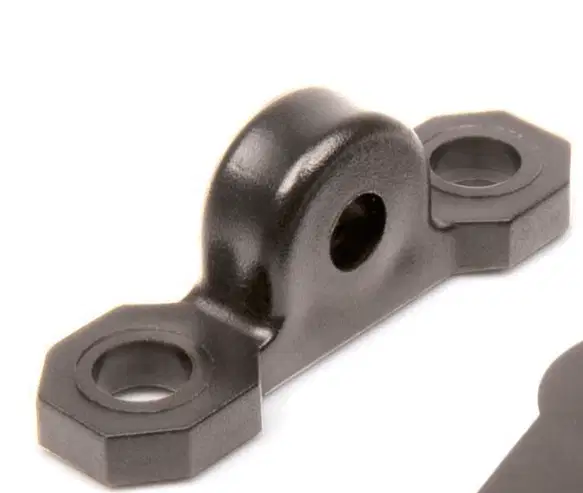
A piece that is used to hold a moving piece (such as an axle to spin freely) in place relative to the rest of the system.
Shaft Coupler
Flat Bearing
Pillow Block Bearing
Gusset

Provides five points of contact for creating a connection between two structural metal components using one screw and nut. Each corner is sized and shaped to securely fit into a square hole pattern of many structural metal components. The center of the retainer is sized and slotted to securely fit a hex nut, allowing a #8-32 screw to be securely tightened without the need of a wrench to hold the nut.
1-post hex nut retainer with bearing flat
flat bearing
plastic spacers
4-Post Hex Nut Retainer

Allows shafts to spin smoothly through the square holes in a structural metal component. When mounted, provides two points of contact within the structural metal. One end contains a post which is sized and shaped to securely fit into the square hole of the structural metal. The center hole is sized and slotted to securely fit a hex nut, allowing a #8-32 screw to be tightened without the need of a wrench to hold the nut. The hole on the end of the retainer provides a smooth round support for a shafts or a shoulder screw to spin in.
chain and sprocket
1-Post Hex Nut Retainer with Bearing Flat
4-post hex nut retainer
gusset

Provides two points of contact for connecting one piece of structural metal to another piece using one screw and nut. One end contains a post which is sized and shaped to securely fit into the square hole of a structural metal component. The other end is sized and slotted to securely fit a hex nut, allowing a #8-32 screw to be tightened without the need of a wrench to hold the nut.
plastic spacers
flat bearing
c-channel
1-Post Hex Nut Retainer

Availabe in two thicknesses 4.6 mm and 8 mm. Ideal for application where there does not need to be as much contact surface, such as a shaft between a wheel and a piece of strutural metal. They work well for filling in space on a screw between a piece of structural metal and gear / sprocket when they are being mounted together.
A Laser Beam
High Strength Spacers
Plastic Spacers
Fasteners

A plate that connects a piece to a shaft so that they rotate together.
Bearing Lock plate
Bearing Attachment rivets
Flat plates
Gears

Put on drive shafts to stop them or objects on them from slipping.
Nylock Nut
Gears
Rubber Band Anchor
Rubber Shaft Collar

A thick metal ring that can be locked down on an axle to keep it, or parts on it, from moving side to side.
Gusset
Axle collar or shaft collar
Flat bar
Angle structure

The larger end (11/32") of the wrench is used to hold the
1-Post Hex Nut Retainer with Bearing Flat
Rubber Shaft Collar
Standoffs
#8 - 32 Nylock Nuts, Low Profile Nuts, and Keps Nuts

The smaller end (1/4") of the wrench is used to hold the
1-Post Hex Nut Retainer with Bearing Flat
Rubber Shaft Collar
#8 - 32 Low Profile Nuts and Standoffs
#8 - 32 Nylock Nuts, Hex Nuts, and Keps Nuts
The larger end (11/32") of the wrench is used to hold the
1-Post Hex Nut Retainer with Bearing Flat
Rubber Shaft Collar
Standoffs
#8 - 32 Nylock Nuts, Hex Nuts, and Keps Nuts
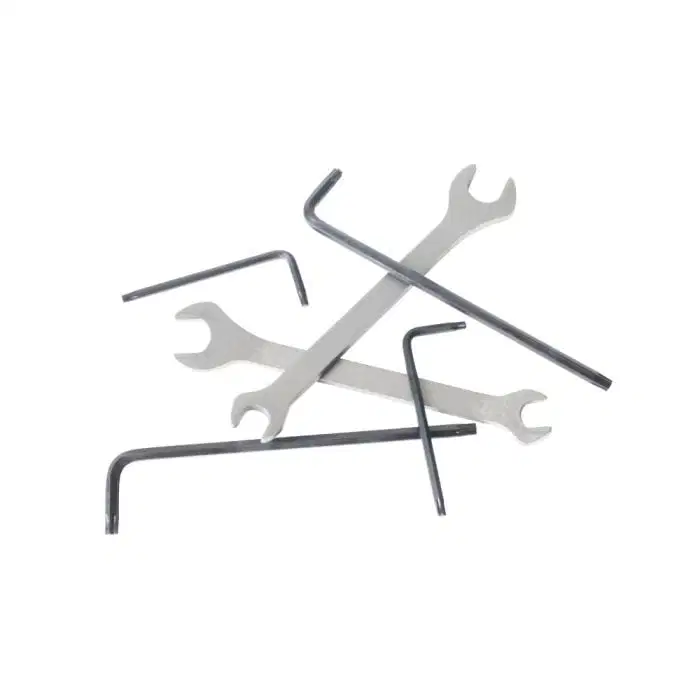
The 5/64 Hex Key (T8) is a smaller allen wrench used with
shaft collar set screws
#8 - 32 screws
Keps nuts
Nylock Nuts
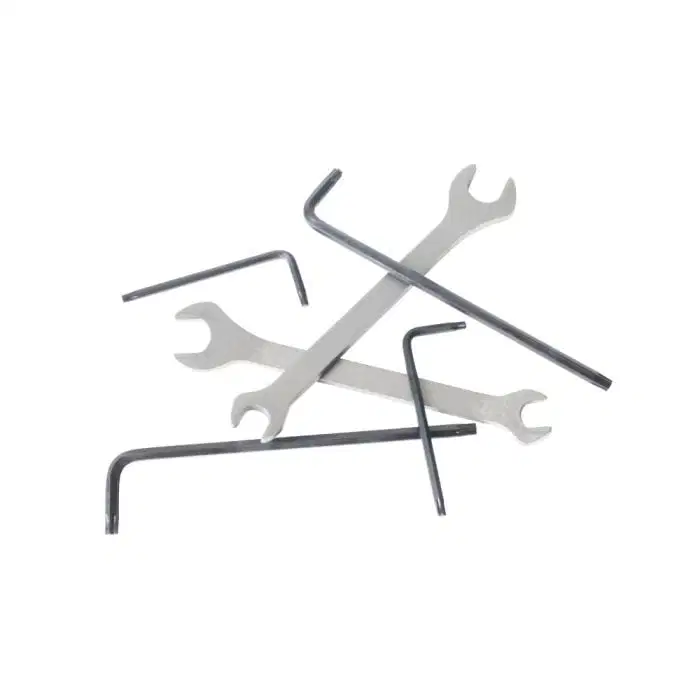
The 3/32 Hex Key (T15) is a larger type of allen wrench used with
shaft collar set screws
#8 - 32 screws
Lock Plate
Nylock Nuts

Are used to separate two parts from one another while creating a rigid connection. A hex shaped bar with #8 - 32 threaded hole cut into each end. They are tightened by using a 1/4" side of the open-ended wrench.
Flat Plates
Nylock Nut
C-channel
Standoffs

A general term for pieces (such as screws, nuts, bolts, rivets and standoffs) whose primary purpose is to hold two or more components together.
Adhesives
Clamp
Plastic Spacers
Fasteners

Nonlocking, great for prototyping due to its small size. Fits in the standoff retainer and C- channel easily.
Low Profile Nut
Flat Plates
Flat Bearing
Keps Nut

A standard nut that includes a toothed "crown" designed to bite into a mounting surface and prevent the nut from slipping.
Lock Nut
Lead Screw Nut
Low Profile Nut
KEPS Nut

A type of hex nut with a plastic ring inserted in one end to grip the shaft of the bolt and prevent the nut from spinning off. This is useful when parts need to be loosely attached to each other without coming apart.
Nylock Nut
Hex Nut
Keps Nut
Grub Screw

A plastic tie for securing wires or other parts to the robot.
zip-tie
what's the difference between vex steel and aluminum members?
wheel
rubber shaft collar

A flat ring of steel that may be split, toothed, or embossed; used in threaded connections to distribute loads, span large openings, relieve friction, or prevent loosening.
Fasteners
Flat Bar
Angle structure
Steel Washers

Thinnest of the washers/spacers available and have a low coefficient of friction.
Open end wrench
Fasteners
Metal Washers
Teflon Washers

