
 Worksheets
Tech+ Module 1.0 Test
Total questions: 25
Worksheet time: 15mins
What is the brain of the device that processes input called?
Hard Drive
System Memory
Central Processing Unit (CPU)
Output Device
Which input method became popular in the early 1980s for its ease of use?
Text commands
Mouse
Keyboard
Microphone
Which of the following is NOT stored in RAM?
Operating system
Active programs
Long-term files
Temporary data
What happens to programs in RAM when you close them?
They are saved to the hard drive
They remain in RAM
They are deleted from RAM
They are compressed.
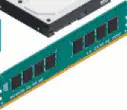
What is the main difference between storage and memory?
A) Storage is temporary, memory is permanent
B) Storage is permanent, memory is temporary
C) Both are permanent
D) Both are temporary
What does 'ROM' stand for in the context of optical drives?
Read-Only Memory
Random-Only Memory
Read-Over Memory
Rewrite-Only Memory
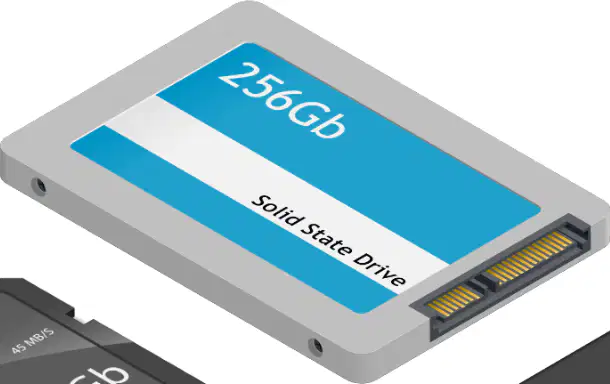
What type of storage device is shown with a capacity of 256Gb in the image?
USB Drive
SD Card
Solid State Drive
Optical Drive
What is the term used for the information a computer gives back to you?
Input
Output
Processing
Storage
What happens when you tap a YouTube link on your device?
The computer processes the input and provides output
The computer stores the data
The computer deletes the data
The computer shuts down
Which device is essential for humans to use computers according to the text?
Printer
Screen
Mouse
Keyboard
What do GPS devices provide according to the text?
Entertainment
Directions
Printing
Modeling
Which of the following is NOT a peripheral device?
Screen
Speaker
Keyboard
Hard drive
What is a common use for desktop computers?
Traveling
Sitting on a desk
Mobile gaming
Outdoor activities
What feature do hybrid laptops always have?
Detachable keyboard
Built-in printer
Touchscreen
Solar panel
A computer is defined as...
any electronic device with a plug.
assists with school or informational work
are electrical devices that follow the Information Processing Cycle (Input, Process, Storage, Output) and are made of hardware.
Computer
5. A microphone is an example of an ______________ device.
Input
Output
Storage
Magnetic stripe readers are used in the following areas except
Credit/debit cards
Security doors to hotels
Electronic funds transfer at POS terminals
Object recognition
Which of the following is not an input device?
Microphone
Keyboard
Joystick
Monitor
Select TWO types of non-volatile memory:
RAM
HDD
ROM
SSD
Which of the following is an example of an output device?
Scanner
Printer
Mouse
Keyboard
What is the primary function of a computer's operating system?
To store data permanently
To manage hardware and software resources
To provide internet access
To perform calculations
Which of the following is a characteristic of volatile memory?
Data is retained when power is off
Data is lost when power is off
Data is stored permanently
Data is encrypted
Match the following
Instant messaging software
WhatsApp & Facebook are examples
Document sharing software
>=2 users access a document, same time
Email software
Uses SMTP to send messages
Conferencing software
Uses video & audio streaming
Match the following
Network Share
On a local network, accessible by others
Flat File
Simple, single table data storage
Word Processor
Creates, stores, prints text documents
Relational Database
Used to store/analyze related info

