
 Worksheets
PSTS BAHASA INGGRIS KELAS IX 2024-1
Total questions: 25
Worksheet time: 2hrs 56mins
Study the conversation below, then answer the questions No. 1 – 5!
Andre : Bekantans are from Borneo, right? So, we can find them in Indonesia, Malaysia and Brunei.
Monita : Yes, but we can find them mostly on the Indonesian side.
Andre : Really?
Monita : Yes, that is why Bekantans are used as the icon of Banjarmasin, South Kalimantan.
Andre : Well, I believe we can find these monkeys in Borneo forests.
Monita : Right, specifically in Mangroves. You know, mangroves are a type of rainforest that meet the
sea.
Andre : So, Bekantans live in mangrove trees.
Monita : Yes, they like spending most of their time in trees.
Andre : See this fact, Bekantans are grouped as arboreal animals.
Monita : Say again. Arbo……arboreal?
Andre : Animals that eat, sleep and play in trees.
Where can Bekantans mostly be found?
Malaysia and Brunei
Indonesian side
Indonesia and Malaysia
Brunei Forest
Study the conversation, then answer the questions No 1 - 5!
Andre : Bekantans are from Borneo, right? So, we can find them in Indonesia, Malaysia and Brunei.
Monita : Yes, but we can find them mostly on the Indonesian side.
Andre : Really?
Monita : Yes, that is why Bekantans are used as the icon of Banjarmasin, South Kalimantan.
Andre : Well, I believe we can find these monkeys in Borneo forests.
Monita : Right, specifically in Mangroves. You know, mangroves are a type of rainforest that meet the
sea.
Andre : So, Bekantans live in mangrove trees.
Monita : Yes, they like spending most of their time in trees.
Andre : See this fact, Bekantans are grouped as arboreal animals.
Monita : Say again. Arbo……arboreal?
Andre : Animals that eat, sleep and play in trees.
Bekantans are the mascot of ….
Borneo forests
Arboreal animals
South Kalimantan
Mangroves trees
Study the conversation below, then answer the questions No. 1 – 5!
Andre : Bekantans are from Borneo, right? So, we can find them in Indonesia, Malaysia and Brunei.
Monita : Yes, but we can find them mostly on the Indonesian side.
Andre : Really?
Monita : Yes, that is why Bekantans are used as the icon of Banjarmasin, South Kalimantan.
Andre : Well, I believe we can find these monkeys in Borneo forests.
Monita : Right, specifically in Mangroves. You know, mangroves are a type of rainforest that meet the
sea.
Andre : So, Bekantans live in mangrove trees.
Monita : Yes, they like spending most of their time in trees.
Andre : See this fact, Bekantans are grouped as arboreal animals.
Monita : Say again. Arbo……arboreal?
Andre : Animals that eat, sleep and play in trees.
The following description is correct, except …
Bekantans like spending most of their time at sea.
Bekantans are grouped as arboreal animals.
We can find Bekantans in Borneo forests.
Bekantans are the icon of Banjarmasin.
Study the conversation below, then answer the questions No. 1 – 5!
Andre : Bekantans are from Borneo, right? So, we can find them in Indonesia, Malaysia and Brunei.
Monita : Yes, but we can find them mostly on the Indonesian side.
Andre : Really?
Monita : Yes, that is why Bekantans are used as the icon of Banjarmasin, South Kalimantan.
Andre : Well, I believe we can find these monkeys in Borneo forests.
Monita : Right, specifically in Mangroves. You know, mangroves are a type of rainforest that meet the
sea.
Andre : So, Bekantans live in mangrove trees.
Monita : Yes, they like spending most of their time in trees.
Andre : See this fact, Bekantans are grouped as arboreal animals.
Monita : Say again. Arbo……arboreal?
Andre : Animals that eat, sleep and play in trees.
What is arboreal animal? It is ….
animal that lives in Mangroves
animal that sleeps, eats and plays in trees
a type of rainforest that meet the sea
animal that used as an icon of Banjarmasin
Study the conversation below, then answer the questions No. 1 – 5!
Andre : Bekantans are from Borneo, right? So, we can find them in Indonesia, Malaysia and Brunei.
Monita : Yes, but we can find them mostly on the Indonesian side.
Andre : Really?
Monita : Yes, that is why Bekantans are used as the icon of Banjarmasin, South Kalimantan.
Andre : Well, I believe we can find these monkeys in Borneo forests.
Monita : Right, specifically in Mangroves. You know, mangroves are a type of rainforest that meet the
sea.
Andre : So, Bekantans live in mangrove trees.
Monita : Yes, they like spending most of their time in trees.
Andre : See this fact, Bekantans are grouped as arboreal animals.
Monita : Say again. Arbo……arboreal?
Andre : Animals that eat, sleep and play in trees.
Rainforests that meet the sea are called ….
Arboreal
Icon
Mangroves
Forests
Orangutan
Orangutans are great apes from Indonesia. Orangutan means man of the forest. They live in Sumatra and Borneo. The scientiic name of Orangutan from Northern Sumatra is Pongo Abelii and the scientiic name of Orangutan from Borneo is Pongo Pygmaeus.
Orangutans have big bodies. A male orangutan can be more than 100 kilograms and can be quite tall. His height can be up to 150 centimeters tall. Female orangutans are smaller and shorter than the males. A mature female orangutan’s weight is about 40 kilograms. Her height is about 120 centimeters tall. Orangutans have reddish brown hair. Unlike monkeys, they do not have tails. They have strong arms. They use their arms to swing between branches.
Orangutans live with their small family groups. They usually live in the tree branches where they build their nests. Orangutans’ favorite food is fruits. They also eat insects, honey, bird eggs, bark, and plants. They sometimes eat meat too. When they are thirsty, they sometimes drink the water from holes in the tree branches.
Orangutans are an endangered species because their habitat is threatened by people doing deforestation. The number of Bornean orangutans around 2017 was estimated at about 104,000 and the Sumatran orangutans about 7,500.
(Adapted from: https://www.worldwildlife.org/species/orangutan)
According to the text, we know that Orangutans are …
Monkeys
Apes
Birds
Reptiles
Orangutan
Orangutans are great apes from Indonesia. Orangutan means man of the forest. They live in Sumatra and Borneo. The scientiic name of Orangutan from Northern Sumatra is Pongo Abelii and the scientiic name of Orangutan from Borneo is Pongo Pygmaeus.
Orangutans have big bodies. A male orangutan can be more than 100 kilograms and can be quite tall. His height can be up to 150 centimeters tall. Female orangutans are smaller and shorter than the males. A mature female orangutan’s weight is about 40 kilograms. Her height is about 120 centimeters tall. Orangutans have reddish brown hair. Unlike monkeys, they do not have tails. They have strong arms. They use their arms to swing between branches.
Orangutans live with their small family groups. They usually live in the tree branches where they build their nests. Orangutans’ favorite food is fruits. They also eat insects, honey, bird eggs, bark, and plants. They sometimes eat meat too. When they are thirsty, they sometimes drink the water from holes in the tree branches.
Orangutans are an endangered species because their habitat is threatened by people doing deforestation. The number of Bornean orangutans around 2017 was estimated at about 104,000 and the Sumatran orangutans about 7,500.
(Adapted from: https://www.worldwildlife.org/species/orangutan)
A male orangutan can be up to … meters tall.
150
1,5
120
1,2
Orangutan
Orangutans are great apes from Indonesia. Orangutan means man of the forest. They live in Sumatra and Borneo. The scientiic name of Orangutan from Northern Sumatra is Pongo Abelii and the scientiic name of Orangutan from Borneo is Pongo Pygmaeus.
Orangutans have big bodies. A male orangutan can be more than 100 kilograms and can be quite tall. His height can be up to 150 centimeters tall. Female orangutans are smaller and shorter than the males. A mature female orangutan’s weight is about 40 kilograms. Her height is about 120 centimeters tall. Orangutans have reddish brown hair. Unlike monkeys, they do not have tails. They have strong arms. They use their arms to swing between branches.
Orangutans live with their small family groups. They usually live in the tree branches where they build their nests. Orangutans’ favorite food is fruits. They also eat insects, honey, bird eggs, bark, and plants. They sometimes eat meat too. When they are thirsty, they sometimes drink the water from holes in the tree branches.
Orangutans are an endangered species because their habitat is threatened by people doing deforestation. The number of Bornean orangutans around 2017 was estimated at about 104,000 and the Sumatran orangutans about 7,500.
(Adapted from: https://www.worldwildlife.org/species/orangutan)
Orangutans can be categorized as …
Herbivores
Carnivores
Insectivore
Omnivores
Orangutan
Orangutans are great apes from Indonesia. Orangutan means man of the forest. They live in Sumatra and Borneo. The scientiic name of Orangutan from Northern Sumatra is Pongo Abelii and the scientiic name of Orangutan from Borneo is Pongo Pygmaeus.
Orangutans have big bodies. A male orangutan can be more than 100 kilograms and can be quite tall. His height can be up to 150 centimeters tall. Female orangutans are smaller and shorter than the males. A mature female orangutan’s weight is about 40 kilograms. Her height is about 120 centimeters tall. Orangutans have reddish brown hair. Unlike monkeys, they do not have tails. They have strong arms. They use their arms to swing between branches.
Orangutans live with their small family groups. They usually live in the tree branches where they build their nests. Orangutans’ favorite food is fruits. They also eat insects, honey, bird eggs, bark, and plants. They sometimes eat meat too. When they are thirsty, they sometimes drink the water from holes in the tree branches.
Orangutans are an endangered species because their habitat is threatened by people doing deforestation. The number of Bornean orangutans around 2017 was estimated at about 104,000 and the Sumatran orangutans about 7,500.
(Adapted from: https://www.worldwildlife.org/species/orangutan)
There are about … orangutans in Sumatra and Borneo.
104.000
7.500
111.500
200
Orangutan
Orangutans are great apes from Indonesia. Orangutan means man of the forest. They live in Sumatra and Borneo. The scientiic name of Orangutan from Northern Sumatra is Pongo Abelii and the scientiic name of Orangutan from Borneo is Pongo Pygmaeus.
Orangutans have big bodies. A male orangutan can be more than 100 kilograms and can be quite tall. His height can be up to 150 centimeters tall. Female orangutans are smaller and shorter than the males. A mature female orangutan’s weight is about 40 kilograms. Her height is about 120 centimeters tall. Orangutans have reddish brown hair. Unlike monkeys, they do not have tails. They have strong arms. They use their arms to swing between branches.
Orangutans live with their small family groups. They usually live in the tree branches where they build their nests. Orangutans’ favorite food is fruits. They also eat insects, honey, bird eggs, bark, and plants. They sometimes eat meat too. When they are thirsty, they sometimes drink the water from holes in the tree branches.
Orangutans are an endangered species because their habitat is threatened by people doing deforestation. The number of Bornean orangutans around 2017 was estimated at about 104,000 and the Sumatran orangutans about 7,500.
(Adapted from: https://www.worldwildlife.org/species/orangutan)
Why are Orangutans endangered species?
They eat insects, honey, bird eggs, bark, and plants.
Orangutans live with their small family groups.
Their habitat is threatened by people doing deforestation.
They usually live in the tree branches.
Which one is included 'Noun groups'?
They build their nests
A mature female orangutan's weight
Orangutans use their arms to swing
Orangutan means man of the forest.
Complete the sentences with the suitable possessive adjectives!
Galang and his friends are writing a report about the life of Gorillas and Orangutans. Galang divides the task for 12) __________ friends. Monita’s task is to find information about Gorillas. 13) ________ notes are about the physical appearance of a gorilla. Andre and Pipit work together to find information
about orangutans. 14) __________ task is to take notes about the physical appearance of orangutans. Galang is the captain of the group. 15) __________ task is to collect all of the information and write them as a report. Galang and his friends should submit their report on Monday.
my
his
her
he
Complete the sentences with the suitable possessive adjectives!
Galang and his friends are writing a report about the life of Gorillas and Orangutans. Galang divides the task for 12) __________ friends. Monita’s task is to find information about Gorillas. 13) ________ notes are about the physical appearance of a gorilla. Andre and Pipit work together to find information
about orangutans. 14) __________ task is to take notes about the physical appearance of orangutans. Galang is the captain of the group. 15) __________ task is to collect all of the information and write them as a report. Galang and his friends should submit their report on Monday.
I
She
His
Her
Complete the sentences with the suitable possessive adjectives!
Galang and his friends are writing a report about the life of Gorillas and Orangutans. Galang divides the task for 12) __________ friends. Monita’s task is to find information about Gorillas. 13) ________ notes are about the physical appearance of a gorilla. Andre and Pipit work together to find information
about orangutans. 14) __________ task is to take notes about the physical appearance of orangutans. Galang is the captain of the group. 15) __________ task is to collect all of the information and write them as a report. Galang and his friends should submit their report on Monday.
They
He
Their
Our
Complete the sentences with the suitable possessive adjectives!
Galang and his friends are writing a report about the life of Gorillas and Orangutans. Galang divides the task for 12) __________ friends. Monita’s task is to find information about Gorillas. 13) ________ notes are about the physical appearance of a gorilla. Andre and Pipit work together to find information
about orangutans. 14) __________ task is to take notes about the physical appearance of orangutans. Galang is the captain of the group. 15) __________ task is to collect all of the information and write them as a report. Galang and his friends should submit their report on Monday.
He
His
Has
Your
Different from orangutans, gorillas ___ black skin.
The correct answer to complete the sentence above is …
have
has
are
is
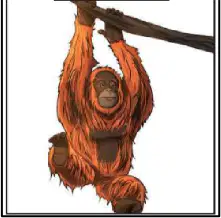
According to the picture, the description below is correct, except ….
It has brown reddish hair
It has strong arms to swing between branches
Its favorite food is fruit
It has long and big nose
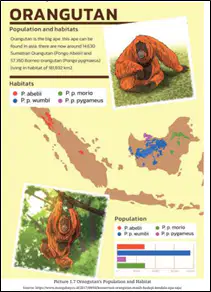
Study the information about Orangutans in the picture, hent answer the questions No 18-20!
What year is the report from?
Two thousand and seven
Two hundred and seventeen
Two thousand and seventy
Two thousand and seventeen
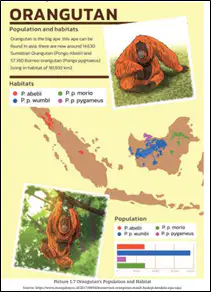
Study the information about Orangutans in the picture, then answer the questions No 18-20!
What species has the biggest population?
p. abelii
p.p. morio
p.p. wumbi
p.p. pygameus
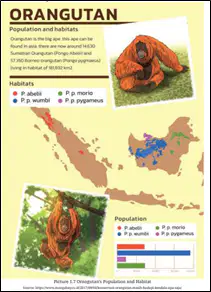
Study the information about Orangutans in the picture, then answer the questions No 18-20!
From the report we know that the population of Pongo Abelii and Pongo pygameus are ….
14.630
57.350
71.980
181,692 km2
Read the text and answer the questions No. 21-24!
Gorillas
Gorillas are the largest apes in the world. Gorillas are our closest cousins because they share 98,3 % of their genetic code with humans. Their scientific name is Gorilla beringei beringei. Gorillas have broad shoulders and chests. They have human-like hands. They have small eyes and hairless faces. They have black skin and hair. Their nostrils are large.
Gorillas have behaviors and also emotions. They can laugh and show their sadness.
Gorillas only live in tropical forests of Africa. We can find gorillas in the rain forests of Cameroon and Congo. They are vegetarians. They eat leaves, shoots and stalks. They also sometimes eat fruits.
Gorillas live in a family group of 6 until 30. The group is led by a group leader. The leader is called a silverback. The leader is a male gorilla who will be a leader for years.
Describe the physical appearance of Gorillas in five sentences!
Read the text and answer the questions No. 21-24!
Gorillas
Gorillas are the largest apes in the world. Gorillas are our closest cousins because they share 98,3 % of their genetic code with humans. Their scientific name is Gorilla beringei beringei. Gorillas have broad shoulders and chests. They have human-like hands. They have small eyes and hairless faces. They have black skin and hair. Their nostrils are large.
Gorillas have behaviors and also emotions. They can laugh and show their sadness.
Gorillas only live in tropical forests of Africa. We can find gorillas in the rain forests of Cameroon and Congo. They are vegetarians. They eat leaves, shoots and stalks. They also sometimes eat fruits.
Gorillas live in a family group of 6 until 30. The group is led by a group leader. The leader is called a silverback. The leader is a male gorilla who will be a leader for years.
Explain the Gorillas' diet!
Read the text and answer the questions No. 21-24!
Gorillas
Gorillas are the largest apes in the world. Gorillas are our closest cousins because they share 98,3 % of their genetic code with humans. Their scientific name is Gorilla beringei beringei. Gorillas have broad shoulders and chests. They have human-like hands. They have small eyes and hairless faces. They have black skin and hair. Their nostrils are large. Gorillas have behaviors and also emotions. They can laugh and show their sadness.
Gorillas only live in tropical forests of Africa. We can find gorillas in the rain forests of Cameroon and Congo. They are vegetarians. They eat leaves, shoots and stalks. They also sometimes eat fruits.
Gorillas live in a family group of 6 until 30. The group is led by a group leader. The leader is called a silverback. The leader is a male gorilla who will be a leader for years.
Explain the habitat of Gorillas!

Gorillas live in a family group of 6 until 30. The group is led by a group leader. The leader is called a silverback. The leader is a male gorilla who will be a leader for years.
Fill in the table by writing noun groups and the meanings!
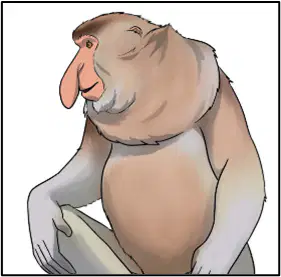
Make a descriptive text to describe the picture!

