
 Worksheets
Quiz: The Moon, Eclipses & Gravity
Total questions: 50
Worksheet time: 1hrs 2mins

Identify "D" in the diagram:
Impact Crater
Crater Rays
Mare (Maria)
Lunar Highlands
Chromosphere

On average, how long can a total lunar eclipse last?


The Moon’s orbit is tilted with respect to Earth’s by about 5°. This is why _____________
We don't see total eclipses every month.
We see the same side of the moon all the time.
The moon looks bigger when it is rising.
We experience ocean tides.


If you look up at the sky and see this, you are witnessing a....
solar eclipse
total eclipse
lunar eclipse
jupiter

What phase of the moon is labeled 4?
waning crescent
waxing crescent
waxing gibbous
waning gibbous

How do astronomers know exactly how far away the Moon is?
they use kilometers as measured by parallax
astronauts measured the distance along the way
laser beams are bounced off reflectors on the Moon's surface
they don't actually know exactly how far away it is

What moon phase will happen after this?
Last Quarter
First Quarter
Full Moon

What moon phase will happen after this?
New Moon
First Quarter
Last Quarter
Full Moon
What is perigee?
The position of the moon's orbit when it is closest to the sun.
The position of the moon's orbit when it is closest to earth.
The position of the moon's orbit when it is furthest from the earth.
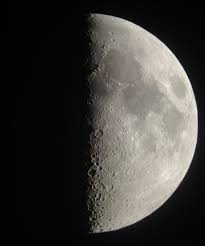
Name the moon phase that would occur after this one.
Waxing Cresent
Full Moon
Waning Gibbous
Waxing Gibbous

What becomes visible during a total solar eclipse that is normally not seen?
The Sun's inner core
The Moon's surface
The Sun's outer atmosphere (corona)
Earth's shadow on the Moon
What unusual behavior might wildlife exhibit during a total solar eclipse?
Nocturnal wildlife wakes up
Wildlife becomes louder
Non-nocturnal wildlife starts flying
Wildlife starts to glow
When will the next total solar eclipse visible from the contiguous United States occur?
Aug. 23, 2044
Oct. 14, 2035
Dec. 25, 2030
July 4, 2026
How does the sky appear during a total solar eclipse?
As if it were midday
As if it were dawn or dusk
Completely unchanged
Brighter than usual
Why does the Moon’s gravity have a greater effect on Earth’s ocean tides than the Sun’s gravity?
The Moon has a greater mass.
The Sun is composed mostly of gases
The Moon is much closer to Earth.
The Sun’s gravity influences more planets.
How many days are required for the Moon to go from one full-Moon phase to the next full-Moon phase when viewed from Earth?
24
27.3
29.5
365
maria
crater
apogee
highlands

Tycho
Copernicus
Mare Crisium
Mare Tranquillitatis
Why is the path of totality for a solar eclipse small compared to a lunar eclipse?
Because the Earth is bigger so it casts a smaller shadow.
Because the moon is further from the Sun so it casts a smaller shadow
Because the moon moves around the earth faster than the Earth rotates.
Because the moon is small so it casts a smaller shadow.
A lunar eclipse occurs about
once in 3 years
twice a year
once a month
once in 5 years
Where did all of the crewed Apollo missions take place on the moon?
Front (near) side
Back (far) side
Left side
Right side
How often does any location on the moon's surface experience periods of daylight and darkness?
Four weeks
One week
Two weeks
Three weeks
What is the surface temperature on the night side of the moon?
-100°C
-300°C
-150°C
-173°C

Which type of eclipse occurs when the Moon comes directly between Earth and the Sun?
Lunar Eclipse
Solar Eclipse

What is illuminating the Moon?
Nuclear Fission
Reflection
Sunlight
Flood Lights

Stonehenge was built in 3000 BC by ancient astronomers, and is believed to have been designed to
mark the rising and setting of the Sun during various the seasons.
predict eclipses.
track the moon and sun.
The main task by the Apollo 11 mission was to
gather moon rocks.
take pictures of the landing vehicle.
conduct medical experiments.
explore craters.
test the flight of golf balls.
When will the next total lunar eclipse occur in the the contiguous U.S.?
May 4, 2026
March 25, 2028
April 3, 2027
March 3, 2026
Why does the moon rise later each day?
Because earth's rotation is not exactly 24 hours.
Because the moon's revolution is slower than earth's rotation.
Because the moon's rotation and revolution are exactly the same.
Why do we always see the same side of the moon?
Because the moon doesn't rotate.
Because the moon rotates at the same speed as earth.
Because the moon rotates and revolves at the same speed.
Because earth's gravity causes the moon to be tidally locked to the earth.
What are some possible explanations for why the moon appears to be larger when it is near the horizon?
Ponzo Illusion
Ebbinghaus Illusion
Relative Size/Distance Hypothesis
What cause a supermoon?
Perigee
Apogee
Perihelion
Aphelion

weight
volume

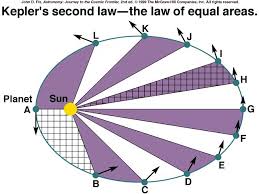
Planet A is moving the fastest at position A. If it didn't speed up, what would happen?
Planet A would be sucked into the Sun, due to the Sun's gravity
Planet A would reach the escape velocity of the Sun's gravity and leave the solar system.
Planet A would stop moving.
Planet A would explode.
What moon phase will you see tonight?
Last Quarter
Full Moon
New Moon
Waxing Crescent
Why does Ganymede orbit around Jupiter instead of the Sun?
Because it's not massive enough to orbit the Sun.
Because it's too close to the Sun.
Because it's closer to Jupiter than the sun.
Because the gravitational force between the Sun and Ganymede is lower.
How much of the moon is always being illuminated?
25%
50%
75%
100%

