
 Worksheets
Sheet Metal Machinery Quiz
Total questions: 48
Worksheet time: 24mins
Which of the following is a type of sheet metal machinery used for cutting?
Tube benders
Guillotine shears
Swaging machinery
Lock formers
What is the primary function of a press brake in sheet metal machinery?
Cutting
Bending
Drilling
Notching
Which machine is used for creating holes in sheet metal?
Band saws
Drills
Section rollers
Tube notchers
What type of machinery is used to form tubes in sheet metal work?
Tube notchers
Tube benders
Lock formers
Ducting machinery
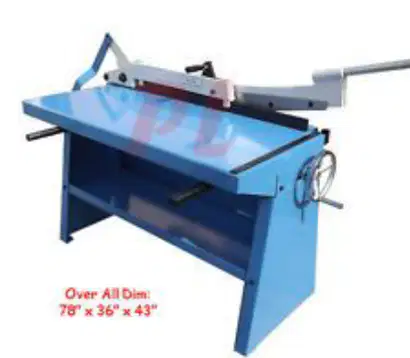
What is another name for a squaring shear?
Lever shear
Guillotine
Bench shear
Circular saw
How is a bench shear typically powered?
Foot powered
Hand powered
Mechanically powered
Electrically powered
What is the primary use of a bench shear?
Cutting delicate shapes
Cutting rough shapes out of sheet metal
Drilling holes in metal
Polishing metal surfaces
What mechanism does a bench shear use to increase mechanical advantage?
Hydraulic mechanism
Compound mechanism
Electric motor
Pneumatic system

What is a press brake primarily used for?
Cutting sheet metal
Bending sheet and plate material
Welding metal parts
Drilling holes in metal
What forms the sides of a press brake?
L-frames
T-frames
C-frames
H-frames
Where is the bottom tool of a press brake mounted?
On the upper beam
On the table
On the side frame
On the movable beam
What is the primary function of a press brake?
To cut metal sheets
To bend metal sheets
To weld metal parts
To polish metal surfaces
Which of the following is a type of punch used in a press brake?
Straight punch
Curved punch
Flat punch
Spiral punch
What angle is commonly associated with a bending gooseneck punch?
45 degrees
60 degrees
90 degrees
120 degrees
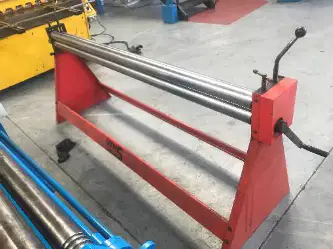
What is the primary function of bending rollers?
To cut metal sheets
To bend metal sheets
To weld metal sheets
To polish metal sheets
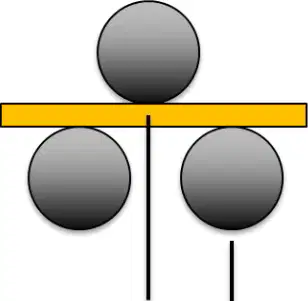
Which type of rollers are used in a configuration where the top roller is adjustable?
Pinch rollers
Pyramid rollers
Flat rollers
Groove rollers
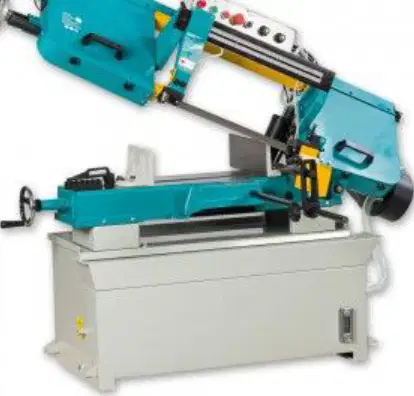
What is a bandsaw primarily used for?
Cooking
Woodworking
Painting
Gardening
What is the main component of a bandsaw?
Continuous band of toothed metal
Circular blade
Laser cutter
Hammer
Which of the following materials can a bandsaw cut?
Only wood
Only metal
A variety of materials
Only plastic
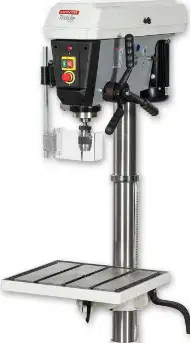
What type of drill is shown on the left side of the image?
Variable Axis Drill
Hand Drill
Pillar Drill
Cordless Drill
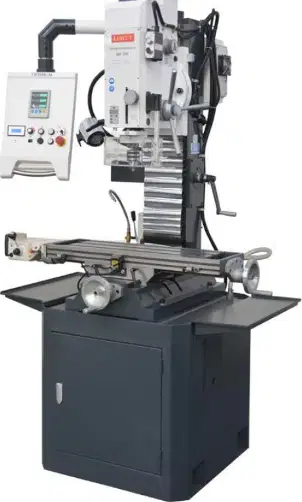
Which drill is capable of moving along multiple axes?
Pillar Drill
Variable Axis Drill
Hand Drill
Bench Drill
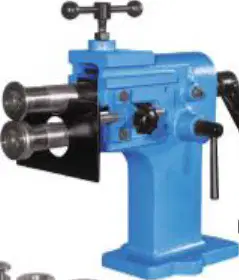
What type of machinery is shown in the image?
Milling Machine
Swaging Machinery
Lathe Machine
Drilling Machine
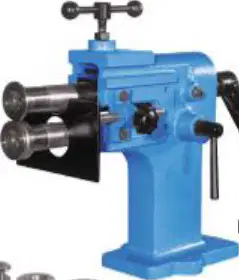
What is the power source for the machinery shown in the image?
Electric
Hydraulic
Manual
Pneumatic

What is a swage block primarily used for in smithing?
Cooking
Shaping metal
Measuring temperature
Storing tools
What materials are swage blocks typically made from?
Wood
Plastic
Cast iron or steel
Aluminum
Which of the following operations is NOT typically performed on a swage block?
Bending
Cutting
Painting
Punching
What shape is mentioned as being used to finish a wheel rim?
Square
Triangle
Curve of a wheel
Hexagon
What is the size of the swage block shown in the image?
10-inch
15-inch
20-inch
25-inch
What is swaging?
A process of cutting materials
A forging process altering dimensions using dies
A method of welding metals
A technique for painting surfaces
Swaging is usually performed as which type of working process?
Hot working process
Cold working process
Chemical process
Electrical process
What happens to the coil around the tube after forming in the first diagram?
It is compressed into grooves of fitting.
It is expanded into a larger shape.
It is removed from the tube.
It is melted down.
In the second diagram, what is the purpose of the die?
To compress the tube into a smaller size.
To expand the tube into the die to form beading.
To cut the tube into pieces.
To heat the tube for molding.
What is the result of the forming process in the third diagram?
The flat sheet is melted.
The flat sheet is formed to contours of the die.
The flat sheet is cut into smaller pieces.
The flat sheet is compressed into a block.
What is the difference between a double hem and a single hem in lock forming?
A double hem has two folds, while a single hem has one fold.
A double hem is thicker than a single hem.
A double hem is used for decorative purposes, while a single hem is not.
A double hem is weaker than a single hem.
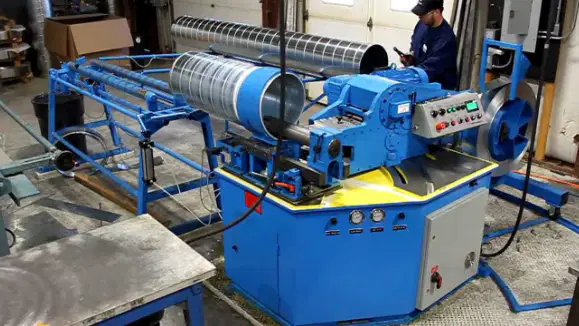
What type of ducting is best fit for the job?
Square ducting
Spiral ducting
Circular ducting
Rectangular ducting
What is Resistance Projection Welding (RPW)?
A type of welding where current flow is concentrated at contact surfaces by a projection.
A method of welding using lasers to join materials.
A process of welding using chemical adhesives.
A technique of welding using ultrasonic waves.
How does Resistance Projection Welding localize the current?
By using a magnetic field to direct the current.
By using projections to concentrate the current at mating surfaces.
By applying high pressure to the welding area.
By cooling the surrounding areas rapidly.
What is a benefit of Resistance Projection Welding?
It is more time-consuming than other welding processes.
It requires more energy than other welding processes.
It is more energy efficient due to localized weld formation.
It produces weaker welds compared to other methods.
What does the rapid thermal cycle in Resistance Projection Welding allow?
It allows for the use of lower quality materials.
It enables precision joining of detailed parts and challenging materials.
It reduces the need for skilled labor.
It eliminates the need for any projections.
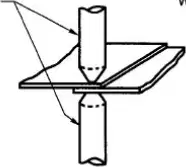
What is the primary purpose of resistance projection welding?
To join metal sheets using heat from electrical resistance
To cut metal sheets into desired shapes
To coat metal surfaces with a protective layer
To engrave designs onto metal surfaces
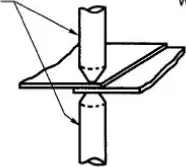
Which of the following is a characteristic of spot welding?
Continuous weld along a seam
Individual welds at specific points
Use of projection welds
Application of a protective coating
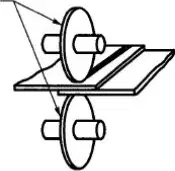
In seam welding, what is used to create the weld?
Welding tips
Welding wheels
Projection welds
Laser beams
What is the primary purpose of resistance projection welding?
To join flat sheets using adhesives
To create welds using projections and force
To cut metal sheets into desired shapes
To coat metal surfaces with protective layers
Which component is essential in resistance projection welding to form weld nuggets?
Flat electrodes
Cutting tools
Adhesive layers
Cooling fans
What is depicted in part (c) of the schematic illustration?
A welded bracket
Projection welding of nuts
Resistance-projection-welded grills
Cutting of metal sheets
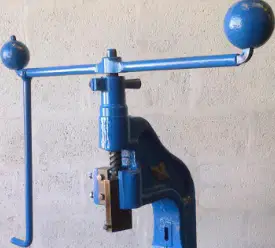
What is a screw press used for in a fly press?
To drive the ram up and down
To rotate the handle
To increase speed
To reduce noise
How does a fly press convert the rotation of the handle into movement?
By using a coarse screw
By using a pulley system
By using hydraulic pressure
By using a belt drive
What is the benefit of the weights in a fly press?
They increase the speed of operation
They maintain momentum and thrust
They reduce the size of the machine
They enhance the appearance

