
 Worksheets
CRID 30 Part 1 + Mandell 192
Total questions: 19
Worksheet time: 16mins
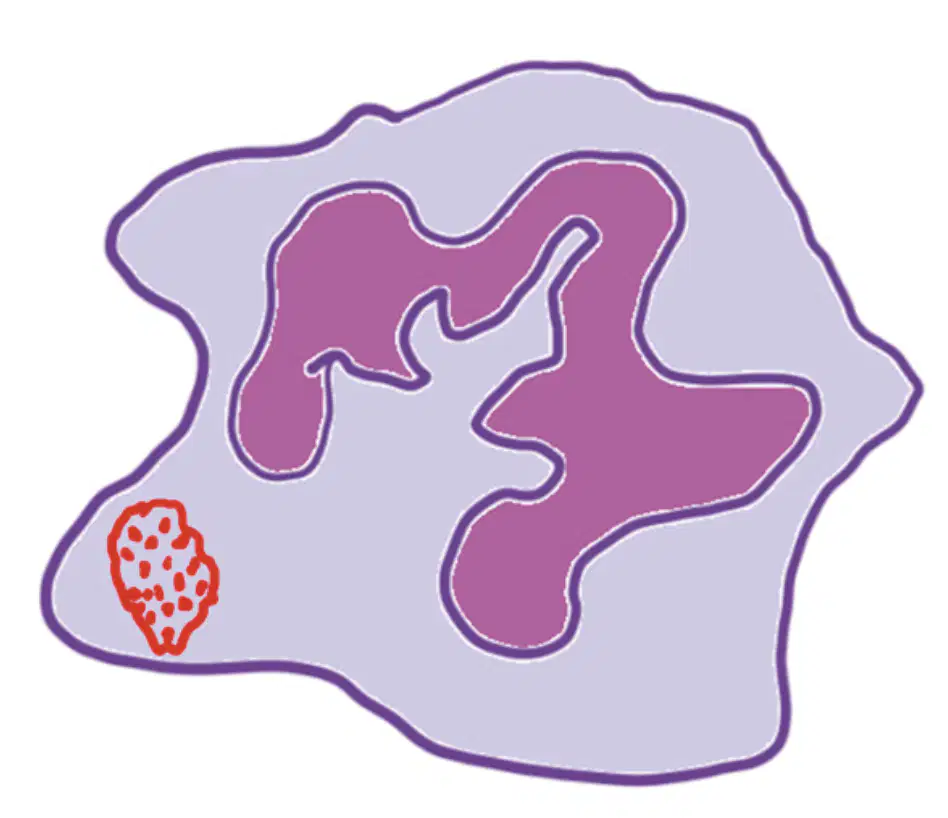
Which of the following is associated with this micro finding?
Babesia
Anaplasma
Ehrlichia
Lyme
CNS disease and rash more common in
Anaplasma
Ehrlichia
What are the diseases that Ixodes carries?
Doxy is NOT the treatment of choice for which of the following rickettsial infections
Anaplasma
Ehrlichia
Babesia
RMSF
32 year old male comes to the ED for evaluation of fever and myalgia. he recently returned from a trip to upstate NYC where he did alot of hiking. he initially attributed his sxs to just being tired from all the hiking, but he does recall several tick bites and decided to get checked. He is not critically ill-appearing. he has a fever of 100.9, HR 110, normotensive. exam notable for mild abdominal tenderness and myalgia; no rash. Labs notable for WBC 2.3, Hgb 10.2, mild AKI and transaminitis, elevated LDH, low hapto. which of the following are you most suspicious for?
RMSF
Ehrlichia
STARI
Babesia
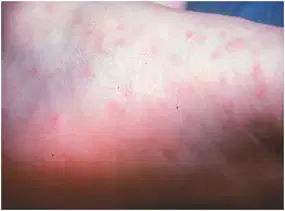
26 year old female presents to the ED for 2 days of fever and lethargy. She recently was visiting family, and did some camping in Minnesota ~7 days ago. She started feeling fatigued with associated fever to 101, chills, headache, myalgias, n/v, and a pinkish rash. she is tachycardic to 120 and hypotensive with plans to admit to the ICU. Patients sister states they all got bit by ticks while camping, but no one else is having any rashes or sxs. she is started on empiric abx (including doxy). since you are concerned about RMSF, what testing do you ask the primary team to order?
no testing needed
serology
PCR
biopsy the rash
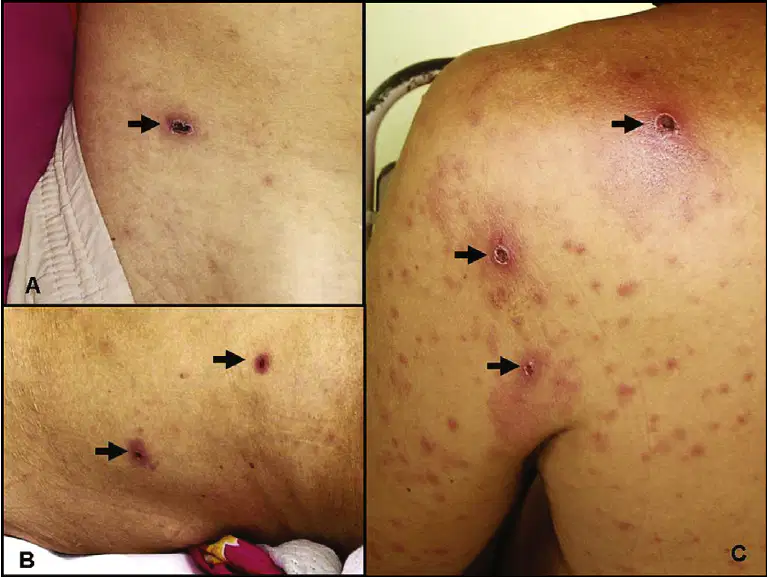
40 year old male presents to the ED for rash, fever, headache, and weakness x2 days. he just got back from a fishing trip in Florida where he states he did find some ticks on his clothing, but is unsure about bites. he has associated nausea, vomiting, and myalgia. he is febrile to 102 in the ED and has the pictured rash. he appears uncomfortable but not toxic. he is being admitted to the regular medicine ward for further eval. given the travel hx, rash, and tick exposure, you recommend starting doxy to treat infection caused by
R. parkeri
R. rickettsii
R. prowazakii
R. akari
a 55 year old man experiencing homelessness presents to the ED for fever, drenching sweats, myalgias/joint pain. he states he has had similar episodes like this in the past few months but seems to always get better. on exam you note some mild abdominal tenderness and hepatosplenomegaly. patient appears disheveled, but not acutely ill. no rash is present, but nursing states they saw body lice and removed a tick from his scalp. he is febrile to 101, HR 108, BP normal. labs notable for WBC 4, Hgb 10, plt 100. what might you expect to see on blood smear (prepped however you wish) for this patient
maltese crosses
morulae
rings
spirochetes
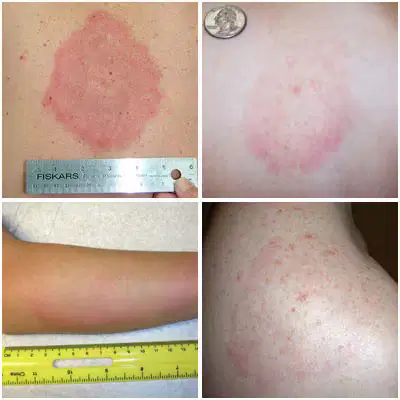
34 year old female presents to the ED for rash. she states she recently returned from a vacation to the Ozarks where she stayed in a cabin. she was outdoors doing various activities like hiking, swimming, boating, etc. she recalls several tick and mosquito bites, but only has the pictured rash around where she had a tick that she removed about a week ago. she thinks the rash has gotten slightly bigger over the last couple days. she otherwise feels well, aside from some minor fatigue and a mild HA. Tx?
doxy
no tx
atovaquone
keflex
22 year old female living in upstate New York presents with her roommate in July with fever x4 days now with confusion. per the roommate, the patient spends a lot of time outdoors but does not recall that she c/o any bug bites recently. She is febrile on exam to 102, mild tachycardia but otherwise HDS. no neck stiffness but is lethargic on exam. no rash noted. CBC and CMP are normal. LP is pursued and shows WBC 130, normal glucose, protein 65 (high). Dx?
Lyme
Anaplasmosis
Powassan Virus
Babesiosis
all of the following can have eschars associated with them EXCEPT
R. africae
R. parkeri
R. akari
R. Rickettsii
30 year old patient presents to the ED in Colorado for LE weakness w/o sensory loss. He recently was camping in the mountains where he did a lot of hiking. recalls several tick and mosquito bites. he is AFVSS. CBC and CMP are normal. aside from the BLE weakness, his exam is pretty normal aside from the fact that you note a tick embedded in the patients scalp which you bravely remove. the primary team is planning an LP but asks what treatment they should start empirically.
no abx, just supportive care
meropenem
vanc and ceftriaxone
ampicillin
you are rounding on a 42 year old patient with PMH of a renal transplant 10 years ago 2/2 diabetic kidney disease. He had presented 3 days ago with fever, myalgia, no rash, transaminitis, leukopenia following a tick bite. he was empirically started on doxy out of concern for tick-borne illness. his tick panel (includes HME, HGA, babesia, and lyme) all came back negative and the patient is not clinically improving as you would have thought (though not critically ill-appearing, either. mentating well). you now are suspecting
Coltivirus
Heartland virus
Bourbon virus
Powassan virus
Match the following
RMSF
R. rickettsii
Scrub typhus
O. tsutsugamushi
Tick borne relapsing fever
R. parkeri
Rickettsial pox
R. akari
African tick bite fever
R. africae
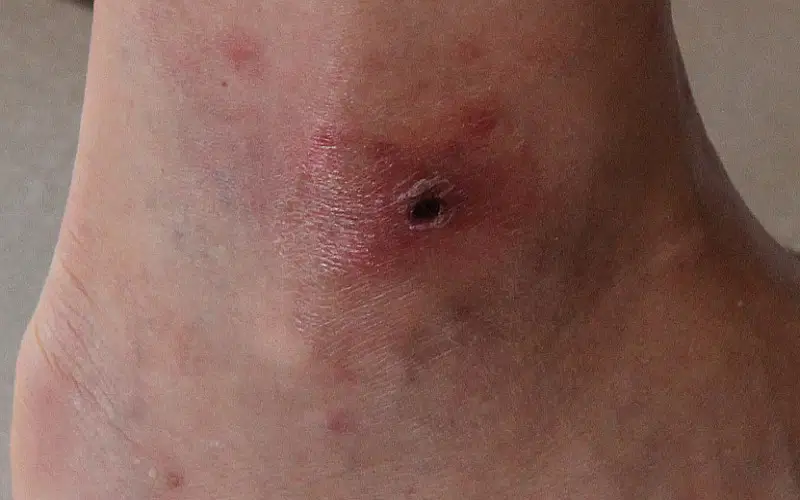
You are on a medical trip to Kenya. A patient presents to clinic about a week after going on a safari trip. patient c/o fever, HA, fatigue. got all appropriate travel vaccines and took malaria ppx. patient is non-toxic appearing and exam is unremarkable except for pictured rash and inguinal LAD. what is the likely bacterial cause
R. coronii
R. rickettsii
R. africae
Anaplasma
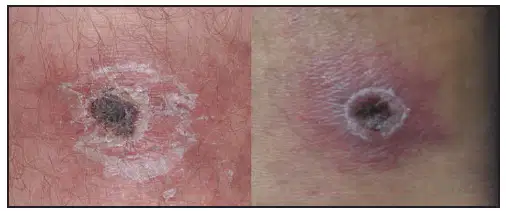
It's November and you are consulted on a 19 year old patient who presented to the ED with a CC of rash. The patient lives in a house with 4 other college roommates who have a similar rash. its almost thanksgiving break and the patient wants to make sure he's okay to go home and that he wont give the rash to his family. he denies any recent travel, outdoor activities other than walking to class, or new soaps/detergents. he lives with no pets. he overall appears well and has no other sxs. what is at the top of your differential?
R parkeri
spider bite
R parkeri
R akari
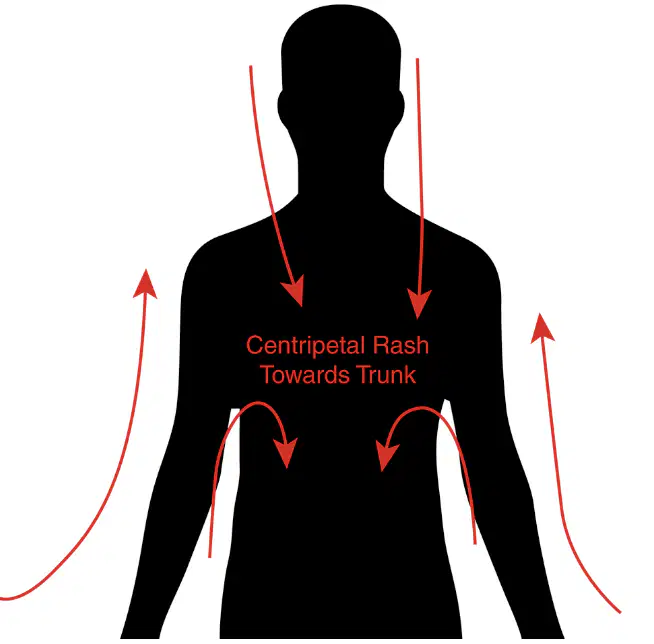
"centripetal rash" is a key clinical finding for which rickettsial diseases?
you are more likely to see morulae in
HME
HGA
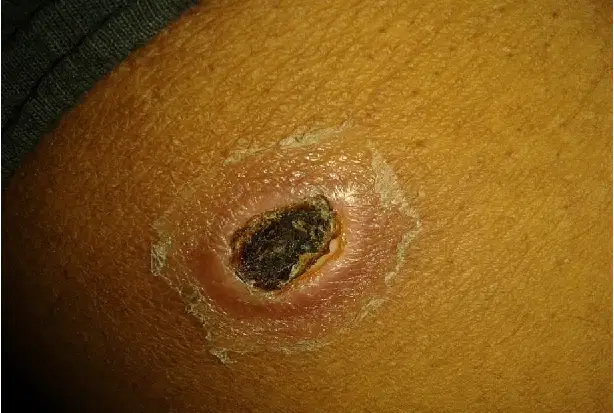
You are vacationing with your friends in Vietnam and one of your friends complains of the pictured rash. over the last several days, they have also been complaining of headache, fever, chills, body aches and even stayed home all day yesterday instead of exploring the city. you recommend a trip to the ED. you notice your friends labs are significant for thrombocytopenia, moderate elevation of LFT's, and a mild AKI. The physician gives you a Rx for doxy, but no translator was available to translate the diagnosis. what was the likely cause of your friends illness?
scrub typhus
malaria
yellow fever
murine typhus

