
 Worksheets
C7 Acids, Bases & Salts_2
Total questions: 40
Worksheet time: 39mins
Silver chloride is an insoluble salt. What would you use to make an insoluble salt?
two different soluble salts
one soluble and one insoluble salt
two different insoluble salts
one acid and one base
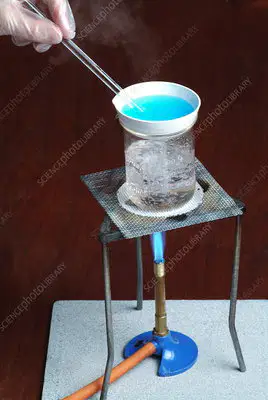
Evaporation (heating) of salt solution allows
decomposed salt formed
dry crystals of salt formed
concentrated salt solution formed
diluted salt solution formed
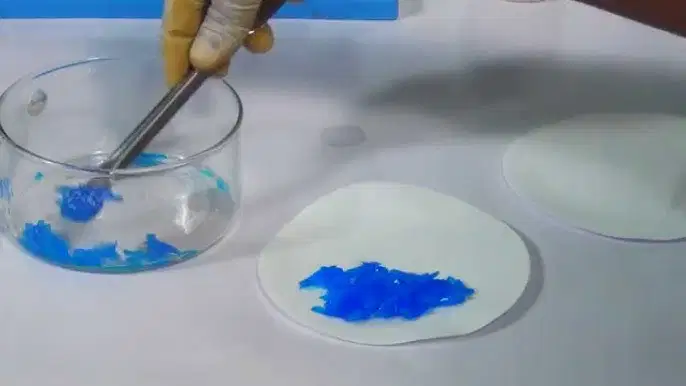
Cooling of concentrated salt solution allows crystals of salt formed because
solubility of salt decreases with temperature
solubility of salt increases with temperature
solubility of salt decreases when temperature increases
solubility of salt increases when temperature decreases
limewater turns cloudy when
carbon dioxide is present
hydrogen is present
water is present
salt is present
copper chloride can be produced when hydrochloic acid reacts with the following, EXCEPT
copper
copper oxide
copper carbonate
copper hydroxide
The word equation for an acid reacting with a metal is
acid + metal → salt + carbon dioxide + water
acid + base → salt + water
acid + metal → salt + hydrogen
acid + metal → salt + water
Acid rain is caused by
pollutants in the air such as SO2 and NO2 reacting with oxygen
acids in the rain reacting with rocks containing carbonates
pollutants in the air such as SO2 and NO2 reacting with water
global warming, heating the earth's atmosphere
When nitric acid is added to magnesium metal a reaction occurs and a gas is produced. The products of this reaction are:
magnesium nitrate and hydrogen gas.
magnesium carbonate and carbon dioxide.
magnesium chloride and hydrogen gas.
magnesium sulphate and carbon dioxide.
An alkali is produced when
A salt dissolves in water
A base dissolves in water
An acid dissolves in water
An acid reacts with a base
Which of the following is the word equation for the reaction between acids and carbonates?
metal + acid → salt + hydrogen
carbonate + acid → salt + water
carbonate + acid → salt+ carbon dioxide + hydrogen
base + acid → salt + water
Which pH has the most hydrogen ions (H+)?
2
7
10
13
As the number of hydrogen ions (H+) decreases, the pH ___________.
increases
decreases
stays the same
What would happen to the blue and red litmus papers when they are dipped into a sample of acid rain?
Blue litmus paper remains blue and red litmus paper remains red.
Blue litmus paper turns red and red litmus paper turns blue.
Blue litmus paper remains blue and red litmus paper turns blue.
Blue litmus paper turns red and red litmus paper remains red.
Which of these compounds is NOT an acid?
HCl
H2SO4
CH3COOH
H2O
Acids are neutralised by...
Bases
Metals
Water
Hydrogen gas
Bases release...
H+
OH-
H2
Acids release...
H+
OH-
H2
Vinegar CH3COOH is ...
An acid
A base
A salt
H+ + OH- --> H2O Is a chemical equation showing...
A neutralisation reaction
An acid-metal reaction
An acid-carbonate reaction
Identify the salt in the following equation:
Zn(OH)2 + 2HNO3 ---> 2H2O + Zn(NO3)2
Universal indicator
turns red in a strong acid
turns orange/yellow in a weak acid
turns green in water
turns blue in a weak alkali
turns purple/violet in a strong alkali
When potassium hydroxide, KOH ionises in water, what are the ions produced?
K⁺ & OH⁻
K²⁺ & OH²⁻
K⁺ & OH²⁻
When sodium hydroxide, NaOH ionises in water forms Na⁺ & OH⁻, it shows
acidic properties
alkaline properties
neutral properties
When nitric acid HNO₃ dissolve in water forming H⁺ & NO₃⁻, it shows
acidic properties
alkaline properties
neutral properties
glacial ethanoic acid does not turn dry blue litmus paper to red. which of the following statements best explains this phenomenon?
the dry litmus paper is too thick
ethanoic acid is insoluble in water
there are no free moving hydroxide ions formed
there are no free moving hydrogen ions formed
when a non-metal oxide dissolves in water, the solution formed is a/an
acid
base
alkali
neutral solution
aluminium oxide has both acidic and basic properties, therefore it is
a base oxide
an acid oxide
a metalloid oxide
an amphoteric oxide
Which organ produces a base for digestion?
stomach
small intestine
spleen
pancreas
Which organ produces an acid to help with digestion?
pancreas
stomach
small intestine
liver
Which is true?
pH of less than 7 is basic; pH of more than 7 is acidic
pH of less than 7 is acidic; pH of more than 7 is basic
Classify the following into soluble and insoluble salts
AgCl
Soluble
Insoluble
Classify the following into soluble and insoluble salts
NaCl
Soluble
Insoluble
Precipitation involves mixing ___________ to form an insoluble solid that separates out from the reaction mixture.
acid and alkali
acid and metal
two acids
two solutions
Bryan wants to prepare silver chloride in the science laboratory. Which of the following reactants should he use?
silver + hydrochloric acid
silver hydroxide + hydrochloric acid
silver nitrate + potassium chloride
silver + chlorine gas
which of the following STATE SYMBOLS should be used for water?
s
l
g
aq
which of the following STATE SYMBOLS should be used for copper sulphate solution?
s
l
g
aq

