wayground logo

Free Printable Worksheets

NEW

Font size

S
M
L
XL
Worksheets

UNIT 3-4 Test: Chemistry

Total questions: 38

Worksheet time: 24mins

Name
Class
Date
1.

Atoms of an element that have different atomic masses are most likely

a)

ions

b)

isotopes

c)

isomers

d)

neutrons

2.

which of the following determines the identity of an element?

a)

atomic mass

b)

atomic number

c)

chemical symbol

d)

chemical name

3.
What is the atomic number of this nucleus?
a)
1
b)
3
c)
4
d)
7
4.
The first energy level can hold up to how many electrons?
a)
8
b)
4
c)
2
d)
5
5.
In what section would Transition Metals be found?
a)
purple
b)
light blue
c)
yellow
d)
red
6.
The vertical columns in the Periodic Table are called 
a)
groups
b)
towers
c)
periods
d)
atomic numbers
7.
The Modern Periodic Table of Elements is arranged by
a)
atomic mass
b)
atomic number
c)
valence electrons
d)
number of isotopes
8.
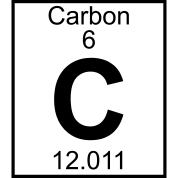
What does the 6 represent?
a)
atomic mass
b)
atomic number
c)
element name
d)
chemical symbol 
9.

When elements combine to form compounds, are their chemical/physical properties like the individual elements?

a)

Yes

b)

No

c)

Always

10.

When is an atom chemically stable?

a)

When it has 2 electrons

b)

When its outer energy level is full

c)

When its inner energy level is full

11.

An atom that has lost or gained an electron is called a(n)

a)

Proton

b)

Ion

c)

Molecule

d)

Chemical Formula

12.

What is an ionic bond?

a)

the force of attraction between the opposite charges of the ions in an ionic compound

b)

The attraction that forms between atoms when they share electrons

13.

What is a covalent bond?

a)

the force of attraction between the opposite charges of the ions in an ionic compound

b)

The attraction that forms between atoms when they share electrons

14.

How many valence electrons are in group 18?

a)

18

b)

8

c)

7

d)

6

15.
Why don't noble gases normally form chemical bonds?
a)
They have only 2 valence electrons
b)
Their outer level electrons are empty
c)
They have 8 neutrons
d)
They have a full valence electron shell
16.
What type of bond is formed when electrons are transferred (stolen, or given) from one atom to another?
a)
Ionic Bond
b)
Covalent Bond
c)
Metallic Bond
d)
Acidic Bond
17.
What is a repeating three-dimensional pattern that forms when ions bond called?
a)
Crystal Lattice
b)
Crystal Lettuce 
c)
Crystal Configuration
d)
Quartz
18.
What type of organic molecule is a fat?
a)
carbohydrate
b)
lipid
c)
starch
d)
protein
19.
What monomers make up proteins?
a)
starches
b)
enzymes
c)
nucleic acids
d)
amino acids
20.
Which of the following types of molecules is found in genetic material?
a)
carbohydrates
b)
lipids
c)
cellulose
d)
nucleic acids
21.
Which of the following is NOT an organic compound?
a)
C6H12O6
b)
H2O
c)
CH4
d)
C2H4O2
22.
What provides energy for your cells?
a)
carbohydrates
b)
DNA
c)
proteins
d)
amino acids
23.
A pH of 5 is
a)
neutral
b)
an acid
c)
a base
24.
What has more OH- than H+?
a)
base
b)
acid
c)
neutral 
d)
enzymes
25.
Which is a stronger acid?
pH = 5 or pH =2
a)
pH = 2
b)
pH = 5
c)
They are both bases.
26.
Which is a weaker base?
pH = 9 or pH =12
a)
pH = 9
b)
pH =  12
c)
They are both acids.
27.
The 3 particles that make up an atom are
a)
positives, negatives, electrons
b)
protons, neutrons, electrons
c)
neutrons, isotopes, electrons
d)
protons, neutrons, isotopes
28.
What is the name of MgCl2
a)
magnesium chloride 
b)
magnesium (II) chloride 
c)
magnesium dichloride 
d)
magnesium (III) chloride 
29.
What is the correct term for "bond that forms when electrons are shared"?
a)
ionic bond
b)
metallic bond
c)
covalent bond
30.
Atoms want _____ electrons in their valence (outermost) shell. 
a)
1
b)
2
c)
6
d)
8
31.
If a neutral atom gains electrons, the charge becomes
a)
negative
b)
positive
32.
Which of the following formulas represents carbon monoxide?
a)
CO
b)
CO2
c)
NO
d)
SO2
33.
How many atoms are in the following compound : Al3SO4
a)
3
b)
6
c)
8
d)
11
34.
Name this compound : N2O
a)
dinitrogen oxide
b)
nitrogen oxide
c)
nitrogen dioxide
d)
dinitrogen monoxide
35.
Name this compound: N2O4
a)
dinickel tetraoxide
b)
nitrogen oxide
c)
dinitrogen tetroxide
36.

Balance the following:

____ Al + ____ O2 → ____ Al2O3

a)
2,3,4
b)
4,3,2
c)
1,1,2
d)
2,1,1
37.

Balancing the following:

____ Al + ____ HCl → ____ AlCl3 + ____ H2

a)
1,3,1,2
b)
2,3,2,3
c)
2,6,2,3
d)
3,2,6,2
38.

Balance the following:

____ H2SO4 + ____ NaNO2 → ____ HNO2 + ____ Na2SO4

a)
1,1,2,1
b)
1,2,2,1
c)
2,3,3,2
d)
4,3,2,1