
 Worksheets
1st QA CESC
Total questions: 62
Worksheet time: 39mins
The word community was derived from the Latin word communis, which means “common” or “shared”.
Community Action
Community
Community Dynamics
Empowerment
IT is activity that aims to increase the understanding, engagement and empowerment of communities for the intention of giving services to people.
Community Action
Community
Empowerment
Non-geographical Community
The changes in the community brought about by social, cultural and environmental experiences whether it is positive or negative development that impacts within the community.
Community Dynamics
Empowerment
Geographical Community
Micro-level community
It is a community where members share the same geographical vicinity such as a village, province or neighborhood.
Non-geographical Community
Geographical Community
Micro-level community
Social Capital
It gives us the idea on how to perceive reality by becoming involve in the day to day process which is_______
own community
socialization
dynamics
social sciences
What term is used to describe the changes in the community brought about by social, cultural, and environmental experiences, whether it is positive or negative development that impacts within the community?
Community Transformation
Empowerment
Geographical Community
Micro-level community
The following are dimensions of Institutional Perspectives except.
Community is composed of the ways people act,
interact with each other, react, and expect each other
to act and interact.
The community uses self-organization and encourages the local citizens to contribute to the community by
taking responsibilities and actions.
This is defined by networks and institutions where
community group are formed in certain areas such as
schools, churches or companies.
It is an existing establishment or physical space
where members of the community go for a certain
purpose.
Which of the following refers to partnership between two parties, such as academic institutions and local communities for mutual benefits in a reciprocal relations?
Citizenship
Community Action
Solidarity
Community Engagement
The livelihood of people living in this area is mostly livestock and farming.
Rural
Urban
Informal sector
What are the four definitions of community using various perspective?
Social Science, Institutional, Civil and Local Perspective
Social Science, Incorporation, Civil and Local Perspective
Social Science, Institutional, Grassroot and Local Perspective
Social Science, Institutional, Grassroots and Civil Perspective
It is a perspective which states that a community is an informally organized social entity, characterized by a sense of identity
Social Science Perspective
Institutional Perspective
Civil Society Perspective
Local/Grassroots Perspective
"A group of people whose connections and relations are formed by their shared histories, experiences, geographies and identities. Example: family, religion and barangay." is a perspective of Local/Grassroots.
TRUE
FALSE
MANY IRRELEVANT INFORMATION ARE ADDED
NOT ENOUGH INFORMATION
Communities have a mechanism for coordinating values, goals and actions of its individual members, is a perspective under?
Social Science Perspective
Institutional Perspective
Civil Society Perspective
Local/Grassroots Perspective
Laws and policies that are implemented by government agency or office. is a perspective under?
Social Science Perspective
Institutional Perspective
Civil Society Perspective
Local/Grassroots Perspective
Under this perspective, They fulfill important duties of checks and balances in democracies, they are able to influence the government and hold it accountable. What social perspective is pertaining to?
Social Science Perspective
Institutional Perspective
Civil Society Perspective
Local/Grassroots Perspective
An organic perspective of community refers to ___________ groups within a locale that are driven and organized because of community issues and concerns, address particular issues, such as crime prevention, environmental protection, or waste management.
Social Science Perspective
Institutional Perspective
Civil Society Perspective
Local/Grassroots Perspective
Bantay- Bata Foundation, Gawad Kalinga, Habitat for Humanity and Philippine Animal Welfare Society (PAWS) are examples under what perspective?
Social Science Perspective
Institutional Perspective
Civil Society Perspective
Local/Grassroots Perspective
In institutional perspective they have established __________that ensure the regular and predictable behavior of actors within a community.
rules
regulations
guidelines
perspective
Community has many factors like norms, religion, ___________, or identity.
rules
values
beliefs
inclusivity
This field is the study of society social order, social interactions, and culture.
Economics
Political Science
Psychology
Sociology
This is the capacity of the community to exercise control over activities and seek ways to employ available resources to establish a stronger and successful community.
Community power
Leadership
Relationship
Social Change
This community is a system characterized by integration and interaction between individuals and groups away from each other in time or space or both.
Formal
Global
Informal
Local
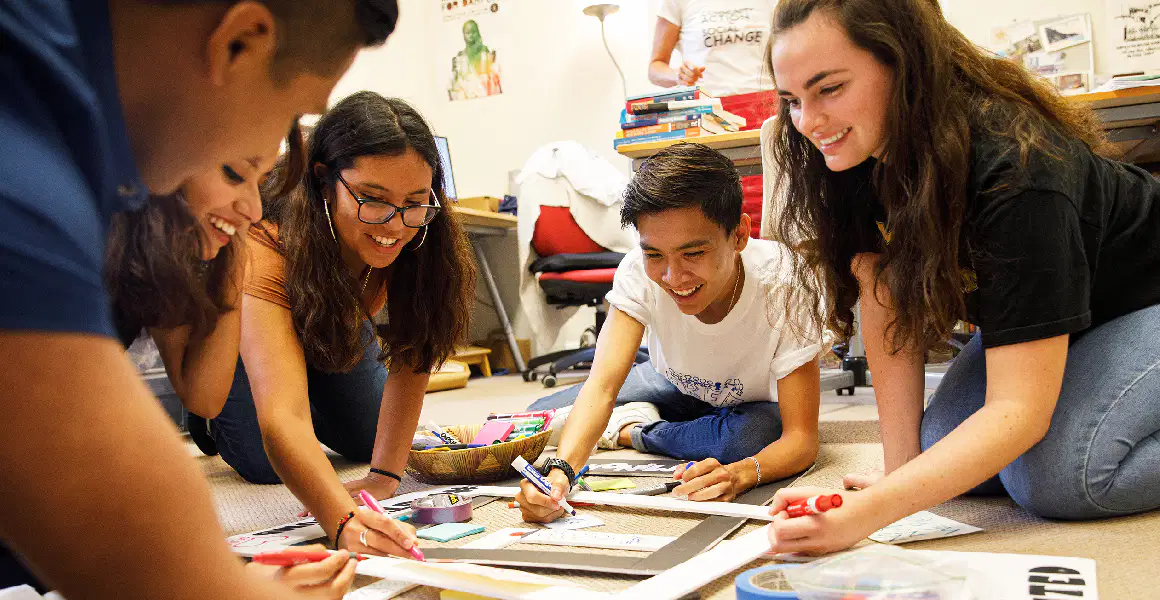
is any activity that aims to increase the understanding, engagement and empowerment of communities for the intention of giving services to people.
Election
Community Action
Rally
Engagement
Once issues are assessed properly and people in the community understand the needs, they work collaboratively to act on it
Understand
Engagement
Sharing of information
Action

To enable the people to independently decide, plan-out and take action to control the situation they have in the community.
Empowerment
Action
Migration
People POWER

This discipline studies the human mind, brain, and social behavior
Social Science
Economic
Zoology
Psychology

This perspective highlights volunteerism. Members of communities may involve themselves in various programs or activities.
Ecology
Local and Grassroots Perspectives
Accounting
Sociology

Stresses the idea of forming a group, foundation or an organization in service to society
Local and Grassroots Perspectives
Civil Society Perspective
Psychology
Economics

Habitat for Humanity Foundation is an example of?
Business Organization
Bank Institutions
State Institutions
Non-Government Organization
Which of the following shows an interrelationship of self and the community?
An individual who does not have regard for community activities.
A pessimistic attitude because people are always too busy to get involved in the community.
An individual who understands the situation of the community and has the urgency to participate.
People rely on the government and private institutions’ effort to help resolve community problems.
Which of the following situations best describes how to involve people affected by the problem in the community?
Pushing to implement a project even without the consent of the majority.
Conducting meetings and events that occupy the community members work hours.
Listen to them carefully so that you have a better understanding of the causes of the problem.
Disregard their opinion about the crisis encountered by the community since you have the expertise to resolve their community problem.
Why is there a need to involve ourselves with community action?
To build our credibility in organizing community actions.
The community requires us to participate and there is no room for us to disobey.
So that people would praise us with our program initiatives and accomplishments.
We are part of a community which is directly experiencing the problem and we have civic obligation to be involved.
Which of the following does NOT show possible roles of self-involvement in the community?
Taking the lead in community partnership.
Attending a barangay hearing on solid waste management.
Conducting feasibility study on the possible program intervention in impoverished communities.
Being reactive to the initiative of outreach programs conducted by the different school's organization.
Hey there! Can you tell me which type of communities are those residential or mix-used areas located at the city outskirts or within the commuting distance of a city?
global communities
rural communities
suburban communities
urban communities
Which group is known for individuals participating solely out of self-interest?
civil society
institutions
Gemeinschaft
Gesellschaft
What is the primary goal of community outreach?
To benefit the service providers at the expense of the community.
To improve the quality of life and address community needs.
To create a one-sided dependency of the community on external help.
To promote individual gain and disregard common good.
What is the relationship between citizenship and community engagement?
Citizenship allows you to ignore community issues.
Active citizenship involves participation in community engagement.
Community engagement is only for a select group of citizens.
Citizenship solely focuses on individual rights and obligations to the state.
Which of the following is NOT a principle of community organization?
Fairness
Justice
Efficiency
Selfishness
What is the key difference between transactional and transitional modalities in community engagement?
Both involve active participation from the community.
Transactional has less community involvement than transitional.
Transitional focuses solely on service provision, while transactional promotes dialogue.
There is no significant difference between the two modalities.
In which type of community engagement are community members actively involved in decision-making and implementation?
Transactional modality
Transformational modality
Both transactional and transitional modalities
None of the above
What is the main purpose of community engagement?
To provide services to the community without their input.
To develop partnerships and work together to address community issues.
To dictate solutions to problems faced by the community.
To gain control over the resources of the community.
What principle ensures that everyone has the opportunity to be involved in decisions that affect them and the community?
Participation
Solidarity
Citizenship
Self-determination
Which type of community engagement is a one-way interaction with the community?
Transitional modality
Transformational modality
Transactional modality
All of the above
Consider a scenario where students, faculty, and school employees voluntarily address the social, economic, and political needs of a community. What term best describes this action?
Transactional Modality
Citizenship
Community Outreach
Marginalization
How are the concepts of community engagement and solidarity interrelated?
They are completely unrelated concepts with different purposes.
Community engagement focuses on individual benefits, while solidarity promotes collective well-being.
Both emphasize collaboration, shared goals, and working together for the common good.
Community engagement seeks to exploit community resources, while solidarity aims to empower others.
Involving oneself in the feeding program at the barangay level is an
example of community engagement.
TRUE
FALSE
Community sector which includes places of worship and organizations as
part of the beliefs of the people in the community.
Private social spaces
Agriculture
Urban Community
Religion
- this encompasses the various aspects in the community which includes demographics, geography and environmental influences, beliefs and attitudes and the likes.
Community Power
Community Structure
Collaboration
Formal Power Structures
Which aspect of community provides a feeling of belongingness among the members?
Geography
Local Economy
Demographics
Beliefs and Attitudes
Which refers to the basic expression of human relationships where people see the need to participate in their societies and to feel that they matter to others?
Citizenship
Solidarity
Community Engagement
Volunteerism
Malls, convenient stores, and public schools belong to the _______.
Private social space
Public social space
Rural area
Urban area
Which of the following shows an interrelationship of self and the community?
An individual who does not have regard for community activities.
A pessimistic attitude because people are always too busy to get involved
in the community.
People rely in the government and private institutions’ effort to help
resolve community problem.
An individual who understands the situation of the community and has the
urgency to participate.
How would you describe industrialized and commercial centers where population density is relatively high?
A group sharing the same environment and conditions
Religion
Agriculture
Urban Community
What is the term used to classify the types of community?
Typology
Organization
Urban community
Rural Community
_______ is often translated as a community which refers to groupings based on a feeling of togetherness.
Gemeinschaft
Gesellschaft
Gemienschaft
Geselschaft
In a __________ community, the types of interpersonal relationships are more formal, specialized, and impersonal.
Gemeinschaft
Gesellschaft
Gemienschaft
Geselschaft
In a __________ community, the types of interpersonal relationships are more formal, specialized, and impersonal.
Gemeinschaft
Gesellschaft
Gemienschaft
Geselschaft
It is the human development measure of the national government that provides conditional cash grants to the poorest of the poor to improve the health, nutrition and education of children aged 0 – 18.
Causes of poverty
Other issues of the poor and marginalized
Pantawid ng Pamilyang Pilipino Program (4Ps)
Tulong Panghanapbuhay sa ating Disadvantaged/ Displaced (TUPAD)
Balik Probinsya, Bagong Pag-Asa Program
Which of the following is NOT a form of community engagement?
Volunteering at a local shelter
Attending a town hall meeting
Ignoring neighborhood concerns
Participating in a community garden project
Which of the following is an example of community engagement?
Watching TV at home
Attending a neighborhood cleanup event
Avoiding interaction with neighbors
Only using social media to connect with friends
Situation: There's been a recent increase in littering and vandalism in your community park. What action do you take?
Report the issues to local authorities and suggest increased surveillance.
Ignore the situation and avoid the park altogether.
Organize a community cleanup event to address the litter problem.
Join the vandals to express frustration with the state of the park.
Situation: Your local food bank is in need of donations to support families experiencing food insecurity. What action do you take?
Ignore the issue, assuming others will provide support.
Organize a food drive in your community to collect donations.
Criticize the food bank for its reliance on donations without addressing root causes.
Spread rumors about the families receiving assistance to discourage donations.

