
 Worksheets
IGCSE Physics Light and Lenses
Total questions: 144
Worksheet time: 2hrs 21mins



Is a convex lens thicker or thinner in the middle?
Thicker
Thinner
A diverging lens is also known as a ____lens.
refracted
diffracted
convex
concave
What does the word "diverging" mean?
to spread apart
to come together
parallel
perpendicular
A converging lens is also known as a ____ lens.
convex
concave
double
refracted
What does the word "converging" mean?
to separate
to come together
parallel
perpendicular
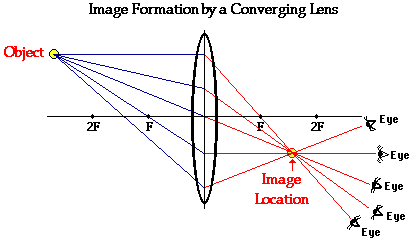
This image is.....
inverted and smaller
inverted and larger
not inverted and smaller
not inverted and larger
When an object is placed between the focal point and the convex lens, the image produced is ___.
real, reduced, and inverted
real, enlarged, and inverted
virtual, enlarged, and upright
virtual, reduced, and upright
Which of the following are uses for convex lenses? (Choose all that are correct)
Camera lens
Telescope lens
Microscope lens
Magnify glass
Choose all correct statements for a virtual image
Cannot be projected on to a screen
Can be projected on to a screen
Light rays do not pass through image
Light rays do pass through image
When doing a ray diagram, you can represent an image as:
An arrow labelled image
An arrow
An arrow labelled object
An eye
If asked to draw an eye on a ray diagram, it is always:
the opposite side to the object
the opposite side to the image
Always right of the lens
Always left of the lens
What is the distance between the the center of the lens and the focal points called?
principal axis
focal length
focal distance
lens radial line

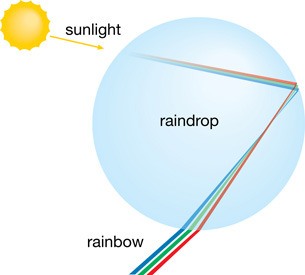
When will total internal reflection occur?
When light travels from a less dense to a more dense medium
When the angle of incidence is smaller than the critical angle
When the angle of incidence is greater than the critical angle
When the light cannot pass through a medium

The above image is an example of a ____________. They happen because cool and hot air have a different ___________________________.
Mirage; angle of incidence
Optical fibre; refractive index
Lateral inversion; angle of reflection
Mirage; refractive index

The focal length of this lens is _______.
negative because it can form real images
positive because it can form real images
negative because it can form virtual images
could be positive or negative depending on the image formed

A person standing in front of a lens creates an image that is both smaller than the original and closer to the lens. Classify the image formed in this scenario.
real, inverted
real, upright
virtual, inverted
virtual, upright

Classify the image formed in this scenario.
real, inverted, larger than original
real, inverted, smaller than original
virtual, upright, larger than original
virtual, upright, smaller than original
the bending of light
refraction
reflection
absorption
transparent

What type of lens do you have in your eye?
Concave
Prismatic
Objective
Convex
Which image CORRECTLY shows how light behaves when it travels from air through glass?


What do a prism, a magnifying glass, a microscope, and eyeglasses ALL have in common.
They are opaque
They refract light
They reflect light
That are translucent
When will total internal reflection occur?
When light travels from a less dense to a more dense medium
When the angle of incidence is smaller than the critical angle
When the angle of incidence is greater than the critical angle
When the light cannot pass through a medium
Zed stands 1.5-m tall in front of a plane mirror. What is the height of his image?
4.5 m
3.0 m
2.0 m
1.5 m
A light ray, travelling parallel to a concave mirror's axis, strikes the mirror's surface. The reflected ray _________.
passes through the mirror's focal point
again travels parallel to the mirror's axis
travels at right angles to the mirror's axis
passes through the mirror's center of curvature
What kind of image is formed by concave lenses?
always real
always virtual
could be real or virtual; depend on the distance of the object from the focal point
could be real or virtual, but always real when the object is placed at the focal point

-
A
B
C
D
-
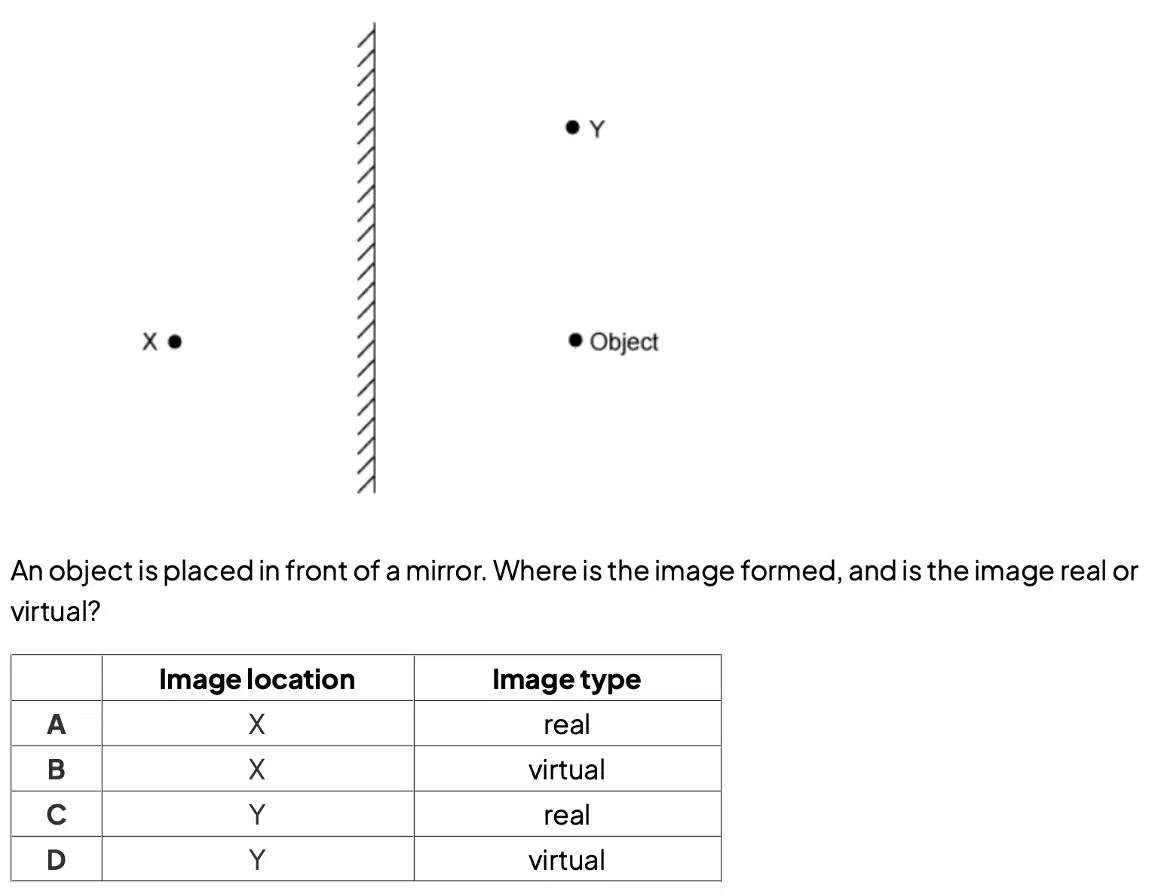
A
B
C
D

-
A
B
C
D
-
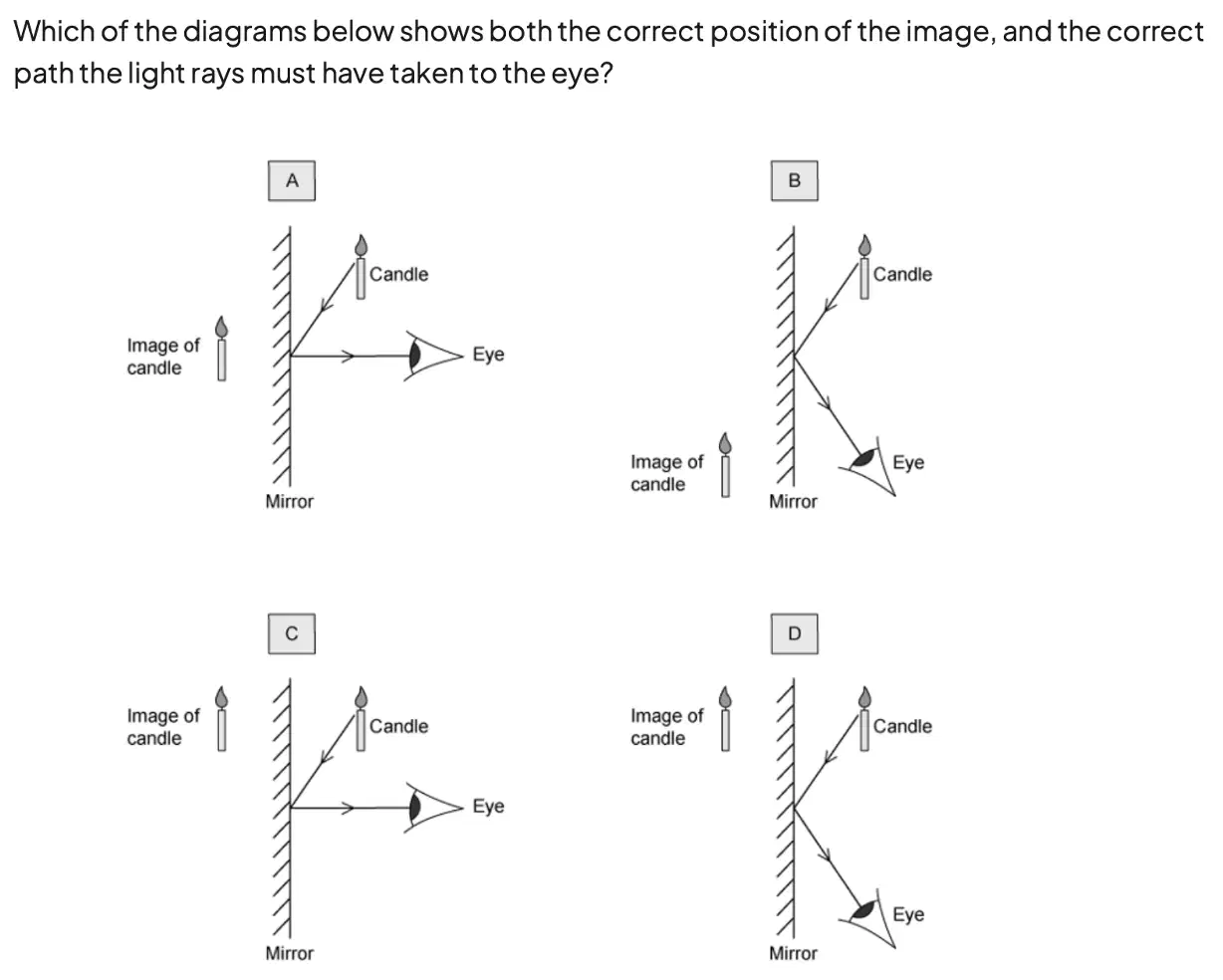
A
B
C
D

-
A
B
C
D

-
A
B
C
D
-
A
B
C
D

-
A
B
C
D

-
A
B
C
D

-
A
B
C
D
Complete the sentence: The angle of incidence is
equal to the angle of reflection.
greater than the angle of reflection.
less than the angle of reflection.
not comparable to the angle of reflection.
What happens when a ray of light goes from a less dense medium into a more dense medium?
It bends towards the normal.
It bends away from the normal.
It passes straight through the medium with no change.
It reflects back at the boundary.
Which of the following best describes the term refractive index?
the number that represents the amount a substance bends light
the number that represents the amount a light ray is reflected
the angle through which light bends
none of the above
Which of the following statements is a reason for using prisms over plane mirrors in a periscope?
The picture will be in colour.
The light is refracted rather than refracted.
The image will be brighter and clearer.
the image will be the same.
Which of the following objects uses mirrors and the law of reflection in order to work?
a periscope
an endoscope
a kaleidoscope
all of the above
Total internal reflection occurs under which conditions?
when the angle of incidence is greater than the critical angle
when the angle of incidence is smaller than the critical angle
when the angle of reflection is greater than the critical angle
when the angle of reflection is smaller than the critical angle
Complete the sentence: Refraction causes light to
bounce off surfaces.
pass through substances with no effect.
change speed.
bend around corners.
Which of the following is a property of waves?
reflection
refraction
diffraction
all of the above
What is the critical angle for glass when the refractive index is 1.45?
52⁰
42⁰
44⁰
34⁰
A ray of light in air enters a glass block. The angle of incidence in air is 30°. The angle of refraction is 20°. What is the refractive index of the glass?
1.00
0.68
1.46
0.17
The refractive index of glass is 1.33. If the angle of incidence is 45°. What is the angle of refraction?
45°
32°
53°
50°
Which of the following is the reason why we see objects?
They reflect light.
They refract light.
They all emit their own light.
They are fluorescing.


To two decimal places, what is the refractive index of the plastic?
What is the angle of refraction at the critical angle?
Less than 43
Equal to 43
More than 43 but less than 90
Equal to 90 degrees

Given that the angle of incidence = 30 degrees
a. Draw a ray diagram, labelling clearly the normal, incident ray, angle of incidence, reflected ray and angle of reflection accurately.
Which is the correct diagam?

If a capital letter R is seen in an ordinary mirror, what does it look like?
A
B
C
D
When light passes from air to water, what happens to the speed of the light?
speeds up
slows down
stays the same


longer wavelength: blue
longer wavelength: red
longer wavelength: blue
longer wavelength: red
MCQ 011
According to the law of reflection, if i = angle of incidence and r = angle of reflection,
i = r
i > r
r > i
i is not equal to r

Optical fibre based on the principle of
total internal reflection.
total internal refraction.
diffraction.
interference.
A ray of light travels from air into glass at an incident angle of 30o. Find the angle of refraction. (The refractive index of glass is 1.5)
19.7o
19o
19.5o
19.3o
A ray of light enters air from glass. The angle of incidence is 35o and the angle of refraction is 69o. Find the refractive index of the glass.
1.62
1.63
1.64
1.65
What electromagnetic wave . has . the shortest wavelengths and the highest frequencies?
Gamma Rays
Ultraviolet Rays
Radio Waves
X Rays
What happens to wavelength as the frequency of a wave increases?
increase
stays the same
decreases
becomes faster
The human eye is only capable of seeing which electromagnetic wave?
Infrared Light
Ultraviolet Light
Visible Light
All of the above

What electromagnetic wave do humans emit as heat energy?
infrared light
ultraviolet light
visible light
microwaves
Which of the following is correct in order from lowest to highest energy?
X Rays, Visible Light, Microwave
Ultraviolet, Visible Light, Gamma-Rays
Microwave, Visible Light, Gamma Rays
Which type of electromagnetic wave has the longest wavelength?
visible light
radio waves
ultraviolet waves
gamma rays
Select the two that show Refractive index of a material
Refractive index = speed of light in vacuum x speed of light in material
Refractive index = speed of light in vacuum / speed of light in material
n = v1 / v2
n = v1 x v2
Dispersion of light referred to as________.
Bending of light
Splitting of light in seven colours
Splitting of light in primary colours
Bouncing back of light
the bending of light
refraction
reflection
absorption
transparent

What type of image is formed?
virtual and inverted
virtual and upright
real and upright
real and inverted

What happens above the critical angle?
Diffraction
Reflection
Total Internal Reflection
Refraction

What is the name we give F?
Principle focus
Axis
Focal length
Image

Which words below best describe the image formed?
virtual, inverted, magnified
real, inverted, same size
real, upright, same size
virtual, upright, diminished

Apart from being virtual, what else is this image?
magnified, inverted
magnified, upright
upright, diminished
upright, same size


To two decimal places, what is the refractive index of the plastic?
Light is an example of a transverse wave
True
False

The critical angle in the diagram is 43 degrees. What is the angle of refraction at the critical angle?
Less than 43
Equal to 43
More than 43 but less than 90
Equal to 90 degrees
Given that the angle of incidence = 30 degrees
a. Draw a ray diagram, labelling clearly the normal, incident ray, angle of incidence, reflected ray and angle of reflection accurately.
Which is the correct diagam?
If a capital letter R is seen in an ordinary mirror, what does it look like?
A
B
C
D

This reflection is
specular.
diffuse.

Images in a plane mirror are
real
larger
same size
smaller
When light passes from air to water, what happens to the speed of the light?
speeds up
slows down
stays the same

You are able to see the road cone in the picture because
orange light travels faster than any other light
the orange light was absorbed into the cone and all other colours were reflected
the orange light was reflected and all other colours were absorbed
only orange light struck the road cone
If v is the speed of light in a medium and c is the speed of light in vacuum, the formula to calculate the refractive index (n) of a medium is
n=cv
n=v/c
n=c/v
v=nc
flint glass n=1.70
barium glass n=1.60
crown glass n=1.523
water n=1.33
diamond n=2.45
What happens to the frequency of a light wave as it propagates from glass into air?
It remains constant.
It slows down.
It speeds up.
It bends.

A light ray containing two different wavelengths is incident at a cetain angle on a block of glass. What color can be associated with the refracted rays 𝒓𝟏 and 𝒓𝟐 respectively according to the figure shown below?
r1 = red r2 = blue
r1 = red r2 = yellow
r1 = green r2 = red
r1 = green r2 = violet

