
 Worksheets
P7 Summative Test 3 ALL ABOUT MATTER &ATOMS
Total questions: 30
Worksheet time: 15mins
A student receives a model of an atom that contains seven protons, neutrons, and electrons, and has an atomic mass of approximately 14. What procedure can the student use to identify the atom?
The student can reference the periodic table and find the element that has an atomic number of 7, which represents the number of neutrons in the atom.
The student can reference the periodic table and find the element that has an atomic number of 14, which represents the number of protons and neutrons in the atom.
The student can reference the periodic table and find the element that has an atomic number of 14, which represents the number of electrons and neutrons in the atom.
The student can reference the periodic table and find the element that has an atomic number of 7, which represents the number of protons in the atom.
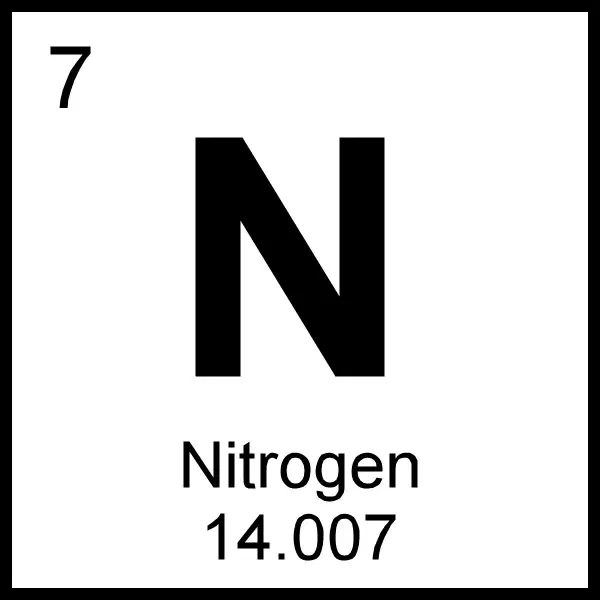
Use this element from the periodic table to answer the question. A student constructs a model of atomic structure for the element nitrogen. What sub particles should be visible in the nucleus of the atom model?
Seven neutrons and seven protons
Seven protons only
Seven electrons and seven neutrons
Fourteen neutrons and seven protons
Protons and neutrons in the central core of the atom are held together by —
strong nuclear force
gravitational force
electromagnetic force
weak nuclear force
Which statement must be true for a stable nucleus to hold the protons and neutrons inside?
The nuclear force must overcome the electromagnetic repulsion between protons.
The nucleus must have more neutrons than protons.
The attractive forces between electrons and protons must be small.
The nuclear force must balance the repulsive forces between neutrons and protons.

Using the diagram, what amount of protons does an element of neon contain?
10
20
15
30
How many protons are in an atom of oxygen?
8
16
9
24
Fluorine has an atomic number of 9 and an atomic mass of 18.998. How many protons does an atom of fluorine have?
18
9
10
19
What does the nucleus of an atom contain?
Protons and neutrons
Protons and electrons
Electrons and neutrons
Protons only
The atomic mass of an element equals the number of —
protons + neutrons
electrons
protons
protons + electrons

Using the diagram pictured, how many protons would an atom of iodine contain?
53
127
74
21
The atomic number of an element is always equal to the number of —
protons
protons plus electrons
Which of the following is characteristic of a physical change?
A. The change can be observed.
B. Substances are changed into different substances.
C. The substance is destroyed in the process.
D. The change is not observable.
Which of the following is NOT an example of a chemical change?
A. Leaves changing color
B. Baking brownies
C. Cutting hair
D. Nail rusting
What is an example of a chemical change of matter?
Coloring on paper
Cutting paper
Burning paper
Tearing paper
What is NOT a physical change?
Freezing water
Burning a wooden splint
Boiling a liquid
Evaporating gasoline
Which of the following is a chemical change?
Bending a paperclip
Burning a candle
Ice cubes melting
Chopping onions
Ductility and malleability are examples of —
physical properties
reactive properties
chemical properties
properties of nonmetals
Which of the following is NOT a mixture?
Saltwater
Air
Water
Soil
What is the first thing you should do if a chemical spill occurs in the lab?
Ignore it and continue working
Notify the teacher or lab supervisor immediately
Try to clean it up with paper towels
Leave the lab and go outside
Which technique is commonly used to separate sand from water?
Filtration
Evaporation
Distillation
Chromatography
What separation technique would you use to separate iron filings from sulfur?
Filtration
Magnetic separation
Distillation
Decantation
What is a beaker primarily used for in the lab?
Measuring exact volumes of liquids
Mixing and heating liquids
Holding solids
Filtering solutions
What is a compound?
A mixture of two elements
A single element
A physical blend of substances
A solution of gases
A fire alarm goes off while you are conducting an experiment. What is the proper response?
Continue working until the alarm stops
Evacuate the lab calmly and follow the school's fire drill procedures
Try to put out any fires yourself
Wait for instructions from the teacher before leaving
You accidentally spill a small amount of liquid on the counter. The liquid is not hazardous, but it could cause a mess. What should you do?
Leave the spill and continue with your experiment
Quickly clean up the spill with paper towels or a cloth
Inform the teacher and wait for instructions
Cover the spill with another object
Which of the following is a heterogeneous mixture?
Brass
Air
Vinegar
Soil
When baking a cake, what kind of change occurs?
Physical change
Chemical change
Reversible change
Evaporation
In a water purification system, which process is used to remove solid particles from the water?
Distillation
Filtration
Condensation
Crystallization
When you open a bottle of soda, you hear a fizzing sound. What causes this?
Air entering the bottle
The release of dissolved carbon dioxide gas
A chemical reaction between soda and air
The evaporation of the soda
Why does ice float on water?
Ice has a higher density than water
Ice has a lower density than water
Ice is heavier than water
Ice is a gas in solid form

