
 Worksheets
Unit 2, Chapter 1: Atoms, Molecules and Compounds
Total questions: 30
Worksheet time: 15mins
Molecules are made up of:
cells
waves
atoms of the same element
atoms of different elements
The center of the atom is called the:
middle
nucleus
electron
matter
AMU stands for:
Atomic Mass Units
Atomic Moving Usable Energy
Always Mind Unstable
Astronomic Metric Units
The mass of an atom
Is the mass of the protons and electrons added together.
is the mas of the neutrons and electrons added together.
is the mass of the neutrons and protons added together.
none of these.
The number of protons is equal to
the number of electrons.
the number of neutrons.
the number of total atoms in a molecule.
the AMU.
The smallest part of an element is the
atom.
compound.
period.
nucleus.
What is the building block of all matter?
nucleus
compound
element
atom
The Periodic Table of Elements
lists only the elements we can see and touch.
lists all the elements that make up matter.
does not list metals.
does not list gases.
Molecules can be formed when what are joined together?
molecules
compounds
atoms
substances
An element is made up of
many types of atoms.
many types of molecules.
at least two types of atoms.
one type of atom.
Different elements are chemically bonded together in
compounds
elements
mixtures
molecules

From the diagrams, which is true?
Water is an element.
Oxygen is an element.
Water and oxygen are both elements.
Neither water nor oxygen are elements.
From the diagrams, which is also true?
Oxygen is a compound.
A water molecule is made up of two hydrogen atoms and one oxygen atom.
Only one of the examples contains an oxygen atom.
Water is not a compound.
The properties of all types of matter
can never change.
depends on the composition and arrangement of atoms.
are the same.
None of these
Two or more atoms that are bonded together are called ______.
molecules
compounds
atoms
besties
When an atom becomes a molecule, a ____ forms.
bond
electron
neutron
element
The ____ is an arrangement of elements according to their atomic numbers that works like a "key" for scientists.
Periodic Table of Elements
Bohr Modle
Newtonian Flow Chart
Periodic Map of Stuff
Carbon dioxide is formed when two oxygen atoms chemically combine with a carbon atom. Which term best describes carbon dioxide?
compound
atom
mixture
element
How many Hydrogen atoms are present in methane (CH4)?
2
4
3
1
What particles are found in the nucleus of an atom?
protons only
protons and neutrons
electrons only
electrons and neutrons
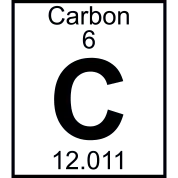
What does the "C" represent?
chemical symbol
atomic mass
atomic number
element name

What is the atomic mass of Neon? (Use the picture!)
10
30
10.18
20.18
Where in an atom are the electrons located?
the nucleus
the electron cloud
the Apple Cloud
the protons
Which part of an atom is positively charged?
the proton
the neutron
the electron
the whole atom
Which part of an atom is negatively charged?
the electron
the proton
the neutron
the whole thing
Which part of an atom has no charge?
the neutrons
the protons
the electrons
the elements
If you combine two or more different types of atoms, what will you get?
a compound
an element
a molecule
a bunch of atoms
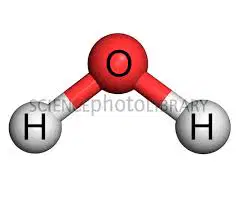
What is this a picture of?
an atom
an element
a molecule
a compound
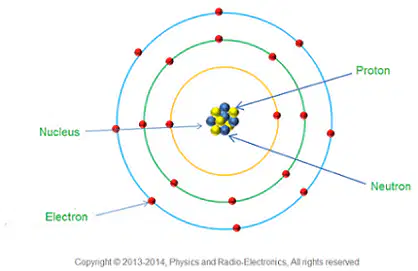
What would we call this image if we were drawing it in our science notebooks?
a Bohr model
an element
a molecule
a compound
Bohr models help us to visualize:
protons and neutrons
what makes up an atom
a compound
a molecule

